Sleep apnea can look like “just snoring,” but the more important clue is repeated breathing disruption during sleep. In obstructive sleep apnea, the throat narrows or closes over and over, briefly reducing airflow and often lowering blood oxygen. The brain responds by partially waking the body so breathing can restart. Many people never remember these awakenings, yet they may wake unrefreshed, fight daytime sleepiness, develop morning headaches, or notice that their blood pressure is difficult to control. Loud snoring, witnessed pauses in breathing, and gasping are especially important warning signs, but sleep apnea can also be quieter and less obvious, particularly in women and older adults. Because the condition can repeatedly activate the stress response at night, it has a meaningful connection with hypertension and other cardiovascular problems. Recognizing the pattern matters because testing is straightforward, treatment can improve symptoms, and blood pressure often becomes easier to manage when sleep apnea is addressed along with standard heart-health care.
Table of Contents
- What Sleep Apnea Looks Like
- Snoring, Gasping, and Nighttime Clues
- Daytime Fatigue and Less Obvious Symptoms
- Why Sleep Apnea Can Raise Blood Pressure
- Who Should Be Tested
- Diagnosis and Treatment Options
- What to Do About Blood Pressure
What Sleep Apnea Looks Like
Obstructive sleep apnea, or OSA, happens when the upper airway repeatedly becomes too narrow or closes during sleep. A complete pause in airflow is called an apnea; a partial reduction is called a hypopnea. Each event may last 10 seconds or longer and can occur many times per hour.
The immediate problem is not simply noise from snoring. During an event, oxygen may fall, carbon dioxide rises, and the body must work harder to breathe against a blocked airway. The brain then triggers a brief arousal that tightens the airway muscles and restores airflow. That cycle can repeat dozens or even hundreds of times during a night.
Doctors often describe severity using the apnea-hypopnea index, or AHI, which counts breathing events per hour of sleep. In adults, the usual categories are:
- Mild OSA: 5 to 14 events per hour
- Moderate OSA: 15 to 29 events per hour
- Severe OSA: 30 or more events per hour
AHI is useful, but it is not the whole story. Two people with the same AHI can have different oxygen drops, sleep disruption, symptoms, and cardiovascular risk. Clinicians may also consider how low oxygen falls, how much of the night is spent with low oxygen, whether events cluster during rapid eye movement sleep, and whether blood pressure or heart disease is already present.
Central sleep apnea is different. In that condition, breathing pauses because the brain temporarily does not send a normal breathing signal. It has different causes and may occur with heart failure, certain medications, high altitude, or neurologic conditions. Most people who snore and have a blocked-airway pattern have obstructive rather than central sleep apnea.
Snoring, Gasping, and Nighttime Clues
Loud, irregular snoring plus witnessed breathing pauses is one of the strongest home clues for obstructive sleep apnea. Ordinary snoring can occur without apnea, so sound alone cannot diagnose the condition. What raises concern is a pattern of snoring that stops during a breathing pause and then resumes with a snort, gasp, choke, or sudden body movement.
A bed partner may notice symptoms before the person with OSA does. Common nighttime clues include:
- Loud snoring on most nights
- Pauses in breathing that another person can see or hear
- Gasping, choking, or snorting during sleep
- Restless sleep or frequent position changes
- Repeated trips to the bathroom at night
- Dry mouth or sore throat on waking
- Night sweats
- Reflux symptoms that seem worse at night
- A racing or pounding heartbeat after a sudden awakening
Snoring is often worse while sleeping on the back because gravity can encourage the tongue and soft tissues to fall toward the airway. Some people have positional OSA, meaning their breathing disturbance is much worse when supine. In that setting, changing sleep position can reduce events, although it does not reliably eliminate OSA and should not replace testing when symptoms are significant. A more detailed look at sleep position, snoring, and blood pressure can help explain why side sleeping helps some people more than others.
Do not assume that quiet sleep rules out apnea. Some people, especially those who live alone, never hear their own snoring. Others have airflow limitation and oxygen drops without dramatic snoring. That is one reason daytime symptoms, medical history, and blood pressure patterns matter.
Daytime Fatigue and Less Obvious Symptoms
Sleep apnea can leave a person in bed for seven or eight hours yet still produce poor-quality sleep. Repeated arousals fragment the normal sleep cycle, so deep and restorative sleep may be interrupted even when total time in bed looks adequate.
The classic daytime symptom is excessive sleepiness: nodding off while reading, watching television, sitting in meetings, or riding as a passenger. Falling asleep while driving is an urgent safety concern. However, many people describe something less dramatic—persistent fatigue, “brain fog,” low motivation, irritability, or difficulty concentrating.
Other possible symptoms include morning headaches, reduced libido, mood changes, memory problems, and reduced exercise energy. Children can present differently, sometimes with hyperactivity or attention problems rather than obvious sleepiness.
Women with OSA are more likely than men to report insomnia, fatigue, headaches, mood symptoms, or unrefreshing sleep and may be less likely to report classic loud snoring. Older adults may attribute tiredness to age, medications, or other health conditions. These less stereotypical patterns can delay testing.
It is also useful to separate sleep apnea from simple sleep deprivation. Someone who sleeps only five hours because of work or late-night screen use can feel exhausted without having OSA. The two problems can coexist, and both can affect cardiovascular health. If too little sleep is part of the pattern, understanding how sleep deprivation affects blood pressure and heart risk can clarify what needs to change beyond apnea treatment.
Why Sleep Apnea Can Raise Blood Pressure
Sleep apnea can raise blood pressure because every obstructive event acts like a short burst of physiologic stress. When oxygen drops and breathing becomes difficult, the sympathetic nervous system—the body’s “fight-or-flight” system—activates. Heart rate and blood pressure can surge as breathing resumes.
One isolated surge is brief. Repeating the cycle many times every night is different. Over time, OSA can contribute to several changes that favor hypertension:
- Persistent sympathetic nervous system activation
- Oxidative stress from repeated oxygen drops and recovery
- Inflammation
- Reduced function of the endothelium, the inner lining of blood vessels
- Increased arterial stiffness
- Hormonal changes that promote sodium and fluid retention
- Disrupted normal nighttime blood pressure patterns
Healthy blood pressure usually falls during sleep. This is called nocturnal “dipping.” People with OSA are more likely to have a smaller nighttime drop or even a rise in pressure while asleep. That pattern can be missed if blood pressure is measured only in a daytime clinic. In some cases, 24-hour ambulatory blood pressure monitoring is useful because it can show nighttime readings and whether normal dipping occurs.
OSA is especially common in people with resistant hypertension, meaning blood pressure stays above goal despite treatment with several medications. Treating OSA can lower blood pressure, but the average reduction with continuous positive airway pressure, or CPAP, is usually modest rather than dramatic. The benefit tends to be larger in people with higher baseline pressure, more severe apnea, resistant hypertension, or better nightly CPAP use.
That distinction matters. CPAP is not a replacement for prescribed blood pressure medication when medication is needed. Instead, apnea treatment and hypertension treatment usually work together. If readings are high, follow an accurate home blood pressure monitoring routine rather than judging progress from an occasional single measurement.
Sleep apnea is also associated with atrial fibrillation, coronary artery disease, heart failure, stroke, and other cardiovascular conditions. Association does not mean every person with OSA will develop these problems, and treating apnea has not been proven to erase all cardiovascular risk. Still, the combination of repeated oxygen stress, sleep fragmentation, and hypertension makes OSA clinically important rather than merely annoying snoring.
Who Should Be Tested
Testing is worth discussing when symptoms, risk factors, or cardiovascular clues make OSA plausible. You do not need to have every classic symptom.
Strong reasons to ask about a sleep evaluation include:
- Loud habitual snoring plus witnessed pauses or gasping
- Excessive daytime sleepiness or unrefreshing sleep without another clear cause
- Resistant or difficult-to-control hypertension
- High blood pressure that is especially elevated in the morning or at night
- Atrial fibrillation, particularly when OSA symptoms are present
- Obesity or a large neck circumference combined with snoring or sleepiness
- Recurrent morning headaches and nighttime choking
- Falling asleep while driving or in other inappropriate situations
Risk increases with excess body weight because fat around the neck and abdomen can make airway collapse more likely, but thin people can have OSA too. Jaw structure, tongue size, tonsils, nasal obstruction, menopause, age, alcohol use, and sedating medications can all influence risk.
Validated screening tools such as STOP-Bang can estimate the likelihood of OSA, but they do not diagnose it. A low-risk questionnaire also does not completely rule out disease when symptoms are convincing.
A few blood pressure patterns should raise suspicion even when sleep symptoms seem mild. Repeated high morning readings can occur because apnea-related sympathetic activity may remain elevated after waking. Nighttime hypertension or a “nondipping” pattern on ambulatory monitoring is another clue. These patterns are not specific to OSA, but they can justify looking for it when other risk factors are present. If home readings are unexpectedly high, first confirm technique and cuff fit before assuming apnea is the cause.
People with atrial fibrillation, heart failure, prior stroke, or coronary disease may also be screened more readily because OSA is common in cardiovascular populations. Testing decisions are still individualized. The goal is not to label everyone who snores; it is to find clinically important breathing disruption that is producing symptoms, oxygen stress, or added cardiovascular burden.
Seek urgent medical care for chest pain, fainting, severe shortness of breath, new neurologic symptoms, or dangerously high blood pressure with concerning symptoms. Those problems should not be attributed to sleep apnea without assessment.
Diagnosis and Treatment Options
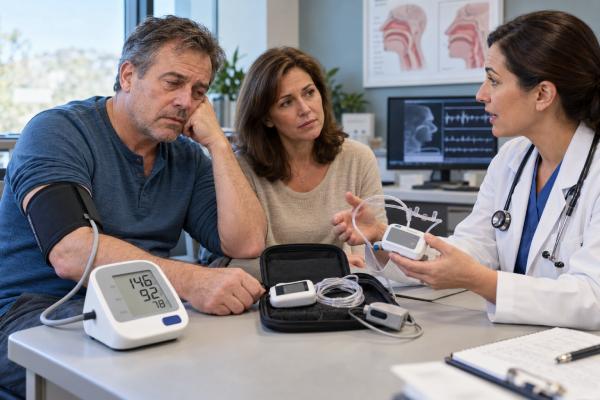
Diagnosis requires an objective sleep test. For many adults with a high likelihood of uncomplicated moderate-to-severe OSA, a home sleep apnea test can record airflow, breathing effort, oxygen saturation, and pulse during a night at home. It is convenient and useful, but it may underestimate severity because it usually cannot measure actual sleep time as precisely as a laboratory study.
An overnight polysomnogram in a sleep laboratory measures more signals, including brain activity, eye movements, muscle activity, airflow, breathing effort, oxygen, heart rhythm, and sleep stages. It is often preferred when the diagnosis is uncertain, a home test is negative despite strong symptoms, or significant heart, lung, neurologic, or other sleep conditions complicate the picture.
Treatment depends on severity, anatomy, symptoms, cardiovascular conditions, and personal preference.
CPAP and related positive-airway-pressure therapy
CPAP uses gentle air pressure through a mask to hold the airway open. It is the most consistently effective treatment for reducing obstructive breathing events and improving oxygen levels. Benefits can include less snoring, better alertness, improved quality of life, and a modest fall in blood pressure in many patients.
Comfort problems are common but often fixable. Different mask shapes, humidification, pressure adjustments, treatment for nasal congestion, and gradual acclimation can make a large difference. Regular use matters; putting the device on for only part of the night leaves untreated apnea during the remaining hours.
Oral appliances and positional treatment
A mandibular advancement device moves the lower jaw forward to help keep the airway open. It may be appropriate for selected people with mild-to-moderate OSA or those who cannot tolerate CPAP. A dentist trained in sleep medicine usually fits and adjusts the appliance.
Positional therapy can help when events occur mainly on the back. Modern devices use vibration or other cues to encourage side sleeping. It is less effective than CPAP for many patients and works best when testing confirms a strongly positional pattern.
Weight management, alcohol, and airway factors
Weight loss can substantially reduce OSA severity in people with overweight or obesity, though it does not guarantee a cure. Alcohol near bedtime can worsen airway collapse and delay the brain’s response to an obstructive event. Sedatives and certain sleep medicines can also worsen breathing in susceptible people, so medication choices should be reviewed with a clinician rather than stopped abruptly.
Nasal treatment, tonsil surgery, upper-airway surgery, hypoglossal nerve stimulation, or newer weight-management medications may be options for selected patients. The right choice depends on the reason the airway is collapsing and how severe the OSA is.
What to Do About Blood Pressure
If you have sleep apnea and high blood pressure, treat both conditions rather than waiting to see whether one fixes the other. A practical plan usually has four parts.
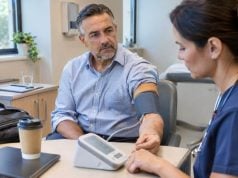
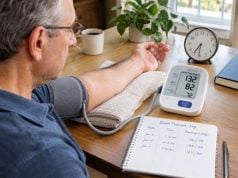
First, measure blood pressure correctly. Use a validated upper-arm cuff with the correct cuff size, sit quietly for about five minutes, keep the arm supported at heart level, and avoid exercise, caffeine, and smoking for roughly 30 minutes before a planned reading. Take repeated readings on several days so decisions are based on an average. A detailed step-by-step home blood pressure method can reduce measurement error.
Second, use OSA therapy consistently. If CPAP is prescribed, aim to wear it whenever you sleep, not only on “bad” nights. If treatment remains uncomfortable, ask for troubleshooting rather than abandoning it.
Third, address shared drivers. Weight management when appropriate, regular physical activity, less sodium, moderation of alcohol, smoking cessation, and adequate sleep duration can improve cardiovascular risk independent of OSA treatment. Healthy sleep also involves schedule and quality; heart-supportive sleep habits can help with regularity and recovery.
Fourth, review persistent hypertension with your clinician. OSA treatment may lower pressure by a few millimeters of mercury on average, but many people still need medication. Do not reduce or stop antihypertensive medicine based on a few improved readings unless the prescriber advises it.
Keep expectations realistic when tracking improvement. Snoring may decrease quickly once an effective treatment is started, while daytime alertness can improve over days to weeks. Blood pressure changes are often smaller and may take longer to see because pressure is influenced by many factors beyond OSA. A home log covering one to two weeks is more informative than comparing one reading before treatment with one reading afterward.
If a prescribed therapy appears to control apnea but fatigue persists, another problem may be contributing. Insomnia, insufficient sleep time, restless legs, depression, anemia, thyroid disease, medication effects, and other medical conditions can all cause tiredness. Persistent symptoms deserve reassessment rather than assuming the device “is not working.”
The key takeaway is simple: loud snoring becomes medically important when it travels with breathing pauses, gasping, daytime impairment, or hard-to-control blood pressure. Those combinations deserve testing rather than guesswork. Sleep apnea is common, diagnosable, and treatable, and addressing it can improve both how you feel during the day and how your cardiovascular system is stressed at night.
One useful way to judge progress is to separate three outcomes: breathing control, daytime symptoms, and cardiovascular measurements. A treatment can dramatically reduce apnea events even if blood pressure changes only a little, because hypertension may have several causes. Likewise, a person may feel more alert before a repeat blood pressure average shows much change. Track each outcome on its own rather than expecting one treatment to produce the same size improvement everywhere.
If you use CPAP, review the device’s treatment data with the sleep clinic when possible. Residual event estimates, leak information, and hours of use can reveal whether the therapy is being applied effectively. Consumer sleep scores are less useful than treatment data from a prescribed device and standardized blood pressure readings. Persistent snoring while using CPAP may reflect mask leak, mouth leak, nasal blockage, or inadequate pressure and deserves troubleshooting.
Finally, remember that OSA severity can change. Weight change, aging, alcohol use, nasal congestion, menopause, medications, and surgery can alter airway behavior. If symptoms return after a period of successful treatment, do not assume you simply need more sleep. Reassessment can determine whether the therapy still matches the current problem.
References
- Obstructive sleep apnea -related hypertension: a review of the literature and clinical management strategy 2024 (Review)
- The Effects of Obstructive Sleep Apnea on the Cardiovascular System: A Comprehensive Review 2024 (Review)
- Impact of Obstructive Sleep Apnea on Cardiovascular Health: A Systematic Review 2024 (Systematic Review)
- Management of hypertension in obstructive sleep apnea 2023 (Review)
- Obstructive sleep apnoea heterogeneity and cardiovascular disease 2023 (Review)
Disclaimer
This article is for general education and is not a diagnosis or a substitute for individualized medical care. If you have loud snoring, witnessed breathing pauses, severe daytime sleepiness, or difficult-to-control blood pressure, discuss sleep apnea testing with a qualified clinician. Seek urgent care for chest pain, severe shortness of breath, fainting, stroke-like symptoms, or other signs of a medical emergency.