Too little sleep does more than make you tired the next day. Regularly cutting sleep short can push several systems in a direction that is unfavorable for the heart: blood pressure stays higher for longer, appetite and food choices can shift, insulin sensitivity may worsen, and inflammatory signals can rise. One short night is not likely to cause heart disease by itself, but repeated sleep restriction can become part of a larger cardiovascular risk pattern, especially when it travels with high blood pressure, excess weight, diabetes, smoking, or low physical activity. For most adults, a practical target is about 7 to 9 hours of sleep per night, with enough regularity that sleep is not constantly being “caught up” on weekends. The important point is that sleep is not passive downtime. It is a period when the nervous system, metabolism, and cardiovascular system are meant to recover. Protecting sleep is therefore one of the everyday habits that supports long-term heart health.
Table of Contents
- How Sleep Deprivation Affects the Heart
- Blood Pressure and the Stress Response
- Appetite, Weight, and Blood Sugar
- Inflammation and Blood Vessel Health
- How Much Sleep Is Enough
- When More Time in Bed Is Not Enough
- A Practical Plan to Protect Sleep and Heart Health
How Sleep Deprivation Affects the Heart
The cardiovascular problem with chronic sleep deprivation is cumulative. A short night activates the body in ways that help you function temporarily, but repeating that pattern night after night can keep the nervous system and metabolism under extra strain.
During normal sleep, heart rate and blood pressure usually fall, stress-hormone activity decreases, and the body moves through sleep stages that support recovery. When sleep is shortened, this recovery window becomes smaller. The result can include higher sympathetic nervous system activity, less nighttime blood pressure dipping, worse glucose handling, greater hunger, and changes in inflammatory signaling.
Researchers often distinguish between sleep deprivation and sleep deficiency. Sleep deprivation usually means not getting enough total sleep. Sleep deficiency is broader and can include poor sleep quality, irregular timing, or sleep occurring at the wrong biological time. A person may spend eight hours in bed and still have deficient sleep if frequent awakenings, insomnia, or sleep apnea repeatedly disrupt it.
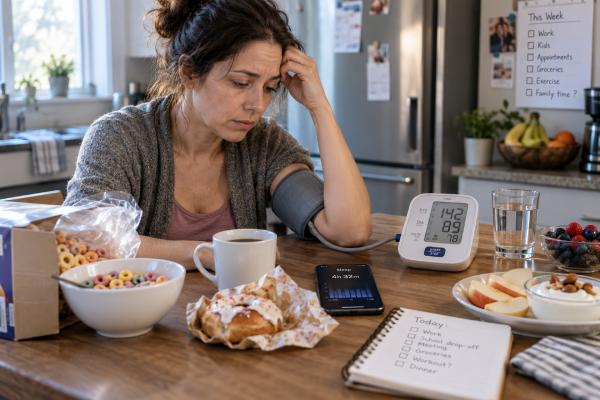
Heart risk is also shaped by what sleep loss causes you to do the next day. People who are exhausted may move less, rely more on high-calorie convenience foods, drink more caffeine, or skip exercise. Those secondary effects can reinforce the direct physiologic effects of short sleep.
Sleep debt also tends to hide in plain sight. A person who needs about eight hours but sleeps six on five work nights has accumulated roughly 10 hours of lost sleep by the weekend. Sleeping late on Saturday may ease sleepiness, but it does not necessarily reverse every metabolic or blood pressure effect of the workweek. Large weekend shifts can also push bedtime later, making Monday morning harder. A steadier schedule usually works better than repeatedly cycling between restriction and catch-up sleep.
People sometimes adapt subjectively to chronic short sleep and believe they are functioning normally. Performance testing tells a different story: attention, reaction time, and decision-making can continue to deteriorate even when the person reports that they feel “used to it.” That matters for driving safety, exercise quality, food choices, and medication adherence as well as heart health.
This is why a useful sleep plan is not simply “go to bed earlier.” It involves getting enough sleep, keeping a reasonably stable schedule, and identifying disorders that prevent restorative sleep. For a broader look at habits that improve sleep quality, see sleep quality habits that support heart health.
Blood Pressure and the Stress Response
Sleep loss can raise blood pressure by keeping the body’s alerting systems more active than they should be. When you are sleep deprived, sympathetic nervous system activity increases and stress hormones such as cortisol can remain elevated. Blood vessels may stay more constricted, heart rate may run higher, and the usual overnight reduction in blood pressure can be blunted.
A healthy pattern often includes a 10% to 20% fall in blood pressure during sleep compared with daytime levels. Not everyone shows the same amount of dipping, but loss of the normal nighttime decline is associated with higher cardiovascular risk. Short or fragmented sleep can contribute to this nondipping pattern.
The effect is not always dramatic after one night. Blood pressure changes vary based on age, baseline hypertension, genetics, stress level, caffeine, sodium intake, and whether a sleep disorder is present. The more important concern is repeated exposure. If a person routinely sleeps five or six hours while also living with hypertension, sleep loss becomes one more factor making pressure harder to control.
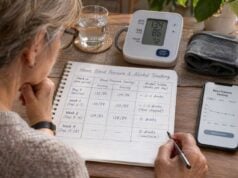
Morning readings can be especially revealing. Blood pressure normally rises around waking as the body becomes active. If sleep has been poor, that rise can occur on top of heightened sympathetic activity. Someone seeing repeated high morning values should first make sure measurements are accurate, then look at the broader picture rather than blaming sleep alone. A structured home blood pressure monitoring schedule can help separate a real trend from random variation.
Sleep deprivation and obstructive sleep apnea can produce overlapping symptoms, but they are not the same problem. If short sleep is accompanied by loud snoring, witnessed breathing pauses, gasping, or unexplained daytime sleepiness, consider whether sleep apnea symptoms and high blood pressure could be part of the picture.
Appetite, Weight, and Blood Sugar
Short sleep can make weight control harder because it changes both biology and behavior. After insufficient sleep, the brain tends to respond more strongly to highly rewarding foods, especially options rich in refined carbohydrates, fat, or salt. At the same time, self-control and planning may be weaker simply because the person is tired.
Hormones involved in hunger and fullness may also shift. Experimental sleep restriction has been linked with changes in appetite-regulating signals, although real-world responses vary. The practical effect is familiar to many people: after a very short night, a balanced breakfast and planned lunch may feel less appealing than pastries, takeout, or repeated snacks.
Sleep loss can also reduce insulin sensitivity. Insulin is the hormone that helps move glucose from the bloodstream into cells. When tissues respond less effectively, the body may need to release more insulin to manage the same meal. Over time, that pattern can contribute to higher blood sugar and greater cardiometabolic risk.
Weight gain is not inevitable if you sleep poorly, and improving sleep does not automatically cause weight loss. But sleep can change the difficulty level of healthy eating. In one practical sense, adequate sleep improves the conditions under which good choices are made.
A few strategies can reduce the appetite effect of a bad night:
- Eat regular meals instead of trying to “make up” for calories by skipping breakfast or lunch.
- Build meals around protein, vegetables or fruit, and high-fiber carbohydrates.
- Keep easy foods such as yogurt, nuts, fruit, oats, beans, and pre-cut vegetables available.
- Avoid treating fatigue primarily with sugary drinks or frequent high-calorie snacks.
- Use caffeine strategically rather than continuously throughout the day.
If short sleep is contributing to late-night eating, the timing problem matters too. Large meals close to bedtime can worsen reflux and make sleep less comfortable, while irregular meal timing can complicate appetite control. The goal is not a rigid schedule; it is reducing the cycle of staying up late, eating because you are tired, and then sleeping poorly again.
Inflammation and Blood Vessel Health
Inflammation is another pathway connecting sleep and cardiovascular health. Repeated sleep loss can increase inflammatory activity and may impair the normal function of the blood-vessel lining. This does not mean that one late night “inflames your arteries” in a clinically meaningful way. The concern is chronic exposure combined with other risk factors.
The endothelium is the thin cell layer lining blood vessels. Healthy endothelial cells help vessels relax, regulate clotting, and respond to changes in blood flow. Sleep restriction, sympathetic activation, oxidative stress, and inflammation can all interfere with these functions.
Over years, cardiovascular disease develops through many interacting pathways. LDL cholesterol, high blood pressure, smoking, diabetes, genetics, diet, and physical activity usually matter far more than any single inflammatory marker. Sleep fits into this network rather than replacing those established risks.
That nuance is important because sleep research is often described too dramatically. Observational studies consistently associate short, poor, or irregular sleep with worse cardiovascular outcomes, but association can be influenced by work schedules, illness, mental health, socioeconomic factors, and other behaviors. Experimental studies support plausible mechanisms, yet no one can calculate an individual’s heart attack risk from sleep duration alone.
A better interpretation is that sleep is a modifiable cardiovascular behavior. The American Heart Association now includes healthy sleep among its core measures of cardiovascular health. That puts sleep beside, not above, factors such as blood pressure, cholesterol, blood sugar, diet, physical activity, nicotine exposure, and body weight.
How Much Sleep Is Enough
For most adults, 7 to 9 hours per night is a practical target, but individual need varies. Some people function well near the lower end, while others genuinely need closer to nine hours. The most useful target is the amount that allows you to wake reasonably refreshed and stay alert during the day without routinely depending on excessive caffeine or weekend recovery sleep.
Long sleep deserves context too. Regularly sleeping more than nine or ten hours is not necessarily harmful by itself. In studies, long sleep is often associated with worse health outcomes, but underlying illness, depression, low activity, or poor sleep quality may explain part of that relationship. Sleeping longer because you are recovering from illness is different from chronically needing 11 hours and still feeling exhausted.
Regularity matters in addition to duration. Large day-to-day swings in bedtime and wake time can disrupt circadian rhythms. A person who sleeps five hours on work nights and ten hours on weekends may average an acceptable number across the week, yet still spend much of the week sleep deprived.
You do not need a perfectly rigid schedule. A realistic goal is to keep bedtime and wake time within roughly an hour on most days. Shift workers and caregivers may not have that flexibility, so their plan should focus on protecting a reliable sleep opportunity, controlling light exposure, and reducing avoidable interruptions.
Wearables can estimate sleep duration and timing, but they are not perfectly accurate at distinguishing sleep stages or diagnosing sleep disorders. Use them to notice trends, not to chase an ideal “sleep score.” If the device says your sleep is poor but you feel rested and function well, the number may matter less than your actual symptoms.
When More Time in Bed Is Not Enough
If you allow enough time for sleep and still feel exhausted, a sleep disorder or medical problem may be interfering. Simply adding more time in bed can sometimes make insomnia worse by increasing the amount of time spent awake and frustrated.
Talk with a clinician if you have any of the following:
- Loud snoring with gasping or witnessed breathing pauses
- Persistent daytime sleepiness despite adequate sleep opportunity
- Trouble falling asleep or staying asleep at least several nights a week for months
- An irresistible urge to move the legs at night
- Falling asleep while driving
- Repeated morning headaches
- Unexplained palpitations or nighttime chest symptoms
- High blood pressure that remains difficult to control
Insomnia deserves specific treatment. Cognitive behavioral therapy for insomnia, often called CBT-I, is the first-line approach for chronic insomnia and focuses on sleep scheduling, stimulus control, beliefs about sleep, and habits that maintain wakefulness. It is more than generic sleep-hygiene advice.
Medication, alcohol, cannabis, pain, depression, anxiety, menopause symptoms, reflux, and thyroid problems can also affect sleep. Review these possibilities instead of assuming every sleep problem is caused by poor habits.
A Practical Plan to Protect Sleep and Heart Health
The most effective sleep changes are often simple enough to repeat. Start by identifying whether the main problem is not enough opportunity to sleep or an inability to sleep well despite enough opportunity. Those require different solutions.
If your schedule is the problem, choose a realistic wake time and work backward to create a sleep window of about 7.5 to 9 hours. Move bedtime earlier in 15- to 30-minute steps rather than trying to shift it by two hours in one night.
Track the result for two weeks before deciding whether the change is helping. Note bedtime, wake time, estimated sleep time, naps, caffeine, alcohol, and how alert you feel during the day. You do not need a detailed spreadsheet; a few notes on your phone are enough. The aim is to discover patterns, such as late caffeine, inconsistent wake times, or repeated early awakenings, that are easy to miss when judging one night at a time.
If you use a blood pressure monitor, take readings under consistent conditions. Improved sleep can lower pressure for some people, but day-to-day numbers also respond to sodium, stress, exercise, illness, medications, and measurement technique. Look for averages and trends rather than expecting a dramatic overnight change.
During the day, get outdoor light soon after waking when possible. Morning light strengthens the circadian signal that supports alertness in the day and sleepiness later. Regular physical activity also helps, although very intense exercise immediately before bed can be stimulating for some people.
In the evening:
- Dim bright light and reduce stimulating screen use during the last hour when possible.
- Avoid large amounts of caffeine late in the day; caffeine can remain active for many hours.
- Limit alcohol as a sleep aid. It may make you drowsy initially but can fragment later sleep and worsen snoring or apnea.
- Keep the bedroom cool, dark, and quiet.
- Reserve the bed mainly for sleep and intimacy if insomnia is a problem.
If you are sleep deprived today, a short nap can improve alertness, but long or late naps may make nighttime sleep harder. A 20- to 30-minute nap earlier in the afternoon is often easier to integrate than a two-hour evening nap.
For heart health, pair sleep improvement with the fundamentals. Keep blood pressure controlled, avoid tobacco, stay active, manage cholesterol and blood sugar, and follow an eating pattern rich in minimally processed foods. Sleep is one part of the system, not a substitute for the rest. If high blood pressure is already present, combine sleep work with proven lifestyle approaches that lower blood pressure and any treatment prescribed by your clinician.
Expect progress to be gradual. A week of better sleep can improve how you feel, but cardiovascular risk is shaped over months and years. If work, caregiving, pain, or shift schedules make a full sleep window difficult, focus first on the part you can control: protect a consistent block of sleep, reduce avoidable interruptions, and ask for medical help when symptoms suggest a treatable disorder. Even partial improvement is more useful than waiting for an ideal routine that never arrives. The goal is not perfect sleep every night. It is to make adequate, regular, restorative sleep the default often enough that your nervous system and metabolism are not continually compensating for chronic sleep loss.
A useful way to protect sleep is to identify the pressure point that repeatedly steals it. For one person it is late work; for another it is scrolling, caregiving, an early commute, or an untreated symptom such as pain or reflux. Fixing the main constraint is usually more effective than collecting a long list of minor sleep-hygiene rules. If bedtime keeps getting delayed because tasks spill into the evening, moving one task earlier in the day may improve sleep more than buying blackout curtains or a new supplement.
Be cautious with the idea of “training” yourself to need less sleep. Most adults cannot meaningfully reduce their biological sleep need through willpower. Feeling less sleepy after months of restriction does not prove that attention, metabolism, or cardiovascular physiology has normalized. If you repeatedly need an alarm, depend on large amounts of caffeine, sleep much longer on free days, or become drowsy during passive activities, those are clues that your usual sleep opportunity may be too short.
When a schedule cannot change immediately, protect what is available: keep the sleep window consistent, make the environment quiet and dark, and avoid sacrificing another hour for low-priority tasks. Small gains repeated nightly can add up to several extra hours of sleep each week.
References
- Sleep and Risk for Heart Disease and Stroke. 2026 (Review)
- A good night’s rest: A contemporary review of sleep and cardiovascular health 2024 (Review)
- Sleep extension and cardiometabolic health: what it is, possible mechanisms and real-world applications 2024 (Review)
- Sleep and cardiovascular disease 2023 (Review)
- Impact of objectively-measured sleep duration on cardiometabolic health: A systematic review of recent evidence 2022 (Systematic Review)
Disclaimer
This article provides general health information and does not replace medical evaluation or treatment. Persistent daytime sleepiness, chronic insomnia, suspected sleep apnea, or difficult-to-control blood pressure should be discussed with a qualified clinician. Do not drive if you are struggling to stay awake, and seek urgent care for chest pain, severe shortness of breath, fainting, or stroke-like symptoms.