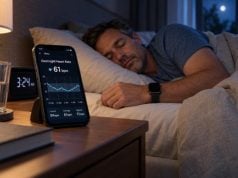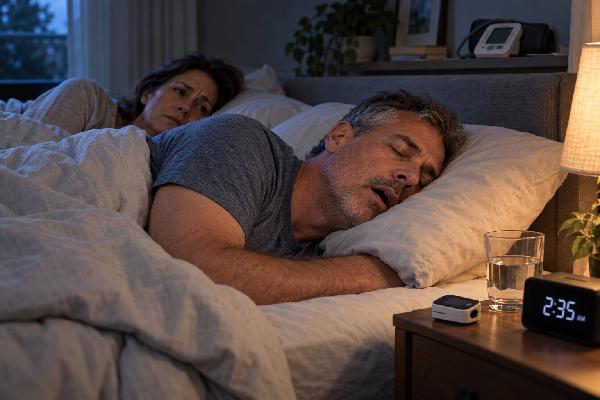
Sleep position can change snoring and obstructive sleep apnea, but it does not directly determine whether your blood pressure is healthy. For many people, sleeping on the back lets the tongue and soft tissues fall toward the throat, narrowing the airway and making snoring or breathing pauses worse. Side sleeping can reduce this collapse, especially in people with positional obstructive sleep apnea. The cardiovascular link comes mainly through the breathing problem: repeated airway obstruction can lower oxygen, fragment sleep, and trigger surges in heart rate and blood pressure. Over time, that nighttime stress can contribute to hypertension and other cardiovascular risk. This does not mean everyone who snores needs to sleep on one specific side, nor does it mean changing position will treat all sleep apnea. The useful question is whether your breathing is clearly worse in one position and whether symptoms such as gasping, daytime fatigue, or difficult-to-control blood pressure suggest a sleep disorder that deserves testing.
Table of Contents
- Why Sleep Position Changes Snoring
- Back Sleeping, Side Sleeping, and Positional Apnea
- How Nighttime Breathing Can Affect Blood Pressure
- Which Sleep Position Is Best?
- When Position Changes Are Not Enough
- How to Try Positional Sleep Safely
- A Practical Plan for Snoring and High Blood Pressure
Why Sleep Position Changes Snoring
Snoring often changes with position because gravity changes the shape of the upper airway. During sleep, the muscles that help keep the throat open relax. When you lie on your back, the tongue, soft palate, and surrounding tissues can fall backward, narrowing the space for airflow. Air moving through a narrowed passage makes soft tissues vibrate, creating the sound of snoring.
Side sleeping changes that geometry. In many people, it moves the tongue and soft tissues away from the back of the throat enough to make airflow quieter and less restricted. This is why a bed partner may notice that snoring is loud on the back and much quieter after the person rolls to the side.
Snoring by itself is not the same as sleep apnea. Primary snoring means noisy breathing without repeated clinically important pauses or reductions in airflow. Obstructive sleep apnea, or OSA, means the airway repeatedly narrows or closes enough to disturb breathing, often causing oxygen drops and brief brain arousals.
The distinction matters because a position change may quiet snoring without fully correcting apnea. A person can sound better but still have repeated breathing events. If snoring occurs with witnessed pauses, choking, morning headaches, or severe daytime sleepiness, the more important task is to evaluate for obstructive sleep apnea symptoms rather than judging treatment by noise alone.
Other factors also influence snoring, including nasal congestion, alcohol, sedating medications, body weight, jaw anatomy, tonsil size, and sleep stage. Rapid eye movement, or REM, sleep can make the upper airway more collapsible in some people. That means the same person may snore differently across the night even without changing position.
Back Sleeping, Side Sleeping, and Positional Apnea
Some people have positional obstructive sleep apnea, meaning breathing events are substantially more frequent while sleeping on the back than in non-supine positions. Definitions vary in research and clinical practice, but a common approach is to compare the apnea-hypopnea index, or AHI, in the supine position with the AHI while sleeping on the side.
For a person with strongly positional OSA, avoiding back sleep can meaningfully reduce the number of breathing events. Research on modern vibrotactile positional devices shows that they can reduce time spent supine and improve AHI in selected patients. However, positional therapy generally does not reduce apnea as consistently as continuous positive airway pressure, or CPAP, and it may be insufficient when OSA is moderate or severe in every position.
Older positional tricks included sewing a tennis ball into the back of a shirt or wearing a backpack-like device. These can work mechanically, but discomfort often limits long-term use. Newer devices may be worn around the neck, chest, or waist and vibrate when the person rolls onto the back, prompting a position change without fully waking them.
Position dependence can also change over time. Weight gain, aging, alcohol use, nasal obstruction, and changes in muscle tone can make apnea less positional. Someone whose OSA was once mild on the side may later have significant events in all positions. That is one reason follow-up testing may be needed after major weight changes or if symptoms return.
If you are using a consumer sleep tracker, treat its position and snoring data as clues rather than a diagnosis. Wearables may estimate body position or record sound, but they cannot reliably rule sleep apnea in or out. Formal testing measures airflow, breathing effort, oxygen, and other signals needed to understand what is actually happening.
How Nighttime Breathing Can Affect Blood Pressure
The heart strain associated with snoring comes mainly from obstructed breathing, not from the sound itself. During an apnea or hypopnea, oxygen may fall and the chest may generate stronger negative pressure while trying to pull air through a blocked airway. The brain then triggers an arousal so the airway can reopen.
Each event can activate the sympathetic nervous system. Heart rate and blood pressure rise as breathing resumes. When this happens many times per hour, the cardiovascular system is exposed to repeated bursts of stress during a period when pressure should normally fall.
Over time, OSA is linked with:
- Higher nighttime and daytime blood pressure
- Reduced normal nighttime blood pressure “dipping”
- Greater blood pressure variability
- Endothelial dysfunction and arterial stiffness
- Increased risk of atrial fibrillation and other cardiovascular conditions
The relationship is especially important in resistant hypertension, where blood pressure remains above goal despite multiple medications. OSA is common in this group, and treating it can produce a modest additional reduction in pressure.
Changing sleep position can help blood pressure indirectly if it meaningfully reduces obstructive events. However, there is much stronger evidence that positional therapy improves positional apnea metrics than evidence that side sleeping alone produces a predictable blood pressure reduction. Do not expect a particular sleep position to substitute for hypertension treatment.
If morning or nighttime readings are repeatedly high, consider whether a clinician should evaluate the pattern with 24-hour ambulatory blood pressure monitoring. This can show whether pressure falls normally during sleep and whether nighttime hypertension is present.
Which Sleep Position Is Best?
There is no universal “best” sleep position for heart health. The best position is the one that supports comfortable, restorative sleep and does not worsen an important breathing problem.
Side sleeping
Side sleeping is often the most practical position for people whose snoring or OSA is worse on the back. Either side can reduce upper-airway collapse compared with supine sleep. Claims that every person must sleep on the left side for the heart are overstated.
People with reflux sometimes prefer the left side because it can reduce nighttime reflux compared with the right side. Reflux control may indirectly improve sleep quality, but that is different from a direct blood pressure effect.
Back sleeping
Back sleeping can be comfortable for the spine and may work well for people who do not snore or have positional apnea. It becomes a concern when the airway clearly worsens in that position. If a sleep study shows many more events while supine, avoiding back sleep can become part of treatment.
Stomach sleeping
Stomach sleeping may reduce snoring in some people because the airway is less likely to collapse backward. However, it can strain the neck or lower back and is harder to maintain comfortably for many adults. It is rarely prescribed as a primary OSA treatment.
Quick comparison of common positions
| Position | Possible breathing effect | Main practical tradeoff |
|---|---|---|
| Back | Often worsens snoring and positional OSA | Can be comfortable for the spine but may increase airway collapse |
| Side | Often reduces snoring and supine-dependent events | May cause shoulder or hip pressure without good pillow support |
| Stomach | May reduce backward tongue collapse in some people | Can strain the neck and lower back |
| Upper body elevated | May modestly improve airway mechanics and reflux | Works best with stable elevation rather than stacked pillows |
The table is a starting point, not a prescription. Comfort, pregnancy, orthopedic problems, reflux, lung disease, and heart failure can all change what is practical. The most meaningful question is whether a position improves objective breathing and restorative sleep without creating another problem.
Pregnancy and heart failure considerations
Pregnancy changes sleep-position advice. Later in pregnancy, side sleeping is commonly recommended because lying flat on the back can compress major blood vessels and reduce venous return. Pregnant people should follow advice from their obstetric clinician rather than using general snoring guidance.
People with significant heart failure may experience shortness of breath when lying flat and may sleep better with the upper body elevated. New or worsening breathlessness when lying down deserves medical evaluation because it can reflect fluid buildup, not simply a sleep-position problem.
When Position Changes Are Not Enough
Position changes are most useful when the breathing problem is truly positional. They are not a reliable stand-alone solution when apnea remains frequent on the side, oxygen falls substantially, symptoms are severe, or cardiovascular disease raises the stakes.
Ask about a sleep evaluation if you have any of these combinations:
- Loud snoring plus witnessed pauses or gasping
- Snoring plus significant daytime sleepiness
- Morning headaches and dry mouth with unrefreshing sleep
- Resistant or difficult-to-control hypertension
- Atrial fibrillation plus symptoms of OSA
- Repeated oxygen alerts from a device together with convincing symptoms
- Falling asleep while driving or during routine daytime activities
A home sleep apnea test may be appropriate for many adults with a high likelihood of uncomplicated OSA. An in-lab sleep study provides more detail and is often preferred when another sleep disorder, significant heart or lung disease, or an unclear home test complicates the picture.
Treatment options include CPAP, oral appliances that move the lower jaw forward, positional therapy, weight management when appropriate, surgery or nerve-stimulation procedures in selected patients, and treatment of nasal obstruction. Avoiding alcohol near bedtime can also reduce airway collapse. A person may use more than one strategy—for example, an oral appliance plus side sleeping.
Do not stop CPAP simply because you slept on your side and snored less. If you want to know whether positional therapy is sufficient, that question should be answered with objective data rather than sound alone.
How to Try Positional Sleep Safely
If your snoring is clearly worse on your back and you do not have untreated severe symptoms, a simple side-sleeping trial is reasonable while you arrange appropriate evaluation.
Start with comfort. Use a pillow height that keeps the neck neutral rather than bent sharply up or down. A pillow between the knees can reduce hip and lower-back strain. Some people find that hugging a body pillow makes side sleeping easier to maintain.
If you keep rolling onto your back, try a gentle positional aid rather than something painful. Give the change several nights rather than judging one attempt. Side sleeping can feel awkward at first, and a new pillow setup may need small adjustments before it becomes comfortable. If you wake repeatedly because the device is forcing you out of position, the sleep fragmentation may cancel part of the benefit. In that case, a different positional device or a different OSA treatment is more sensible than simply tolerating poor sleep.
If you share a bed, ask your partner to focus on breathing pattern rather than snoring volume alone. A quiet sleeper can still have apnea, while a loud snorer can have no clinically important obstruction. Reports of breath-holding, gasping, prolonged silence followed by a loud snort, or repeated restless awakenings carry more weight than decibel level.
If you keep rolling onto your back, try a gentle positional aid rather than something painful. A wedge behind the back, a body pillow, or a purpose-built positional device may help. Devices that punish movement with significant discomfort often fail because they fragment sleep—the opposite of what you want.
Raising the head of the bed can help some people with reflux and may modestly improve upper-airway mechanics, but stacking several soft pillows is not the same thing. Too many pillows can flex the neck and make breathing less comfortable. A stable wedge or adjustable bed gives more consistent elevation.
Pay attention to outcomes that matter:
- Is snoring reduced according to a bed partner?
- Are gasping episodes less frequent?
- Do you wake more refreshed?
- Is daytime sleepiness improving?
- Are morning headaches less frequent?
- Does a prescribed therapy remain comfortable and effective?
Do not use a drop in snoring volume as proof that blood pressure or apnea has normalized. If hypertension is part of the concern, use a validated upper-arm monitor and a consistent home blood pressure measurement technique.
A Practical Plan for Snoring and High Blood Pressure
If you snore and have high blood pressure, handle the two issues in parallel. First, confirm the blood pressure. Measure under standardized conditions for several days, using the correct cuff size and averaging repeated readings. A single high morning number cannot tell you whether sleep is the cause.
Second, look for sleep-apnea clues. Ask a bed partner about pauses, gasping, or abrupt snoring changes. Notice whether you wake with headaches, dry mouth, or a pounding heart. Pay attention to daytime alertness. If you live alone, symptoms and risk factors still matter even without a witness.
Third, note whether position changes the pattern. If snoring nearly disappears on your side and returns quickly on your back, positional OSA becomes more plausible, but formal testing is still the way to measure severity.
Fourth, improve the basics that influence both sleep and blood pressure. Maintain a regular sleep opportunity, avoid smoking, limit alcohol, stay physically active, manage weight when appropriate, and keep dietary sodium in a range recommended for you. Better sleep habits for heart health support treatment regardless of preferred position.
Finally, use the least complicated treatment that actually controls the problem. Someone with mild, strongly positional OSA may do well with positional therapy or an oral appliance. Someone with severe OSA, large oxygen drops, marked sleepiness, or major cardiovascular disease may need CPAP or another more reliable therapy. The treatment should match the physiology, not a social-media rule about the “healthiest” side to sleep on.
If chest pain, fainting, severe shortness of breath, new neurologic symptoms, or very high blood pressure with concerning symptoms occurs, seek urgent medical care. Sleep position is not an appropriate explanation for emergency symptoms.
The practical takeaway is that position matters most when it changes airway obstruction. Side sleeping can be useful, sometimes substantially so, but it is a tool rather than a cure-all. When snoring travels with fatigue, gasping, oxygen drops, or high blood pressure, the next step is to find out whether obstructive sleep apnea is present and treat it appropriately.
If you are testing whether position matters, make the experiment specific. Spend several nights deliberately favoring side sleep, keep alcohol and bedtime routines reasonably similar, and note snoring reports, gasping, morning headaches, and daytime alertness. This will not diagnose apnea, but it can show whether position is a strong trigger worth discussing during a sleep evaluation. If symptoms are severe, do not delay testing just to complete a home experiment.
For people with shoulder pain, arthritis, or pregnancy-related discomfort, side sleeping may require support rather than determination. A pillow between the knees, a supportive pillow under the top arm, or a mattress adjustment can reduce pressure points. If side sleep consistently causes pain and poor sleep, another apnea treatment may be more appropriate than forcing a position all night.
Also remember that sleep position changes naturally. A person may begin on the side and spend much of the later night on the back without knowing it. This is one reason a bed partner’s observations or objective sleep-study data can be more useful than the position in which you remember falling asleep. Treatment should control the breathing problem across the whole night, including REM sleep and unplanned position changes.
If you are prescribed an oral appliance or CPAP, position can still matter, but it should be treated as an add-on rather than an excuse to underuse the primary therapy. A follow-up sleep study or device data can show whether side sleeping adds meaningful control and whether the treatment remains effective when you roll onto your back.
References
- Comparative efficacy of sleep positional therapy, oral appliance therapy, and CPAP in obstructive sleep apnea: a meta-analysis of mean changes in key outcomes 2025 (Meta-Analysis)
- Efficacy of vibrotactile positional therapy devices on patients with positional obstructive sleep apnoea: a systematic review and meta-analysis 2023 (Systematic Review)
- Obstructive sleep apnea -related hypertension: a review of the literature and clinical management strategy 2024 (Review)
- The Effects of Obstructive Sleep Apnea on the Cardiovascular System: A Comprehensive Review 2024 (Review)
- A Narrative Review of the Association of Obstructive Sleep Apnea with Hypertension: How to Treat Both When They Coexist? 2023 (Review)
Disclaimer
This article is for general education and is not a diagnosis or a substitute for medical care. Persistent snoring with breathing pauses, severe daytime sleepiness, or difficult-to-control blood pressure warrants professional assessment for sleep apnea and other causes. Seek urgent care for chest pain, fainting, severe shortness of breath, stroke-like symptoms, or other medical emergencies.