Good sleep is part of heart care, not just recovery from a busy day. For most adults, the most useful target is 7 to 9 hours of sleep on a regular schedule, with a routine that makes it easier to fall asleep and stay asleep. Consistently short, irregular, or fragmented sleep is associated with higher blood pressure, worse glucose regulation, and greater cardiovascular risk. Too little sleep can also make eating harder to regulate: people may have more opportunities to snack, stronger responses to rewarding foods, and less energy for healthy choices the next day.
A heart-friendly night routine does not require perfect sleep or an elaborate list of supplements. The strongest habits are basic: keep wake time steady, allow enough time in bed, get bright light and activity during the day, stop caffeine early enough, avoid using alcohol as a sleep aid, finish heavy meals before bed, and create a dark, quiet sleeping environment. Just as important, persistent snoring, gasping, insomnia, or daytime sleepiness deserves medical attention rather than another bedtime hack.
Table of Contents
- Why sleep matters for blood pressure, appetite, and the heart
- Aim for enough sleep and a regular schedule
- Build a heart-friendly evening routine
- Time food, caffeine, and alcohol wisely
- Make the bedroom work for sleep
- Use daytime habits to improve nighttime sleep
- Know when sleep problems need medical help
Why sleep matters for blood pressure, appetite, and the heart
Sleep affects cardiovascular health through several systems at once. During healthy sleep, heart rate and blood pressure usually fall for part of the night, giving the cardiovascular system a lower-work period. Sleep also interacts with the autonomic nervous system, stress hormones, inflammation, insulin sensitivity, appetite regulation, and the circadian clock that coordinates 24-hour body rhythms.
That is why sleep is now treated as a core cardiovascular-health behavior. The American Heart Association includes sleep in Life’s Essential 8, alongside diet, physical activity, nicotine exposure, body weight, cholesterol, blood glucose, and blood pressure.
Short sleep is especially relevant to blood pressure. Meta-analyses of large cohort studies have found that adults who routinely sleep less than about 7 hours have a higher risk of developing hypertension, with risk tending to rise further at very short durations. The relationship is not proof that every bad night raises long-term risk, but it supports treating chronic sleep loss as a real health issue rather than a harmless lifestyle preference. The mechanisms behind poor sleep and higher blood pressure include greater sympathetic nervous system activity, disrupted nighttime blood-pressure dipping, hormonal changes, and effects on weight and glucose control.
Sleep also influences eating behavior. One randomized trial in adults with overweight who normally slept less than 6.5 hours found that individualized sleep counseling increased sleep by about 1.2 hours per night and reduced objectively measured energy intake by roughly 270 calories per day during the study. That does not mean an extra hour of sleep automatically causes the same calorie reduction for everyone. It does show that sleep duration can change eating behavior in everyday life.
The appetite story is more complicated than a simple “sleep loss raises hunger hormones” slogan. Research on ghrelin, leptin, and subjective hunger is inconsistent. A more useful practical view is that short sleep can extend waking time, increase exposure to food cues, reduce self-control when tired, and make high-calorie foods more appealing. Good sleep supports appetite management, but it does not replace a balanced diet.
Aim for enough sleep and a regular schedule
For most adults, 7 to 9 hours per night is a sensible target. Individual needs vary, and time in bed is not the same as time asleep. If you need 20 to 30 minutes to fall asleep and wake briefly during the night, you may need an 8-hour sleep opportunity to obtain roughly 7½ hours of actual sleep.
The second target is regularity. Newer sleep research emphasizes that cardiovascular sleep health is multidimensional: duration matters, but so do timing, regularity, continuity, daytime alertness, and the absence of untreated sleep disorders. A 2025 systematic review found that irregular sleep timing was consistently associated with adverse cardiometabolic outcomes, including hypertension and cardiovascular events, even when sleep duration was considered.
You do not need to go to bed at the exact same minute every night. A practical goal is to keep wake time within about an hour most days, including weekends, and let bedtime move only enough to preserve adequate sleep. A steady wake time anchors your circadian rhythm more reliably than forcing an early bedtime when you are not sleepy.
A simple way to set your schedule is to work backward:
- Choose a wake time you can maintain most days.
- Allow 7 to 9 hours of likely sleep.
- Add a small buffer for falling asleep and brief awakenings.
- Start a wind-down period 30 to 60 minutes before your planned bedtime.
For example, if you need to wake at 6:30 a.m. and function best with about 8 hours of sleep, a bedtime near 10:15 to 10:30 p.m. may be more realistic than getting into bed at midnight and hoping to “catch up” later.
Weekend catch-up sleep can reduce some immediate sleepiness, but large shifts in timing can create a mini version of jet lag. If weekdays and weekends differ by three or four hours, first look for ways to protect more sleep on workdays. The broader concept of sleep quality and heart health includes both adequate hours and a repeatable sleep-wake pattern.
Build a heart-friendly evening routine
A useful night routine lowers stimulation gradually instead of asking your brain to switch from work mode to sleep mode in five minutes. The exact activities matter less than the consistency and the reduction in light, stress, food, and mental activation as bedtime approaches.
Three hours before bed
If possible, finish a large dinner about 2 to 3 hours before lying down. This gives digestion time to progress and may reduce reflux, which can fragment sleep. A very heavy, high-fat meal immediately before bed is more likely to feel uncomfortable than a moderate dinner eaten earlier.
This is also a good window for light activity. A relaxed 10- to 20-minute walk after dinner can support glucose control and help separate the active part of the day from the wind-down period. If that fits your routine, see the practical guide to walking after dinner.
Intense exercise close to bedtime affects people differently. Many adults sleep well after evening exercise, while others feel wired after hard intervals or heavy lifting. If late workouts delay sleep for you, move the hardest session earlier and keep evening activity easy.
One hour before bed
Dim the environment. Bright evening light can delay the body’s circadian signal for sleep, especially when it is close and intense. You do not have to eliminate every screen, but lowering brightness, avoiding stimulating work, and keeping the room lighting softer can help.
Choose a repeatable sequence that tells your brain the day is ending. For example:
- Set out clothes or prepare breakfast for the morning.
- Take a warm shower.
- Brush teeth and take prescribed evening medicines as directed.
- Spend 10 to 20 minutes reading, stretching gently, or listening to calm audio.
- Write tomorrow’s top tasks on paper if your mind tends to rehearse them in bed.
- Go to bed when sleepy rather than using the bed as a second living room.
If worry spikes at bedtime, give it an earlier appointment. Ten minutes of planning or journaling after dinner can be more effective than trying to solve tomorrow’s problems under the covers.
The last 15 minutes
Keep this part boring on purpose. Check that the room is comfortable, set the alarm, place the phone out of reach if scrolling is a problem, and turn off unnecessary alerts. Repeating the same final steps makes sleep less dependent on motivation.
You do not need to perform every habit every night. Pick three or four that remove your biggest barriers. A routine that takes 30 minutes and happens six nights a week is more useful than a 12-step ritual that collapses after three days.
Time food, caffeine, and alcohol wisely
Sleep and appetite influence each other, so evening eating deserves attention without turning bedtime into a diet rulebook.
Keep dinner satisfying
A dinner with protein, high-fiber carbohydrate, vegetables, and some unsaturated fat is more likely to carry you through the evening than a small meal built mostly from refined starch. Examples include salmon with potatoes and vegetables, lentil soup with whole-grain toast, or chicken with brown rice and a large salad.
If you are genuinely hungry later, a small snack is reasonable. Yogurt with berries, fruit with a small handful of nuts, or whole-grain toast with nut butter is usually easier on sleep than a large takeout meal. Repeated late-night eating can become a problem when it adds substantial calories or replaces a regular meal pattern. The relationship between late-night eating and morning blood pressure is one reason to look at timing as well as food quality.
Cut caffeine early enough for your sensitivity
Caffeine has a half-life of roughly several hours, and people clear it at very different speeds. A coffee at 4 p.m. may be harmless for one person and still affect another at 10 p.m. If sleep is difficult, a practical experiment is to stop caffeine at least 6 to 8 hours before bedtime for two weeks and see whether falling asleep or staying asleep improves.
Remember that caffeine is not limited to coffee. Tea, energy drinks, cola, pre-workout products, chocolate, and some medicines contribute too. People who notice palpitations or temporary blood-pressure increases may benefit from the guidance on caffeine and blood pressure.
Do not use alcohol as a sleep aid
Alcohol can make you feel sleepy at first, but it often produces lighter, more fragmented sleep later in the night. It can also worsen snoring and obstructive sleep apnea. Larger or more frequent amounts can raise blood pressure and triglycerides and add substantial calories.
If you drink, finishing earlier and keeping the amount low is better for sleep than using a nightcap to force drowsiness. If reducing alcohol is difficult or you drink heavily every day, seek medical guidance rather than stopping abruptly because withdrawal can be dangerous. For the cardiovascular side of this issue, see alcohol and heart health.
Make the bedroom work for sleep
The goal is not a luxury sleep setup. It is a room that is dark, quiet, comfortable, and associated mainly with sleep.
Keep the temperature comfortable for you, often slightly cool. Reduce light with curtains, an eye mask, or by covering bright electronics. If outside noise is unpredictable, earplugs or steady background sound may help. A supportive mattress and pillow matter when pain keeps waking you, but there is no single mattress firmness that is best for the heart.
Phones create two separate problems: light and behavior. The behavioral part is often bigger. Messages, news, work email, games, and social feeds keep the brain engaged and can stretch a planned five-minute check into half an hour. Charging the phone across the room is a simple fix if bedtime scrolling repeatedly steals sleep.
If you are awake in bed for a long time and becoming frustrated, do not keep fighting the mattress. A standard insomnia strategy is to get up, move to a dimly lit area, do something calm, and return to bed when sleepy. The purpose is to rebuild the link between bed and sleep rather than bed and worry.
Do not watch the clock repeatedly. Seeing 2:17, 2:42, and 3:05 a.m. often increases stress without helping you sleep. Turn the display away or keep it out of sight.
Snoring deserves a separate note. Side sleeping can reduce snoring for some people, but body position is not a substitute for evaluating suspected sleep apnea. If position clearly changes your symptoms, the guide to sleep position, snoring, and blood pressure explains why.
Use daytime habits to improve nighttime sleep
Good sleep starts in the morning. Your circadian system uses light, activity, food timing, and routine as time signals, so daytime behavior can make the night routine much easier.
Get outdoor light early. Morning light helps anchor circadian timing. If possible, spend 10 to 30 minutes outdoors after waking or during the early part of the day. Outdoor light is much brighter than ordinary indoor lighting, even when the sky is cloudy.
Move regularly. Exercise improves cardiovascular fitness and is generally associated with better sleep. Aim for a sustainable weekly pattern rather than trying to exhaust yourself at night. Even brisk walking counts.
Avoid long, late naps if nighttime sleep is difficult. A short nap can restore alertness, but a two-hour nap in the evening may remove the sleep pressure you need at bedtime. If you nap, earlier in the afternoon and shorter is usually easier to fit with nighttime sleep.
Use the bed for sleep, not work. Working from bed blurs environmental cues. If space is limited, even sitting in a chair or changing position and lighting during work hours can create some separation.
Protect enough time for sleep. No relaxation technique can compensate for a schedule that allows only five hours in bed. When bedtime keeps drifting later, look for the behavior taking that time—work, television, gaming, chores, or scrolling—and set a stopping cue 30 to 60 minutes earlier.
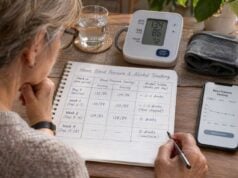
A useful seven-night experiment is to track only four items: bedtime, estimated sleep time, wake time, and how rested you feel in the morning. Do not chase wearable scores night by night. Look for patterns. If you discover that your best days follow 7½ to 8 hours with a consistent wake time, that is more actionable than a single “sleep score.”
Know when sleep problems need medical help
Lifestyle habits help many people, but some sleep problems need diagnosis and treatment. This matters for heart health because disorders such as obstructive sleep apnea can repeatedly lower oxygen, fragment sleep, activate the sympathetic nervous system, and contribute to difficult-to-control hypertension.
Talk with a healthcare professional if you have any of these patterns:
- Loud, habitual snoring with pauses in breathing, choking, or gasping
- Excessive daytime sleepiness despite allowing enough time for sleep
- Morning headaches, dry mouth, or repeatedly waking to urinate along with heavy snoring
- Blood pressure that remains high despite treatment, especially with obesity or snoring
- Difficulty falling asleep or staying asleep at least several nights a week for months
- An urge to move the legs at night that repeatedly delays sleep
- Unusual behaviors during sleep, such as acting out dreams or frequent dangerous movements
The guide to sleep apnea symptoms and blood pressure can help you recognize common warning signs. Sleep apnea cannot be ruled out by a smartwatch or by the fact that you do not remember waking during the night.
For chronic insomnia, cognitive behavioral therapy for insomnia, often called CBT-I, is the preferred structured treatment. It addresses sleep timing, time in bed, conditioned wakefulness, unhelpful sleep beliefs, and relaxation. It is more specific than generic “sleep hygiene.” Ask about in-person or validated digital CBT-I if insomnia persists.
A practical heart-supportive sleep plan is simple: protect a 7- to 9-hour sleep opportunity, wake at a similar time each day, get morning light, move during the day, stop caffeine early, finish heavy meals before bed, keep alcohol low or skip it, and use the last hour for a predictable wind-down. Give those habits a few weeks, not two nights. If sleep remains poor—or snoring, gasping, or daytime sleepiness is prominent—shift from self-help to medical evaluation.
References
- Multidimensional Sleep Health: Definitions and Implications for Cardiometabolic Health: A Scientific Statement From the American Heart Association 2025 (Position Statement)
- Role of Circadian Health in Cardiometabolic Health and Disease Risk: A Scientific Statement From the American Heart Association 2025 (Position Statement)
- Sleep regularity as an important component of sleep hygiene: a systematic review 2025 (Systematic Review)
- Association between sleep duration and hypertension incidence: Systematic review and meta-analysis of cohort studies. 2024 (Systematic Review)
- Effect of Sleep Extension on Objectively Assessed Energy Intake Among Adults With Overweight in Real-life Settings: A Randomized Clinical Trial 2022 (RCT)
- Life’s Essential Eight: Updating and Enhancing the American Heart Association’s Cardiovascular Health Construct 2022 (Position Statement)
Disclaimer
This article provides general education and is not a diagnosis or individualized treatment plan. Persistent insomnia, loud snoring with breathing pauses, severe daytime sleepiness, or difficult-to-control blood pressure should be discussed with a qualified healthcare professional. Do not change prescribed blood-pressure or sleep medicines without medical guidance.