Losing excess weight can improve heart health, but the benefits do not all appear on the same schedule. Blood pressure, blood sugar control, and triglycerides may begin improving within days to weeks, especially when weight loss comes with better food choices and more activity. Waist size and fitness often change over weeks to months. LDL cholesterol, HDL cholesterol, sleep apnea, heart structure, and long-term cardiovascular risk may take longer or respond less predictably.
The most important point is that you do not need to reach a “perfect” weight before your heart benefits. For many people with overweight or obesity, losing about 5% to 10% of starting weight can produce meaningful changes in several cardiovascular risk factors. Some improvements also come from the behaviors used to lose weight, even before the scale moves much. The timeline depends on your starting health, medications, diet pattern, activity level, genetics, and how much weight you lose and keep off.
Table of Contents
- What Can Improve First After Weight Loss?
- Blood Pressure and Blood Sugar Often Respond Early
- Cholesterol and Triglycerides Change at Different Speeds
- Waist Size, Fitness, and Heart Workload Improve Over Months
- What Usually Takes Longer to Improve?
- How Much Weight Loss Is Enough to Help the Heart?
- How to Track Heart-Health Progress While Losing Weight
What Can Improve First After Weight Loss?
Metabolic changes can begin before a large amount of weight is gone. When you eat fewer calories, reduce excess sodium and refined carbohydrates, move more, and lose some body fat, the body can respond quickly. Insulin sensitivity may improve, the liver may produce fewer triglyceride-rich particles, and blood pressure can fall as fluid balance and blood-vessel function change.
A practical timeline looks more like overlapping waves than a fixed schedule:
| Approximate timeframe | Changes that may appear | What affects the response |
|---|---|---|
| Days to a few weeks | Lower blood pressure, improved fasting glucose, less post-meal glucose rise, lower resting workload in some people | Sodium intake, calorie deficit, medications, starting blood pressure and blood sugar |
| Several weeks to 3 months | Lower triglycerides, smaller waist, better walking tolerance, improved insulin resistance | Amount of weight lost, carbohydrate and alcohol intake, exercise, visceral fat loss |
| 3 to 12 months | More substantial blood-pressure changes, better fitness, improved sleep symptoms, changes in LDL and HDL, reduced inflammation | Weight-loss magnitude, diet quality, fitness gains, sleep, smoking, genetics |
| 1 year and beyond | More durable changes in cardiovascular risk, heart structure, mobility, and outcomes when weight loss is maintained | Long-term weight maintenance, risk-factor control, medications, existing cardiovascular disease |
These are not deadlines. A person can see a lower blood pressure in the first two weeks yet little change in LDL cholesterol after three months. Another person may lose inches from the waist while body weight changes slowly because activity preserves or adds lean tissue.
The scale also cannot separate fat loss from fluid shifts. Early weight loss often includes water. For cardiovascular health, reductions in abdominal and visceral fat are especially relevant. Tracking waist circumference as a heart-risk marker can therefore add useful information that body weight alone misses.
Blood Pressure and Blood Sugar Often Respond Early
Blood pressure is one of the cardiovascular measures most likely to improve with modest weight loss. A 2023 systematic review and meta-analysis found meaningful reductions in both systolic and diastolic blood pressure after weight loss in people with overweight or obesity, with larger reductions generally seen after larger decreases in body mass index.
The change may begin early because weight loss affects several systems at once. Less excess body mass reduces the demand on the heart. Improved insulin sensitivity can decrease sodium retention. Better food choices often lower sodium and raise potassium intake. Regular activity improves blood-vessel function and reduces sympathetic nervous system activity.
That means the improvement is not caused by fat loss alone. Someone who adopts a lower-sodium eating pattern can see blood pressure fall before losing much weight. A person starting regular walking may gain another benefit. This is why a heart-focused weight-loss plan should not be judged only by pounds lost.
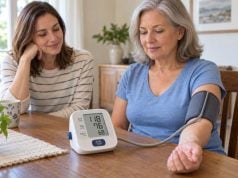
If you already take antihypertensive medicine, measure blood pressure during active weight loss. A dose that was appropriate at your previous weight may become too strong, especially after a larger loss. Lightheadedness, fainting, unusual weakness, or repeated low readings deserve medical review rather than simply stopping medication. If you are learning to interpret readings, a guide to normal blood pressure ranges can help put the numbers in context.
Blood sugar can also improve quickly. Calorie reduction and activity increase the muscles’ ability to use glucose, while loss of liver and visceral fat can improve insulin sensitivity. In people with prediabetes or type 2 diabetes, fasting glucose may improve before a major change in body size is visible. A1C moves more slowly because it reflects average blood sugar over roughly the prior two to three months.
People using insulin or medications that can cause hypoglycemia may need dose adjustments as weight and food intake change. Recurrent shakiness, sweating, confusion, or low glucose readings should be addressed promptly with the prescribing clinician.
Cholesterol and Triglycerides Change at Different Speeds
Triglycerides often improve faster and more consistently than LDL cholesterol. They respond strongly to calorie balance, alcohol intake, refined carbohydrates, blood sugar control, and loss of liver and visceral fat. A person who reduces sugary drinks, cuts back on alcohol, and loses several percent of body weight may see a noticeable triglyceride change within weeks to a few months.
This is especially useful when elevated triglycerides are tied to insulin resistance. Lifestyle changes that improve both conditions tend to reinforce each other. For practical food changes, the principles in lowering triglycerides through diet are often more important than chasing a single “heart healthy” food.
LDL cholesterol is less predictable. Weight loss can lower LDL, but the size and direction of the change depend heavily on the diet used to lose weight. For example, a calorie-restricted pattern rich in vegetables, legumes, whole grains, nuts, fish, and unsaturated fats may lower LDL. In contrast, a very-low-carbohydrate diet high in butter, fatty red meat, coconut oil, or other saturated-fat sources can cause LDL to rise in some people even while weight and triglycerides fall.
HDL cholesterol can be similarly confusing. HDL may stay flat or even dip during active weight loss, then rise after weight stabilizes. That does not mean the weight-loss effort is harming the heart. HDL is only one marker, and cardiovascular risk is not determined by trying to maximize HDL as an isolated goal.
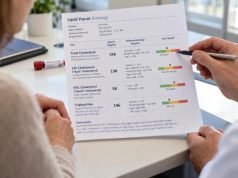
For most people, the lipid panel should be interpreted as a pattern: LDL cholesterol, non-HDL cholesterol, triglycerides, and sometimes apolipoprotein B, along with blood pressure, glucose status, smoking, age, family history, and existing cardiovascular disease. If you want a refresher on these values, LDL, HDL, and triglycerides explains what each part of the lipid panel represents.
A repeat lipid panel is often most useful after enough time has passed for the new eating pattern and weight to stabilize. Clinicians commonly recheck within a few months after a meaningful lifestyle or medication change, but timing should match the individual situation.
Waist Size, Fitness, and Heart Workload Improve Over Months
A smaller waist and better fitness can matter even when total weight loss is modest. Visceral fat—the fat stored around abdominal organs—is metabolically active and is linked with insulin resistance, inflammation, abnormal lipids, and cardiovascular risk. Losing visceral fat can improve risk markers out of proportion to the number on the scale.
Waist circumference usually changes gradually over weeks to months. Measure it under similar conditions, at the same location, and not every day. Monthly measurements are often more informative than frequent checks because normal bloating and measurement error can hide the trend. The health importance of abdominal fat is discussed in more detail in visceral fat and heart disease risk.
Fitness can improve on a different schedule from body weight. Within several weeks of consistent aerobic exercise, many people can walk farther or climb stairs with less breathlessness. Resting heart rate may fall as stroke volume—the amount of blood pumped with each heartbeat—improves. Blood vessels also become better at dilating during activity.
This creates an important distinction: weight loss and cardiorespiratory fitness are related, but they are not the same outcome. A person can become substantially fitter while losing only a small amount of weight. That fitness improvement is still valuable for cardiovascular health.
Walking is a practical starting point because it is easy to scale. A person who is inactive might begin with 10-minute walks and gradually build toward longer sessions, rather than forcing an intense program that is hard to sustain. The goal is regular movement that can be maintained, not punishment for eating. A structured approach to walking for heart health can help with duration and pace.
As body mass decreases, everyday movement also costs less energy. Stairs, carrying groceries, and longer walks may feel easier because the heart and muscles are moving a lighter load. For someone with severe obesity, even a moderate loss can make a noticeable difference in mobility and willingness to be active.
What Usually Takes Longer to Improve?
Long-term cardiovascular risk falls more slowly than day-to-day measurements. A lower blood pressure this month is encouraging, but preventing heart attack, stroke, heart failure, and cardiovascular death depends on maintaining healthier risk factors over years.
Some changes that may require more time include:
- Heart structure and function. Obesity can contribute to enlargement of heart chambers, increased left-ventricular mass, and changes associated with heart failure. These do not reverse in a matter of days. Larger and sustained weight loss may produce remodeling over months to years.
- Sleep apnea burden. Weight loss can reduce obstructive sleep apnea severity, particularly when excess upper-body and abdominal fat contributes to airway obstruction. However, sleep apnea does not always disappear. People using CPAP should not stop it based on weight loss alone; repeat evaluation may be needed.
- Inflammation. Markers of systemic inflammation can improve as adipose tissue decreases, but the pace varies and is influenced by smoking, infections, sleep, chronic disease, and fitness.
- LDL-related artery risk. Atherosclerotic plaque develops over years. Lowering LDL and other risk factors can stabilize plaque and reduce future events, but existing artery disease is not “cleaned out” simply because weight is lower.
- Medication needs. Some people can reduce blood pressure or diabetes medication after sustained weight loss, while others still need treatment because genetics, age, kidney disease, or established cardiovascular disease remain important.
- Event risk. Demonstrating fewer heart attacks or strokes requires long follow-up. In the SELECT randomized trial, adults with established cardiovascular disease and overweight or obesity but no diabetes had fewer major cardiovascular events with semaglutide than with placebo over a mean follow-up of about 40 months.
The SELECT result does not mean every weight-loss method produces the same cardiovascular-event reduction. It shows that, in a specific high-risk population, a treatment that caused substantial weight loss and other cardiometabolic effects reduced major events. Lifestyle change remains foundational, while medications and metabolic surgery may be appropriate for some people based on BMI, health conditions, risk, access, and preference.
Weight regain also matters. Blood pressure, glucose, triglycerides, sleep apnea, and other risk factors can worsen again when substantial weight returns. Maintenance is therefore part of treatment, not a separate phase that begins after the “real” work is finished.
How Much Weight Loss Is Enough to Help the Heart?
Even 5% to 10% of starting body weight can be clinically meaningful. For a person who weighs 220 lb (100 kg), 5% is 11 lb (5 kg), and 10% is 22 lb (10 kg). That range can improve blood pressure, glucose regulation, triglycerides, mobility, and several features of metabolic syndrome.
More weight loss can produce larger benefits in some conditions. Sleep apnea, fatty liver disease, diabetes control, and severe obesity-related limitations may improve more with losses beyond 10%. Modern anti-obesity medications and metabolic surgery can produce substantially greater average losses than lifestyle programs alone in appropriately selected patients.
But percentage lost is only part of the story. Two people who each lose 8% of body weight may see different lipid or blood-pressure responses because their starting risks differ. Someone with very high blood pressure has more room to improve than someone whose blood pressure was already normal. Someone with genetically high LDL may still need cholesterol-lowering medication despite major weight loss.
It is also possible to improve cardiovascular health before reaching a target weight. Consider these parallel goals:
- Lose weight at a pace you can sustain.
- Preserve muscle with adequate protein and resistance training when appropriate.
- Build regular aerobic activity.
- Improve food quality, fiber intake, and unsaturated fat intake.
- Keep sodium reasonable, particularly if blood pressure is high.
- Limit alcohol if triglycerides or blood pressure are elevated.
- Avoid smoking and nicotine.
- Treat sleep apnea, diabetes, hypertension, and high cholesterol rather than waiting for weight loss to fix them.
A smaller, maintained loss is often more valuable than a large short-term loss followed by regain. The best plan is one that improves health behaviors and produces a body-weight trend you can realistically maintain.
How to Track Heart-Health Progress While Losing Weight
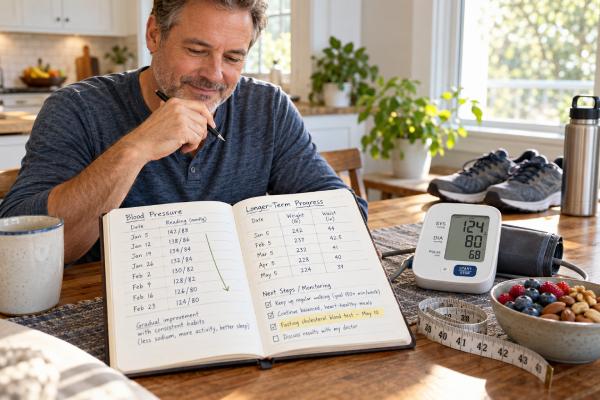
Track several health measures instead of using body weight as the only scorecard. This makes progress easier to see and helps identify when medications or the plan itself need adjustment.
A practical monitoring approach is:
- Check weight under consistent conditions. Daily or several-times-weekly measurements can be useful if they do not create distress. Focus on the weekly or monthly trend rather than single-day changes.
- Measure waist circumference about monthly. Use the same technique each time.
- Monitor home blood pressure if you have hypertension or take blood-pressure medication. Sit quietly for about five minutes first, use a validated upper-arm cuff, and take readings consistently.
- Follow glucose as advised if you have diabetes or prediabetes. Medication needs can change during active weight loss.
- Repeat laboratory tests when clinically appropriate. A lipid panel and A1C are often reassessed after several months, depending on treatment changes and baseline risk.
- Record functional changes. Walking pace, exercise duration, stair tolerance, sleep quality, and energy can reveal improvements the scale cannot.
- Review medications after substantial weight change. Do this with the prescribing clinician rather than adjusting doses on your own.
Seek medical care promptly for chest pressure, fainting, severe shortness of breath, new neurologic symptoms, or a sustained rapid or irregular heartbeat. These should not be written off as “part of losing weight.”
Weight loss can help the heart at several levels, but the sequence is not uniform. Blood pressure, glucose control, and triglycerides often lead the way; waist size and fitness tend to show progress over weeks to months; LDL, sleep apnea, structural heart changes, and long-term event risk may take longer or require additional treatment. The useful question is not only “How much weight have I lost?” but also “Which cardiovascular risks are improving, and which still need direct attention?”
The most useful checkpoint is not whether every marker improves at the same speed. It is whether the overall trend is moving in a healthier direction and the plan is sustainable. A clinician can help interpret mixed results, especially when blood pressure, glucose, lipids, medications, or symptoms change at different rates.
References
- Obesity and Cardiovascular Disease: A Scientific Statement From the American Heart Association 2021 (Position Statement)
- Effect of weight loss on blood pressure changes in overweight patients: A systematic review and meta-analysis 2023 (Systematic Review)
- The Effect of Semaglutide on Blood Pressure in Patients without Diabetes: A Systematic Review and Meta-Analysis 2023 (Systematic Review)
- Semaglutide and Cardiovascular Outcomes in Obesity without Diabetes 2023 (RCT)
- Rethinking weight loss treatments as cardiovascular medicine in obesity, a comprehensive review 2024 (Review)
- Effects of weight control interventions on cardiovascular outcomes: an umbrella review of systematic reviews and meta-analyses 2025 (Systematic Review)
Disclaimer
Weight loss can change blood pressure, blood sugar, and medication needs, so people with cardiovascular disease, diabetes, or prescription treatment should make major weight-loss changes with appropriate medical guidance. Seek urgent care for chest pain, severe shortness of breath, fainting, or other possible heart-attack or stroke symptoms. This article is educational and is not a substitute for individualized medical advice.