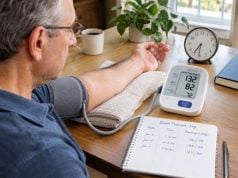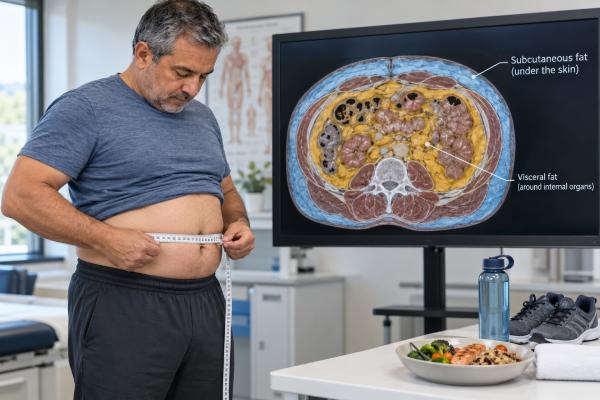
Visceral fat is the fat stored deep inside the abdomen around organs such as the liver and intestines. Unlike the softer fat you can pinch under the skin, visceral fat is metabolically active and is strongly linked with insulin resistance, high triglycerides, high blood pressure, fatty liver disease, and cardiovascular disease. You cannot diagnose visceral fat by appearance alone, and a person can carry too much of it even when their body mass index, or BMI, is not in the obesity range. The most practical clue is a growing waist measurement, especially when it rises over time. The good news is that visceral fat often responds well to the same habits that protect the heart: regular aerobic activity, strength training, a calorie intake that supports gradual fat loss when needed, good sleep, and a diet rich in minimally processed foods. Even modest reductions in abdominal fat can improve several heart-risk markers before a dramatic change is visible on the scale.
Table of Contents
- What Visceral Fat Is and Why It Matters
- Signs You May Have Too Much Visceral Fat
- How Visceral Fat Raises Heart Risk
- How Visceral Fat Is Measured
- How to Reduce Visceral Fat
- Common Mistakes and Myths
- When to Get Medical Help
What Visceral Fat Is and Why It Matters
Visceral adipose tissue sits inside the abdominal cavity. It surrounds internal organs and differs from subcutaneous fat, which lies just under the skin. Both are normal parts of the body, but excess visceral fat is more strongly associated with metabolic and cardiovascular problems.
The reason is not simply that visceral fat takes up space. It behaves like an endocrine and immune organ. As it enlarges, it can release inflammatory signaling molecules and more free fatty acids into the circulation. Those changes can worsen insulin sensitivity, alter blood lipids, and promote the cluster of problems often seen in metabolic syndrome.
Visceral fat also tends to accompany fat stored in other places where large amounts are not ideal, including the liver, around the heart, and within muscle. These are sometimes called ectopic fat depots. Their presence helps explain why two people with the same BMI can have very different cardiometabolic risk.
A useful way to think about visceral fat is as a risk marker, not a disease that exists in isolation. A large amount often travels with other important findings: elevated blood pressure, high fasting glucose, high triglycerides, low HDL cholesterol, fatty liver, sleep apnea, or reduced cardiorespiratory fitness.
Body weight alone can therefore miss part of the picture. A person may have a BMI in the “normal” range but still have central obesity, while another person with a higher BMI may carry proportionally less visceral fat. That is why waist measurement can add useful information to weight and BMI.
Signs You May Have Too Much Visceral Fat
There is no symptom that proves you have excess visceral fat. It does not usually cause pain, and you cannot reliably tell how much is present by pressing on the abdomen. Still, several patterns can raise suspicion.
The most useful everyday sign is increasing waist size. A waist that expands over months or years often reflects a rise in abdominal fat, although it cannot distinguish visceral from subcutaneous fat. Tracking waist circumference and heart risk is often more informative than relying on scale weight alone.
Other clues include:
- A waist-to-height ratio of 0.5 or higher, meaning the waist is at least half of height.
- High triglycerides or low HDL cholesterol.
- Prediabetes, type 2 diabetes, or rising fasting glucose.
- High blood pressure.
- Fatty liver disease.
- Snoring, daytime sleepiness, or diagnosed sleep apnea.
- A gradual decline in fitness or daily activity.
These are not specific to visceral fat, but they commonly occur together because they share underlying metabolic pathways.
You can have excess visceral fat without obesity
One common misconception is that visceral fat is only a concern for people with a very high body weight. In reality, fat distribution matters. Some people store a larger share of excess energy around the abdomen, while others store more under the skin around the hips and thighs.
Age, sex hormones, genetics, ethnicity, sleep, activity level, diet, alcohol intake, and menopause can all influence where fat is stored. After menopause, for example, fat distribution often shifts toward the abdomen even when body weight changes little.
A normal BMI should not be treated as a guarantee of low cardiometabolic risk. If waist size is high or blood pressure, glucose, or lipids are abnormal, those findings deserve attention regardless of BMI.
How Visceral Fat Raises Heart Risk
Excess visceral fat is associated with cardiovascular disease through several overlapping pathways. The risk comes less from one single mechanism and more from the way abdominal fat can push multiple risk factors in an unfavorable direction at the same time.
Insulin resistance and higher blood sugar
Visceral fat releases fatty acids into the portal circulation, which carries blood directly to the liver. When the liver receives a large fatty-acid load, it may become more insulin resistant and produce more glucose and triglyceride-rich particles. Over time, this can contribute to prediabetes and type 2 diabetes.
Chronically high glucose and insulin resistance can damage blood vessels, promote inflammation, and increase cardiovascular risk. That is why improving blood sugar control for heart health matters even before diabetes develops.
Higher triglycerides and unfavorable lipoproteins
The liver can package excess fat into very-low-density lipoprotein particles, or VLDL. This can raise blood triglycerides and contribute to a more atherogenic lipid profile. In some people, LDL cholesterol may not look dramatically elevated while ApoB or the number of atherogenic particles remains high.
Higher blood pressure
Visceral obesity is associated with increased sympathetic nervous system activity, changes in kidney sodium handling, sleep apnea, and hormonal signaling that can raise blood pressure. High blood pressure then adds mechanical stress to artery walls and increases the workload on the heart.
Chronic low-grade inflammation
Healthy fat tissue stores energy and communicates with the rest of the body. When visceral fat becomes enlarged and dysfunctional, its inflammatory profile changes. Higher levels of inflammatory signaling can impair blood-vessel function and may contribute to atherosclerosis.
Fat around the heart and liver
Abdominal visceral fat often accompanies fat around the heart and within the liver. These depots are associated with cardiometabolic disease, though they are not routinely measured in healthy people. The overall pattern is one reason central obesity can carry risk independent of BMI.
The practical point is that visceral fat is not just a cosmetic concern. It is a marker of metabolic stress. Reducing it can improve blood pressure, glucose regulation, triglycerides, fitness, and inflammatory burden even if the scale moves slowly.
How Visceral Fat Is Measured
CT and MRI can directly quantify visceral fat and are commonly used in research. They are not usually needed for routine weight management because they are expensive, and CT exposes a person to radiation. A scan performed for another medical reason may incidentally show visceral or liver fat, but dedicated imaging is rarely necessary just to decide whether lifestyle changes are worthwhile.
Waist circumference is the most practical screening tool
A tape measure cannot see the fat surrounding the organs, but waist size correlates with central adiposity and adds risk information beyond BMI. Measure at the same anatomical point each time, with the tape horizontal and snug but not compressing the skin. A common clinical method is to measure midway between the bottom of the ribs and the top of the hip bones after a normal exhale.
Common U.S. clinical thresholds associated with higher cardiometabolic risk are about 40 inches, or 102 cm, in men and 35 inches, or 88 cm, in women. These cut points are not equally appropriate for every ethnic group, and risk can increase below them. Some Asian populations use lower waist thresholds.
Waist-to-height ratio can be even easier to interpret across groups. Divide waist by height using the same units. A ratio under 0.5 is a useful general target for many adults. A ratio from 0.5 to 0.59 suggests increased central adiposity, while 0.6 or higher suggests greater risk.
Other tests help define the risk that comes with visceral fat
A clinician may also check:
- Blood pressure.
- Fasting glucose and A1C.
- Triglycerides, HDL, LDL, and sometimes ApoB.
- Liver enzymes when fatty liver is a concern.
- Sleep apnea risk.
- Family history and smoking status.
No single result tells the whole story. A person with a larger waist but excellent blood pressure, glucose, and fitness may have a different near-term risk profile from someone with the same waist and multiple metabolic abnormalities.
How to Reduce Visceral Fat
Visceral fat usually responds to sustained energy balance and physical activity. You do not need a special “belly-fat” food or supplement, and you cannot selectively burn fat from the abdomen with crunches. The goal is to improve whole-body metabolism while creating conditions that gradually reduce excess fat.
Build a weekly aerobic exercise base
Regular aerobic exercise is one of the most reliable ways to reduce visceral fat. Research shows benefits from moderate-to-vigorous aerobic activity, resistance training, combined programs, and interval training. The exact best format depends on fitness, medical history, and what you can maintain.
A practical target is at least 150 minutes per week of moderate-intensity aerobic activity, such as brisk walking, cycling, or swimming. People who already meet that level may gain more from gradually increasing time or intensity if it is safe. If you are starting from little activity, even 10- to 15-minute sessions are useful.
For a simple entry point, use walking for heart health and slowly increase pace, duration, or hills as fitness improves.
Add strength training two or more days per week
Resistance training helps preserve or build muscle while fat is lost. It also improves glucose handling and physical function. Use major movement patterns such as squats or sit-to-stands, rows, presses, hinges, carries, and step-ups. Beginners can start with body weight, bands, machines, or light free weights.
Strength training alone may not reduce visceral fat as much as a larger dose of aerobic exercise, but it supports long-term weight management and cardiometabolic health. Combining both forms is often practical and well rounded.
Use a modest calorie deficit if weight loss is appropriate
For many people with excess abdominal fat, gradual weight loss is the most direct route to reducing it. A moderate calorie deficit is usually easier to sustain than an aggressive one. You do not need to remove an entire food group unless there is a medical or personal reason.
Build meals around vegetables, fruit, legumes, whole grains, nuts, seeds, fish, lean or minimally processed protein sources, and unsaturated fats. This overlaps closely with a Mediterranean-style eating pattern.
A useful plate pattern is:
- About half vegetables or fruit.
- About one quarter high-fiber carbohydrate, such as beans, oats, barley, brown rice, or potatoes.
- About one quarter protein.
- A modest portion of unsaturated fat, such as olive oil, nuts, seeds, or avocado.
Liquid calories, alcohol, highly processed snacks, and oversized restaurant portions can make a calorie deficit difficult without adding much fullness. Reducing them often produces more benefit than trying to identify a single “fat-burning” ingredient.
Prioritize sleep and screen for sleep apnea
Short or poor-quality sleep can increase appetite, worsen insulin sensitivity, and make exercise recovery harder. Aim for a regular sleep schedule and enough time in bed to obtain roughly 7 to 9 hours of sleep for most adults.
If loud snoring, witnessed breathing pauses, morning headaches, or excessive daytime sleepiness are present, ask about sleep apnea. Treating sleep apnea can improve daytime function and may support blood pressure and weight-management efforts.
Limit alcohol if waist size and triglycerides are rising
Alcohol adds calories and can raise triglycerides in susceptible people. It may also increase appetite and reduce sleep quality. If you drink, reducing frequency or serving size can be a high-yield step, especially when abdominal weight gain and elevated triglycerides occur together.
Track more than body weight
A scale can miss meaningful changes. Exercise may reduce visceral fat while preserving muscle, so total weight may change less than expected. Track waist circumference every few weeks under similar conditions, plus blood pressure, activity, sleep, and relevant lab values.
A slow reduction in waist size with stable or improving strength is often a better sign than rapid weight loss that is difficult to maintain. The broader goal is better cardiometabolic health, not the smallest possible number on a scale.
Common Mistakes and Myths
Several common approaches waste effort or create unrealistic expectations.
“Spot reduction” does not work. Ab exercises strengthen the abdominal muscles but do not selectively remove visceral or subcutaneous belly fat. Keep core work if you enjoy it, but pair it with whole-body activity and an eating pattern that supports fat loss.
Sweating more does not mean you burned more abdominal fat. Sauna suits, waist trainers, and excessive heat mainly change water balance. Temporary drops in scale weight return with rehydration.
A supplement cannot substitute for energy balance and exercise. Products marketed as cortisol blockers, thermogenic fat burners, detoxes, or “visceral fat reducers” often rely on weak evidence. Some stimulants can raise heart rate or blood pressure.
Rapid weight loss is not automatically better. Aggressive dieting can increase hunger, reduce training quality, and cause loss of lean tissue. A slower plan that can be maintained for months usually produces more durable changes.
BMI and waist are not competitors. BMI is useful for classifying overall body size; waist adds information about central fat distribution. Using both gives a more complete picture than relying on either alone.
Fitness still matters. Better cardiorespiratory fitness is linked with lower cardiovascular risk across body sizes. Weight loss and fitness are complementary, not mutually exclusive. The comparison between fitness and weight loss for heart risk is therefore best viewed as “both, when possible.”
When to Get Medical Help
Talk with a healthcare professional if your waist is increasing quickly, you have a strong family history of early cardiovascular disease, or you have high blood pressure, abnormal cholesterol, prediabetes, diabetes, fatty liver disease, or possible sleep apnea. These conditions may need treatment in addition to lifestyle changes.
Medical evaluation is also important before a major increase in exercise if you have known heart disease or symptoms such as chest pressure, fainting, unexplained shortness of breath, or palpitations with exertion. New chest pain, severe shortness of breath, or symptoms suggesting a heart attack or stroke require urgent emergency care.
For people with obesity and significant cardiometabolic risk, evidence-based obesity treatment may include nutrition support, structured behavioral treatment, prescription weight-management medication, or bariatric surgery. These treatments are not shortcuts; they are medical tools that can be appropriate when lifestyle changes alone are not enough.
The most useful starting point is simple: measure your waist, know your blood pressure and basic metabolic labs, move regularly, and focus on habits you can repeat. Visceral fat is strongly tied to heart risk, but it is also a fat depot that often responds meaningfully to consistent changes in activity, food, sleep, and body weight.
References
- The association between the visceral to subcutaneous abdominal fat ratio and the risk of cardiovascular diseases: a systematic review 2024 (Systematic Review)
- Effects of various exercise types on visceral adipose tissue in individuals with overweight and obesity: A systematic review and network meta-analysis of 84 randomized controlled trials 2024 (Systematic Review)
- Dose–response effects of exercise and caloric restriction on visceral adiposity in overweight and obese adults: a systematic review and meta-analysis of randomised controlled trials 2023 (Systematic Review)
- Visceral adipose tissue and residual cardiovascular risk: a pathological link and new therapeutic options 2023 (Review)
- Obesity and Cardiovascular Disease: A Scientific Statement From the American Heart Association 2021 (Position Statement)
Disclaimer
This article is for general education and is not a diagnosis or individualized treatment plan. Waist size and body composition should be interpreted alongside blood pressure, laboratory results, medical history, medications, and other risk factors. Seek urgent care for chest pain, severe shortness of breath, fainting, or stroke-like symptoms.