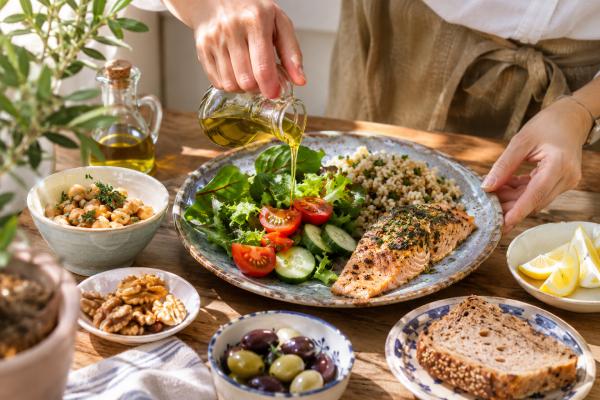
The Mediterranean diet is one of the best-studied eating patterns for cardiovascular health because it focuses on foods that improve several risk factors at once: vegetables, fruit, beans, whole grains, nuts, seeds, fish, and extra-virgin olive oil. It is not a rigid menu and it does not require foods from one country. The core idea is to make minimally processed plant foods the base of most meals, use unsaturated fats in place of butter and other saturated fats, and eat red and processed meats less often. Large trials and systematic reviews link Mediterranean-style eating with fewer cardiovascular events, including heart attack and stroke, especially when people stick with the pattern over time. You do not need to change every meal overnight or drink wine to follow it. A practical start is to upgrade one meal at a time, build a repeatable grocery list, and focus on substitutions that you can keep doing for years.
Table of Contents
- What the Mediterranean diet actually is
- How it supports heart health
- What to eat most often
- Foods to limit without making the diet rigid
- How to start this week
- Simple meals, portions, and grocery strategy
- Common mistakes and who needs adjustments
What the Mediterranean diet actually is
The Mediterranean diet is an eating pattern inspired by traditional diets in countries around the Mediterranean Sea. Modern research versions vary, but they share the same foundation: mostly plant foods, olive oil as the main added fat, regular fish and legumes, moderate amounts of dairy and poultry, and less red meat, processed meat, sweets, and highly refined food.
This is not a low-fat diet. It changes the type of fat. Instead of getting a large share of calories from butter, fatty processed meats, shortening, and coconut-heavy packaged foods, the pattern emphasizes monounsaturated and polyunsaturated fats from olive oil, nuts, seeds, and fish.
It is also not a low-carbohydrate diet. Whole grains, beans, lentils, fruit, and starchy vegetables can all fit. The quality of the carbohydrate matters more than eliminating the entire category.
A Mediterranean plate often looks like this:
- about half the plate vegetables or vegetables plus fruit;
- about one-quarter whole grains or another high-fiber starch;
- about one-quarter beans, lentils, fish, poultry, eggs, or another protein;
- olive oil, nuts, seeds, herbs, spices, and other minimally processed foods for flavor.
There is no requirement to count points or buy special “Mediterranean” products. In fact, many packaged foods marketed with that label do not resemble the pattern used in cardiovascular studies.
Wine is optional, not a requirement. If you do not drink alcohol, there is no heart-health reason to start. If you do drink, less is generally safer, and some people should avoid alcohol entirely because of medications, pregnancy, liver disease, addiction risk, arrhythmias, or other health concerns.
How it supports heart health
The Mediterranean diet helps the heart through several pathways rather than one magic ingredient. That is a major reason it performs well in long-term studies.
It can improve cholesterol quality
Replacing saturated fat with unsaturated fat can lower LDL cholesterol. Soluble fiber from oats, barley, beans, lentils, fruit, and some vegetables can further reduce LDL by limiting cholesterol absorption and increasing bile acid loss. Nuts and seeds add unsaturated fats, plant sterols, and fiber.
If LDL is elevated, diet may be one part of the plan rather than the whole treatment. People with very high LDL, familial hypercholesterolemia, diabetes, or established cardiovascular disease may still need medication even when they eat well.
It supports healthier blood pressure
Vegetables, fruit, beans, dairy, nuts, and seeds supply potassium, magnesium, and other nutrients involved in blood-pressure regulation. Minimally processed foods also make it easier to reduce excess sodium. The result can complement other evidence-based blood-pressure strategies.
It improves the overall dietary package
A Mediterranean pattern naturally reduces many foods that drive excess calories, refined carbohydrate intake, and sodium: sugary drinks, processed meats, deep-fried fast food, sweets, and highly processed snacks. At the same time, it increases fiber and food volume, which can improve fullness and support weight management.
Large cardiovascular trials strengthen the case beyond risk-factor changes. In the Spanish PREDIMED trial, Mediterranean diets supplemented with extra-virgin olive oil or nuts reduced major cardiovascular events compared with a control diet. A recent systematic review of randomized trials also found fewer cardiovascular events with Mediterranean-style interventions, although the exact effect size varies across studies and populations.
For people who already have coronary heart disease, the CORDIOPREV trial compared a Mediterranean diet with a low-fat diet over about seven years. The Mediterranean group experienced fewer major cardiovascular events. That does not mean every person must choose one exact menu, but it supports the idea that food pattern quality matters even after heart disease is established.
What to eat most often
A useful way to follow the Mediterranean diet is to think in food groups rather than strict daily rules.
Vegetables and fruit
Make vegetables a major part of lunch and dinner, and use fruit as a snack or dessert. Fresh, frozen, and no-salt-added canned vegetables all count. Aim for variety over the week: leafy greens, tomatoes, peppers, carrots, broccoli, cabbage, eggplant, zucchini, onions, and whatever is affordable and available.
The best vegetables are the ones you will eat consistently. A tray of frozen mixed vegetables used four times a week can be more valuable than expensive produce that spoils in the refrigerator. For practical ideas, a guide to vegetables for heart health can help you rotate choices.
Beans and lentils
Beans, chickpeas, and lentils provide fiber, plant protein, potassium, magnesium, and very little saturated fat. Use them in soups, grain bowls, salads, pasta sauces, or as a partial replacement for ground meat. Even two or three bean-based meals per week can shift the overall diet in a better direction.
If canned beans are easiest, rinse and drain them to remove some sodium. A practical guide to beans and lentils for heart health can help with serving sizes and meal ideas.
Whole grains
Choose oats, barley, brown rice, bulgur, farro, quinoa, whole-grain bread, and whole-wheat pasta more often than refined grains. Look for “whole” grain near the start of the ingredient list and compare fiber amounts when choosing packaged products.
Whole grains are not automatically low-calorie, but they generally provide more fiber and micronutrients than refined versions. The goal is to improve quality, not to make portions unlimited.
Extra-virgin olive oil
Use olive oil as the main cooking and dressing fat when practical. It works for sautéing, roasting, marinades, vinaigrettes, and finishing cooked vegetables. Extra-virgin olive oil contains mostly monounsaturated fat plus polyphenols.
A tablespoon contains roughly 120 calories, so pouring freely can work against weight goals. Use enough to make healthy foods satisfying, not so much that every meal becomes calorie-dense. Learn more about extra-virgin olive oil and heart health if you are deciding how to use it.
Nuts and seeds
A small handful of unsalted nuts makes a convenient snack, and seeds can go into yogurt, oatmeal, salads, or soups. Walnuts, almonds, pistachios, peanuts, sunflower seeds, chia, and flax can all fit. Choose unsalted or lightly salted versions when blood pressure is a concern.
Fish and seafood
Fish provides protein, and fatty fish such as salmon, sardines, trout, herring, and mackerel provide long-chain omega-3 fats. A common practical target is fish about twice a week, with at least one oily-fish meal when available and appropriate.
Poultry, eggs, yogurt, and cheese can also fit in moderate amounts. The Mediterranean diet does not require avoiding all animal foods.
Foods to limit without making the diet rigid
The diet works best as a pattern, not as a list of forbidden foods. Still, some foods should become less frequent because they tend to add saturated fat, sodium, refined starch, or added sugar without much fiber.
Processed meats such as bacon, sausage, salami, and many deli meats are a high-priority category to reduce. They often combine sodium, saturated fat, and preservatives in a food that is easy to overeat.
Red meat can fit occasionally, but it should not be the default protein at most lunches and dinners. When you eat it, choose a reasonable portion and pair it with vegetables, beans, or whole grains rather than making meat the entire meal.
Butter, cream, and large amounts of high-fat cheese can push saturated fat intake up quickly. You do not need to eliminate cheese, but use it as a flavoring rather than the main protein in every meal.
Sweets, pastries, sweetened drinks, and refined snacks are better treated as occasional foods. A Mediterranean diet built around olive-oil cookies, white bread, sweetened yogurt, and packaged crackers is Mediterranean in name only.
One of the most useful habits is reading labels for sodium, saturated fat, added sugars, and fiber. A guide to reading nutrition labels for heart health can make packaged-food decisions much faster.
Do not make perfection the goal. If you eat pizza on Friday, your week is not “ruined.” The more useful question is what your usual breakfast, lunch, dinner, snacks, and drinks look like across months.
How to start this week
Starting with substitutions is easier than rebuilding your entire diet overnight. Pick two or three changes that affect foods you eat often.
1. Change the cooking fat
Use olive oil instead of butter for most sautéing, roasting, and salad dressings. If you currently cook with a lot of butter, this single swap can reduce saturated fat without changing the entire meal.
2. Add one plant food to meals you already eat
Put berries or a banana on oatmeal. Add tomatoes and greens to a sandwich. Add frozen vegetables to pasta. Put chickpeas into a salad. Small additions can make the pattern feel familiar instead of restrictive.
3. Replace two meat-centered meals each week
Try lentil soup, bean chili, chickpea pasta with vegetables, or a grain bowl with beans and tahini. You do not need to become vegetarian. The goal is simply to make plant proteins routine.
4. Make fish easy
Keep frozen salmon, canned sardines, canned salmon, or tuna available if you eat seafood. Pair it with frozen vegetables and a whole grain for a fast meal.
5. Upgrade snacks
Replace some chips, cookies, or candy with fruit, unsalted nuts, plain yogurt with fruit, vegetables with hummus, or a small whole-grain snack. If you need more ideas, heart-healthy snack options can help.
6. Stop relying on willpower at 7 p.m.
Plan at least three dinners before shopping. If healthy ingredients are present but there is no meal plan, takeout often wins. A short repeatable dinner list is more useful than an ambitious recipe collection.
Simple meals, portions, and grocery strategy
Mediterranean eating can be inexpensive and simple if you build meals from repeatable components.
| Meal | Simple Mediterranean-style option | Heart-health strength |
|---|---|---|
| Breakfast | Oatmeal with berries, walnuts, and plain yogurt | Whole grains, fiber, nuts, fruit |
| Lunch | Lentil soup, whole-grain bread, side salad with olive oil | Legumes, vegetables, unsaturated fat |
| Dinner | Salmon, roasted vegetables, and barley | Omega-3 fats, vegetables, whole grains |
| Fast dinner | Whole-wheat pasta with white beans, spinach, tomatoes, and olive oil | Fiber, legumes, vegetables |
| Snack | Apple with a small handful of almonds | Fruit, unsaturated fat, fiber |
Portions still matter, especially for olive oil, nuts, cheese, bread, and pasta. These foods can fit while still contributing substantial calories. If weight loss is a goal, keep vegetables generous, choose a clear protein portion, and measure calorie-dense fats at first until you can estimate them accurately.
A simple grocery list might include:
- two or three vegetables you will cook;
- two fruits you will actually eat;
- one leafy green or salad mix;
- canned or dry beans and lentils;
- oats plus one or two other whole grains;
- whole-grain bread or pasta;
- extra-virgin olive oil;
- unsalted nuts or seeds;
- fish or seafood for one or two meals;
- eggs, plain yogurt, or poultry as additional proteins;
- herbs, spices, lemon, garlic, and vinegar for flavor.
Frozen vegetables and fruit can reduce cost and food waste. Canned fish and beans can make the pattern easier on busy weeks. The nutritional pattern matters more than whether the ingredients look “authentically Mediterranean.”
If weekly planning is your main barrier, Mediterranean meal prep can help turn these foods into ready-to-assemble lunches and dinners.
How to tell whether the pattern is actually changing your diet
You do not need a Mediterranean-diet score to know whether you are moving in the right direction. Look at the foods that show up repeatedly over a normal week. If vegetables are present at most lunches and dinners, beans or lentils appear several times, whole grains replace many refined grains, fish or other lean proteins replace some red meat, and olive oil or nuts replace some saturated-fat sources, the pattern is taking shape.
The reverse is also useful. Count how often processed meat, fast food, sugary drinks, pastries, and heavily salted packaged meals appear. The goal is not zero. A meaningful improvement is often a shift from “most days” to “occasionally.” That kind of change is easier to sustain than a short period of perfect eating followed by a return to old habits.
Clinical markers can give feedback too. Blood pressure can change within weeks when sodium and food quality improve. LDL cholesterol may change within several weeks to a few months, depending on the size of the dietary shift and whether weight changes. If you are using diet to address a specific risk factor, ask your clinician when to repeat the relevant test rather than checking too soon.
Keep the outcome in perspective: a Mediterranean diet is not successful only if the scale drops. Better blood pressure, lower LDL, improved glucose control, more fiber, greater meal satisfaction, and less dependence on ultra-processed food are all valuable results.
Common mistakes and who needs adjustments
The most common mistake is adding olive oil and nuts without reducing less-helpful foods. If you keep the same amount of butter, processed meat, sweets, and refined snacks and simply add several tablespoons of oil and handfuls of nuts, calories can rise sharply. The diet works through replacement, not just addition.
Another mistake is assuming “Mediterranean” means unlimited bread, pasta, cheese, and restaurant food. Restaurant Mediterranean meals can be excellent, but they can also be high in sodium, refined grains, and calories. Look at the whole plate.
People with certain health conditions may need modifications. If you have chronic kidney disease, you may need individualized guidance on potassium, phosphorus, protein, or sodium. If you take warfarin, you usually do not need to avoid leafy greens, but you should keep vitamin K intake reasonably consistent and follow your anticoagulation team’s advice. People with food allergies, celiac disease, diabetes, or gastrointestinal conditions can still use Mediterranean principles with appropriate substitutions.
If you have high blood pressure, combining Mediterranean principles with the structured sodium and produce goals of the DASH pattern may be useful. A comparison of the Mediterranean and DASH diets can help you decide which framework fits your main goal.
Finally, remember that diet is one part of cardiovascular prevention. Physical activity, sleep, smoking status, blood pressure treatment, cholesterol management, and prescribed medicines still matter. A strong diet can lower risk, but it should not be used as a reason to stop medication without medical guidance.
The best Mediterranean diet is the version you can sustain. If most meals contain vegetables or fruit, high-fiber plant foods, a sensible protein source, and unsaturated fats, while processed meat and heavily refined foods become occasional choices, you are applying the pattern in the way that matters most.
References
- Effect of Mediterranean Diets on Cardiovascular Risk Factors and Disease in Overweight and Obese Adults: A Systematic Review and Meta-Analysis of Randomized Controlled Trials 2025 (Systematic Review)
- Long-term impact of mediterranean diet on cardiovascular disease prevention: A systematic review and meta-analysis of randomized controlled trials 2024 (Systematic Review)
- Mediterranean Diet for Primary and Secondary Prevention of Cardiovascular Disease and Mortality: An Updated Systematic Review 2023 (Systematic Review)
- Long-term secondary prevention of cardiovascular disease with a Mediterranean diet and a low-fat diet (CORDIOPREV): a randomised controlled trial. 2022 (RCT)
- Popular Dietary Patterns: Alignment With American Heart Association 2021 Dietary Guidance: A Scientific Statement From the American Heart Association 2023 (Scientific Statement)
- What is the Mediterranean Diet? 2024
Disclaimer
This article provides general nutrition education and is not a substitute for individualized medical or dietetic advice. If you have heart disease, kidney disease, diabetes, food allergies, take anticoagulants, or need a therapeutic diet, discuss major dietary changes with your healthcare team. Do not stop prescribed cardiovascular medicines because of dietary improvements without medical guidance.