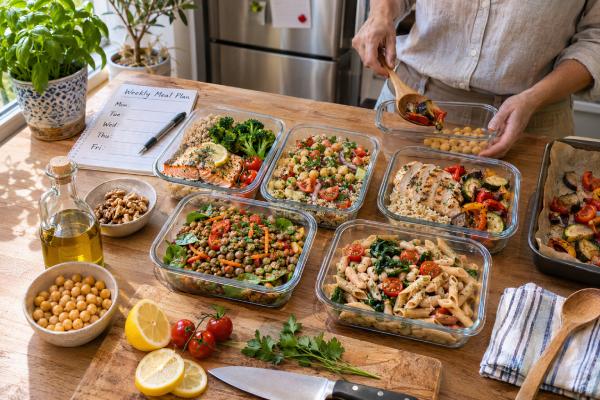
Mediterranean meal prep works best when you prepare flexible building blocks instead of seven identical containers. A few hours of simple cooking can give you vegetables, whole grains, beans, fish or another protein, and an olive-oil-based sauce that turn into different lunches and dinners throughout the week. That approach supports heart health because it makes high-fiber foods and unsaturated fats the easy choice when you are hungry and short on time. It can also reduce reliance on takeout, processed meats, salty convenience foods, and oversized restaurant portions. The plan does not require complicated recipes or expensive ingredients. You can use canned beans, frozen vegetables, whole grains, plain yogurt, eggs, and canned or frozen fish alongside fresh foods. The key is to prep only what will stay safe and appealing, refrigerate cooked foods promptly, and freeze later-week portions when needed. The weekly plan below gives you a repeatable structure that you can adjust for your schedule, budget, and calorie needs.
Table of Contents
- The core meal-prep formula
- A heart-healthy grocery list
- Your 90-minute prep session
- A simple seven-day meal plan
- How to control sodium, portions, and saturated fat
- Food safety, storage, and reheating
- How to make the plan cheaper and easier
The core meal-prep formula
A useful Mediterranean prep system has five parts: vegetables, a high-fiber carbohydrate, a protein, an unsaturated-fat source, and flavor. You can mix these parts in bowls, salads, wraps, soups, and plated meals without following a new recipe each day.
For example, one batch of roasted peppers, zucchini, onions, and broccoli can go into a grain bowl on Monday, a whole-wheat pasta dish on Tuesday, and an egg-and-vegetable dinner on Wednesday. A pot of lentils can become lunch soup, salad topping, or a side dish. That flexibility prevents meal-prep fatigue.
A simple plate template is:
- half vegetables or vegetables plus fruit;
- one-quarter whole grains or another high-fiber starch;
- one-quarter beans, lentils, fish, poultry, eggs, or another protein;
- olive oil, nuts, seeds, avocado, or another unsaturated-fat source in a sensible amount.
This reflects the principles of a Mediterranean diet for heart health without requiring exact recipes.
Prep components, not finished meals
Finished meals are useful for one or two busy days, but components offer more variety. Prepare three or four core items and keep a few “instant” foods available:
- cooked whole grain;
- roasted or steamed vegetables;
- bean or lentil dish;
- olive-oil dressing;
- washed fruit;
- plain yogurt;
- canned low-sodium beans or fish;
- whole-grain bread or wraps.
Then add freshly cooked eggs, fish, or poultry on days when you have 10–20 minutes. This reduces the amount of cooked protein sitting in the refrigerator all week.
A heart-healthy grocery list
A one-week grocery list for one or two adults can be simple. Scale quantities to household size and appetite rather than treating these amounts as a prescription.
Produce
Choose five to seven vegetables that can work in several meals. Good prep-friendly choices include broccoli, peppers, carrots, zucchini, onions, tomatoes, spinach, cabbage, and salad greens. Add three or four fruits such as apples, oranges, berries, grapes, or bananas.
Frozen vegetables are excellent backups and may be cheaper. They are especially useful for later in the week because they do not spoil in the refrigerator.
Whole grains and starches
Pick two: oats, barley, brown rice, bulgur, farro, quinoa, whole-wheat pasta, or whole-grain bread. Keeping the choice narrow makes prep faster.
If you want to understand why these foods matter, whole grains support heart health through fiber and nutrient density, particularly when they replace refined grains.
Proteins
Use a mix of plant and animal options:
- two cans of no-salt-added or low-sodium beans;
- dry or canned lentils;
- fish for one or two meals;
- eggs;
- plain yogurt;
- optional poultry or tofu.
Beans and lentils are especially useful because they are inexpensive, high in fiber, and easy to batch-cook. Rinsing canned beans removes some sodium.
Healthy fats and flavor
Keep extra-virgin olive oil, unsalted nuts, seeds, lemon, vinegar, garlic, and several dried herbs or spices on hand. A small amount of feta or Parmesan can add strong flavor, but cheese can also add sodium and saturated fat quickly.
If sodium is a priority, choose unsalted nuts, compare bread labels, and look for canned products labeled no-salt-added or lower sodium.
Your 90-minute prep session
You can prepare most of the week’s base foods in about 90 minutes if tasks overlap. The goal is not to cook every meal completely.
1. Start the grain and lentils
Cook one whole grain, such as barley or brown rice, according to package directions. At the same time, simmer lentils or prepare a quick lentil soup. If using canned lentils or beans, rinse them and skip this cooking step.
2. Roast two trays of vegetables
Cut sturdy vegetables into similar-size pieces, toss with a measured amount of olive oil, and season with garlic, paprika, oregano, pepper, or cumin. Roast until tender and browned. Keep salad greens and delicate vegetables raw for later.
A large batch should be enough for several meals, but do not automatically drown the vegetables in oil. One to two tablespoons spread across a tray may be enough, depending on the amount and cooking method.
3. Make one sauce or dressing
Whisk olive oil with lemon juice or vinegar, garlic, herbs, and pepper. Store it separately so salads stay crisp. If you want a creamy sauce, combine plain yogurt, lemon, garlic, and herbs.
4. Prepare grab-and-go breakfasts
Portion oats into jars or containers with cinnamon and nuts, then add milk or yogurt and fruit when ready to eat. Or boil several eggs and pair them with whole-grain toast and fruit.
5. Portion only the next three to four days
Put grain, vegetables, and lentils into meal-size containers for the early week. Freeze extra grain or lentils for later days rather than keeping everything refrigerated until the weekend.
This approach works well because USDA guidance generally recommends using cooked leftovers within three to four days when refrigerated. Freezing later-week portions protects both safety and quality.
Suggested batch sizes for a small household
If quantities are the part that slows you down, use a simple starting point for one adult who wants several prepared lunches and dinners. Cook about 2 cups of dry whole grain, which usually yields several cups cooked depending on the grain. Prepare 3 to 4 cups of cooked beans or lentils, or use several low-sodium cans. Roast two sheet pans of vegetables, aiming for roughly 8 to 10 cups before cooking. Make about half a cup of dressing and keep it separate.
Those amounts are only a planning guide. A larger, more active person may need more food, while someone with a smaller appetite may need less. Two adults can often double the protein and vegetables but may not need to double every condiment or dressing. The best batch size is the amount you can safely use or freeze before quality drops.
For fish or poultry, prep smaller quantities. Many people prefer to cook two portions at a time because seafood can dry out after repeated reheating. Another option is to freeze individual raw portions and thaw them in the refrigerator the night before cooking. That gives you the convenience of planning without keeping cooked protein for too long.
Use a two-zone refrigerator system
Put early-week foods at eye level and later-week frozen portions together in one freezer section. Keep a small “use first” bin for cut vegetables, opened yogurt, cooked grains, and other foods that need attention. This simple setup reduces food waste because the ingredients most likely to spoil are visible rather than buried behind condiments.
On Wednesday or Thursday, do a five-minute reset. Move one frozen meal to the refrigerator to thaw, check the produce drawer, and decide what must be eaten next. If greens are wilting, turn them into a cooked dish. If fruit is getting soft, add it to oatmeal or yogurt. Meal prep works better when it includes this midweek adjustment instead of assuming Sunday’s plan will survive unchanged for seven days.
A simple seven-day meal plan
This plan reuses ingredients without making every meal identical. Adjust portions based on hunger, body size, activity, and medical goals.
| Day | Lunch | Dinner |
|---|---|---|
| Monday | Barley bowl with lentils, roasted vegetables, greens, and lemon-olive oil dressing | Baked salmon, broccoli, and brown rice |
| Tuesday | Lentil soup with whole-grain toast and fruit | Whole-wheat pasta with white beans, tomatoes, spinach, and olive oil |
| Wednesday | Greek-style bean salad with cucumber, tomato, greens, and a small amount of feta | Vegetable omelet with whole-grain toast and side salad |
| Thursday | Thawed grain-and-lentil bowl with fresh greens and yogurt-herb sauce | Chicken or tofu with roasted vegetables and barley |
| Friday | Tuna-and-white-bean salad with whole-grain crackers or bread | Sheet-pan fish with vegetables and potatoes |
| Saturday | Hummus and vegetable whole-grain wrap with fruit | Bean chili or vegetable stew with a whole grain |
| Sunday | Leftover soup or salad assembled from remaining ingredients | Flexible family meal using the Mediterranean plate template |
Breakfast can repeat to reduce decision fatigue. Two easy rotations are oatmeal with berries and walnuts, or plain yogurt with fruit, oats, and seeds. Snacks can include fruit, unsalted nuts, vegetables with hummus, or yogurt.
This is intentionally not a restaurant-style menu. The health value comes from repeating useful foods often enough that they become normal. You can change the seasonings completely—Italian herbs one day, cumin and paprika the next, lemon-dill another day—while keeping the same base ingredients.
A five-minute emergency meal
Keep one meal available for nights when the plan falls apart. For example: rinse a can of chickpeas, microwave frozen vegetables and a precooked whole grain, then add olive oil, lemon, and herbs. Another option is whole-grain toast topped with canned salmon, tomato, and a side of fruit.
A reliable emergency meal prevents the “nothing is ready, so order fast food” cycle.
How to control sodium, portions, and saturated fat
Mediterranean-style meal prep can still become high in sodium or calories if you rely heavily on cheese, olives, cured meats, sauces, and large amounts of oil.
Watch the quiet sodium sources
Bread, canned foods, condiments, cheese, and prepared sauces can contribute significant sodium even when they do not taste extremely salty. Compare labels within the same category. Two breads can differ by hundreds of milligrams of sodium across several slices.
For people with high blood pressure, a lower-sodium approach can be layered onto Mediterranean meal prep. Use herbs, lemon, vinegar, garlic, onion, chili, and spices to create strong flavor without relying on salt alone.
Measure calorie-dense fats at first
Olive oil and nuts support heart health, but they are energy-dense. One tablespoon of olive oil has roughly 120 calories. If weight loss is a goal, measure oil for a few weeks instead of pouring freely. A small handful of nuts is usually enough for a snack or meal topping.
Keep saturated fat in perspective
Cheese, butter, fatty red meat, sausage, and full-fat creamy sauces can make a meal look Mediterranean while pushing saturated fat high. Use cheese as a garnish, choose fish and legumes often, and replace butter with olive oil in most cooking.
If you are meal prepping specifically for cholesterol, emphasize beans, lentils, oats, barley, vegetables, fruit, nuts, and seeds because these foods bring fiber as well as unsaturated fats.
Food safety, storage, and reheating
Meal prep only helps if the food stays safe. Refrigerate cooked food promptly rather than leaving a large pot or tray at room temperature for hours. Divide large batches into shallow containers so they cool faster.
Use refrigerated leftovers within about three to four days. If you prep on Sunday, meals intended for Friday or Saturday should usually be frozen or made later in the week. Label containers with the date if you tend to forget when something was cooked.
The general two-hour rule is useful: perishable food should not sit at room temperature for more than about two hours, or one hour in very hot conditions. Keep cold foods cold when taking lunch to work, using an insulated bag and ice pack if refrigeration is not available.
When reheating leftovers, heat them thoroughly. USDA food-safety guidance uses 165°F (74°C) as a safe reheating target for leftovers. Soups and sauces should be heated until steaming hot throughout.
Fish and some vegetables lose quality after several days even when still safe. Freeze portions early rather than waiting until day four to decide. Grains, bean dishes, soups, stews, and many cooked vegetables freeze particularly well.
Raw salad greens and cut tomatoes are better stored separately from warm cooked foods and dressings. Keeping components separate also improves texture and makes the same prep feel fresher.
Meal-prep shortcuts that still fit the pattern
There is no nutritional prize for chopping every vegetable yourself. Prewashed greens, frozen chopped onions, microwaveable brown rice, canned lentils, rotisserie chicken with the skin removed, and plain hummus can all reduce friction. The useful question is whether a shortcut keeps the meal close to the Mediterranean pattern while controlling sodium, saturated fat, and added sugar.
Compare labels on convenience foods. A microwave grain pouch may be nearly unsalted or may contain several hundred milligrams of sodium. Rotisserie chicken can be much saltier than home-cooked poultry. Hummus varies widely in sodium. Choosing the lower-sodium version lets you keep the time savings without giving up your blood-pressure goals.
Keep one “assembly dinner” that requires no cooking beyond a microwave or toaster. Whole-grain bread, no-salt-added beans, bagged salad, fruit, plain yogurt, and canned salmon can become a complete meal in minutes. A reliable fallback matters because the most difficult meal to plan is often the one you need when you are already tired.
How to make the plan cheaper and easier
Mediterranean eating does not require premium seafood, specialty olives, imported cheese, or expensive supplements. The most cost-effective foods are often the ones with the strongest nutritional value.
Use dry or store-brand canned beans, lentils, oats, brown rice, frozen vegetables, seasonal fruit, canned salmon or sardines, eggs, and peanut butter or other unsalted nut butters. Buy olive oil in a size you can use while it remains fresh rather than paying extra for decorative packaging.
Cook one or two “anchor” foods in bulk and use convenience foods strategically. A bag of frozen vegetables, microwavable whole grain, and low-sodium canned beans can still produce a strong meal in minutes. Convenience is not the enemy; highly processed choices that add a lot of sodium, refined starch, saturated fat, and added sugar are the bigger concern.
If time is your barrier, cut prep to 45 minutes. Roast one tray of vegetables, cook one grain, rinse two cans of beans, and make one dressing. Buy washed greens and pre-cut vegetables if the extra cost makes the plan realistic.
If boredom is your barrier, change flavor rather than ingredients. The same chickpea-and-grain bowl can taste completely different with lemon-dill, tomato-basil, cumin-lime, or tahini-garlic seasoning.
Keep a short list of meals that freeze well
Some foods are especially useful for weeks when plans change. Lentil soup, bean chili, cooked grains, tomato-based sauces, and many stews freeze and reheat well. Freeze them in meal-size portions so you can thaw only what you need. Labeling the container with the food and date prevents the freezer from becoming long-term storage for mystery meals.
The best weekly plan is one you can repeat without resentment. Start with three prepared lunches and two planned dinners, then add more only if the system helps. Over time, that consistency can make a heart-supportive eating pattern feel automatic rather than like a temporary diet.
References
- Long-term impact of mediterranean diet on cardiovascular disease prevention: A systematic review and meta-analysis of randomized controlled trials 2024 (Systematic Review)
- Mediterranean Diet for Primary and Secondary Prevention of Cardiovascular Disease and Mortality: An Updated Systematic Review 2023 (Systematic Review)
- Long-term secondary prevention of cardiovascular disease with a Mediterranean diet and a low-fat diet (CORDIOPREV): a randomised controlled trial. 2022 (RCT)
- Popular Dietary Patterns: Alignment With American Heart Association 2021 Dietary Guidance: A Scientific Statement From the American Heart Association 2023 (Scientific Statement)
- What is the Mediterranean Diet? 2024
- Keep Food Safe! Food Safety Basics 2025
Disclaimer
This article provides general nutrition and food-safety education and is not individualized medical advice. People with kidney disease, diabetes, heart failure, food allergies, swallowing problems, or prescribed sodium, potassium, fluid, or calorie limits may need a modified meal plan. Follow your healthcare team’s instructions when they differ from general meal-prep guidance.