The best foods to lower cholesterol are high in soluble fiber and unsaturated fats and low in saturated fat. Oats, barley, beans, lentils, psyllium, nuts, seeds, avocado, olive oil, and other liquid plant oils can all help lower LDL cholesterol when they become regular parts of the diet. Plant sterol–fortified foods can provide an additional LDL-lowering effect for some people. The biggest improvement usually comes from combining these foods instead of relying on one ingredient: replace butter and fatty meats with unsaturated fats, replace refined grains with fiber-rich choices, and use beans or fish in place of processed meat more often. Diet changes can produce measurable cholesterol changes within weeks, although the size of the response varies widely. People with very high LDL, familial hypercholesterolemia, diabetes, or established cardiovascular disease may still need medication even with an excellent diet. Food is most useful as a consistent treatment partner, not a reason to delay appropriate medical care.
Table of Contents
- How Food Changes Cholesterol
- Best Soluble-Fiber Foods
- Best Fats for Lower LDL
- Plant Proteins, Nuts, and Seeds
- Foods to Limit for High Cholesterol
- Simple Cholesterol-Lowering Meals
- How Fast Cholesterol Can Change
How Food Changes Cholesterol
Diet can lower LDL cholesterol through several different mechanisms. The most useful strategy is to combine them.
First, soluble fiber binds water in the digestive tract and helps increase the loss of bile acids. Because the liver uses cholesterol to make more bile, this can reduce circulating LDL. Second, replacing saturated fat with unsaturated fat changes how the liver handles cholesterol and generally lowers LDL. Third, plant sterols and stanols reduce intestinal cholesterol absorption. Finally, choosing minimally processed plant foods tends to improve calorie control, blood sugar, and triglycerides at the same time.
LDL is usually the main cholesterol target because higher LDL contributes directly to atherosclerosis. But a lipid panel also includes triglycerides and HDL cholesterol, and some people need additional markers such as non-HDL cholesterol or apolipoprotein B. If you are not sure what your numbers mean, the guide to LDL, HDL, and triglycerides explains the basics.
The key is replacement. Eating oatmeal is helpful, but its effect is smaller if the rest of the day remains heavy in butter, fatty meat, cheese, pastries, and refined snacks. Likewise, adding olive oil does not help much if it simply adds calories without replacing saturated fat.
A practical cholesterol-lowering pattern therefore has four jobs:
- Increase soluble and total fiber.
- Replace saturated fat with unsaturated fat.
- Use more plant proteins and fish in place of processed or fatty meats.
- Keep excess refined carbohydrate and added sugar under control, especially if triglycerides are also high.
Best Soluble-Fiber Foods
Soluble fiber is one of the most dependable food tools for lowering LDL. A 2023 dose-response meta-analysis found that each additional 5 g per day of soluble fiber was associated with a meaningful average reduction in LDL cholesterol. You do not need supplements to benefit, but combining food sources makes the target easier to reach.
Oats and oat bran
Oats contain beta-glucan, a viscous soluble fiber. A bowl of oatmeal is an easy daily base, especially when topped with berries, nuts, or ground flaxseed rather than brown sugar and butter. Oat bran can provide even more beta-glucan per serving and can be stirred into yogurt, muffins, or hot cereal.
For a more specific look at portions and beta-glucan, see oats for lowering LDL cholesterol.
Barley
Barley also supplies beta-glucan and works well in soups, grain bowls, pilafs, and salads. Pearled barley has some of the outer layers removed but still provides substantial soluble fiber. Hulled barley is less processed but takes longer to cook. Either can be useful if it replaces white rice or refined pasta. More practical ideas are available in barley for cholesterol.
Beans, lentils, chickpeas, and peas
Legumes provide soluble fiber, plant protein, resistant starch, potassium, and magnesium. They are especially powerful as a replacement food because they can displace meat that is higher in saturated fat. A serving of 1/2 to 1 cup cooked at lunch or dinner can make a substantial contribution to daily fiber.
Use canned no-salt-added beans when convenience matters, or rinse standard canned beans to reduce some sodium. Add lentils to soup, mash chickpeas into sandwich fillings, or replace part of the ground meat in tacos with black beans.
Psyllium
Psyllium is a concentrated source of viscous soluble fiber. It can lower LDL when taken consistently, but it should be increased gradually and mixed with adequate fluid. It can also affect the absorption or timing of some medicines, so people who take prescription drugs should follow product directions and ask a pharmacist or clinician if they are unsure about spacing.
A food-first approach is often enough, but psyllium can be useful when diet alone does not provide much soluble fiber. See soluble fiber for cholesterol for practical intake strategies.
Fruit and vegetables
Apples, pears, citrus fruit, berries, okra, eggplant, carrots, and many other produce choices add soluble and insoluble fiber. They may not lower LDL as dramatically as a concentrated fiber source, but they improve the overall pattern and can replace desserts, chips, and refined snacks.
Best Fats for Lower LDL
The type of fat matters more for LDL than simply eating “low fat.” Unsaturated fats can support a healthier lipid profile when they replace saturated fats.
Olive oil and other liquid plant oils
Extra-virgin olive oil is a useful everyday choice for salad dressing, roasting, and moderate-heat cooking. Canola, soybean, sunflower, safflower, and avocado oils can also fit. The important move is using these fats instead of butter, lard, shortening, coconut oil, or large amounts of cream.
A tablespoon of oil still contains about 120 calories, so pouring more is not better. The benefit is substitution. If you normally cook vegetables in 1 tablespoon of butter, using a similar amount of olive oil shifts the fat profile without necessarily increasing calories.
Avocado
Avocado provides monounsaturated fat and fiber. Add 1/4 to 1/2 an avocado to toast, salads, grain bowls, or sandwiches. Again, use it in place of cheese, mayonnaise, butter, or another saturated-fat-rich topping. The guide to avocados and LDL cholesterol explains the evidence and portions in more detail.
Nuts and seeds
Almonds, walnuts, pistachios, peanuts, pecans, chia, flaxseed, and other nuts and seeds supply unsaturated fat, fiber, protein, and plant sterols. A common practical portion is about 1 ounce of nuts per day. Choose unsalted or lightly salted varieties when possible.
Ground flaxseed and chia also provide soluble fiber. Add them to oatmeal, yogurt, or smoothies. Whole flaxseed may pass through the digestive tract with less nutrient absorption, so ground flaxseed is usually more useful.
Fish
Fatty fish such as salmon, sardines, trout, and herring provide omega-3 fats. They are particularly helpful for triglycerides and are a smart replacement for fatty or processed meat. Eating fish about twice weekly fits many heart-healthy eating patterns.
Plant Proteins, Nuts, and Seeds
A cholesterol-lowering diet becomes easier when the protein choice supports the same goal as the fiber and fat choices. Plant proteins do that naturally.
Beans and lentils are the most obvious option, but tofu, tempeh, edamame, soy milk, nuts, and seeds also work. Soy protein can replace animal proteins that contain more saturated fat, while whole soy foods add minerals and, in some cases, fiber.
Try setting a simple weekly target rather than going fully vegetarian overnight:
- Two bean- or lentil-based dinners.
- One or two fish meals.
- One tofu or tempeh meal if you enjoy soy foods.
- Nuts or seeds as the default snack several days per week.
If you eat meat, choose lean, unprocessed cuts and keep portions modest. Skinless poultry and lean pork or beef can fit, but they do not need to appear at every meal.
Plant sterols and stanols are another tool. Small amounts occur naturally in plant foods, but fortified spreads, yogurts, or drinks can provide around 1.5–2 g or more per day—an amount studied for LDL lowering. Meta-analyses show that fortified foods or supplements can lower LDL, often by around 5–10% depending on dose, baseline LDL, and consistency. They are not essential for everyone, but they can be useful for people who need an additional dietary step.
Do not assume a product is heart-healthy merely because it contains plant sterols. Check calories, saturated fat, added sugar, and sodium too. The sterol should complement a strong diet, not give a nutritionally poor product a free pass.
Foods to Limit for High Cholesterol
The foods that matter most are those that deliver a lot of saturated fat, especially when they are frequent rather than occasional.
| Food category | Common examples | Better everyday option |
|---|---|---|
| Fatty processed meats | Sausage, bacon, salami, hot dogs | Beans, fish, lean poultry |
| High-fat dairy | Butter, cream, full-fat cheese | Olive oil, yogurt, smaller cheese portions |
| Tropical fats | Coconut oil, palm-rich products | Olive, canola, or other liquid plant oils |
| Commercial baked goods | Pastries, cookies, buttery desserts | Fruit, oats, nuts, yogurt |
| Fried fast food | Fries, fried chicken, many takeout meals | Baked, grilled, roasted foods |
| Refined sugary foods | Candy, sugary cereal, sweet drinks | Whole grains, fruit, unsweetened drinks |
Saturated fat deserves attention
Saturated fat is found in butter, fatty red meat, processed meat, cheese, cream, coconut oil, palm oil, and many baked or fried foods. Reducing it works best when you replace it with unsaturated fat or high-fiber carbohydrates—not when you replace it with sugar and refined starch.
A buttered white bagel replaced with a low-fat sugary muffin is not much of an upgrade. Oatmeal with fruit and nuts is.
Dietary cholesterol is not the only issue
Egg yolks, shellfish, and organ meats contain dietary cholesterol, but saturated fat is often a more important dietary lever for LDL in the general population. Individual responses vary, and some people experience larger LDL increases from cholesterol-rich foods. If your LDL is high, evaluate the whole pattern rather than focusing on eggs alone.
Ultra-processed foods can create several problems at once
Packaged foods may combine saturated fat, refined starch, added sugar, and sodium. You do not have to eliminate every processed food, but choose versions that help the plan: whole-grain bread, unsweetened oatmeal, canned beans, frozen vegetables, and plain yogurt are processed yet nutritionally useful.
Simple Cholesterol-Lowering Meals
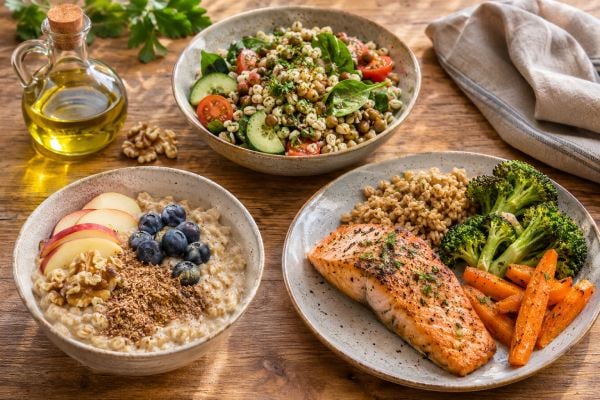
A useful meal combines soluble fiber, a high-fiber carbohydrate, a lean or plant protein, and unsaturated fat.
A practical grocery list
If you want to simplify shopping, build the cart around a few repeatable staples rather than hunting for specialty “cholesterol-lowering” products. In the grain aisle, choose rolled oats, barley, brown rice, whole-grain bread, and whole-grain pasta. In the protein section, stock canned or dried beans, lentils, tofu, fish, plain yogurt, and a modest amount of lean poultry if you use it. Add unsalted nuts, seeds, olive or canola oil, and plenty of vegetables and fruit.
Then identify the foods that tend to drive saturated fat in your current routine. For one person that may be butter and cheese; for another it may be sausage, pastries, takeout, or coconut-based products. Replacing the top one or two contributors often produces a bigger change than buying many small “healthy” extras.
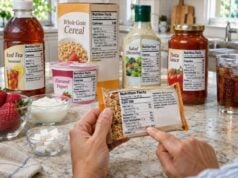
Check labels on packaged foods for saturated fat and fiber. Two breads can look similar while one provides 1 g of fiber per slice and another provides 4 g. Likewise, granola, crackers, and plant-based foods can still contain substantial saturated fat from coconut or palm oil. A short ingredient list is not enough; the nutrition facts panel gives the more useful comparison. Keep two or three dependable options in each category so busy days do not automatically send you back to higher-saturated-fat convenience foods.
Breakfast
- Oatmeal with berries, walnuts, and ground flaxseed.
- Overnight oats with chia, apple, cinnamon, and plain yogurt.
- Whole-grain toast with avocado and a side of fruit.
- Plain yogurt topped with oats, berries, and almonds.
Lunch
- Lentil soup with a whole-grain roll and salad.
- Chickpea salad with olive oil, lemon, herbs, and whole-grain pita.
- Barley bowl with roasted vegetables, edamame, and tahini.
- Whole-grain wrap with hummus, vegetables, and a small amount of avocado.
Dinner
- Baked salmon with barley and roasted vegetables.
- Black-bean tacos with cabbage, salsa, and avocado.
- Whole-grain pasta with tomato sauce, white beans, spinach, and olive oil.
- Tofu stir-fry with vegetables and brown rice.
Snacks
- Apple with unsalted peanut butter.
- A small handful of nuts.
- Carrots with hummus.
- Plain yogurt with berries.
- Air-popped popcorn with herbs instead of butter.
If breakfast is your hardest meal to improve, this guide to a high-fiber breakfast for cholesterol gives additional options.
How Fast Cholesterol Can Change
LDL can begin changing within a few weeks of a meaningful diet change. That does not mean everyone will see a dramatic drop in 7 or 14 days. Genetics, starting LDL, body weight, thyroid function, medication, and the size of the dietary change all influence the result.
For many people, a repeat lipid panel after roughly 6–12 weeks of consistent changes gives a more useful picture than checking too quickly. Your clinician may choose a different interval, especially after starting or changing cholesterol medication.
A practical way to judge whether your diet is strong enough is to ask four questions:
- Do I eat a soluble-fiber food at least once or twice per day?
- Do I usually use liquid plant oils instead of butter or coconut oil?
- Do beans, fish, soy foods, nuts, or seeds replace higher-saturated-fat proteins several times per week?
- Are sugary drinks, pastries, processed meats, and fried foods occasional rather than daily?
If the answer to most is yes, you are addressing the major dietary levers. If LDL remains high, that does not mean the diet “failed.” Some people have a large inherited component and need medication to reach a safe level. People with LDL around 190 mg/dL or higher, known atherosclerotic cardiovascular disease, or familial hypercholesterolemia generally require prompt clinical assessment rather than a diet-only trial.
Weight loss, when medically appropriate, can improve triglycerides and other metabolic risk factors, while physical activity supports overall cardiovascular health. A broader guide to lowering cholesterol with diet and exercise can help integrate those pieces. The most effective plan is the one that combines food quality with the treatment intensity your actual cardiovascular risk requires.
The easiest way to make these foods work is to assign them regular jobs. Oats or barley can cover breakfast several days a week. Beans can anchor two or three lunches or dinners. Nuts can replace a refined snack. Olive oil can replace butter for most sautéing and dressings. Fish can take the place of a higher-saturated-fat entrée once or twice a week. This turns cholesterol lowering from a list of “healthy foods” into a repeatable pattern.
Portion size still matters, especially for calorie-dense foods such as nuts, seeds, avocado, and oils. They are useful replacements for saturated fats, not unlimited additions on top of the same diet. Likewise, fiber should rise gradually if your current intake is low; sudden large increases can cause gas, bloating, or discomfort. Drink enough fluid and increase beans, oats, barley, fruit, and vegetables over several days. The most effective plan is one you can sustain long enough for the change in LDL to become your new baseline rather than a short experiment.
When comparing packaged foods, look beyond a front-label “heart healthy” impression. Check saturated fat, fiber, added sugars, sodium, and serving size. A granola that contains oats can still be high in added sugar and low in soluble fiber per serving; a plant-based frozen meal can still be high in sodium or coconut-derived saturated fat. Choose foods based on the nutrition profile that supports your goal, not the marketing category.
It can also help to set one measurable food target at a time. For a week, make breakfast a soluble-fiber meal every day. The next week, replace butter and high-saturated-fat spreads with olive oil, nuts, seeds, or avocado. Then add beans or lentils to several meals. Small, specific targets are easier to monitor than a vague instruction to “eat better,” and they make it clear which changes are sustainable. If you use a fiber supplement such as psyllium, increase it gradually and take it with adequate fluid; ask a pharmacist about timing if you take medications, because fiber can affect absorption of some drugs.
References
- 2021 Dietary Guidance to Improve Cardiovascular Health: A Scientific Statement From the American Heart Association 2021 (Position Statement)
- Soluble Fiber Supplementation and Serum Lipid Profile: A Systematic Review and Dose-Response Meta-Analysis of Randomized Controlled Trials 2023 (Systematic Review)
- Use of phytosterol-fortified foods to improve LDL cholesterol levels: A systematic review and meta-analysis 2023 (Systematic Review)
- Saturated Fat Intake and the Prevention and Management of Cardiovascular Disease in Adults: An Academy of Nutrition and Dietetics Evidence-Based Nutrition Practice Guideline 2023 (Guideline)
- Plantago consumption significantly reduces total cholesterol and low-density lipoprotein cholesterol in adults: A systematic review and meta-analysis 2024 (Systematic Review)
Disclaimer
This article provides general nutrition information and does not replace medical advice, diagnosis, or treatment. Very high LDL cholesterol, familial hypercholesterolemia, diabetes, or established cardiovascular disease may require medication in addition to diet; discuss your targets and treatment plan with a qualified healthcare professional.