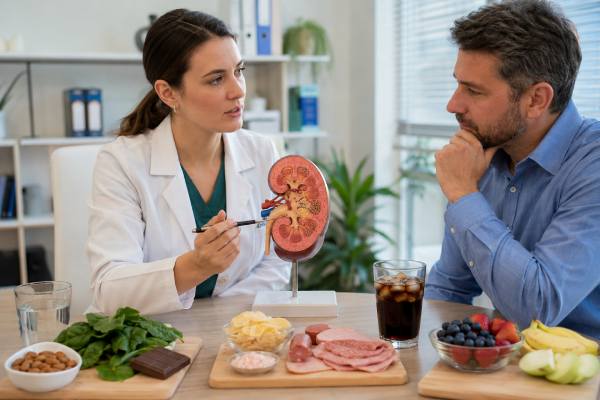
Kidney stones form when urine becomes too concentrated with minerals and waste products that crystallize instead of staying dissolved. Food is not the only reason this happens, but daily eating habits strongly affect the mix of calcium, oxalate, uric acid, sodium, citrate, and fluid in urine.
The biggest diet triggers are not obscure foods. They are usually high-oxalate foods eaten often, salty packaged meals, sugary drinks, large portions of animal protein, low fluid intake, and avoiding calcium at the wrong time. The useful goal is not to fear every food on a “kidney stone list.” It is to understand which foods matter for your stone type, how often you eat them, what you pair them with, and what your urine test shows.
Table of Contents
- Foods That Raise Kidney Stone Risk the Most
- High-Oxalate Foods: The Main Concern for Calcium Oxalate Stones
- Salt: The Hidden Trigger That Raises Urine Calcium
- Sugar, Soda, and Fructose: Why Sweet Drinks Matter
- Animal Protein and Purines: Meat, Seafood, and Uric Acid Stones
- Calcium, Fluids, and Meal Timing: What to Add, Not Just Avoid
- How to Personalize Your Kidney Stone Food List
Foods That Raise Kidney Stone Risk the Most
The foods most linked with kidney stones affect urine chemistry in different ways. Spinach raises oxalate. Salty foods raise urine calcium. Sugary drinks and large portions of meat increase acid load and uric acid risk. Low fluid intake makes all of these more concentrated.
The most practical starting point is to focus on patterns, not single bites. A spinach salad once in a while is different from a daily smoothie packed with spinach, almond butter, cocoa powder, and vitamin C powder. A restaurant meal is different from a week of takeout, deli meat, instant noodles, and salty snacks.
| Food or habit | Main stone concern | What to watch | Better direction |
|---|---|---|---|
| Spinach, rhubarb, almonds, wheat bran, beets, chocolate | Higher oxalate load | Large portions, daily use, smoothies, nut-heavy snacks | Use lower-oxalate greens, vary snacks, pair oxalate with calcium foods |
| Fast food, canned soup, deli meat, chips, frozen meals | Higher urine calcium | Sodium above 2,300 mg daily, frequent restaurant meals | Choose lower-sodium labels, cook more meals at home, use herbs and acids for flavor |
| Cola, sweet tea, energy drinks, fruit drinks, excess juice | Higher sugar and uric acid burden | Daily sweet drinks, large servings, refills | Make water the default, use citrus water or unsweetened drinks |
| Large servings of red meat, organ meats, some seafood | Higher uric acid and lower urine citrate | Meat-heavy meals twice a day, high-protein dieting | Use moderate portions and mix in lower-oxalate plant proteins |
| Very low calcium intake | More oxalate absorbed from the gut | Avoiding dairy or calcium foods without a replacement plan | Get calcium from food with meals unless your clinician gives different advice |
The stone type matters. Calcium oxalate stones are the most common, so oxalate, sodium, calcium timing, and hydration get the most attention. Uric acid stones need extra focus on animal protein, sugary drinks, weight, insulin resistance, and urine pH. Cystine stones usually require very high fluid goals and sodium restriction. Infection stones are driven by bacteria, so diet alone is not the solution.
If you do not know your stone type, use a broad prevention pattern: drink enough fluid to keep urine pale most of the day, limit sodium, avoid large daily portions of high-oxalate foods, keep normal calcium from meals, reduce sugary drinks, and keep animal protein moderate. Once you know the stone composition, a more targeted plan works better. A guide to kidney stone types helps explain why the food list changes from person to person.
High-Oxalate Foods: The Main Concern for Calcium Oxalate Stones
Oxalate is a natural compound in many plant foods. In the gut, oxalate binds with calcium and leaves through stool. When too much oxalate is absorbed, it travels to the kidneys and leaves through urine. If urine also contains enough calcium and is too concentrated, calcium oxalate crystals form more easily.
The common mistake is thinking all vegetables are risky. They are not. The highest-impact foods are a smaller group, especially when eaten in large amounts or blended into drinks.
Foods that often matter most include:
- Spinach
- Rhubarb
- Swiss chard
- Beet greens and beets
- Almonds and almond butter
- Cashews
- Peanuts and peanut butter
- Wheat bran
- Buckwheat
- Soy nuts and some soy products
- Dark chocolate and cocoa powder
- Black tea in large amounts
- Sweet potatoes
- Okra
Spinach deserves special attention because it is extremely high in oxalate and easy to overeat in smoothies. A cooked cup of spinach shrinks into a small-looking portion, but it still carries a heavy oxalate load. A daily green smoothie with spinach, almond milk, almond butter, cocoa, and berries turns several “healthy” ingredients into a high-oxalate routine.
That does not mean the right answer is a vegetable-poor diet. Lower-oxalate choices include romaine lettuce, kale, cabbage, cauliflower, broccoli, cucumbers, peas, mushrooms, onions, zucchini, and bell peppers. For fruit, bananas, melons, grapes, peaches, mango, and apples are usually easier choices than relying heavily on high-oxalate fruit or fruit-nut combinations.
For people with calcium oxalate stones, the useful question is not “Does this food contain oxalate?” Many foods do. The better question is “Is this one of my frequent high-oxalate foods, and am I eating it without calcium?” A detailed low-oxalate diet is most useful when urine oxalate is high or stone history points clearly to calcium oxalate stones.
Portion size changes the risk
A small piece of chocolate after dinner is not the same as a daily cocoa-based protein shake. A sprinkle of nuts on oatmeal is not the same as multiple handfuls of almonds for snacks every day. Oxalate risk rises when the same high-oxalate foods become routine and replace lower-risk options.
Nut-based diets are a common hidden issue. Almond flour, almond milk, almond butter, cashew snacks, and nut-heavy protein bars add up quickly. Someone trying to eat “clean” or low-carb might eat nuts several times daily without realizing that their oxalate exposure has increased.
Tea is similar. A cup of black tea is not usually the problem by itself. Strong black tea throughout the day, especially with low water intake, deserves attention. Switching some servings to water, herbal tea, or lemon water lowers the overall load without making the diet feel restricted.
Cooking helps some foods but does not erase oxalate
Boiling high-oxalate vegetables and discarding the water reduces some soluble oxalate. This is more useful for vegetables than for nuts, grains, chocolate, or powders. Steaming keeps more oxalate in the food than boiling because less leaves into water.
Even with boiling, spinach remains a high-oxalate food. Cooking is not a free pass for large daily portions. Use cooking as a small risk-reduction step, not the main strategy.
Calcium with meals lowers oxalate absorption
Avoiding calcium is one of the most common diet mistakes in calcium oxalate stone prevention. Calcium in food binds oxalate in the gut before it reaches the kidneys. That means a normal amount of calcium with meals often lowers oxalate absorption.
Good meal-based calcium choices include milk, yogurt, kefir, cheese in sensible portions, calcium-set tofu, and calcium-fortified foods. The timing matters: calcium works best when it is eaten with the oxalate-containing meal, not hours later. A practical approach is pairing yogurt with lunch, adding milk to a meal, or using calcium-set tofu instead of eating high-oxalate foods alone.
For people who cannot tolerate dairy, fortified lower-oxalate alternatives need careful label reading. Some almond-based products are poor choices for oxalate stone formers. Calcium-fortified oat, rice, or pea options vary, so the ingredient list matters. For a deeper explanation of timing, see calcium with meals for oxalates.
Salt: The Hidden Trigger That Raises Urine Calcium
Salt raises kidney stone risk because sodium and calcium handling in the kidneys are linked. When sodium intake goes up, the kidneys often release more calcium into urine. More urine calcium gives calcium oxalate and calcium phosphate stones more building material.
This is why a low-sodium plan is often more important than cutting calcium from food. The problem is usually not yogurt, milk, or cheese eaten in normal portions. The bigger problem is a day built around salty bread, deli meat, pizza, canned soup, restaurant meals, chips, sauces, and frozen dinners.
A useful sodium target for many stone formers is below 2,300 mg daily, unless a clinician sets a different goal. That is roughly the sodium in one teaspoon of table salt, but most sodium does not come from the saltshaker. It comes already added to packaged and restaurant foods.
Common high-sodium foods include:
- Deli turkey, ham, salami, bacon, sausage, and hot dogs
- Pizza, burgers, fries, tacos, and fast-food bowls
- Instant noodles and boxed rice mixes
- Canned soup and canned chili
- Frozen meals
- Pickles, olives, sauerkraut, and salty condiments
- Chips, pretzels, crackers, and salted nuts
- Restaurant sauces, soy sauce, teriyaki sauce, and bottled dressings
- Processed cheese and cheese spreads
Label reading makes sodium control much easier. A food with 5% Daily Value or less for sodium per serving is a lower-sodium choice. A food with 20% Daily Value or more is high. The serving size matters because many packages contain two or three servings even though people eat the whole package.
The fastest wins are usually simple swaps. Choose “no salt added” canned beans and tomatoes. Rinse canned beans. Pick lower-sodium broth. Replace deli meat sandwiches with leftover roasted chicken, eggs, hummus made with lower-sodium ingredients, or tuna packed without excess salt. Use lemon juice, vinegar, garlic, pepper, smoked paprika, cumin, dill, basil, parsley, and chili flakes to add flavor without relying on salt.
Salt also affects cystine stones. For cystine stone formers, sodium restriction helps reduce cystine in urine. That makes salty foods a problem even when oxalate is not the main issue. More detail on this mechanism is covered in high sodium and kidney stones.
Sugar, Soda, and Fructose: Why Sweet Drinks Matter
Sugary drinks are a practical kidney stone target because they add a large sugar load without making a person full. They also displace water, which is the main drink for keeping stone-forming substances diluted.
The biggest concerns are regular soda, sweet tea, lemonade with lots of sugar, fruit drinks, energy drinks, sports drinks, flavored coffees, and large servings of juice. The sugar in these drinks pushes the diet toward higher calorie intake and metabolic stress. Fructose, in particular, is linked with higher uric acid production, which matters for uric acid stones and for people prone to gout.
Cola deserves separate attention because many colas contain phosphoric acid. Not every sparkling drink is the same. Plain sparkling water is different from cola. A sweetened cola habit combines sugar, acid load, and poor hydration quality. If a person drinks cola daily, replacing it with water, citrus water, or unsweetened sparkling water is a high-value change.
Fruit juice sounds healthier, but large servings still deliver concentrated sugar. A small glass of orange juice with a meal is different from using juice as the main daily fluid. Whole fruit is usually better because it comes with fiber and is harder to overconsume quickly.
Better drink choices include:
- Plain water
- Water with lemon or lime
- Unsweetened sparkling water
- Unsweetened herbal tea
- Milk or fortified alternatives when they fit the person’s calcium and kidney plan
- Coffee in moderate amounts, when it does not worsen bladder symptoms or replace water
Citrus drinks need a sugar check. Lemon or lime can add citrate, a substance in urine that helps discourage calcium crystal formation. But a heavily sweetened lemonade is not the same as lemon water. Use citrus for flavor, not as a reason to drink sugar.
People who dislike plain water often do better with a rotation: water in the morning, citrus water with lunch, unsweetened sparkling water in the afternoon, and water again in the evening. The best drink plan is one that spreads fluid through the day instead of forcing a large amount at night. A guide to drinks that help prevent kidney stones gives more options for building that routine.
Animal Protein and Purines: Meat, Seafood, and Uric Acid Stones
Animal protein affects stones in several ways. Large portions increase acid load, raise uric acid production, and lower urine citrate. Citrate is protective because it binds calcium and reduces crystal growth. For uric acid stones, meat-heavy eating also adds purines, compounds that break down into uric acid.
The issue is usually portion size and frequency, not whether a person ever eats meat. A balanced dinner with a palm-sized portion of chicken or fish is different from a high-protein diet built around steak, burgers, jerky, protein shakes, eggs, and meat at every meal.
Foods that deserve limits for uric acid risk include:
- Organ meats such as liver and kidney
- Large portions of beef, pork, lamb, and game meats
- Anchovies, sardines, mussels, scallops, and some other shellfish
- Meat gravies and rich meat stocks
- Frequent processed meats such as sausage, bacon, salami, and hot dogs
Poultry and fish still count as animal protein, even when they are lean. They are often better heart-health choices than processed or fatty red meat, but very large portions still affect urine chemistry. Eggs and dairy add protein too, though dairy also supplies calcium, so the overall effect depends on the meal.
A practical portion target is often 3 to 4 ounces of cooked meat, poultry, or fish at a meal, then filling the rest of the plate with lower-oxalate vegetables, fruit, whole grains that fit the person’s oxalate needs, and calcium-containing foods. Athletes, older adults, and people with medical nutrition needs should not cut protein carelessly. The point is moderation, not protein avoidance.
Plant proteins are useful, but they need thoughtful choices for calcium oxalate stone formers. Lentils, beans, and peas are often reasonable in moderate portions, especially when sodium is low and meals include enough fluid. Nuts, almond flour, and some soy foods create more oxalate concern. This is where a person’s 24-hour urine results help separate helpful changes from unnecessary restriction.
High-protein weight-loss diets are a common trigger pattern. Keto-style eating, low-carb plans heavy in meat and cheese, and bodybuilding diets high in protein powder shift urine chemistry in the wrong direction for some stone formers. They often lower fruit intake, reduce citrate, increase acid load, and make constipation or low fluid intake worse. For a closer look at protein portions, see animal protein and kidney stones.
Calcium, Fluids, and Meal Timing: What to Add, Not Just Avoid
A kidney stone diet is not only a list of foods to cut. The protective habits matter just as much: enough fluid, normal calcium with meals, more citrate-rich foods, less sodium, and a steady meal pattern.
Fluid is the foundation because concentrated urine makes stones easier to form. A good daily goal is enough fluid to produce pale yellow urine most of the day. Many stone prevention plans aim for about 2.5 liters of urine output daily, which often requires more than 2.5 liters of fluid intake because sweat, exercise, hot weather, and body size change needs.
The best timing is spread out. Drinking a large bottle of water at night does not protect the kidneys as well as steady fluid through the day. Urine often becomes more concentrated overnight, so a glass of water in the evening helps some people, but waking repeatedly to urinate creates another problem. The right balance is steady daytime hydration and a modest evening drink.
Calcium is the other “add back” habit that many people get wrong. For most calcium oxalate stone formers, normal dietary calcium is protective when eaten with meals. Very low calcium diets raise oxalate absorption and hurt bone health. Food-based calcium is usually preferred unless a clinician recommends a supplement.
Examples of practical pairings:
- Yogurt with lunch that includes vegetables or beans
- Milk with oatmeal instead of eating nut-heavy cereal dry
- Cheese in a modest portion with a meal, while keeping sodium in check
- Calcium-set tofu with lower-oxalate vegetables
- Fortified food with a meal that contains oxalate
Calcium supplements need individualized advice. If used, they are usually taken with meals for oxalate binding, not randomly between meals. People with high blood calcium, primary hyperparathyroidism, chronic kidney disease, or a history of calcium phosphate stones need medical guidance before changing calcium supplements.
Citrate-rich foods are another useful addition. Lemon, lime, oranges, and some other fruits provide alkali and citrate-related benefits. They do not “dissolve” most calcium stones like a cleaning product dissolves mineral deposits, but they support a urine environment that is less friendly to crystal growth. Lemon water is useful when it replaces sugary drinks or helps a person drink more fluid.
Vitamin C supplements deserve caution. High-dose vitamin C increases oxalate production in some people. Food sources of vitamin C, such as citrus, peppers, and strawberries, are not the same as taking large supplement doses. Stone formers should avoid high-dose vitamin C unless a clinician specifically recommends it.
How to Personalize Your Kidney Stone Food List
The best kidney stone diet is based on the stone type and urine chemistry. Without that information, people often over-restrict the wrong foods and miss the bigger trigger. Someone with high urine sodium needs a different emphasis than someone with high urine oxalate, low citrate, low urine volume, or low urine pH.
Ask for the stone analysis if you passed a stone or had one removed. Stone composition separates calcium oxalate, calcium phosphate, uric acid, struvite, cystine, and mixed stones. Mixed stones are common, so the prevention plan often combines several strategies.
A 24-hour urine test is especially useful after recurrent stones, multiple stones, high-risk stone types, young age at first stone, solitary kidney, bowel disease, bariatric surgery, or strong family history. The test measures urine volume and stone-related substances such as calcium, oxalate, citrate, uric acid, sodium, and pH. Those results show which food changes deserve priority. A practical guide to the 24-hour urine test for kidney stones explains what the test measures and how to prepare.
Match the food strategy to the stone type
For calcium oxalate stones, the usual plan is enough fluid, normal calcium with meals, lower sodium, fewer high-oxalate foods, and moderate animal protein. This is the classic situation where cutting calcium is a mistake.
For calcium phosphate stones, sodium reduction and urine calcium control matter. Urine pH also matters because calcium phosphate stones form more easily in alkaline urine. People with this stone type should not aggressively alkalinize urine with supplements unless their clinician recommends it.
For uric acid stones, the focus shifts toward urine pH, purine intake, weight and metabolic health, and sugar reduction. Uric acid stones often form in acidic urine. Diet helps, but many people need medication that alkalinizes urine. Read more about uric acid stones if your report shows uric acid or you have gout.
For cystine stones, fluid needs are often higher than for other stone types, and sodium restriction is important. This is a genetic stone condition, so diet is only one part of a medical plan.
For struvite stones, infection control is central. These stones are linked with urease-producing bacteria and often require urologic treatment. Diet changes do not replace treating the infection and removing stone material when needed.
Common mistakes that keep stones coming back
One mistake is focusing only on oxalate while ignoring salt. A person might stop eating spinach but keep eating restaurant meals daily. If urine sodium and urine calcium stay high, stone risk remains high.
Another mistake is drinking plenty of fluid only after a stone attack. Prevention requires ordinary days to be hydrated, including workdays, travel days, gym days, and hot-weather days. Dark morning urine, long gaps without urinating, and headaches after outdoor activity are clues that fluid timing needs work.
A third mistake is using “healthy” products without checking the ingredients. Almond flour crackers, spinach smoothies, beet powders, turmeric capsules, high-dose vitamin C, and protein powders all fit wellness culture, but they are not automatically stone-friendly.
A fourth mistake is changing everything at once. A strict diet that feels punishing usually fails. Start with the changes that match your biggest risks: replace sweet drinks, reduce sodium, stop daily spinach smoothies, pair calcium with meals, moderate meat portions, and spread water through the day.
A practical one-day stone-conscious meal pattern
Breakfast could be oatmeal made with milk, topped with banana or blueberries, plus water or coffee. Skip almond-heavy granola if oxalate is a concern. If you prefer eggs, pair them with lower-sodium toast and fruit rather than bacon or sausage.
Lunch could be a lower-sodium turkey or chicken bowl made with rice, cabbage, cucumber, bell pepper, herbs, olive oil, and lemon, with yogurt on the side. If you use beans, choose low-sodium or rinsed beans and keep portions moderate.
Dinner could be a moderate portion of fish or chicken with roasted cauliflower, zucchini, a small serving of potatoes or rice, and a salad made with romaine instead of spinach. Flavor it with lemon, garlic, herbs, vinegar, and pepper instead of salty sauces.
Snacks could include fruit, yogurt, lower-sodium crackers with cheese, carrots with a lower-sodium dip, or popcorn made without heavy salt. If nuts are part of your diet, keep portions small and avoid relying on almonds or cashews every day.
The goal is a repeatable pattern, not a perfect menu. A strong kidney stone prevention diet looks like ordinary balanced eating with tighter attention to fluid, sodium, oxalate concentration, calcium timing, sugar, and protein portions. For a broader prevention plan that includes medical options, see kidney stone prevention.
References
- Eating, Diet, & Nutrition for Kidney Stones 2017
- UPDATE – Canadian Urological Association guideline: Evaluation and medical management of kidney stones 2022 (Guideline)
- Metabolic Evaluation and Recurrence Prevention for Urinary Stone Patients: An EAU Guidelines Update 2024 (Guideline Update)
- Dietary interventions on nutritional management of population with urolithiasis: a systematic review of clinical evidence 2025 (Systematic Review)
- Correlation between lifestyle choices, dietary factors, and the risk of adult urolithiasis: insights from a systematic review and meta-analysis 2025 (Systematic Review and Meta-analysis)
- Healthy dietary patterns, biological aging, and kidney stones: evidence from NHANES 2007–2018 2025 (Observational Study)
Disclaimer
This article is for education about food choices and kidney stone prevention. It does not diagnose your stone type or replace advice from a urologist, nephrologist, physician, or registered dietitian. Seek medical care for severe flank pain, fever, vomiting, blood in urine, trouble passing urine, pregnancy with stone symptoms, or a stone in a person with one kidney.