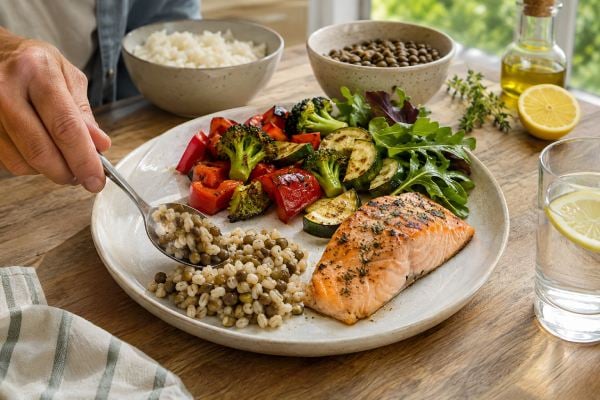
High triglycerides often respond quickly to food changes because triglycerides reflect how the body handles excess energy, especially from added sugars, refined carbohydrates, alcohol, and excess calories. The most important targets are usually not dietary fat alone. Sweet drinks, large portions of white bread or desserts, frequent alcohol, and calorie-dense snack foods can push triglycerides up even when a diet does not look obviously “fatty.” The best approach is to replace these foods rather than simply eat less of everything. Choose water or unsweetened drinks instead of sugary beverages, whole grains and beans instead of refined starches, unsaturated fats instead of saturated fats, and minimally processed meals instead of foods built around sugar and refined flour. If triglycerides are very high—especially 500 mg/dL or higher—diet becomes more urgent because pancreatitis risk rises and the right plan may differ from standard heart-healthy advice. In that situation, work with a clinician rather than relying on food swaps alone.
Table of Contents
- What Triglycerides Are and Why Food Changes Them
- Foods and Drinks Most Likely to Raise Triglycerides
- Better Carbohydrate Swaps
- Which Fats Help and Which Ones to Limit
- Meal Patterns That Help Lower Triglycerides
- How Fast Triglycerides Can Change
- When High Triglycerides Need Medical Care
What Triglycerides Are and Why Food Changes Them
Triglycerides are a form of fat carried in the blood. Your body makes them from fatty acids and from excess energy, especially when you consume more carbohydrate, alcohol, or calories than you immediately need. The liver packages triglycerides into very-low-density lipoprotein particles, or VLDL, which circulate and deliver fat to tissues.
A triglyceride result is not just a measure of how much fat you ate the day before. It can reflect insulin resistance, body weight, alcohol intake, diabetes control, genetics, thyroid function, kidney or liver disease, medications, and your overall eating pattern. That is why high triglycerides often travel with high blood sugar, abdominal weight gain, low HDL cholesterol, and elevated blood pressure.
Common cutoffs are:
- Under 150 mg/dL: generally considered normal.
- 150–499 mg/dL: mild to moderate elevation.
- 500 mg/dL or higher: severe enough that pancreatitis prevention becomes a major concern.
- Around 1,000 mg/dL or higher: a much more urgent level that can reflect chylomicronemia and requires prompt medical management.
If your level is mildly or moderately elevated, lifestyle changes often make a meaningful difference. If it is very high, do not assume a standard “heart-healthy” diet is enough; your clinician may recommend a temporarily stricter fat plan, alcohol avoidance, medication, and evaluation for secondary causes.
For a broader explanation of causes and treatment priorities, see what high triglycerides mean and how they are lowered.
Foods and Drinks Most Likely to Raise Triglycerides
The biggest triglyceride drivers are usually foods that deliver a lot of rapidly absorbed carbohydrate, alcohol, or excess calories with little fiber or satiety.
Sugar-sweetened drinks
Soda, sweet tea, energy drinks, sports drinks, sweetened coffee drinks, lemonade, and many fruit drinks are high-impact targets because liquid sugar is easy to consume quickly and does not fill you up like solid food. A large sweetened beverage can contain 40–70 g of sugar, which is roughly 10–17 teaspoons.
The liver can convert excess carbohydrate into fatty acids through a process called de novo lipogenesis. Sugary drinks are especially problematic because they can deliver a large carbohydrate load without replacing much food later. If you drink them daily, switching to water, sparkling water, unsweetened tea, or coffee is often one of the fastest changes to make.
If added sugar is a major part of your diet, the connection between sugar, triglycerides, and heart risk is worth understanding.
Desserts, candy, and sweet baked goods
Cookies, cakes, pastries, ice cream, candy, sweet cereal, and snack bars often combine refined starch, added sugar, and fat. That combination makes them calorie-dense and easy to overeat.
You do not have to ban dessert forever. Frequency and portion matter. A small dessert a few times a week is different from large sweets after lunch and dinner every day. If triglycerides are high, treat dessert as an occasional food rather than a default meal ending.
Refined grains and oversized starch portions
White bread, white rice, many crackers, low-fiber cereal, large pasta servings, bagels, and refined-flour snacks can raise triglycerides when they dominate the diet, especially in people with insulin resistance.
The issue is not that all carbohydrate is harmful. Beans, lentils, intact whole grains, vegetables, and fruit come packaged with fiber and water and tend to be more filling. The problem is repeated large portions of low-fiber starch, especially when total calories are also high.
Alcohol
Alcohol can raise triglycerides substantially in susceptible people. The liver prioritizes alcohol metabolism and may produce more triglyceride-rich particles, while drinking can also increase appetite and add calories. Beer, wine, spirits, and cocktails can all matter; sugary cocktails add a second triglyceride-raising factor.
For someone with very high triglycerides, complete avoidance may be advised. For a moderate elevation, reducing frequency and quantity can still have a large effect. Learn more about why alcohol can spike triglycerides.
Ultra-processed snack foods
Chips, crackers, cookies, sweetened cereal, packaged pastries, and many convenience foods can combine refined carbohydrate, saturated fat, and high calorie density. Even when an individual snack is not especially sugary, frequent grazing can create a sustained calorie surplus.
Large portions of calorie-dense foods
Triglycerides can rise when total calorie intake exceeds what your body uses, even if the foods are not “junk.” Large amounts of nuts, oils, cheese, restaurant meals, or smoothies can contribute to weight gain and liver fat if portions consistently overshoot your needs.
The goal is not to fear calorie-dense foods. It is to use them in portions that fit your energy needs.
What about fruit, honey, and “natural” sugar?
Whole fruit usually belongs in a triglyceride-lowering diet. The sugar in fruit comes with water, fiber, and a food structure that slows eating and limits how much sugar you consume at once. Two oranges are very different from a large glass of orange juice, which can deliver the sugar from several pieces of fruit in minutes and with much less fiber. If your triglycerides are high, prioritize whole fruit and keep juice portions small or skip them.
Honey, maple syrup, agave, coconut sugar, raw sugar, and date syrup may sound less processed, but your liver still sees them mainly as concentrated sugars. They can fit in small amounts, yet they should not be treated as metabolic “free foods.” Replacing table sugar with honey while keeping the same large dose is unlikely to solve a triglyceride problem.
Dried fruit is another gray area. It can be nutritious, but removing water concentrates both calories and sugar. A small handful can fit; eating several large handfuls while watching television can add hundreds of calories quickly. Pairing a small portion with nuts or plain yogurt can make it more satisfying.
Do you need a low-carbohydrate diet?
Not necessarily. Some people with insulin resistance see triglycerides fall when they reduce total carbohydrate, but the quality of the replacement matters. Swapping white bread and sweets for vegetables, beans, fish, olive oil, nuts, and minimally processed protein can be helpful. Swapping those same carbohydrates for butter, fatty processed meat, cheese, and coconut oil may lower triglycerides while worsening LDL cholesterol.
A moderate-carbohydrate pattern built around high-fiber foods is often easier to sustain and supports the rest of the lipid profile. The best plan is the one that improves triglycerides, LDL-related risk, blood sugar, body weight, and overall diet quality at the same time.
If you track food for a week, look for repeated sources rather than isolated treats. A daily sweetened coffee, large evening bowl of cereal, and weekend alcohol may explain more than a single restaurant dessert. Targeting the habits that occur most often usually produces the biggest change with the least disruption. Recheck your triglycerides after a clinician-recommended interval so you can see whether the changes are working rather than guessing from how “healthy” the diet feels day to day.
Better Carbohydrate Swaps
Carbohydrate quality and quantity both matter. A useful rule is to replace refined carbohydrates with higher-fiber foods rather than simply remove carbohydrates and fill the gap with saturated fat.
| Limit more often | Swap in | Why the swap helps |
|---|---|---|
| Soda or sweet tea | Water, sparkling water, unsweetened tea | Removes a large liquid sugar load |
| White bread or large bagel | Dense whole-grain bread or oats | Adds fiber and improves fullness |
| Large white-rice portion | Smaller rice portion plus beans and vegetables | Lowers the refined-carbohydrate load per meal |
| Sweet cereal | Plain oatmeal with fruit and nuts | Replaces added sugar with fiber and whole foods |
| Cookies or candy snack | Fruit with plain yogurt or a small handful of nuts | Provides protein, fiber, or unsaturated fat for satiety |
| Large pasta bowl | Smaller whole-grain pasta portion with vegetables and protein | Reduces starch density while preserving the meal |
Whole fruit is usually a better choice than juice because fiber and chewing slow intake. Fruit contains fructose, but the metabolic effect of an apple or orange is not the same as drinking a large sweetened beverage. The food matrix matters: whole fruit comes with water, fiber, vitamins, minerals, and a lower sugar concentration.
Beans and lentils are especially useful because they replace refined starch while adding protein and soluble fiber. Barley, oats, quinoa, brown rice, farro, and other whole grains can also fit. Portion size still matters, but you rarely need to eliminate these foods completely.
If you want a more focused eating plan, diet changes that lower triglycerides can help turn these swaps into a routine.
Which Fats Help and Which Ones to Limit
A common mistake is to assume that high blood triglycerides require an extremely low-fat diet in every case. For mild to moderate hypertriglyceridemia, replacing refined carbohydrate with unsaturated fats can lower triglycerides and improve the overall lipid profile.
Useful unsaturated-fat sources include:
- olive, canola, avocado, and other liquid plant oils;
- nuts and seeds;
- avocado;
- fatty fish such as salmon, sardines, trout, and herring.
Saturated fat deserves a different focus. Butter, fatty red meat, processed meat, coconut oil, palm oil, full-fat dairy, and many baked goods can raise LDL cholesterol even when they do not dramatically raise triglycerides. If your triglycerides are high, your LDL and ApoB risk still matter, so replacing saturated fat with unsaturated fat is usually preferable to simply lowering carbohydrate and adding butter, bacon, cheese, or coconut oil.
Omega-3 fatty acids can lower triglycerides, but food and prescription products are not interchangeable. Eating fish twice a week supports a heart-healthy pattern. Prescription omega-3 medications use much higher, standardized doses for selected patients. Ordinary fish-oil supplements vary in EPA and DHA content and should not be assumed to provide the same effect. If triglycerides remain high despite lifestyle changes, a clinician can explain whether prescription omega-3 therapy versus over-the-counter fish oil is relevant.
One important exception is severe hypertriglyceridemia. When triglycerides are 500 mg/dL or higher—and especially near or above 1,000 mg/dL—clinicians may recommend a substantially lower-fat diet to reduce chylomicrons and pancreatitis risk. That plan should be individualized rather than copied from general internet advice.
Meal Patterns That Help Lower Triglycerides
The best pattern is one you can repeat. Mediterranean-style and other minimally processed eating patterns work well because they naturally reduce added sugar and refined starch while emphasizing vegetables, legumes, whole grains, fish, nuts, and unsaturated oils.
A practical plate can look like this:
- Half the plate: non-starchy vegetables.
- One quarter: protein such as fish, chicken, tofu, beans, or lentils.
- One quarter: a high-fiber starch such as beans, whole grains, or potatoes in a moderate portion.
- Added fat: a small amount of olive oil, nuts, seeds, or avocado.
Protein at meals can make carbohydrate portions easier to manage. Choose mostly fish, poultry, legumes, tofu, tempeh, low-fat dairy, or other minimally processed proteins. Avoid using processed meat as the default protein source.
Meal timing can also help indirectly. Constant snacking can push total calories up without you noticing. Many people do well with three structured meals and, if needed, one planned snack. Others prefer a different schedule. The main goal is to reduce unplanned eating and large late-night calorie loads.
Physical activity improves triglyceride metabolism too. A 10–20 minute walk after meals can help glucose handling and contributes to weekly activity. For a practical option, see walking after meals for blood sugar and triglycerides.
Weight loss can have a meaningful effect when excess body fat is contributing. Even a modest loss of about 5%–10% of body weight can improve triglycerides and insulin sensitivity. You do not need to reach an “ideal” body weight before seeing metabolic benefits.
How Fast Triglycerides Can Change
Triglycerides can shift faster than many people expect. A few weeks of reducing alcohol, sweet drinks, refined carbohydrates, and excess calories may produce a noticeable change, especially when the starting level is high.
However, triglycerides also fluctuate. A recent meal, alcohol intake, illness, uncontrolled blood sugar, and whether the test was fasting can affect the result. Your clinician may repeat a lipid panel before making major treatment decisions, particularly when a value is unexpectedly high.
A useful 4- to 8-week experiment is to focus on the biggest levers:
- Eliminate or sharply reduce sugar-sweetened drinks.
- Avoid or minimize alcohol.
- Replace refined grains with whole grains, beans, and vegetables.
- Reduce desserts and packaged snacks.
- Use unsaturated fats instead of butter, coconut oil, and fatty processed meats.
- Add regular aerobic activity and walking.
- If appropriate, aim for gradual weight loss.
Do not make ten tiny changes if two large ones are responsible for most of the problem. Someone who drinks two sodas and two beers daily may get more benefit from changing those beverages than from worrying about the small amount of sugar in a condiment.
If you want grocery-level ideas, foods that help lower triglycerides can make the next shopping trip easier.
When High Triglycerides Need Medical Care
High triglycerides are not always a diet-only problem. Diabetes, hypothyroidism, kidney disease, liver disease, pregnancy, genetics, and medications can raise them. Some people inherit disorders that produce severe elevations even with careful eating.
Talk with a clinician if:
- triglycerides are 500 mg/dL or higher;
- levels repeatedly stay high despite major lifestyle changes;
- you have diabetes, known cardiovascular disease, or chronic kidney disease;
- you take a medication known to raise triglycerides;
- several family members have very high triglycerides or pancreatitis;
- your result is around 1,000 mg/dL or higher.
Severe upper abdominal pain, especially with nausea or vomiting, can be a sign of pancreatitis and needs urgent medical evaluation.
For moderate triglyceride elevation, treatment often focuses on overall atherosclerotic cardiovascular risk, not just the triglyceride number. Statins may be recommended when LDL-related risk is significant. In selected high-risk patients with persistent triglyceride elevation, additional therapy such as icosapent ethyl may be considered. The right medication depends on the whole risk profile.
The central food message is simple: reduce the combination of liquid sugar, refined starch, alcohol, excess calories, and heavily processed foods. Replace them with high-fiber carbohydrates, minimally processed protein, unsaturated fats, vegetables, and water. That approach supports triglycerides without creating a restrictive diet that is impossible to maintain.
References
- Dietary Interventions for Hypertriglyceridemia 2026 (Review)
- Approach to the Patient With Moderate Hypertriglyceridemia 2022 (Review)
- Dietary management of dyslipidemia and the impact of dietary patterns on lipid disorders 2022 (Review)
- The Effect of Dietary Interventions on Hypertriglyceridemia: From Public Health to Molecular Nutrition Evidence 2022 (Review)
- 2021 Dietary Guidance to Improve Cardiovascular Health: A Scientific Statement From the American Heart Association 2021 (Position Statement)
Disclaimer
This article is for general education and does not replace medical evaluation. Triglycerides of 500 mg/dL or higher may require specific dietary and medication treatment, and levels near or above 1,000 mg/dL can carry substantial pancreatitis risk. Seek urgent care for severe persistent upper abdominal pain, especially with vomiting.