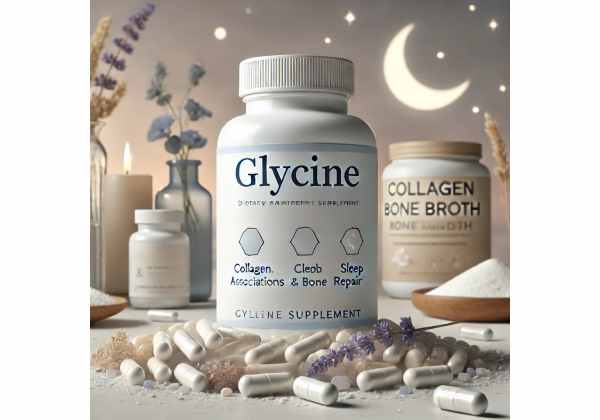
Glycine is easy to overlook. It is a simple amino acid the body already uses every day, and it does not have the dramatic reputation of stimulants, sedatives, or trendy nootropics. Yet it plays several important roles that matter for brain health and mental wellness. Glycine acts as a neurotransmitter, supports collagen and glutathione production, and appears to influence sleep quality, next-day alertness, and the brain’s response to stress. That combination makes it more interesting than its quiet profile suggests.
At the same time, glycine is not a cure-all. The evidence is strongest for sleep-related benefits, especially in people who struggle with nonrestorative sleep. Its role in mood, cognition, and psychiatric health is more nuanced and still developing. This article looks at how glycine works, where the research is most convincing, who may benefit, how to use it well, and what safety issues deserve a closer look.
Table of Contents
- How Glycine Affects the Brain
- Sleep and Next-Day Mental Clarity
- Mood, Stress, and Mental Health
- Who May Benefit Most
- Dosage, Forms, and Timing
- Safety, Side Effects, and Cautions
How Glycine Affects the Brain
Glycine is a nonessential amino acid, which means the body can make it on its own. Even so, “nonessential” can sound more dismissive than it should. Glycine has several jobs that are highly relevant to brain function. It acts as an inhibitory neurotransmitter in parts of the central nervous system, especially in the spinal cord and brainstem, and it also serves as a co-agonist at the NMDA receptor, where it helps regulate excitatory glutamate signaling. That dual role is one reason glycine is so interesting. It is involved in both calming and activating systems, depending on where and how it is acting.
This does not mean taking a glycine supplement produces a dramatic switch in brain chemistry. Oral glycine is not comparable to a sedative or prescription psychiatric medicine. Its effects appear to be gentler and more systems-oriented. In practical terms, glycine may influence mental wellness through several overlapping pathways:
- supporting normal neurotransmission
- helping regulate sleep-related physiology
- contributing to glutathione production and antioxidant defense
- participating in inflammation control
- supporting connective tissue and metabolic resilience
That broader background matters because brain health depends on more than neurotransmitters alone. Sleep quality, inflammatory load, oxidative stress, cellular repair, and metabolic stability all shape how clear, steady, and resilient the mind feels. Glycine sits at an interesting intersection of those processes.
One reason glycine is often discussed in sleep and mental wellness is that it seems to affect core body temperature and peripheral blood flow in a way that promotes sleep onset and improves the feeling of restfulness the next day. Another reason is that glycine signaling is closely linked to glutamatergic activity, which is relevant to learning, memory, and several psychiatric conditions. Researchers have explored this especially in schizophrenia, where glycine has been studied as an adjunct rather than a stand-alone therapy.
Still, glycine is best understood as a supportive compound, not a high-impact cognitive enhancer. It is unlikely to sharpen focus in the way caffeine can, and it is not a general substitute for sleep, nutrition, or mental health care. Its real value appears to be more specific. For many people, the most noticeable effects are linked to better sleep quality, less next-day fatigue, and a subtle sense of mental steadiness rather than a dramatic shift in concentration or mood.
That profile may sound modest, but it is often more realistic than the marketing around brain supplements. A compound that quietly supports sleep, stress recovery, and neurotransmission can still be genuinely useful, especially when those are the weak points that need attention.
Sleep and Next-Day Mental Clarity
If glycine has one area where the human evidence feels most practical, it is sleep. Not deep sedation, not knockout effects, but sleep quality. That difference matters. Glycine does not appear to work like a traditional sleeping pill. Instead, the research suggests it may help people fall asleep a bit more smoothly, feel more refreshed the next day, and reduce the sense of sleep-related fatigue that can linger into the morning.
This is one reason glycine attracts so much interest in brain health. Poor sleep can quickly erode attention, working memory, emotional regulation, and stress tolerance. Even one or two rough nights can leave people feeling mentally slower, less patient, and more vulnerable to overwhelm. Those effects overlap strongly with what people describe in discussions of sleep and brain function, and glycine seems most relevant when sleep quality is the weak link.
The best-known human studies used 3 grams before bedtime. In people with sleep complaints or partial sleep restriction, glycine improved subjective sleep quality and, in some studies, next-day feelings of liveliness, clear-headedness, and reduced fatigue. Importantly, these benefits appeared without major disruption to sleep architecture. That makes glycine different from some stronger sleep aids, which can produce sedation but leave the next day feeling dull or heavy.
What might explain this effect? The leading theory involves thermoregulation. Glycine appears to promote peripheral vasodilation and a slight drop in core body temperature, which can make it easier for the body to transition into sleep. Sleep onset is closely tied to temperature rhythms, so this is not a trivial mechanism. It is a biologically plausible one.
The most realistic benefits to expect are:
- feeling calmer about going to sleep
- falling asleep with a bit less friction
- waking with less grogginess after a poor night
- slightly better next-day mental freshness
That said, glycine is not a cure for chronic insomnia. If someone has severe sleep anxiety, sleep apnea, circadian disruption, depression-related insomnia, or long-standing fragmented sleep, glycine may help at the margins but is unlikely to solve the underlying problem. In those cases, broader evaluation and behavior-based treatment matter much more.
Glycine also fits best for people who want a lighter intervention. Someone who does not tolerate stronger sleep supplements, or who wants something gentler than melatonin or sedating herbs, may find glycine appealing. It can also make sense for people whose main complaint is not “I cannot sleep at all,” but “I sleep, yet I do not feel restored.”
That is an important distinction. Glycine seems less about forcing sleep and more about improving sleep quality and next-day function. For mental wellness, that can still be highly meaningful, because better sleep often improves mood, patience, concentration, and stress resilience even when the supplement itself does not directly target those systems.
Mood, Stress, and Mental Health
Once glycine moves beyond sleep, the conversation becomes more complex. There are real reasons to think it may matter for mood and mental wellness, but the evidence is not equally strong across conditions. The most careful way to frame it is that glycine has plausible mechanisms and a few interesting clinical signals, yet its best-supported everyday use is still sleep rather than general mood enhancement.
One reason glycine stays in the mental health conversation is its role at the NMDA receptor. Glycine is required as a co-agonist for normal NMDA receptor function, and glutamatergic signaling has been implicated in depression, schizophrenia, cognitive symptoms, and stress-related disorders. That does not mean more glycine automatically fixes these problems. It means glycine sits in a pathway researchers take seriously.
There are several possible mental wellness angles:
- Stress buffering: Better sleep alone can reduce irritability, mental fatigue, and stress sensitivity.
- Neurotransmission support: Glycine affects both inhibitory and excitatory balance in the nervous system.
- Inflammation and oxidative stress: Glycine may support antioxidant and anti-inflammatory pathways that indirectly matter for brain health.
- Psychiatric adjunct research: High-dose glycine has been studied in schizophrenia, especially for negative symptoms.
The schizophrenia research is the most notable direct psychiatric example, but it also highlights a key point: the doses used in that setting were far higher than typical bedtime sleep doses. These were not casual wellness regimens. They were specialist, adjunctive, research-level interventions. That makes it inappropriate to generalize those findings to routine self-treatment for anxiety, low mood, or everyday stress.
For depression and anxiety in ordinary supplement use, the evidence is much thinner. Glycine may help some people feel better indirectly because they sleep better and wake more refreshed. That can absolutely matter. Poor sleep often amplifies low mood, emotional reactivity, and rumination. But that is different from proving glycine is an antidepressant or anxiolytic.
This is especially important when readers compare glycine with other supplements aimed more directly at mood or stress. For example, someone seeking targeted support for anxious tension may be better served by options that are more often discussed for acute calm, such as L-theanine for anxiety and sleep. Glycine’s strength is subtler and more sleep-centered.
A realistic summary looks like this:
- Glycine has meaningful relevance to brain signaling and psychiatric research.
- Its most practical mental wellness benefit is often indirect, through sleep improvement.
- High-dose psychiatric use is not the same as standard over-the-counter use.
- Broad claims about glycine for depression or anxiety are ahead of the evidence.
That does not make glycine unimportant. It just places it in the right lane. For some people, the path to better mood is not a stronger “mood supplement.” It is better sleep, less morning fatigue, and a more stable nervous system. Glycine may help with that path, but it should be described with care.
Who May Benefit Most
Glycine is not the right supplement for every goal, but it does have a fairly clear profile of who is most likely to notice something useful. In general, the best candidates are people whose mental wellness is being dragged down by poor sleep quality, nonrestorative sleep, or next-day fatigue rather than by an urgent psychiatric problem that needs more direct treatment.
The first group is people with mild sleep complaints. These are the people who often say:
- “I sleep, but I do not wake feeling restored.”
- “I get into bed tired, but settling into sleep feels rough.”
- “My sleep is not terrible, but the next morning I feel dull.”
Glycine may be especially attractive here because it is not usually used as a heavy sedative. Some people want better sleep without feeling drugged, and that is where glycine fits better than many stronger nighttime options.
The second group is people dealing with occasional sleep restriction or mental fatigue. Travel, work pressure, parenting, deadlines, and inconsistent sleep can all leave the brain feeling depleted. In those periods, glycine may be helpful as a low-friction support strategy. It is not a substitute for sleep, but it may soften the cognitive cost of a rough night.
The third group includes people who prefer simple, low-stimulation supplements. Glycine powder is inexpensive, easy to take, and usually free of the stimulating “brain blend” ingredients that can backfire in sensitive people. Someone who gets jittery from energizing nootropics may prefer a calmer approach.
It may be a poor fit, or at least an incomplete one, for people whose main issue is persistent depression, panic, severe insomnia, bipolar symptoms, or unexplained cognitive decline. In those cases, the central problem usually needs assessment first. Many symptoms blamed on poor sleep or “brain fog” can actually reflect other issues, including mood disorders, burnout, hormone shifts, thyroid dysfunction, or nutrient deficits. That broader differential is one reason articles on feeling mentally slow often end up being more helpful than any single supplement guide.
Glycine may be especially worth considering when these conditions are present:
- bedtime restlessness without strong insomnia medication needs
- poor sleep quality with next-day fogginess
- light or broken sleep during stressful periods
- sensitivity to stronger sedating supplements
- interest in a low-cost, low-complexity sleep support option
The common thread is modesty. Glycine tends to help most when the goal is modest but meaningful improvement rather than a dramatic transformation. For the right person, that can still be a very good outcome. Better sleep and clearer mornings often create a ripple effect across mood, stress tolerance, and mental performance, even when the supplement itself feels subtle.
Dosage, Forms, and Timing
For general brain health and mental wellness use, glycine is usually taken as a plain powder. This is practical for two reasons: it is inexpensive, and the dose that shows up most often in sleep research is easier to take in powder form than in capsules. Glycine has a mildly sweet taste, so many people mix it with water, tea, or another evening drink.
The most common evidence-informed routine is 3 grams taken about 30 to 60 minutes before bedtime. This is the standard starting point for people using glycine to support sleep quality and next-day mental freshness. For many adults, that is the only dose worth testing at first.
A simple approach looks like this:
- Start with 3 grams at night.
- Take it consistently for at least several nights rather than judging it after one dose.
- Pay attention to sleep quality, morning alertness, and how rested you feel.
- If it is well tolerated but unhelpful, reconsider whether sleep is really the main problem before simply increasing the dose.
Some people choose to start lower, such as 1 to 2 grams, especially if they have a sensitive stomach. That is reasonable, though it may be below the best-studied bedtime amount. Very high doses belong in a different category entirely. High-dose glycine has been used in psychiatric research, but those amounts are not typical consumer use and should not be copied casually.
Timing matters because glycine’s main practical benefit seems to be nighttime use. It is not commonly used as a daytime focus supplement. In fact, daytime use may make less sense for people who are hoping for alertness, since glycine’s clearest everyday effect is tied to the sleep-wake transition rather than peak mental drive.
There is also no compelling reason to chase specialty forms. Plain glycine is the default. Expensive formulas that present glycine as part of a “brain stack” may not offer any advantage unless there is a very specific reason for the added ingredients.
You may also see glycine compared with other nighttime supports such as magnesium, melatonin, or calming amino acids. That comparison is useful, but the best fit depends on the sleep problem. Someone with circadian timing issues may think more about melatonin, while someone with muscle tension or broader relaxation needs may look into magnesium for anxiety and sleep. Glycine fits best when the target is better sleep quality and a clearer morning, not forceful sedation.
As a rule, glycine works best when dosing stays simple. One plain form, one consistent bedtime dose, and a short period of observation are usually enough to tell whether it belongs in your routine. If you need a large, complicated stack to notice any effect, glycine is probably not the main answer.
Safety, Side Effects, and Cautions
At common bedtime doses, glycine is generally considered well tolerated. That is part of its appeal. It does not have the heavy next-day feel that some sleep aids cause, and in human studies the typical sleep dose has produced relatively few serious problems. Still, “well tolerated” is not the same as universally appropriate.
The most common side effects are digestive. These may include:
- stomach discomfort
- mild nausea
- bloating
- soft stools
- a sense of fullness if the dose is large
These issues are more likely at higher doses than at the standard 3-gram bedtime amount. Some reports suggest even substantially larger short-term doses are not associated with serious acute adverse events in healthy volunteers, but that is not a reason to treat glycine as unlimited. Higher doses do not necessarily produce better sleep, and they may make tolerability worse.
There are also a few practical cautions worth keeping in mind:
- Do not confuse research dosing with wellness dosing. Psychiatric studies have used much higher amounts than typical sleep support regimens.
- Use extra caution with medical conditions. People with kidney disease, liver disease, pregnancy, breastfeeding, or complex psychiatric treatment plans should check with a clinician first.
- Do not use glycine to delay evaluation. If sleep problems are severe, persistent, or linked to snoring, mood symptoms, panic, or major daytime impairment, the underlying cause matters more than the supplement.
- Watch stacked nighttime formulas. Glycine often appears in blends with melatonin, magnesium, herbs, or sedating antihistamine-like ingredients. If you are trying to judge whether glycine helps, test it on its own first.
One subtle risk with gentle supplements is that people assume they are automatically the right choice because they seem harmless. In reality, the bigger problem is often misdirected treatment. Someone with sleep apnea, depression, or chronic stress overload may get small benefits from glycine while still missing the real reason they feel exhausted. That is why a broader look at sleep and mental health is often more valuable than focusing only on supplements.
A good rule is to match the supplement to the problem. Glycine makes the most sense for modest sleep-quality support, especially when the goal is a lighter, gentler intervention. It makes less sense as a self-directed treatment for major psychiatric symptoms or long-term cognitive decline.
Used thoughtfully, glycine is a relatively low-risk option. Used carelessly, it is usually still mild, but it can waste time by making a bigger sleep or mental health issue look simpler than it really is.
References
- The effect of glycine administration on the characteristics of physiological systems in human adults: A systematic review 2024 (Systematic Review)
- Interactions Involving Glycine and Other Amino Acid Neurotransmitters: Focus on Transporter-Mediated Regulation of Release and Glycine–Glutamate Crosstalk 2024 (Review)
- Glycine: The Smallest Anti-Inflammatory Micronutrient 2023 (Review)
- The Effects of Glycine on Subjective Daytime Performance in Partially Sleep-Restricted Healthy Volunteers 2012 (RCT)
- Adjunctive high-dose glycine in the treatment of schizophrenia 2001 (Clinical Study)
Disclaimer
This article is for educational purposes only and is not medical advice. Glycine may be useful for some adults, especially for sleep-related concerns, but it is not a substitute for professional evaluation or treatment of insomnia, depression, anxiety, cognitive changes, or other medical symptoms. People who are pregnant, breastfeeding, managing a chronic illness, or taking psychiatric or sleep-related medications should speak with a qualified clinician before using glycine regularly. If your symptoms are severe, persistent, or worsening, seek professional care rather than relying on supplements alone.
If you found this article helpful, please share it on Facebook, X (formerly Twitter), or any platform your audience uses.