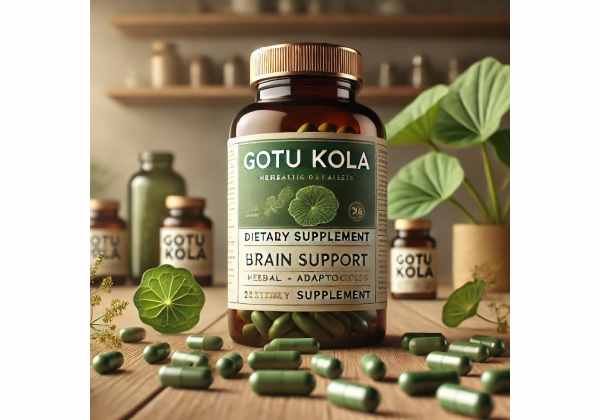
Gotu kola has been used for centuries as a plant associated with memory, calm, and recovery, yet modern interest in it is often pulled in two directions. One side treats it as a gentle nootropic for focus and mental clarity. The other sees it as a broader adaptogenic herb that may support stress resilience, circulation, and nervous system repair. Both views contain some truth, but neither tells the whole story. Gotu kola is best understood as a complex botanical whose effects depend on the extract, the dose, and the reason someone is taking it.
That complexity matters for brain health. The plant contains triterpenes such as asiaticoside, madecassoside, asiatic acid, and madecassic acid, along with other compounds that may affect oxidative stress, inflammation, mitochondrial function, and mood-related pathways. This guide looks at what gotu kola is, how it may work, where the evidence is strongest, how to choose and dose it, and what safety issues deserve careful attention.
Table of Contents
- What Gotu Kola Is and Why It Stands Out
- How It May Affect Brain and Mood
- Where Benefits Look Most Plausible
- What Clinical Evidence Actually Shows
- Dosage, Forms, and How to Choose
- Safety, Side Effects, and Precautions
What Gotu Kola Is and Why It Stands Out
Gotu kola, or Centella asiatica, is a creeping herb used in traditional medicine across South and Southeast Asia. It has a long reputation as a plant for memory, wound healing, circulation, skin repair, and general vitality. For a brain-health audience, what makes it interesting is that it does not fit neatly into one supplement category. It is not a stimulant, not simply a calming herb, and not just a general antioxidant. It appears to act through several overlapping pathways that could matter for cognition, mood, and mental resilience.
One reason gotu kola stands out is its triterpene profile. The best-known compounds include:
- asiaticoside
- madecassoside
- asiatic acid
- madecassic acid
These compounds have been studied for anti-inflammatory, antioxidant, neuroprotective, and tissue-repair effects. Modern extracts may also contain polyphenols and other constituents that could contribute to the plant’s activity, which is one reason whole-extract products can behave differently from isolated compounds.
Another reason it stands out is that product form matters a great deal. Some supplements use dried leaf powder. Others use water extracts or standardized triterpene extracts. Human studies have used very different preparations, which helps explain why results are mixed and why label reading matters more than it does with simpler nutrients.
Gotu kola is also a supplement that creates name confusion. In some traditional systems, it has been called “brahmi,” a name more commonly linked today with bacopa. Those two herbs are not the same, and their research profiles are different. Bacopa is usually discussed more directly as a memory herb, while gotu kola is often described as broader and more restorative.
This broader profile shapes expectations. A person who wants a sharp, immediate productivity boost may be disappointed. A person looking for steadier mental energy, calmer stress reactivity, or gentle support for age-related cognitive changes may find it more appealing.
The plant also has a dual identity in research. On one side, there is substantial preclinical work suggesting neuroprotection, antioxidant activity, and support for mitochondrial function. On the other, the human literature is still relatively small, with variations in dose, extract type, duration, and study population. That means gotu kola is promising, but not settled.
The practical takeaway is that gotu kola is best viewed as a multi-pathway botanical with potential brain and mental wellness applications, especially where stress, inflammation, aging, or mental fatigue are part of the picture. It is not a one-note supplement, and that is both its strength and its challenge.
How It May Affect Brain and Mood
Gotu kola’s brain and mood effects appear to come less from direct stimulation and more from the way it influences the body’s background state. The most plausible mechanisms involve oxidative stress control, neuroinflammation, mitochondrial function, stress biology, and possibly neurotransmitter-related activity.
A major theme in the research is antioxidant and mitochondrial support. Brain tissue is metabolically demanding, and long-term cognitive decline is often linked to oxidative damage and impaired cellular energy handling. Compounds in gotu kola have shown the ability, at least in preclinical work, to support antioxidant response pathways and protect mitochondrial function. That matters because a brain cell that manages oxidative stress better may also preserve function better under strain.
Another important pathway is inflammation regulation. Low-grade inflammation has been linked to mental fatigue, slower processing speed, low mood, and cognitive complaints. Gotu kola appears to influence inflammatory signaling in a way that could reduce some of that burden. This does not make it a treatment for depression or anxiety, but it helps explain why the herb is often discussed as a resilience-oriented botanical rather than a simple memory enhancer.
There is also interest in stress-response regulation. Some preclinical work suggests gotu kola may influence the hypothalamic-pituitary-adrenal axis and other systems involved in tension, recovery, and emotional balance. That makes it relevant to a broader conversation about stress, cortisol, and cognitive performance. A herb that helps the body respond more smoothly to stress may indirectly support memory, patience, and concentration.
Other proposed mechanisms include:
- support for synaptic signaling
- reduced excitotoxic stress
- improved neuronal repair processes
- possible effects on blood flow and microcirculation
- modulation of mood-related neurochemistry
These ideas help explain why gotu kola is sometimes described as both calming and cognitively supportive. It may not sedate the brain. Instead, it may reduce some of the noise that interferes with clear thinking.
Still, the mechanism story is stronger than the clinical one. Much of the most exciting evidence comes from cell and animal studies, not from large human trials. That distinction matters. A compound can look impressive in neuroprotection models and still produce modest real-world effects in humans, especially when commercial supplements vary widely in quality.
So the most grounded way to describe gotu kola is this: it may improve the conditions the brain depends on. Those conditions include lower inflammatory stress, better cellular energy handling, steadier stress responses, and possibly better repair capacity. That kind of support is valuable, but it is rarely dramatic, and it works best when expectations are realistic.
Where Benefits Look Most Plausible
The most believable case for gotu kola is not that it transforms cognition overnight. It is that it may offer gentle support for mental steadiness, alertness, and resilience, especially in people dealing with stress, aging, or cognitive wear-and-tear.
One area where it seems most plausible is mental fatigue. People often reach for stimulants when what they really need is a better buffer against exhaustion, stress load, or inflammatory drag. Gotu kola may fit that need better than a fast-acting nootropic. For someone struggling with persistent mental fatigue, the value may come from feeling less depleted rather than more “amped up.”
A second plausible area is mood balance under stress. Human and preclinical signals suggest gotu kola may support alert calmness more than sedation. That distinction matters. Some calming supplements can reduce tension while also making people feel heavy or slow. Gotu kola is more often described as potentially supportive for calm focus, at least in the people who respond well to it.
A third area is age-related cognitive support. Gotu kola has a long traditional reputation as a memory herb, and the research interest around older adults reflects that history. The evidence is not strong enough to call it a proven memory supplement, but it is strong enough to justify careful interest, especially when the goal is broad support rather than dramatic improvement.
Possible benefit areas include:
- self-perceived alertness
- stress-related mental weariness
- mild age-related cognitive slowing
- executive function support in broader lifestyle programs
- calmer cognitive performance under pressure
It may be particularly appealing for people who:
- want a non-stimulant approach
- feel worn down rather than under-aroused
- are interested in herbs with both traditional and modern research support
- prefer a gentle daily supplement over a “performance” product
Where it looks less convincing:
- as a strong treatment for diagnosed anxiety disorders
- as a proven antidepressant supplement
- as a primary memory enhancer for healthy younger adults
- as a substitute for sleep, exercise, or medical care
This matters because search intent around gotu kola often drifts toward big promises: sharper memory, less anxiety, better mood, better focus, and protection against cognitive decline. The real picture is narrower and more practical. Gotu kola may help some people feel more balanced, less mentally strained, and a bit more clear. That is useful, but it is not magic.
It also seems to make the most sense in a foundation-first plan. Sleep, movement, better nutrition, and lower chronic stress still matter more. Gotu kola may help most when it sits on top of those basics rather than trying to replace them.
What Clinical Evidence Actually Shows
The clinical evidence on gotu kola is promising in places, but it is not strong enough to support sweeping claims. This is one of those supplements where the best writing is careful writing.
The most important human takeaway is that overall evidence for direct cognitive enhancement remains mixed. A systematic review and meta-analysis of human studies found no strong evidence that gotu kola reliably improves overall cognitive function across domains. At the same time, the review suggested possible benefits in related areas such as self-reported alertness and reductions in anger scores in some settings. That is a meaningful nuance. The herb may influence mood tone and mental state without producing a large, consistent boost on formal cognitive testing.
More recent clinical work adds detail rather than certainty. A phase 1 randomized trial of a standardized gotu kola water extract in cognitively impaired older adults focused mainly on pharmacokinetics, tolerability, and biological activity. It found the extract was acutely safe and well tolerated at the studied doses, and it helped clarify which compounds appear in plasma and urine after use. That is valuable for product science, but it is not proof of clinical benefit.
A randomized study in older adults with mild cognitive impairment examined gotu kola alongside multicomponent exercise. Both the exercise-only group and the exercise-plus-gotu-kola group improved on several outcomes. Gotu kola did not clearly add overall cognitive benefits beyond exercise, though there were signals suggesting a possible effect on executive function through inflammatory pathways. That is the kind of finding that deserves interest, but not overstatement.
So what does the clinical picture support?
- Caution against hype
- Some support for alertness or mental state effects
- Reasonable interest in older-adult cognitive support
- A need for better standardized trials
This is a good example of why many readers benefit from a more skeptical framework like evidence-based nootropics thinking. A supplement can have a long traditional history, solid mechanistic plausibility, and real biological activity while still lacking strong proof for a specific everyday benefit.
A few study-design problems keep showing up in gotu kola research:
- small sample sizes
- short intervention periods
- inconsistent extract types
- poor reporting of plant part and standardization
- wide variation in doses
Those issues matter because herbal outcomes depend heavily on preparation quality. A negative or modest trial does not always mean the plant is ineffective, but it also does not justify broad claims.
The most honest summary is that gotu kola remains intriguing but underconfirmed for brain and mental wellness. It may help some users, especially in areas related to alertness, stress resilience, and broader aging-related support, but current clinical evidence does not support calling it a proven cognitive enhancer.
Dosage, Forms, and How to Choose
Gotu kola dosage is not standardized in the way many vitamin or mineral supplements are. That is because different products use different parts of the plant, different extraction methods, and different marker compounds. The first question is not “How many milligrams?” It is “What exactly am I taking?”
Common forms include:
- dried gotu kola powder
- water extracts
- standardized triterpene extracts
- teas and tinctures
- mixed brain-health formulas
Human studies have used a surprisingly wide range of doses. In the clinical literature, water extracts have been studied in amounts such as 250 mg to 750 mg per day, while other trials and traditional use patterns suggest higher gram-level doses of whole herb may be used in some contexts. A more recent randomized exercise study used 500 mg twice daily of gotu kola extract. An acute phase 1 study examined 2 g and 4 g doses of a standardized water extract in older adults to study absorption and tolerability.
That range tells you something important: the same milligram number does not mean the same biological exposure across products.
A practical dosing approach looks like this:
- Choose the form first.
Standardized extracts are usually better when you want consistency. Whole herb powders may be gentler but less predictable. - Start low.
A lower starting dose gives you time to assess tolerance. - Use it consistently.
Gotu kola is not usually judged well after one dose. - Track the right outcomes.
Look for changes in mental steadiness, stress tolerance, alert calmness, or fatigue, not just “IQ points.” - Reassess after a few weeks.
If nothing meaningful changes, more is not automatically better.
When comparing products, look for:
- the plant form used
- extract ratio when provided
- standardization to key triterpenes
- third-party testing
- transparent labeling of active markers
- limited filler ingredients
This is especially important because older reviews of the human literature noted major gaps in standardization and reporting. Many products still do not state enough about active content, which makes comparison difficult.
Timing depends on the product and your response. Some people prefer morning use because they feel a mild lift in mental steadiness. Others split the dose. If a product feels calming, evening use may make more sense. In blends, timing can be distorted by other ingredients, especially caffeine, L-theanine, or stimulatory botanicals.
In short, choosing gotu kola well is less about chasing a headline dose and more about matching a reliable product to a realistic goal.
Safety, Side Effects, and Precautions
Gotu kola is generally well tolerated in small human trials, and that is one reason it remains attractive as a daily botanical. Still, “well tolerated” is not the same as universally safe, and this is an area where product quality and personal context matter.
The side effects most likely to show up are relatively mild:
- stomach discomfort
- nausea
- bloating
- headache
- dizziness
- loose stools
- sleepiness in some users
These are more likely when someone starts high, combines multiple new supplements at once, or uses a poorly standardized product.
There are also a few broader precautions worth taking seriously. People with complex medical histories should be careful with gotu kola if they have:
- chronic liver disease
- significant medication use
- autoimmune conditions
- pregnancy or breastfeeding status
- a history of strong reactions to herbs or botanical extracts
A cautious approach also makes sense for people taking sedating medications, anti-anxiety drugs, or large combinations of calming supplements. Gotu kola is not usually strongly sedating, but herbs can interact in subtle ways, especially in real-world stacks. The same principle applies if someone already uses several stress-support products such as other calming adaptogenic herbs.
A few smart safety rules can prevent most problems:
- Buy from brands that disclose extract details and testing.
- Start with one product, not a large stack.
- Stop if side effects are clear or persistent.
- Do not use it as a substitute for treating serious symptoms.
- Ask a clinician first if you take prescription medications or have a chronic condition.
It is also important to use gotu kola for the right type of problem. It is not a substitute for evaluation if you have worsening memory loss, major depression, severe anxiety, sudden confusion, or persistent brain fog. Those symptoms deserve proper assessment, not guesswork with supplements.
From a practical perspective, gotu kola appears to have a reasonable safety profile when used thoughtfully, especially in standardized products and moderate doses. The bigger risk is often not toxicity itself, but uncertainty: uncertain extract quality, uncertain active content, and uncertain expectations.
That makes one final point worth emphasizing. Safety with botanicals is not only about whether the herb is inherently safe. It is also about whether the label tells the truth, whether the dose fits the product, and whether the supplement is being used for a problem that actually calls for medical care instead.
References
- A review of neuroprotective properties of Centella asiatica (L.) Urb. and its therapeutic effects 2025 (Review)
- Centella asiatica: Advances in Extraction Technologies, Phytochemistry, and Therapeutic Applications 2025 (Review)
- Pharmacokinetics and Pharmacodynamics of Key Components of a Standardized Centella asiatica Product in Cognitively Impaired Older Adults: A Phase 1, Double-Blind, Randomized Clinical Trial 2022 (Clinical Trial)
- Does Gotu kola supplementation improve cognitive function, inflammation, and oxidative stress more than multicomponent exercise alone? – a randomized controlled study 2022 (RCT)
- Effects of Centella asiatica (L.) Urb. on cognitive function and mood related outcomes: A Systematic Review and Meta-analysis 2017 (Systematic Review and Meta-analysis)
Disclaimer
This article is for educational purposes only and is not medical advice. Gotu kola is not a proven treatment for depression, anxiety disorders, insomnia, mild cognitive impairment, dementia, or any other neurological or psychiatric condition. If you have persistent memory problems, significant mood symptoms, severe fatigue, liver disease, or take prescription medications, speak with a qualified healthcare professional before using it. Seek urgent medical care for suicidal thoughts, sudden confusion, chest pain, or rapidly worsening neurological symptoms.
If you found this article helpful, consider sharing it on Facebook, X, or your preferred platform.