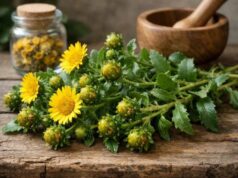
Great yellow gentian is one of Europe’s classic bitter herbs. Its thick root, rather than its bright yellow flowers, is the part used in herbal medicine. For centuries, it has been valued as a digestive bitter, especially for low appetite, sluggish digestion, and the kind of post-meal discomfort that feels heavy rather than inflamed. Modern interest in gentian centers on the same core idea: its intensely bitter compounds appear to prime digestive function before food arrives.
What makes gentian distinctive is not a broad wellness image, but a very specific profile. It is mainly used to stimulate appetite, support digestive secretions, and help with mild dyspeptic symptoms such as fullness, belching, and slow digestion. It may also support bile flow in traditional practice. At the same time, it is not suitable for everyone. Because it is a strong bitter, timing, dose, and stomach sensitivity matter.
Used well, gentian can be practical and elegant. Used carelessly, it can be the wrong herb for the wrong digestive pattern.
Essential Insights
- Great yellow gentian is best known for temporary loss of appetite and mild dyspeptic complaints such as fullness and sluggish digestion.
- Its signature bitter compounds include amarogentin, gentiopicroside, swertiamarin, and related secoiridoids.
- A traditional adult range is about 0.6 to 6 g of dried root daily, often taken 15 to 60 minutes before meals.
- Avoid it during pregnancy and with stomach or duodenal ulcer or acute upper digestive inflammation.
- Adults with persistent symptoms beyond 2 weeks should stop self-treatment and seek clinical advice.
Table of Contents
- What is great yellow gentian
- Key compounds and bitter actions
- What does gentian help with
- How gentian is used
- How much gentian per day
- Safety, interactions, and who should avoid it
- What the evidence really says
What is great yellow gentian
Great yellow gentian, botanically known as Gentiana lutea, is a tall perennial herb native to mountainous parts of central and southern Europe. In herbal medicine, the root and rhizome are the prized parts. They are thick, pale inside, and famously bitter. That bitterness is not just a sensory detail. It is the herb’s defining medicinal feature.
Most people encounter gentian in one of three settings. The first is traditional herbal medicine, where the dried root is used in teas, tinctures, and extracts for appetite and digestion. The second is bitter aperitif and liqueur traditions, where gentian contributes a deep, earthy bitterness. The third is modern supplement use, where gentian appears in digestive formulas aimed at pre-meal use.
A helpful way to understand gentian is to separate it from soothing digestive herbs. Gentian is not a coating herb like marshmallow, and it is not primarily a carminative spice like fennel or cardamom. It is a stimulating bitter. That means it tends to fit best when digestion feels weak, slow, or unresponsive, not when the main problem is burning irritation.
The plant has several common names, including yellow gentian, bitterwort, and gentian root. In commercial products, labels may simply say gentian. In practical terms, that usually refers to Gentiana lutea root, though the exact preparation still matters.
Common forms include:
- Dried root for tea or infusion.
- Powdered root in capsules.
- Tinctures and liquid extracts.
- Dry extracts in tablets or capsules.
- Multi-herb digestive bitters.
This herb also has a strong place in traditional European materia medica because it fills a specific niche. Many digestive complaints are not caused by too little food quality alone. Sometimes the issue is poor digestive readiness. Gentian is used to address that pre-meal readiness by bringing bitterness into the picture before eating.
That timing is one of the keys to understanding it. Gentian is usually taken before meals rather than after them, especially when the goal is appetite or digestive stimulation. In that sense, it behaves more like a primer than a rescue remedy.
Another important point is that the root is the main medicinal material. The flowers are striking, but they are not the usual focus of clinical or traditional digestive use. When buyers choose a gentian product, they should look for root-based preparations, not vague whole-plant branding.
In short, great yellow gentian is a classic bitter tonic herb with a narrow but meaningful digestive role. Its value lies in precision. It is most useful when chosen for the right symptom pattern and taken in the right way.
Key compounds and bitter actions
Gentian’s medicinal activity begins with its chemistry. The best-known compounds in great yellow gentian are bitter secoiridoids, especially amarogentin and gentiopicroside, which is also called gentiopicrin in some older literature. These compounds help explain why gentian tastes so intensely bitter and why it has such a long history as a digestive stimulant.
The main groups of compounds in gentian root include:
- Secoiridoid glycosides such as amarogentin, gentiopicroside, swertiamarin, and sweroside.
- Xanthones such as gentisin and isogentisin.
- Iridoid-related compounds including loganic acid.
- Smaller amounts of sugars, phenolics, and other minor constituents.
Amarogentin deserves special attention because it is often described as one of the bitterest naturally occurring compounds known. That fact is not just trivia. It helps explain why even relatively small amounts of gentian can produce a noticeable physiological response. When bitter substances contact taste receptors, especially before a meal, they may trigger a cascade that involves saliva, gastric secretion, and digestive readiness.
This is where gentian differs from herbs marketed as general antioxidants or broad adaptogens. Its primary action is sensory and digestive. The bitterness itself is the mechanism’s starting point. In simple terms, the herb tells the body that food is coming and that digestion should prepare.
That likely translates into several practical actions:
- Increased salivation.
- Stimulation of gastric and digestive secretions.
- Support for appetite in people who feel flat or uninterested in food.
- Possible support for bile flow in traditional use.
- Mild digestive toning rather than a soothing, coating effect.
A useful nuance is that bitter herbs are not all interchangeable. Gentian is deeper, harsher, and more tonic than many culinary bitters. People who want a gentler, aromatic bitter profile sometimes respond better to herbs with a warming or volatile oil component. That is one reason formulas may pair gentian with herbs such as wormwood for classic bitter support or with milder aromatic digestives.
The non-bitter compounds in gentian, especially xanthones, are also scientifically interesting. They are often discussed in relation to antioxidant, anti-inflammatory, and other laboratory effects. Still, this is where readers should keep perspective. Gentian’s real-world medicinal identity is still overwhelmingly digestive. Its bitter secoiridoids are the center of gravity.
Another practical point is that extraction method changes the final profile. Water infusions, ethanol-based tinctures, and dry extracts do not present exactly the same chemical balance. That helps explain why some gentian products feel noticeably stronger than others even when the label names the same plant.
So when people ask what gentian contains, the best answer is not a long chemistry list alone. It is this: gentian contains some of the most distinctive bitter compounds used in European herbal medicine, and those compounds are closely tied to its traditional role as a pre-meal digestive tonic.
What does gentian help with
Gentian is most useful for a fairly specific group of digestive complaints. Its best traditional uses are temporary loss of appetite and mild dyspeptic symptoms. Dyspepsia is a broad term, but in the gentian context it usually means heaviness after meals, early fullness, sluggish digestion, mild belching, and a sense that digestion is underpowered rather than inflamed.
This distinction matters. Gentian is generally a better match when the digestive picture looks “cold,” slow, or apathetic. It is a worse match when the picture looks hot, irritated, or ulcer-prone. That single insight often determines whether the herb feels helpful or uncomfortable.
The most reasonable benefits to expect include:
- Better appetite before meals.
- More digestive readiness in people who forget to eat or feel indifferent to food.
- Less post-meal heaviness in mild functional digestive complaints.
- Mild support for digestion of fuller meals.
- Possible traditional support for bile flow.
In everyday life, gentian often suits people who say things like:
- “I am not hungry until late in the day.”
- “Food just sits there.”
- “I feel full too quickly.”
- “I need something that wakes digestion up before a meal.”
It is less likely to be a good fit for people whose main complaint is acid burning, sharp upper abdominal pain, or active ulcer history.
Gentian is also sometimes discussed in relation to nausea, but this needs care. Traditional sources include nausea prevention among its uses, yet modern readers should not assume it behaves like a standard anti-nausea herb in all contexts. For motion sickness, pregnancy-related nausea, or well-studied acute nausea uses, herbs with better direct clinical support may make more sense. For example, ginger’s digestive and anti-nausea evidence is usually broader and more familiar in modern practice.
Another gentle correction is worth making. Gentian is not a miracle herb for chronic bloating. If bloating is driven by constipation, food intolerance, reflux, or gut-brain interaction issues, gentian may not address the root cause. It can help when sluggish digestive signaling is part of the problem, but it is not a stand-alone answer to every upper GI symptom.
Some traditional systems also use gentian as a general tonic after illness or periods of poor intake. That makes sense when appetite is low and convalescence includes digestive dullness. In that setting, the herb’s value is not “healing everything,” but helping the body re-engage with food and digestion.
So what does gentian truly help with? Its strongest use remains narrow and practical: temporary loss of appetite and mild digestive complaints that improve when bitterness is introduced before meals. That is a meaningful role, but it is not the same as being a universal digestive cure.
How gentian is used
Gentian is usually used orally, and the form chosen should match the reason for using it. The herb is not commonly taken as a casual daily tonic for no clear purpose. It works best when there is a defined digestive goal and when the user pays attention to timing.
The main forms are straightforward:
- Tea or infusion made from the dried root.
- Tincture or liquid extract.
- Dry extract capsules or tablets.
- Combination digestive bitters.
Tea is traditional, but gentian tea is extremely bitter. Some people tolerate that well, while others strongly dislike it. Even so, the intense taste may be part of what makes the herb function as intended, because the oral bitter signal is one of the likely triggers for its digestive effect.
Tinctures and liquid bitters are often more practical for pre-meal use. A small measured dose can be taken shortly before eating, and the timing is easy to control. Capsules are convenient, but they slightly change the experience because the bitterness is less immediate in the mouth. That does not make them ineffective, but it may make the effect feel different.
A practical rhythm often looks like this:
- Take gentian shortly before meals, not randomly during the day.
- Use it when appetite is low or digestion feels slow.
- Reassess after 1 to 2 weeks, especially if the symptom pattern is not clearly improving.
- Stop and rethink the choice if it feels irritating rather than supportive.
Gentian also works well in multi-herb formulas. Herbalists often combine it with carminatives or aromatic digestives so the formula stimulates and relaxes at the same time. That can be useful when a person has poor appetite plus mild gas or cramping. People looking for a softer, post-meal digestive profile sometimes compare it with peppermint for digestive comfort, though peppermint is usually calmer and less distinctly pre-meal in character.
One of the most common mistakes is using gentian after a heavy meal and expecting immediate relief. It can still play a role there, but it is usually better framed as a preparation herb than a rescue herb. Another mistake is taking it despite clear signs of irritation, such as burning, rawness, or active ulcer symptoms.
In culinary and liqueur traditions, gentian is also used in aperitif-style preparations. That historical use aligns with its herbal logic: bitterness before a meal can help organize digestive readiness. Still, alcoholic gentian products are not the same as standardized medicinal preparations, and dose consistency is much lower.
Used thoughtfully, gentian is simple. Pick the right form, take it before meals, and use it for the kind of digestive slowdown it actually matches. The herb tends to disappoint only when people expect it to behave like something it is not.
How much gentian per day
Gentian dosage depends on the form, the strength of the preparation, and the goal of use. Root tea, tincture, and dry extract cannot be treated as interchangeable by weight alone, so the label and extract type matter.
Traditional adult use usually centers on the root taken before meals. In official monograph style guidance, the daily range for dried root can run broadly, with roughly 0.6 to 6 g per day appearing in European use patterns and about 0.1 to 6 g per day in some official natural health product frameworks. That wide range reflects real differences in preparation style.
Common adult approaches include:
- Infusion or tea: 0.6 to 2 g as a single dose, 1 to 3 times daily.
- Dried root total: around 0.6 to 6 g daily depending on preparation and frequency.
- Dry extract: often around 240 mg per dose, 2 to 3 times daily in traditional monograph ranges.
- Tincture: about 1 ml, 1 to 3 times daily in some traditional preparations.
The timing is almost as important as the amount. Gentian is generally taken 15 to 60 minutes before meals. This is one of the clearest practical rules in gentian use. The point is to engage bitterness early enough that appetite and digestive signaling can respond before eating starts.
A sensible way to use gentian is:
- Start at the lower end of the range.
- Use it before the meals that matter most.
- Increase only if the product is well tolerated.
- Stop after 2 weeks if the complaint is unchanged or worsening.
That final point matters because gentian is meant for short-term self-care of mild symptoms, not indefinite self-treatment of undiagnosed digestive problems.
Product variability also deserves attention. One capsule may contain plain powdered root, while another contains a concentrated dry extract. A “stronger” feeling product is not always a better one. It may simply be more bitter or more concentrated. This is why reading the preparation type matters more than chasing the largest number on the bottle.
As a rule, gentian is especially suited to pre-meal use in small, deliberate amounts. It is not an herb that rewards casual overuse. If a person needs to keep increasing the dose to notice anything, that is often a sign to reassess the diagnosis rather than escalate indefinitely.
For readers comparing digestive botanicals, artichoke’s digestive support profile can feel more comfortable for some post-meal complaints, while gentian remains more distinctly bitter and pre-meal in function.
The best dosing mindset is simple: use enough to create a clear but comfortable bitter effect, respect the form you are taking, and let the symptom pattern determine whether gentian is truly the right herb.
Safety, interactions, and who should avoid it
Gentian is usually well tolerated when taken in appropriate adult doses, but it is not a universally gentle herb. Because it stimulates digestive activity and bitterness can be quite strong, the people most likely to do poorly with gentian are often those with irritated or inflamed upper digestive conditions.
The clearest groups who should avoid gentian without clinical guidance include:
- Pregnant people.
- People with stomach or duodenal ulcer.
- People with acute stomach or upper digestive inflammation.
- Children and adolescents unless specifically advised by a clinician.
Breastfeeding is a caution area rather than an automatic absolute ban in every source, but the safest practical advice is still to avoid self-prescribing it unless a qualified professional approves it.
The most commonly mentioned adverse effect is headache. Some users may also notice stomach discomfort if the herb is taken too strongly, too often, or despite the wrong symptom pattern. Hypersensitivity is another reason to avoid use.
A practical safety checklist looks like this:
- Do not take gentian if bitter herbs predictably worsen your stomach.
- Stop if the herb causes burning, sharp pain, or new irritation.
- Avoid self-treatment if symptoms persist beyond 2 weeks.
- Use extra caution with compound digestive formulas, since gentian may not be the only active herb involved.
Formal interaction data are limited, and official sources do not document many well-established drug interactions. Still, that should not be mistaken for proof of zero interaction potential. If someone is taking medicines for ulcers, chronic reflux, or complex gastrointestinal disease, gentian is not a good herb to add casually. The absence of robust interaction reports simply reflects limited study, not perfect certainty.
Another important real-world point is fit. Gentian is more likely to help a person with weak appetite and post-meal heaviness than someone with gastritis-like discomfort. That makes safety partly a matter of correct matching. The wrong bitter can aggravate the wrong stomach.
People who want a milder digestive herb with a different feel sometimes look at dandelion’s broader digestive and safety profile instead, especially when they want a less forceful bitter.
Gentian also should not be used as a substitute for diagnostic work. Ongoing upper abdominal pain, weight loss, black stools, difficulty swallowing, repeated vomiting, or new severe reflux symptoms need medical evaluation, not herbal experimentation.
In safety terms, gentian is best understood as a targeted herb with a clear boundary line. For the right adult, used briefly and before meals, it can be quite appropriate. For people with ulcerative or inflamed digestive conditions, it can be the wrong tool altogether.
What the evidence really says
The evidence for great yellow gentian is strongest when it is described honestly: it is a traditional digestive herb with plausible mechanisms, official recognition for certain mild uses, and a relatively small modern clinical evidence base.
That means two things are true at once. First, gentian has enough pharmacological and traditional support to justify modern use for temporary loss of appetite and mild dyspeptic complaints. Second, it does not have the kind of large, modern, condition-specific clinical trial base that would justify grand claims about broad digestive healing.
What supports gentian’s use most convincingly is the convergence of several lines of evidence:
- Long-standing traditional use in Europe.
- Official monographs recognizing use for temporary loss of appetite and mild digestive complaints.
- Clear phytochemistry centered on potent bitter secoiridoids.
- Mechanistic work supporting digestive stimulation and spasm-related actions.
- Limited human research suggesting meaningful physiological effects.
Still, the limits are important. Much of the modern literature is preclinical, mechanistic, or review-based. Human studies are not abundant, and some older digestive studies do not meet the design standards readers now expect. There is also variability in preparations. A tea, tincture, dry extract, and microencapsulated bitter ingredient do not behave identically, so results cannot always be transferred neatly from one form to another.
This is why gentian should be framed as evidence-informed but not heavily trial-proven. It sits in the same broad category as several traditional digestive bitters: stronger than folklore alone, but not backed by the kind of clinical volume seen with a few better-studied digestive agents.
One especially useful insight from the evidence is that gentian may work best not by “fixing disease,” but by changing digestive readiness and meal response. That makes it highly practical for some functional complaints and much less relevant for structural disease, severe reflux, ulcers, or chronic inflammatory pathology.
It is also important not to confuse plausibility with proof. Laboratory findings around antioxidant, anti-inflammatory, skin, or metabolic pathways are interesting, but they do not automatically expand gentian’s clinical role. The digestive uses remain the most grounded.
In comparison, some digestive herbs have broader modern clinical data. That is one reason many clinicians are more comfortable discussing ginger’s better-studied digestive applications for specific complaints. Gentian still has value, but its value is narrower and more dependent on correct use.
The most accurate bottom line is this: gentian is a legitimate traditional bitter with a sound digestive rationale, especially for low appetite and mild dyspeptic symptoms. Its evidence is enough to support careful use, but not enough to justify hype, long-term self-treatment, or broad disease claims. In herbal medicine, that kind of honest precision is often the difference between a useful herb and a misunderstood one.
References
- The healing bitterness of Gentiana lutea L., phytochemistry and biological activities: A systematic review 2023 (Systematic Review)
- Spasmolytic Activity of Gentiana lutea L. Root Extracts on the Rat Ileum: Underlying Mechanisms of Action 2024
- Microencapsulated bitter compounds (from Gentiana lutea) reduce daily energy intakes in humans 2016 (RCT)
- European Union herbal monograph on Gentiana lutea L., radix 2019 (Monograph)
- NATURAL HEALTH PRODUCT GENTIAN – GENTIANA LUTEA 2025 (Official Monograph)
Disclaimer
This article is for educational purposes only and does not replace medical advice, diagnosis, or treatment. Great yellow gentian can affect digestive secretions and may not be appropriate for people with ulcers, acute stomach inflammation, pregnancy, breastfeeding, or persistent digestive symptoms. Anyone with ongoing abdominal pain, reflux, unexplained weight loss, black stools, repeated vomiting, or a diagnosed gastrointestinal disorder should speak with a qualified healthcare professional before using gentian or any bitter herb.
If this article helped you, please share it on Facebook, X, or your preferred platform to help more readers find reliable herbal information.