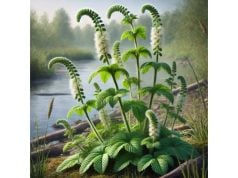
Greater celandine, Chelidonium majus, is a striking yellow-flowered herb from the poppy family that has been used for centuries in European and Asian herbal practice. Its best-known features are a bitter taste, a bright yellow-orange latex, and a chemistry dominated by potent isoquinoline alkaloids. Traditionally, it has been used in two very different ways: internally for digestive spasm, biliary discomfort, and sluggish digestion, and externally for warts, corns, and certain stubborn skin lesions.
That long history makes the herb intriguing, but it also makes careful reading essential. Greater celandine is not a gentle kitchen herb, and it is not a beginner supplement. Laboratory studies suggest antispasmodic, antimicrobial, antiviral, and anti-inflammatory activity, but oral use has also been linked to rare yet important cases of liver injury. In other words, this is a plant with real biological activity and a narrower safety margin than many readers expect. The most helpful way to approach it is with clear priorities: what it is, what its key compounds do, where its traditional uses make sense, what modern evidence actually supports, and when the risks outweigh the potential benefits.
Quick Facts
- Greater celandine is used most often for digestive spasm, biliary discomfort, and topical wart care rather than as a general wellness herb.
- Its main active compounds are isoquinoline alkaloids such as chelidonine, sanguinarine, chelerythrine, berberine, and protopine.
- Historical oral use has often involved about 15 to 20 drops of tincture, 3 times daily, but unsupervised oral use is a poor fit because liver safety remains a concern.
- Avoid oral use if you have liver disease, are pregnant or breastfeeding, are giving herbs to a child, or take medicines that can stress the liver.
Table of Contents
- What is Greater Celandine
- Key ingredients and actions
- Benefits and traditional uses
- What the research really shows
- How to use Greater Celandine
- How much per day
- Safety, interactions, and who should avoid it
What is Greater Celandine
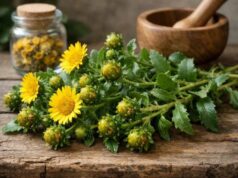
Greater celandine is a perennial herb in the Papaveraceae family, the same broad family that includes poppies. It grows widely across Europe and parts of Asia and has spread into North America as well. The plant is easy to recognize once you know the clues: soft blue-green leaves, small four-petaled yellow flowers, and a vivid orange-yellow sap that appears when the stem or leaf is broken. That sap, often called latex, is central to the plant’s folk reputation.
The herb has a long medicinal history, especially in digestive and skin care traditions. In older European herbal practice, it was used for cramping abdominal pain, sluggish bile flow, jaundice-like complaints, gallbladder discomfort, and digestive heaviness after fatty meals. Folk use also applied the fresh latex directly to warts and corns. In some traditional systems, it was viewed as both a bitter digestive herb and a tissue-targeted topical remedy.
One practical point matters right away: the medicinal raw material is not always the same thing. In formal herbal use, the dried aerial parts collected during flowering have often been the main medicinal material. In folk practice, the fresh latex is commonly used externally, and in some regions the root has also been valued. That distinction matters because the chemistry changes by plant part. Roots and immature fruits can carry higher alkaloid concentrations than the leafy herb, and fresh sap behaves very differently from a tea or tincture.
It is also worth clearing up a naming confusion. Greater celandine is not the same plant as lesser celandine, also called pilewort. They are unrelated species from different botanical families. Mixing them up can create real safety problems, so the botanical name matters here more than it does for many herbs.
What makes greater celandine unusual is that it has never fit neatly into the category of a gentle home remedy. Even supporters of the herb tend to treat it as targeted rather than casual. It has a credible tradition, a chemically active profile, and several interesting laboratory findings, but it also carries enough risk that many people are better served by safer digestive or topical herbs for everyday self-care. That tension between usefulness and caution defines the whole conversation around this plant.
Key ingredients and actions
The chemistry of greater celandine is the main reason it attracts both interest and caution. Its most important constituents are isoquinoline alkaloids, a group of potent plant compounds with strong biological activity. The best-known names include chelidonine, sanguinarine, chelerythrine, berberine, coptisine, protopine, allocryptopine, and stylopine. Modern reviews describe a much larger alkaloid profile overall, which helps explain why the plant has effects that range from digestive spasm relief to antimicrobial and cell-active behavior.
Chelidonine is often discussed as one of the herb’s signature compounds. It has been studied for antispasmodic, analgesic, and cell-regulating effects. Sanguinarine and chelerythrine attract attention because they are highly active and help explain both the plant’s antimicrobial reputation and some of its toxicity concerns. Berberine and coptisine are better known from other bitter botanicals, and their presence helps connect greater celandine to traditional digestive use. Readers familiar with barberry for bitter alkaloid support will notice some overlap in chemical themes, though greater celandine has a more contested safety profile.
The plant also contains phenolic acids and related compounds, including caffeic, ferulic, and p-coumaric acid derivatives, along with chelidonic acid and other minor constituents. These do not define the herb as strongly as the alkaloids do, but they broaden its antioxidant and anti-inflammatory profile. The result is a plant that behaves as more than a single-molecule medicine. Extraction method, solvent, plant part, and freshness all shape the final product.
From a practical standpoint, these compounds help explain several traditional actions:
- Bitter and digestive-stimulating activity
- Antispasmodic effects on smooth muscle
- Choleretic and cholagogue tendencies, meaning support for bile formation or flow
- Antimicrobial and antiviral activity in laboratory studies
- Irritant and tissue-altering activity in the fresh latex used on warts
That last point deserves emphasis. The same chemistry that makes the plant attractive for stubborn skin lesions can also make it harsh. Fresh sap is not just “natural wart juice.” It is a chemically active latex with compounds that can irritate normal tissue.
Another useful insight is that variability is built into the plant. A tea from dried aerial herb, a tincture standardized to alkaloids, and a dab of fresh latex are not interchangeable preparations. They may all be called greater celandine, but they do not behave the same way in the body. That is one reason the herb has produced so many mixed opinions in both traditional practice and modern research. The chemistry is real, but consistency is harder to guarantee than the herb’s long history might suggest.
Benefits and traditional uses
The most credible traditional uses of greater celandine cluster around digestion and topical skin care. It has historically been used for cramping upper abdominal discomfort, bile-related symptoms, fullness after meals, and sluggish digestion. In those settings, the herb is usually valued as a bitter antispasmodic rather than as a nutrient-rich tonic. The hoped-for result is not broad “detox” support but a more specific reduction in spasm, pressure, and post-meal discomfort.
For digestive complaints, older herbal practice often turned to greater celandine when the pattern included several features at once: tight or crampy pain, bloating, a heavy feeling after fatty foods, and discomfort believed to involve the gallbladder or bile ducts. That older logic still helps modern readers understand the herb. It is not traditionally chosen for heartburn alone, constipation alone, or vague fatigue. It is chosen when spasm and biliary sluggishness seem central.
Traditional internal uses have included:
- Functional dyspepsia with cramping or pressure
- Biliary discomfort without signs of acute obstruction
- Flatulence and post-meal fullness
- Spasm-like abdominal pain
- Older gallbladder and liver support traditions
That said, modern self-care often favors gentler options first. For readers who mainly want mild digestive support, something like artichoke for bile and digestion may make more sense as a first step because the risk profile is easier.
The second major use is topical. Fresh yellow-orange latex has been dabbed directly onto common warts, corns, and similar keratinized lesions in folk medicine for generations. The logic is partly antiviral, partly tissue-destructive, and partly based on the plant’s ability to change abnormal surface growth over time. This is why the herb is often mentioned in wart traditions even when modern dermatology does not treat it as a standard therapy.
A realistic way to think about the potential benefits is this:
- Internally, greater celandine may help where spasm, bitter deficiency, and bile-related digestive discomfort overlap.
- Externally, it may help some common warts or corns when used carefully on a tiny area.
- It is much less convincing as a general liver cleanser, broad immune enhancer, or cancer remedy.
That final distinction matters because internet summaries often stretch the herb far beyond what its tradition or evidence supports. Yes, laboratory studies have looked at antimicrobial, antiviral, anti-inflammatory, and anticancer effects. But those findings do not automatically translate into safe home use. The realistic benefit profile is narrower and more practical: digestive spasm support in selected cases and cautious external use for stubborn surface lesions.
What the research really shows
Greater celandine has a larger research footprint than many folk herbs, but the quality of that evidence is uneven. The strongest body of data is preclinical. Researchers have documented antimicrobial, antiviral, anti-inflammatory, antispasmodic, choleretic, and cytotoxic effects in cell and animal studies. The plant’s chemistry is active enough that these findings are not surprising. The hard question is how much of that translates into dependable human benefit.
For digestive use, the evidence is more modest than many product labels suggest. Some positive human data involve multi-herb formulas in which greater celandine is only one ingredient among several. That makes it difficult to isolate the role of greater celandine itself. When a formula works, the benefit may come from the combination rather than from celandine alone. Compared with herbs that have a clearer everyday record for self-managed gut spasm, such as peppermint for digestive spasm, greater celandine remains less straightforward.
For wart use, the evidence is also limited. Folk practice is strong, and mechanistic studies on the latex suggest antiviral and tissue-active effects. There are case reports and observational discussions that keep the tradition alive. But there is still a gap between “historically used and biologically plausible” and “well proven in modern clinical trials.” That is why wart treatment with greater celandine remains more of a traditional option than a standardized evidence-based therapy.
Cancer-related claims deserve especially careful wording. Greater celandine compounds show cytotoxic effects in laboratory settings, and that naturally draws attention. But preclinical anticancer activity is common in pharmacology and does not justify self-treatment. This herb should not be used as a substitute for cancer care, and exaggerated cancer claims are one of the least responsible ways to present it.
The current evidence picture is best summarized like this:
- Strong for phytochemistry and biologic activity in the lab
- Suggestive but incomplete for digestive spasm and biliary complaints
- Traditional and plausible, but clinically underdeveloped, for common warts
- Too weak for confident claims about chronic liver disease, immune disease, or cancer treatment
The most honest conclusion is that greater celandine is a pharmacologically active traditional herb with real signals, not a proven all-purpose remedy. Research supports curiosity, but not hype. For most readers, that means the herb belongs in the category of selective use under clear conditions, not casual long-term supplementation.
How to use Greater Celandine
How greater celandine is used depends heavily on the goal and the form. Internal preparations usually rely on the dried aerial herb or a liquid extract. External preparations use either the fresh latex or a topical product formulated for skin lesions. These are not interchangeable approaches, and confusing them is one of the easiest ways to misuse the plant.
For internal use, people have historically taken the herb as a tea, tincture, fluid extract, or capsule. Because the active compounds can vary widely, modern use should favor clearly labeled commercial products over home-foraged preparations. A standardized product at least gives you some idea of the intended strength. Freshly harvested wild plants do not. That is especially important because alkaloid levels vary by season, plant part, and extraction method.
For topical use, the traditional method is simple but strong: a tiny amount of fresh latex is applied directly to a wart or corn. The surrounding skin is avoided, the area is allowed to dry, and the application is repeated over days or weeks. This is not something to smear broadly on irritated skin. It is a pinpoint use for a very specific target. If the lesion is uncertain, pigmented, bleeding, or located on the face or genital area, self-treatment is a bad idea.
A sensible use framework looks like this:
- Choose the goal first: digestive support or lesion-specific topical use.
- Match the preparation to that goal rather than improvising.
- Use the smallest effective amount.
- Stop quickly if irritation or systemic symptoms appear.
- Do not keep escalating the dose because the plant “seems natural.”
For people wanting a general external astringent or soothing skin herb rather than a strong wart remedy, gentler options such as witch hazel for topical astringency are often easier to tolerate.
Another practical rule is to avoid using greater celandine as a broad cleansing herb. That framing encourages prolonged, unfocused use, which is exactly the wrong match for this plant. Greater celandine is better thought of as a short-term, purpose-driven herb. If the purpose is not specific, the herb usually does not belong in the plan.
How much per day
Dosage is the point where greater celandine becomes notably more complicated than many herbs. There is no widely accepted modern self-care dose that can be called both well established and broadly reassuring. Most dosing language still comes from older monographs, legacy preparations, or traditional practice rather than from modern clinical consensus.
Historically, oral use has often been described in forms such as tincture, fluid extract, or dried herb infusion. Older references and product directions have included amounts such as 15 to 20 drops of tincture three times daily, or low daily gram amounts of the herb. Those figures help explain how the herb was used, but they should not be read as a green light for routine self-prescribing now. A key reason is that liver injury linked to greater celandine appears to be at least partly idiosyncratic. In plain language, harm may not depend only on taking a very high dose.
That is why modern dosing has to include a risk perspective, not just a quantity perspective. Some older regulatory assessments in Europe flagged alkaloid intake thresholds and led to restrictions on higher-dose oral products. That tells you something important: the question is not simply “how much works,” but “how much can be used with reasonable confidence.”
A practical way to think about dosage is this:
- Oral use should be conservative, short term, and ideally supervised.
- Product-specific directions matter more than generalized herb folklore.
- Extracts are not equivalent to teas or raw herb.
- Longer use is harder to justify than brief use.
- Topical wart use is measured by area and frequency, not by grams.
For topical care, historical practice has often involved applying a tiny amount of fresh sap or a topical preparation to the lesion two or three times daily. Even there, smaller is better. Only the lesion should be treated, and nearby healthy skin should be protected.
Common variables that change the right dose include:
- Plant part used
- Extract strength and alkaloid content
- Whether the product is oral or topical
- Body size and liver health
- Duration of use
- Other medicines or supplements in the routine
The safest bottom line is simple. There is no ideal universal daily dose for modern unsupervised oral use. If someone chooses an oral preparation despite the herb’s safety concerns, it should be a clearly labeled product, taken at the low end of the manufacturer’s directions, for the shortest reasonable time, with prompt stopping at the first sign of intolerance.
Safety, interactions, and who should avoid it
Safety is the defining issue with greater celandine. The herb is not known mainly because it is ineffective. It is controversial because oral use has been linked to rare but well-documented cases of liver injury. That does not mean every product causes harm or that every traditional use was misguided. It does mean that the margin for casual experimentation is smaller than many readers expect.
The most important safety concern is herb-induced liver injury. Reported cases have ranged from mild hepatitis-like illness to marked enzyme elevations with jaundice. Many people recovered after stopping the herb, but that does not make the risk trivial. What makes the issue harder is that the reaction may not be entirely predictable. It has often behaved more like an idiosyncratic adverse reaction than a simple overdose problem.
Warning signs that deserve immediate stopping and medical evaluation include:
- Yellowing of the eyes or skin
- Dark urine
- Pale stools
- Persistent nausea
- Upper right abdominal pain
- Unusual fatigue
- Itching with abnormal liver tests
Topical use is generally less risky systemically, but it is not harmless. Fresh latex can irritate skin, stain tissue, and cause burning. It should never be used near the eyes, inside the mouth, on large open areas, or on lesions you have not had properly identified. A wart, mole, precancerous spot, and irritated growth can look similar to a non-specialist.
People who should avoid oral greater celandine unless specifically directed by a qualified clinician include:
- Anyone with current or past liver disease
- People who drink heavily or already use hepatotoxic medicines
- Pregnant or breastfeeding people
- Children
- People with unexplained jaundice or abnormal liver tests
- Anyone with suspected gallstone obstruction, fever, or acute abdominal pain
Interaction data are not complete, but caution is still justified. Combining greater celandine with medicines that stress the liver is the most obvious concern. It is also wise to be careful with alcohol, multiple strong botanical extracts, and medicines metabolized heavily through the liver. Because the herb has antispasmodic and centrally active alkaloids, some people may also notice dizziness or unwanted slowing when it is combined with other sedating agents, although this is less well defined than the liver issue.
In practice, the risk-benefit balance is narrow. For a tiny common wart, careful topical use may be reasonable for some adults. For oral digestive self-care, greater celandine is often harder to justify because safer herbs and standard medical pathways usually exist.
References
- Chelidonium majus L.: A Current Perspective on Isoquinoline Alkaloids, Emerging Phytochemicals, Alkaloid Biosynthesis, and Biological Activities 2025 (Review)
- Alkaloids in Chelidonium majus L: a review of its phytochemistry, pharmacology and toxicology 2024 (Review)
- A Hidden Cause of Hypertransaminasemia: Liver Toxicity Caused by Chelidonium Majus L. : Report of Two Cases of Herb-Induced Liver Injury and Literature Review 2024
- Greater Celandine – LiverTox – NCBI Bookshelf 2022 (Authoritative Monograph)
- The Activity of Chelidonium majus L. Latex and Its Components on HPV Reveal Insights into the Antiviral Molecular Mechanism 2022
Disclaimer
This article is for educational purposes only and is not medical advice. Greater celandine is a higher-risk herb than many readers assume, especially when taken by mouth. It should not be used to diagnose, treat, or delay care for liver disease, gallbladder disease, persistent digestive symptoms, or suspicious skin lesions. Seek medical care promptly for jaundice, dark urine, severe abdominal pain, persistent nausea, or worsening skin changes. If you are pregnant, breastfeeding, have liver disease, take prescription medicines, or are considering oral use for more than a brief period, speak with a qualified healthcare professional first.
If this article helped you, please share it on Facebook, X, or your preferred platform.