Green banana flour is made from dried, ground unripe bananas. Its main draw is resistant starch, a carbohydrate that passes through the small intestine largely undigested. That makes it a useful option if you want to add fiber or swap out some of the refined flour in foods you already eat. How much it moves your blood sugar depends on the flour itself, how you cook it, and what else is on the plate.
Research on resistant starch suggests it can blunt the glucose rise after some meals. The evidence for green banana flour specifically is thinner, particularly when it comes to fasting glucose or A1C. There’s also a practical safety point: cooking can make part of the starch easier to digest, and stirring uncooked flour into a smoothie is appropriate only if the product is labeled ready to eat. If you want to try it, start with a small amount in a familiar recipe and see how your digestion responds.
Table of Contents
- What green banana flour contains
- What the blood sugar research shows
- What cooking and cooling do to resistant starch
- How to use green banana flour
- How to choose a flour and read the label
- Who should skip it or check with a clinician
- How to tell whether it’s worth using
What green banana flour contains
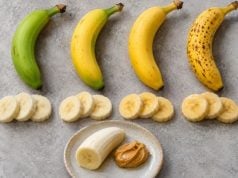
Unripe bananas store much of their carbohydrate as starch. As the fruit ripens, some of that starch breaks down into sugars, which is why a yellow banana tastes sweeter than a green one. Drying and milling the fruit while it is still green produces a flour that can contain a substantial amount of resistant starch.
The exact amount varies with the banana variety, its stage of ripeness, and how the maker dries and processes it. The differences between a green banana and a ripe banana also explain why sweet banana powder is a different ingredient from green banana flour.
In minimally processed green banana flour, the main form is called type 2 resistant starch, or RS2. Its starch granules have a structure that makes them difficult for digestive enzymes to break down. The flour also contains digestible starch, which your body can break down and absorb as glucose. Both forms can be present in the same spoonful, so quantity and preparation matter.
When resistant starch reaches the large intestine, gut bacteria can ferment it. They produce short-chain fatty acids, including butyrate, which cells lining the colon can use for energy. Fermentation also produces gas. That helps explain why a small amount in a pancake may be fine while a much larger breakfast addition leaves you bloated. Tolerance varies from person to person.
Green banana flour, green banana biomass, and isolated banana starch all come from the same fruit, but their compositions differ. Flour is made by grinding dried banana material. Biomass is a moist preparation typically made from cooked green bananas. Isolated banana starch is extracted from the fruit and contains less of its other material. A tablespoon of each can deliver a different amount of resistant starch. When a study or product claim mentions “green banana,” check which form it means before using the result to judge a bag of flour.
What the blood sugar research shows
Replacing digestible starch can change the response to a meal
The clearest reason resistant starch may help after a meal is simple: less starch is available to become glucose. If a recipe swap leaves you with less digestible starch in the portion you eat, the rise in blood sugar may be smaller. A review of 36 randomized trials involving 982 people with prediabetes or type 2 diabetes found that type 2 resistant starch reduced post-meal glucose on average in both short-term and longer studies. The review combined studies using different foods, starch preparations, and amounts, so it gives a sense of what resistant starch can do under some conditions. The effect of any particular flour or recipe remains uncertain.
The difference between adding and replacing is easy to miss. Imagine making two batches of pancakes. In one, you take out 10 g of wheat flour and replace it with 10 g of green banana flour. In the other, you keep all the wheat flour and add 10 g of banana flour on top. The second batch still contains the original wheat starch plus whatever digestible starch comes with the banana flour. The first has a better chance of reducing digestible starch per pancake, assuming both batches make the same number of pancakes.
The flour blend, the way the batter cooks, and the amount of syrup you use can all affect the result. If you’re working on post-meal blood sugar spikes, look at the whole plate when deciding which change to try.
Evidence for lasting improvements is limited
In a 24-week randomized trial, 113 adults with prediabetes or type 2 diabetes completed a study in which both groups received nutrition support. One group also ate 40 g of green banana biomass each day, providing about 4.5 g of resistant starch. The biomass group’s fasting glucose and A1C fell over the study, and A1C also fell in the group receiving nutrition support alone. The trial did not establish a clear blood sugar advantage from the biomass.
The 40 g figure describes the amount of a specific moist product used in the trial. The same weight of dry flour could provide a very different amount of resistant starch.
In a smaller crossover study, adults with type 2 diabetes tried isolated banana starch, a resistant maize starch, and digestible maize starch in separate four-day periods. Researchers matched the treatments for digestible starch so they could examine what happened when resistant starch was added. Among the 10 people with complete sensor data, average daily glucose was higher on days two through four with banana starch than with digestible maize starch, even though one fasting glucose measure favored banana starch. The trial was brief and used extracted starch. It illustrates why a favorable result on one glucose measure can tell a different story from readings across a whole day.
After-meal glucose, fasting glucose, and A1C answer different questions. A smaller rise after breakfast tells you something about that meal. A1C reflects average blood sugar over roughly three months. There’s no established amount of retail green banana flour that reliably lowers A1C, and the research cannot tell you how much a serving will change your reading.
What cooking and cooling do to resistant starch
When flour heats up in water or a moist batter, its starch granules absorb water and swell. This process, called gelatinization, makes some of the starch easier for digestive enzymes to reach. A pancake, bread loaf, or bowl of porridge can therefore contain less of the original RS2 than the flour used to make it.
The recipe’s moisture, baking or cooking time, and other ingredients all influence how much survives. An oven temperature alone tells you little about how much resistant starch ends up in a slice of bread.
Some starch can become resistant again as cooked food cools. Starch chains rearrange during cooling and form type 3 resistant starch, or RS3. The same process can happen when you cook and cool rice, pasta, or potatoes. How much RS3 forms depends on the food and preparation. You can’t assume that chilling a batch of banana flour muffins restores all the resistant starch that was in the dry flour.
A baking study found that replacing part of the wheat flour with certain green banana flours increased measured resistant starch in the finished bread. The banana variety mattered. Because the researchers measured the bread’s composition and baking properties, the study could show how much resistant starch was present in the finished loaf. A separate study in people would be needed to know how that loaf affects blood sugar after eating.
Follow the package directions for cooking. Raw flour can carry harmful bacteria, and drying or milling alone does not guarantee that a product is safe to eat as sold. Use flour in smoothies, yogurt, or other uncooked foods only when the label says it’s ready to eat or gives directions for that use. If the package calls for cooking or gives no clear instructions for uncooked use, choose a cooked recipe. Stirring raw flour into already-cooked oats just before serving gives it little time to cook. Follow the manufacturer’s directions or use the flour in a recipe that cooks it thoroughly.
How to use green banana flour
Start with a small amount you can measure
If you’re trying it to see how your digestion responds, about 1 level teaspoon of flour in a serving is a practical starting amount. That’s a kitchen measure for testing tolerance, and the amount of resistant starch it provides depends on the product. Try the same amount on a few occasions before deciding whether to use more.
If the package gives a serving size and a weight in grams, weighing the portion makes it easier to repeat, especially if you switch brands or make a larger batch. Keep the rest of your usual fiber intake steady for those first few servings. Adding banana flour, extra beans, and a new fiber supplement in the same week gives gut bacteria more to ferment and makes it harder to identify what caused any discomfort.
If you develop gas or bloating that bothers you, use less or stop. You can still use the flour occasionally in a recipe you like. There’s no established daily target for blood sugar.
Use a partial substitution in a familiar recipe
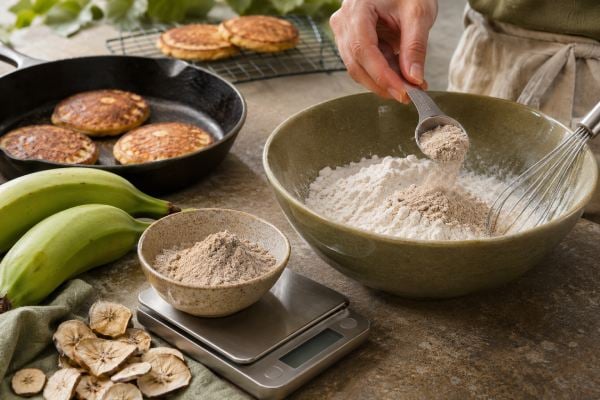
For a first batch of pancakes or muffins, try replacing 5% to 10% of the flour by weight. If your recipe uses 200 g of flour, take out 10 to 20 g and replace it with the same weight of green banana flour. This is a starting point for recipe texture, independent of the amount you might choose to eat in one serving. Check how many portions the batch makes so you know how much flour ends up in each one. For example, replacing 20 g in a batch of 10 muffins adds 2 g of green banana flour per muffin.
The flour can change how much liquid the batter needs, and larger substitutions can change how the food holds together. Try a small swap first and see how the finished batch turns out. For a fully gluten-free bake, use a recipe developed for banana flour or a suitable gluten-free blend. Wheat flour’s gluten helps provide structure, and green banana flour behaves differently when it makes up most of the mix.
| Food | How to use it | What to keep in mind |
|---|---|---|
| Pancakes or muffins | Replace 5% to 10% of the recipe’s flour by weight and cook or bake fully. | Divide the flour used by the number of portions to estimate how much is in each. |
| Soup or sauce | Whisk a small amount into cool water before adding it to the pot, then cook it thoroughly. | It can thicken as it heats. Start with less if you’re trying it for the first time. |
| Yogurt or a smoothie | Stir or blend in a small amount of a product labeled ready to eat. | Juice, sweetened yogurt, and large portions of fruit can add more carbohydrate than the flour itself. |
A recipe you already make gives you a point of comparison. If you usually have two pancakes with plain yogurt and berries, keep those portions the same for the first test. Changing the flour, doubling the berries, and dropping the syrup all at once may give you a breakfast you like, but it makes it hard to tell which change affected your digestion or glucose.
How to choose a flour and read the label
Look for green banana or unripe banana in the ingredient list. A single-ingredient flour is easiest to assess. Blends can work well in baking, but products that also contain rice flour, tapioca starch, or sweeteners can have a different mix of carbohydrates. Banana powder marketed for flavor may be made from ripe fruit. The ingredient list and preparation directions tell you more than a picture of a banana on the package.
Next, look at the serving weight, total carbohydrate, and dietary fiber. If you’re comparing two products, put them on the same weight basis. A flour with 3 g of fiber per 15 g serving provides the same labeled fiber per gram as one with 6 g per 30 g serving. The total fiber number can include several kinds of fiber. It can’t tell you exactly how many grams are resistant starch unless the label or manufacturer lists that amount separately.
A resistant starch figure is most useful when it specifies the serving weight and whether it refers to the flour as sold or the finished food. For example, if a manufacturer lists 4 g of resistant starch per 15 g serving of dry flour, a 5 g portion of that flour would contain roughly 1.3 g before cooking. That’s an example of how to scale a label, and the number can change once you cook the flour. Claims printed on the front of the bag often leave out this preparation detail.
A low sugar number also needs context. Flour can contain very little sugar and still supply starch that your body turns into glucose. If you count carbs for diabetes care, follow the method your care team taught you. A front-of-package “net carbs” number or an estimate borrowed from a study can give you a different tally from the one your treatment plan uses.
Who should skip it or check with a clinician
Skip it if you have a banana allergy. The flour comes from banana, and cooking or baking is an unreliable way to remove the risk of an allergic reaction. If you’ve had mouth itching, hives, swelling, or another reaction after eating banana and aren’t sure what caused it, ask a clinician before trying the flour. If you have a latex allergy and have also reacted to banana, mention both reactions when you seek advice.
If you have irritable bowel syndrome (IBS) or often get pain or bloating from fermentable fibers, a large serving may be uncomfortable. Tolerance varies, and a reaction to one serving size may tell you more than the product’s marketing claims. If you already have a digestive flare or are working through a supervised elimination diet, wait until you can assess a new food without several symptoms or food changes happening at once.
If your clinician has prescribed a low-fiber diet, or you have gastroparesis, a condition that slows stomach emptying, ask whether the flour fits your plan. The answer can depend on your symptoms, the portion, and how it’s prepared. For people with celiac disease, pure banana flour is naturally gluten-free. Look for a gluten-free label to help avoid contamination during milling or packaging. Any recipe that still contains wheat flour contains gluten even if you replace some of it with banana flour.
If you use mealtime insulin or take a medicine that can cause low blood sugar, such as glipizide, check with your diabetes team before making substantial changes to your usual carbohydrate intake. The issue is how the meal’s carbohydrate content fits with your medication and monitoring plan. Use the glucose targets and treatment instructions you’ve been given, and consult your care team if a change in meals leads to repeated lows.
How to tell whether it’s worth using
If you already use a glucose meter or a continuous glucose monitor, compare two versions of a meal you eat regularly. Keep the serving size, toppings, and usual activity afterward as similar as you reasonably can. Check at the times in your care plan and measure from the same point in the meal each time, usually the first bite. If you use a sensor, look at the pattern over the next few hours as well as the peak. A single reading can miss a rise that occurs earlier or later.
Repeat the comparison on more than one day if the answer matters to you. Poor sleep, illness, exercise, and a different starting glucose can all affect the curve. If your glucose responses look similar, your decision can come down to whether you like the food, tolerate the flour, and find the price worthwhile.
If you use the flour mainly to increase fiber, you can judge it by what it adds to your usual meals and how your digestion feels. A glucose monitor is optional for that decision. Green banana flour makes the most sense when it fits something you already like to cook or bake. If you’d have to buy it solely for a hoped-for change in A1C, the evidence gives little reason to prioritize it. Beans, lentils, and whole grains can add fiber to meals you may already make, and they bring other nutrients along with them. A partial flour swap is one option within that wider choice of foods.
References
- A comparison of the effects of resistant starch types on glycemic response in individuals with type 2 diabetes or prediabetes: A systematic review and meta-analysis 2023 (Systematic Review)
- The multifactorial phenomenon of enzymatic hydrolysis resistance in unripe banana flour and its starch: A concise review 2024 (Review)
- The Physicochemical and Rheological Properties of Green Banana Flour–Wheat Flour Bread Substitutions 2025
- Resistant Starch Consumption Effects on Glycemic Control and Glycemic Variability in Patients with Type 2 Diabetes: A Randomized Crossover Study 2021 (RCT)
- Beneficial effects of green banana biomass consumption in patients with pre-diabetes and type 2 diabetes: a randomised controlled trial 2019 (RCT)
- Handling flour and flour products safely 2024 (Guidance)
Disclaimer
This article provides general nutrition information. If you take insulin or another medication that can cause low blood sugar, ask your diabetes care team how to handle substantial changes in meal carbohydrates. If you have a prescribed low-fiber diet, check with your clinician before adding green banana flour.