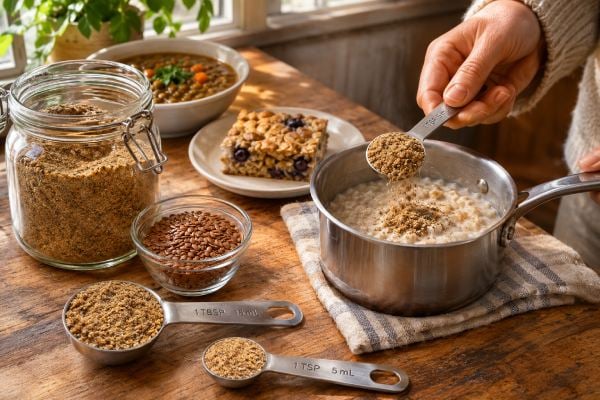
Ground flaxseed is one of the simplest ways to add fiber to a meal you already eat. Stir a spoonful into oatmeal, fold it into muffin batter, or whisk it into soup until the liquid thickens slightly. A level tablespoon weighs about 7 grams and supplies roughly 2 grams of fiber. If flaxseed is new to your routine—or if extra fiber tends to make you bloated—a teaspoon is a gentler place to start.
Some studies in people with prediabetes or type 2 diabetes suggest ground flaxseed may help with blood sugar. One small trial found a smaller rise after breakfast, and some longer studies found improvements in A1C, a measure of average blood sugar over about three months. The results vary, and researchers haven’t established a daily amount that reliably lowers glucose. For everyday use, start with a portion your stomach handles comfortably and add it to a meal you enjoy enough to eat regularly.
Table of Contents
- What the Research Shows About Flaxseed and Blood Sugar
- How Much Ground Flaxseed to Use
- Ground Flaxseed, Whole Seeds, and Oil
- Easy Ways to Add Ground Flaxseed to Meals
- Meal Timing and How to Interpret Glucose Readings
- Side Effects and When to Check With a Clinician
What the Research Shows About Flaxseed and Blood Sugar
Flaxseed contains both soluble and insoluble fiber, a plant omega-3 fat called alpha-linolenic acid, and plant compounds known as lignans. Some of its soluble fiber forms a gel when mixed with liquid. That is why ground flaxseed can thicken porridge or soup. Gel-forming fiber may slow how quickly carbohydrates are digested and glucose reaches the bloodstream, which can soften the rise after some meals. The amount of flaxseed you use, and what else is in the meal, can affect the result.
Blood sugar after a meal
In a 2022 trial, 19 men with type 2 diabetes ate the same breakfast on two occasions. On one occasion, they took 15 grams of ground golden flaxseed before eating. With the flaxseed, the rise from their starting glucose to their peak was 17% smaller, and their overall glucose rise across the two-hour test period was also lower.
That 17% refers to the size of the rise above the starting level, not the final glucose value itself. If a meal would otherwise raise glucose by 60 mg/dL, a 17% smaller rise would be about 50 mg/dL. The example is just arithmetic. The trial tested one dose with one breakfast in a small group, so it gives limited guidance about what happens with a teaspoon in oatmeal, a spoonful baked into bread, or a different meal later in the day.
Fasting glucose and A1C
A review of seven trials in people with prediabetes or type 2 diabetes found that milled or ground flaxseed improved several measures on average, including fasting glucose and A1C. The fasting glucose results varied considerably across trials. The studies also used different amounts and ways of serving flaxseed, making it difficult to pin down a daily serving that would produce a reliable change.
Fasting glucose, post-meal glucose, and A1C answer different questions. Fasting glucose reflects what happens overnight and between meals. Post-meal readings show how your body handles a meal under the conditions of that day. A1C captures a much longer stretch of time. A smaller rise after one breakfast tells you something about that breakfast. It takes longer-term evidence to say whether a change will show up on your next lab test.
The most dependable benefit of ground flaxseed is the fiber it adds. A tablespoon contributes about 2 grams toward your daily intake. The American Diabetes Association recommends at least 14 grams of fiber per 1,000 calories for people with diabetes or at risk of it. That works out to 28 grams on a 2,000-calorie eating pattern. Flaxseed can help you get there alongside other sources of fiber for blood sugar, including beans, whole grains, vegetables, and whole fruit.
How Much Ground Flaxseed to Use
Start with 1 level teaspoon a day for several days. If you feel comfortable, try 1 level tablespoon a day. Some people prefer to use up to 2 tablespoons spread across meals. Think of these as kitchen portions rather than medical doses. The research hasn’t established a standard amount for treating high blood sugar, and there’s no need to work up to the larger portion if a smaller one suits you.
| Level measure | Approximate weight | Approximate fiber | How to use it |
|---|---|---|---|
| 1 teaspoon | 2 to 2.5 g | About 0.7 g | Stir into a bowl or serving of cooked food while you see how you tolerate it. |
| 1 tablespoon | 7 g | About 2 g | Mix into one meal or divide between two meals. |
| 2 tablespoons | 14 g | About 4 g | Use across the day if you want more fiber and tolerate this amount. |
These estimates use 7 grams per tablespoon. The weight can vary with the grind and how tightly you pack the spoon, so use a level measuring spoon and check your package for its serving size and fiber content. Grams are more useful when you’re comparing products or reading a study. At 7 grams per tablespoon, the 15 grams used in the breakfast trial comes to just over 2 level tablespoons.
If you already eat plenty of beans, vegetables, and whole grains, you may be comfortable adding a tablespoon to a meal. If you’re increasing several fiber sources at once, take it more slowly. A breakfast that suddenly includes flaxseed, chia, bran, and a much larger serving of oats can leave you guessing about which change caused the bloating. Adding one ingredient at a time makes it easier to figure out what agrees with you. It’s the same approach that helps when you’re increasing your fiber intake more broadly.
Splitting a serving can help with texture. Two tablespoons can make a small bowl of oats pasty, while a tablespoon in a full pot of soup may barely change it. If a full tablespoon at once feels heavy, try a teaspoon in breakfast and another in a cooked meal later. Use the amount you can comfortably eat. A larger serving can add more fiber, but the evidence leaves open whether it will improve your glucose more than a smaller serving.
Ground Flaxseed, Whole Seeds, and Oil
Look for plain ground flaxseed, also sold as milled flaxseed or flaxseed meal. A product with flaxseed as its only ingredient makes it easy to see how much you’re getting. Packages labeled “ground whole flaxseed” contain the full seed after grinding. Brown and golden flaxseed both work in recipes. One trial used golden flaxseed, and there’s too little evidence to choose a color based on blood sugar.
Grinding breaks the outer coat so your digestive system can reach more of what’s inside. Whole flaxseed can pass through the gut intact, especially if you swallow the seeds without chewing them thoroughly. If whole seeds are what you have, you can grind a small batch in a clean spice or coffee grinder and then use it in cooked food. Pre-ground flaxseed saves a step and is easier to measure consistently.
Flaxseed oil provides alpha-linolenic acid, but the oil itself contains no fiber. If your goal is to add the fiber found in ground seeds, choose the meal. Flaxseed capsules and lignan extracts also have different contents and serving sizes, so results from trials on ground flaxseed can’t tell you what those products will do. A bag of plain ground flaxseed is sufficient for the meal ideas below.
Use the Nutrition Facts panel when buying a cereal, cracker, or bread that advertises flaxseed. The label can tell you how much fiber and carbohydrate you get per serving, even when the product doesn’t say how much flaxseed it contains. If you usually eat two slices of bread, look at the numbers for two slices. The amount of flour and the size of your serving can matter more to your glucose than the seeds you see on the crust.
Keep ground flaxseed sealed and follow the package’s storage directions. If you grind it yourself, store it in an airtight container in the refrigerator and make small batches you’ll use regularly. When shopping, check whether the product is intended to be eaten as sold or needs cooking. The U.S. National Center for Complementary and Integrative Health advises against eating raw or unripe flaxseed because it may contain potentially toxic compounds. If you’re unsure how a product was processed, use it in cooked or baked food and follow any preparation instructions on the package.
Easy Ways to Add Ground Flaxseed to Meals
Start with a dish that already has some moisture. Ground flaxseed mixes evenly into porridge, soup, and batter, where it has liquid to absorb. If you’re skeptical about the texture, a teaspoon in one portion is enough to see whether you like it. With a whole batch, measure the flaxseed before mixing so you know roughly how much lands in each serving.
Cook it into breakfast
Stir a teaspoon into oatmeal while it cooks. If you like the result, try a tablespoon next time and add an extra splash of water or milk if the oats get too thick. Chopped apple or a small handful of berries can add sweetness and texture. Plain Greek yogurt on the side—or stirred in at serving—adds protein. This can work with whatever oats you already keep in the cupboard.
For a different warm breakfast, stir flaxseed into pancake batter and cook the pancakes through. Start with a tablespoon in a batch that serves two to four people. If you want a bigger share of flaxseed at a single breakfast, porridge makes the amount easier to measure. With pancakes, what you get depends on how many you make and how many you eat.
Add it to lunch and dinner
- Soup or chili. Whisk a teaspoon into a portion of tomato soup, lentil soup, or chili while it heats. Start small if the soup is already thick, since flaxseed will absorb some of the liquid.
- Meatballs or bean patties. Mix a tablespoon into a batch of turkey meatballs or mashed bean patties and cook as usual. Flaxseed can help bind the mixture, especially if you give it a few minutes to absorb moisture before shaping.
- Savory oats. Cook a teaspoon into plain oats, then top them with an egg or tofu and leftover vegetables. The mild seed flavor works with black pepper, scallions, or a spoonful of salsa.
- Vegetable sauce. Whisk a teaspoon into a small pan of simmering tomato sauce. Stir well and give it time to thicken. If you make enough for leftovers, add a splash of water when reheating if needed.
Soup is particularly easy if everyone in the household likes a different texture. You can heat a single serving with flaxseed and leave the rest of the pot ready to use as usual. If your soups are already rich in beans or lentils, check how your stomach handles that meal before adding a larger amount.
Use it in batch cooking
Ground flaxseed works in baked oatmeal, quick breads, and muffins. To keep track of portions, divide the amount you mix in by the number of servings. For example, 4 tablespoons stirred into a pan of baked oatmeal cut into eight squares gives each square about half a tablespoon, assuming you mix it evenly and cut equal portions. If you are adapting a recipe, start with a small addition because flaxseed absorbs liquid and can make the finished bake denser.
Keep the rest of the recipe in view if blood sugar is your main concern. A sweet muffin with flaxseed still contains the carbohydrate from its flour and sugar. A serving of baked oats made with plain milk, berries, and ground flaxseed gives you a different mix of nutrients from a large bakery muffin. The amount and type of carbohydrate in the meal still help explain how your glucose responds.
Meal Timing and How to Interpret Glucose Readings
There’s no established best time of day to eat ground flaxseed for blood sugar. The small breakfast trial used it before the meal, so its results reflect that particular setup. If your goal is to eat more fiber, adding flaxseed during cooking is a practical choice. Breakfast works well if you regularly make oats. Lunch or dinner may be easier if you tend to skip breakfast or prefer savory foods.
If you already use a glucose meter or a continuous glucose monitor as part of your care, look for patterns across several similar meals. For example, you might compare your usual bowl of oats with the same recipe cooked with a tablespoon of ground flaxseed. Keep the oat portion, toppings, and time of day similar, and check around the meal at the times recommended in your care plan. Note differences in sleep, illness, activity, and starting glucose. These can all affect the comparison.
When you adjust several things at once, it becomes harder to tell what helped. If you make the oats with less honey, add flaxseed, and take a walk after breakfast, a smaller rise could reflect any of those changes. If you want to understand what the flaxseed contributed, keep the other details as similar as you can. If your main goal is finding a breakfast that works for you, the overall pattern matters more than assigning credit to one ingredient.
You can use ground flaxseed as a fiber-rich food without measuring your response. If you’re worried about a high fasting result or think you may have prediabetes, ask about standard lab testing and follow-up. A breakfast comparison can help with meal planning, while a lab test answers the separate question of whether your glucose levels fall in the prediabetes range.
Side Effects and When to Check With a Clinician
Gas, bloating, fullness, and loose stools can occur, especially after a large increase. Mix ground flaxseed into moist food and drink fluids regularly within any limits your clinician has set. If symptoms start after you increase the portion, return to the last amount you tolerated or pause and see whether they settle. Give yourself a few days before trying another increase. If symptoms persist, ask your clinician about other causes and fiber options.
Check with your care team before making flaxseed a daily habit if you have a prescribed low-fiber diet, a known bowel narrowing, or a condition such as gastroparesis. Gastroparesis means the stomach empties slowly, and higher-fiber foods may be hard to tolerate. If you’re pregnant or breastfeeding, ask your clinician before starting a daily flaxseed routine for blood sugar. Safety evidence in pregnancy is uncertain, and little is known about use while breastfeeding.
If you take oral medication, ask a pharmacist whether to leave a gap between the medication and a flax-containing meal. Fiber can affect the absorption of some medicines, and the timing depends on the drug. Also check with your clinician if you take an anticoagulant or antiplatelet drug, since a potential interaction with flaxseed or flaxseed oil has been raised. This is particularly worth discussing before adding a concentrated supplement or taking larger amounts regularly.
If you use insulin or a medicine that can cause low blood sugar, such as glipizide or glimepiride, follow your existing monitoring plan when changing your meals. The bigger change may come from what you eat less of when you add flaxseed. For example, replacing a large serving of sweetened cereal with a smaller serving of oats and flaxseed may reduce the meal’s carbohydrate enough to matter to your treatment plan. Bring repeated low readings to your diabetes care team and use their guidance for medication adjustments.
For most people who can eat flaxseed comfortably, a teaspoon cooked into a familiar meal is an easy starting point. Move up to a tablespoon if you like the texture and want the extra fiber. Judge the routine by how well it fits your meals and digestion, and use your usual diabetes follow-up to assess longer-term changes in blood sugar.
References
- Acute Flaxseed Intake Reduces Postprandial Glycemia in Subjects with Type 2 Diabetes: A Randomized Crossover Clinical Trial 2022 (RCT)
- Effect of flaxseed (Linum usitatissimum) supplementation on glycemic control and insulin resistance in prediabetes and type 2 diabetes: A systematic review and meta-analysis of randomized controlled trials 2022 (Systematic Review)
- 5. Facilitating Positive Health Behaviors and Well-being to Improve Health Outcomes: Standards of Care in Diabetes—2026 2026 (Guideline)
- Flaxseed: Is ground better than whole? 2023
- Flaxseed and Flaxseed Oil 2025
Disclaimer
This article provides general information about ground flaxseed as a food. If you take medicines that can cause low blood sugar, have a digestive condition that limits fiber, or are pregnant or breastfeeding, ask your healthcare team how flaxseed fits your care plan. Discuss changes to your diabetes treatment with your prescribing clinician.