A slightly green banana is a reasonable choice when you want a smaller rise in blood sugar after eating. As bananas ripen, starch shifts into sugars, and some of the resistant starch that would otherwise pass through the small intestine undigested disappears.
That shift helps explain why an underripe banana produced a smaller glucose rise than an equal weight of very ripe banana in a small study of adults with type 2 diabetes. The size of the difference is harder to predict in everyday life, especially when you’re choosing between a banana with green tips and one that just turned yellow. How much you eat and what you eat with it matter too. If sweet, soft bananas suit your taste or digestion better, a smaller serving of ripe fruit may be the more comfortable option. At breakfast or snack time, three clues are enough to guide the choice: peel color, portion size, and the rest of the plate.
Table of Contents
- What Changes as Bananas Ripen
- What Blood Sugar Studies Show
- How Much Banana to Eat
- How to Eat Bananas as Part of a Meal or Snack
- Which Ripeness Should You Choose?
- How to Compare Your Own Blood Sugar Response
What Changes as Bananas Ripen
The familiar yellow dessert banana starts out firm and starchy. During ripening, enzymes break down much of that starch into sugars—glucose, fructose, and sucrose—and the flesh softens. By the time a banana tastes sweet and yields easily to a fork, its carbohydrate profile has changed noticeably.
Some of the starch in an underripe banana is resistant starch. The name describes its behavior during digestion: it escapes breakdown in the small intestine and reaches the large intestine, where gut bacteria can ferment it. In practical terms, that makes part of the carbohydrate act more like fiber. A green banana still contains digestible carbohydrates, though, so it can still raise blood sugar.
The amount of resistant starch can shift substantially between a fully green banana and a ripe one. In a controlled study of Cavendish bananas from the same batch, a laboratory method that captured more resistant starch measured about 18 g of dietary fiber per 100 g of unripe fruit, compared with about 4–5 g per 100 g of ripe fruit. A traditional method returned about 2 g per 100 g across ripeness stages. Those figures describe what the two tests captured in those samples, which helps explain why a generic fiber entry in a food database can miss much of the change during ripening.
| Peel and texture | Likely carbohydrate pattern | How it fits in a meal or snack |
|---|---|---|
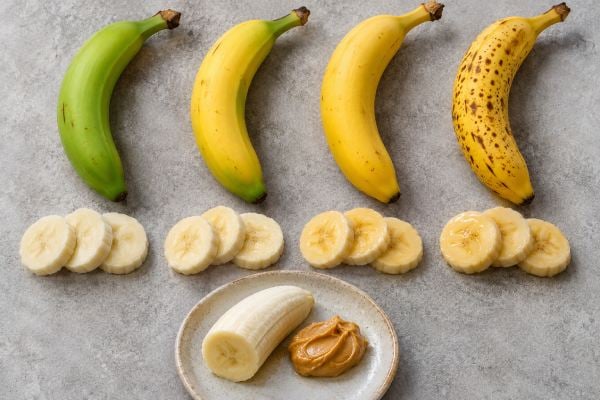
| Mostly green, with firm flesh | More starch, including resistant starch, and less sugar | May suit you if you like a firmer, less sweet banana and tolerate it well |
| Mostly yellow with green tips | Partway through the shift from starch to sugars | A practical choice if you want some sweetness and a banana that still slices neatly |
| Evenly yellow, with softer flesh | Less starch and more sugar than a fully green banana | Easy to eat plain or slice into yogurt or oatmeal |
| Yellow with brown speckles, soft and sweet | Generally little starch remains, though sugar content can overlap with that of yellow bananas | Easy to mash into oatmeal or freeze in small portions for smoothies |
Peel color gives a rough guide. In the controlled batch, total sugars rose clearly from unripe to ripe fruit, while the difference between ripe and overripe fruit was less clear. Growing conditions, variety, and handling after harvest can all affect the composition of the banana you buy. A few brown spots tell you that the flesh will be softer and sweeter; they say little about how many extra grams of sugar are in that particular banana.
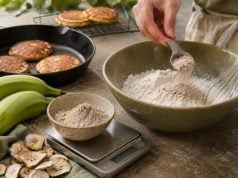
These comparisons apply to common dessert bananas. Green plantains are a different food choice, usually cooked and served as part of a meal. The starch in green banana flour can also behave differently depending on how the flour was made and how you use it. A reading after a raw banana gives little guidance about a serving of cooked plantain or a muffin made with banana flour.
What Blood Sugar Studies Show
In a study of 10 adults with type 2 diabetes, researchers served 120 g of underripe banana and 120 g of overripe banana on separate days. The underripe banana produced a smaller overall rise in glucose during the four hours after eating, while the average insulin responses were similar. Because the comparison used equal weights of fruit, it speaks to the choice between two bananas of roughly the same size.
The study compared two ends of the ripeness range. It gives less guidance on a choice between green-tipped and evenly yellow fruit, or between a yellow banana and one with a few speckles. It also measured a short-term response in a small group, so how much your own blood sugar changes after eating a banana—and whether eating greener bananas regularly affects your A1C—are separate questions.
What the glycemic index can tell you
The glycemic index and glycemic load answer different questions. The glycemic index, or GI, compares the blood sugar response to a carbohydrate food with the response to a reference food under test conditions. Glycemic load takes the amount of digestible carbohydrate in a serving into account, which makes it closer to the question you face at breakfast when you can choose between half a banana and a whole one.
The small banana study reported GI values of 43 for underripe fruit and 74 for overripe fruit. Those numbers belong to that experiment. They don’t serve as a conversion chart for peel color, and they aren’t blood sugar readings in mg/dL. Treating them as fixed values can give a false sense of precision, especially for the middle ripeness stages where many people eat bananas.
Research on resistant starch in people with prediabetes or type 2 diabetes offers some support for the idea that replacing digestible starch with certain forms of resistant starch can reduce the after-meal glucose response. The studies used different sources, amounts, and preparations of resistant starch. Their findings help explain why the composition of a greener banana might matter, while leaving open the size of the benefit from one ordinary serving.
If you’re deciding what to change first, look at the size of the serving you normally eat. Half a yellow banana supplies about half the carbohydrate of that same banana eaten whole, and the difference between two neighboring ripeness stages is harder to estimate. That makes portions the easier adjustment to repeat from day to day.
How Much Banana to Eat
For a modest portion, start with half a medium banana or an extra-small one. For carb counting, half a medium banana is roughly 13–14 g of total carbohydrate, and a whole medium banana is about 27 g. The CDC lists one extra-small banana as one carbohydrate choice, about 15 g. These are estimates; the amount of fruit you actually eat matters more than the label you have in mind for its size.
You can use that portion in a few ways. If banana is your main carbohydrate at snack time, half a medium one gives you a convenient starting point. If you’re adding it to oatmeal, a few slices may be enough for flavor. If you plan to eat the whole banana, consider what other carbohydrates are already part of the meal: a banana added to cereal, milk, and toast is part of a different meal from one served with eggs and plain yogurt.
A kitchen scale can help if your bunch contains bananas of noticeably different sizes or you want to compare two ripeness stages. Weigh the peeled fruit, since the peel contributes to the weight of the banana at the store. You can also slice a medium banana into two portions and save one for later; freezing the extra slices in small batches makes it easier to use the same amount the next time you make a smoothie.
Count the carbs using your usual method
A green banana tastes less sweet because more of its carbohydrate is in the form of starch. Taste can tell you something about ripeness, but it can’t tell you how much digestible carbohydrate is in your serving. Subtracting an assumed amount of resistant starch to arrive at a homemade “net carb” number is especially unreliable for a fresh banana, since that would require knowing how much resistant starch was actually in the fruit and how it was prepared.
If you use mealtime insulin, follow the carb-counting and dosing method you’ve agreed on with your diabetes team. A greener peel or a published GI value gives you too little information to adjust a dose on its own. If an ordinary snack repeatedly takes you outside your target range, share the portion, the rest of the meal, and when the reading occurred; those details give your team more to work with than “bananas run me high.”
For a different fruit portion, the CDC lists ¾ cup of blueberries or one medium orange at about 15 g of carbohydrate per serving. You may find it easier to choose among several fruit options and portion sizes than to keep bananas at just the right stage every week.
How to Eat Bananas as Part of a Meal or Snack
Banana slices can bring sweetness to a breakfast that already contains fiber or protein, but they can also add a substantial amount of carbohydrate to a meal that’s already built around oats, cereal, or bread. Look at what the banana is doing in the meal. If it takes the place of honey or sweetened granola, the meal may need fewer sweet add-ins. If you add it on top of everything you already eat, the meal contains more carbohydrate.
Simple combinations with a clear portion
- Banana and plain Greek yogurt. Slice half a medium banana into plain yogurt and add a spoonful of chopped walnuts if you want crunch. Strained yogurt adds protein, and the banana provides sweetness. If you use flavored yogurt, check the label so you know how much carbohydrate comes from the yogurt as well as the fruit.
- Oatmeal with banana and cinnamon. Stir a few ripe banana slices into hot oats and mash them with your spoon. Add cinnamon or chopped pecans for flavor. Ripe banana works well here because even a small portion sweetens several bites.
- Banana with peanut butter. Serve half a banana with a spoonful of peanut butter. If you put both on toast, count the bread as part of the snack. If you want something smaller, spread the peanut butter directly onto the banana slices.
- A smoothie with a measured amount of banana. Blend half a frozen banana with plain yogurt and water or unsweetened milk. If you also use oats, juice, dates, or a second fruit, those ingredients can add up quickly. Put aside the banana portion before reaching for the blender so the amount stays easy to repeat.
Adding protein or fat can change the timing and size of the glucose response, and it can make a snack feel more substantial. The effect depends on the combination, the amounts, and the person eating it. In some mixed meals, glucose rises later than you might expect, which matters if you use insulin or tend to judge a meal from one early reading. Start with fruit pairings with protein or fat you enjoy and consider the whole meal when you review your readings.
Why preparation and other ingredients matter
Blending the whole fruit keeps its fiber in the drink, but the portion is still easy to overlook because a large banana disappears into a smoothie along with whatever else goes into the blender. If you’re deciding whether ripeness matters in your usual smoothie, keep the other ingredients and their amounts steady. A half banana blended with plain yogurt gives you a cleaner comparison than two smoothies with different juices, sweeteners, and serving sizes.
Banana bread is another example. A ripe banana can sweeten the batter, but the flour, any added sugar, and the size of the slice all contribute to the carbohydrate you eat. The same principle applies to dried banana chips. Check the serving size and total carbohydrate on the package, since the fruit has lost water and some products contain added sugar; a handful of chips and a handful of fresh slices can have quite different amounts of carbohydrate.
Which Ripeness Should You Choose?
Choose a yellow banana with green tips if you want to try a less ripe option. It’s a practical middle ground if a fully green banana tastes chalky to you. You may find one firm enough to slice thinly into yogurt and sweet enough to eat without adding honey or syrup. The strongest direct evidence applies to a wider difference in ripeness, so expect some uncertainty about how much this smaller switch affects your glucose.
Choose a yellow or speckled banana if you enjoy the taste or tolerate it better. A riper banana mashes easily, which makes it useful when a few slices are enough to flavor a meal. If you routinely buy a bunch that ripens all at once, freeze the extra fruit in half-banana portions; it’s easier to keep a sensible amount on hand when the portions are already set.
Let digestion guide you if greener fruit makes you uncomfortable. Gut bacteria ferment resistant starch, and some people notice more gas or bloating when they suddenly eat more of it. If you want to try an underripe banana, start with part of one and see how you feel. If it repeatedly leaves you uncomfortable, try a riper banana or a different fruit; the potential glucose benefit of underripe fruit is too uncertain to justify repeatedly eating a food that bothers you.
If you have prediabetes, a whole banana can fit into an eating pattern that includes other fruits, legumes, whole grains, and vegetables. Look at how often you eat it and what it usually accompanies. If a banana is your usual substitute for a pastry, that is a different change from adding one to a breakfast that already leaves you full. In a broader plan for managing prediabetes, one fruit choice matters less than the meals and habits you can sustain.
If you have diabetes and often see higher readings after a breakfast that includes banana, change one thing at a time. A smaller serving is an easy first comparison. You can also keep the serving size steady and try a greener banana on another day. Which change makes sense depends on what you’re willing to eat regularly and which change gives you a consistent result.
How to Compare Your Own Blood Sugar Response
If you already use a glucose meter or continuous glucose monitor as part of your care, you can use it to see whether ripeness makes a practical difference for you. Pick a meal you would eat anyway; a comparison is most informative when the rest of the meal looks the same and the banana is the only thing you deliberately change.
- Pick two ripeness stages and match the portions. For example, use 60 g of peeled green-tipped banana one day and 60 g of peeled ripe banana another day. Bananas from the same bunch make it easier to compare the same variety.
- Keep the meal and timing similar. If the first serving goes into plain yogurt, keep the amount and type of yogurt the same for the second. Follow your usual medication plan. Note anything that could shift your readings, such as an unusually active morning, illness, or a poor night’s sleep.
- Check at the same points. Record your premeal reading and use your usual post-meal check time. If your plan calls for a two-hour check, count from the first bite both times. If you use a sensor, look at the trend and the timing of the rise as well as the reading at your usual check time.
- Look for a pattern before changing a routine. The first day may start at a different glucose level or include a factor you can’t easily control. If the difference would affect what you eat often, repeat the comparison on another pair of similar days and review the results in the context of your personal targets.
For many adults with diabetes, a typical target two hours after the start of a meal is below 180 mg/dL. Your own target may differ, particularly during pregnancy. This is a treatment target for people with diabetes; if you’re concerned that you may have prediabetes or diabetes, ask about standard testing. A home reading after a banana can’t establish a diagnosis.
Readings also have a margin of error. A continuous glucose monitor measures glucose in the fluid between cells, so it can trail blood glucose when levels change quickly. If the difference between your two servings is small, it may reflect ordinary variation or sensor lag and other accuracy limits. If the sensor reading doesn’t match how you feel, follow your care plan and device instructions for confirming it with a finger-stick meter.
Use the result to answer a question you actually face. If both servings usually fit your target and you prefer ripe bananas, taste and convenience can guide your choice. If the greener portion consistently gives you readings closer to your target and you enjoy it, that gives you a reason to buy your bananas a little earlier in the week. If both servings repeatedly take you above target, review the full meal and the pattern with your care team.
References
- Influence of ripeness of banana on the blood glucose and insulin response in type 2 diabetic subjects 1992 (Comparative Study)
- Dietary fiber, starch, and sugars in bananas at different stages of ripeness in the retail market 2021
- A comparison of the effects of resistant starch types on glycemic response in individuals with type 2 diabetes or prediabetes: A systematic review and meta-analysis 2023 (Systematic Review)
- 5. Facilitating Positive Health Behaviors and Well-being to Improve Health Outcomes: Standards of Care in Diabetes—2026 2026 (Guideline)
- Carb Choices 2024
- Manage Blood Sugar 2024
Disclaimer
This article provides general information about banana ripeness, carbohydrate portions, and blood sugar. If you use insulin or another medicine that can cause low blood sugar, follow your diabetes care plan and speak with your care team before changing your medication dose or usual carbohydrate intake.