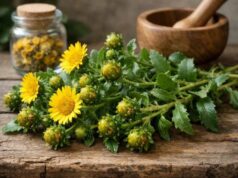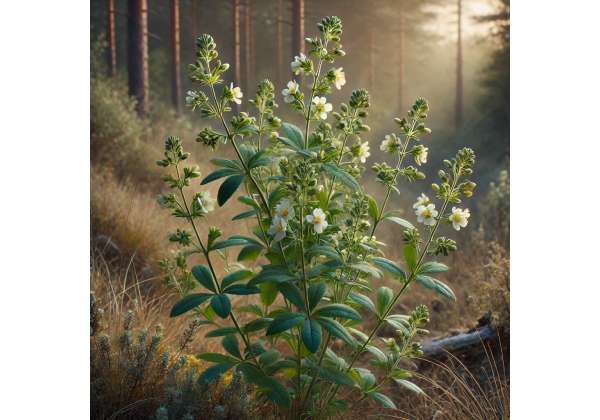
Gromwell, botanically known as Lithospermum officinale, is an old European herb with a far larger reputation in traditional medicine than in modern clinical practice. Also called European stoneseed, it was historically used for urinary complaints, gravel, bladder irritation, fever, digestive discomfort, and external skin problems. What makes it interesting today is not strong human trial evidence, because that is still lacking, but the way its traditional uses overlap with a growing body of phytochemical and laboratory research. Gromwell contains phenolic acids, flavonoids, lipids, naphthoquinone-related compounds, and, importantly, pyrrolizidine alkaloids that shape both its promise and its risk.
That dual nature is the heart of the story. On one side, gromwell shows antioxidant, anti-inflammatory, wound-healing, and neuroinflammatory potential in preclinical work. On the other, its safety cannot be treated casually, especially for internal use. In other words, this is not a gentle kitchen herb to self-dose on instinct. It is a traditional medicinal plant with a meaningful research signal, but also with limits that deserve respect, realism, and careful use.
Top Highlights
- Gromwell is most plausible for topical skin support and broader antioxidant or anti-inflammatory potential, not for self-prescribed internal treatment.
- Traditional use focused on urinary discomfort, gravel, spasms, and external skin complaints, but modern human evidence is still weak.
- No validated oral human dose in g/day has been established, and internal self-dosing is not recommended.
- Pyrrolizidine alkaloids are the main safety concern and are a strong reason to avoid casual internal use.
- Pregnant or breastfeeding people, children, and anyone with liver disease, thyroid disease, or fertility concerns should avoid concentrated gromwell preparations.
Table of Contents
- What is gromwell
- Key compounds and medicinal properties
- What benefits are most plausible
- How is gromwell used
- How much should you take
- Side effects and who should avoid it
- What the evidence actually says
What is gromwell
Gromwell is a perennial herb in the Boraginaceae family, the same broad plant family that includes several rough-leaved, mineral-rich, and medicinally important species. The botanical name Lithospermum officinale hints at its older medical reputation. “Litho” refers to stone, and “spermum” refers to seed, a reminder that this plant became associated with urinary gravel and stone-like complaints long before modern phytochemistry entered the picture.
Common names such as European stoneseed and gromwell are useful because they help separate this species from related plants that are often mixed into online herb discussions. That distinction matters. Some modern claims about “Lithospermum” actually come from different species in the genus, especially East Asian purple gromwell. Those relatives are scientifically interesting, but they are not interchangeable with Lithospermum officinale. For readers looking for accurate guidance, that is one of the most important filters to keep in mind.
Historically, gromwell was used in European folk medicine for urinary irritation, renal gravel, mild spasms, diarrhea, fever, itching, and a range of external complaints. It also carried a more symbolic and magical reputation in older herbal traditions. Like many old herbs, it moved easily between practical medicine, household use, and folklore. That can make it tempting to romanticize, but the more useful modern approach is to ask which of those traditions make pharmacological sense and which ones still lack convincing support.
The plant parts used in medicine have varied. Roots and aerial parts appear in older descriptions, and seeds have drawn interest for their lipid profile. That last point is often overlooked. Gromwell is not only a “root herb.” Some seed-oil research has explored its unusual fatty-acid content, which adds a nutritional and biochemical angle beyond classical folk use.
A helpful comparison is with another borage-family topical herb. Like comfrey, gromwell belongs to a family known for useful bioactive compounds and real safety boundaries. That family resemblance does not prove the same benefits, but it does help explain why gromwell repeatedly appears in discussions of skin support, inflammation, and cautious external use.
Today, gromwell sits in an in-between category. It is too historically important to dismiss as a botanical footnote, yet not clinically proven enough to present as a reliable modern herbal staple. That middle ground is where the article belongs. Gromwell is best understood as a traditional medicinal plant with interesting chemistry, selective preclinical promise, and enough risk to justify a careful, evidence-aware approach rather than a casual one.
Key compounds and medicinal properties
Gromwell’s medicinal interest comes from a mixed chemical profile rather than one single star compound. Reviews and analytical studies identify phenolic acids, flavonoids, quinones, glucosides, lipids, and alkaloids among its major constituents. That diversity helps explain why the plant has shown several different kinds of laboratory activity, from antioxidant behavior to anti-inflammatory effects and topical tissue support.
One of the more useful ways to understand gromwell is to divide its chemistry into four functional groups.
First are the phenolic acids and related antioxidants, especially rosmarinic acid, chlorogenic acid, hydrocaffeic acid, and related molecules reported in Lithospermum officinale and the wider family. These compounds are commonly associated with oxidative-stress control and inflammation-related pathways. They do not make gromwell unique, but they do give the plant a plausible foundation for traditional soothing and protective uses.
Second are flavonoids and other polyphenols. These broaden the antioxidant story and likely contribute to the herb’s cell-protective profile. In practical terms, they support the idea that gromwell is more than an inert folk remedy. It contains compounds that make sense in a modern pharmacology conversation, especially when inflammation and tissue stress are involved.
Third are lipids and seed-oil constituents. Gromwell seeds have drawn interest because they appear to contain unusual polyunsaturated fatty acids, which gives the species some value beyond classical root-centered herbalism. This does not automatically turn gromwell into a therapeutic oil, but it does make the plant biochemically richer than many summaries suggest.
Fourth, and most important from a safety standpoint, are pyrrolizidine alkaloids. These are the compounds that complicate the entire story. They are a major reason modern herbal use of gromwell cannot simply copy historical practice. Pyrrolizidine alkaloids are associated with liver toxicity concerns, especially with internal use or repeated exposure, and their presence changes the risk calculation dramatically.
This chemistry translates into several medicinal properties that are plausible, though not equally proven:
- Antioxidant activity
- Anti-inflammatory potential
- Topical tissue-support and wound-healing potential
- Mild antimicrobial activity
- Older endocrine effects, especially thyroid-related activity in animal work
That last category deserves extra attention because it is unusual. Gromwell is one of the herbs with older experimental literature suggesting antithyrotropic effects. In simple terms, certain extracts appeared able to interfere with thyroid-related signaling in animal models. That does not justify using the plant to treat thyroid disease, but it does justify caution.
A useful comparison is corn silk for gentler urinary support. Corn silk is often framed as a milder urinary herb with a clearer comfort-oriented identity. Gromwell, by contrast, has a more pharmacologically complex and safety-sensitive profile. That does not make it better. It simply makes it less suitable for casual, unsupervised experimentation.
The most accurate way to summarize gromwell’s medicinal properties is this: it is chemically active, especially in antioxidant, anti-inflammatory, topical, and endocrine-related directions, but its chemistry also carries real liabilities. In this plant, promising compounds and meaningful risk exist side by side.
What benefits are most plausible
The strongest claims for gromwell are not the broadest ones. This is not a herb where it makes sense to promise “whole-body healing” or to recycle every traditional claim without ranking them. The most plausible benefits sit in a narrower and more defensible range.
The first is topical tissue support, especially around inflammation and wound-related repair. Animal work suggests that gromwell preparations may support faster epithelial recovery, calmer inflammatory response, and better granulation patterns in burn models. This does not prove that every cream, poultice, or homemade salve will perform well in humans, but it does make external use more credible than aggressive oral self-treatment.
The second is anti-inflammatory and antioxidant support. This is where the chemistry and the lab data line up most clearly. Gromwell extracts and callus-derived preparations have shown the ability to reduce inflammatory signaling and oxidative stress markers in experimental settings. That gives the herb a reasonable scientific basis for the old idea that it helps calm irritated tissues. The mistake would be to assume that this automatically translates into treating chronic inflammatory disease in people. It does not.
The third is traditional urinary support, though this should be framed carefully. Historical sources repeatedly associate gromwell with urinary discomfort, gravel, and diuretic or lithotriptic use. That background is real, but modern human evidence is thin. This is one of those areas where tradition points toward a plausible direction, yet the proof has not caught up. Readers looking for a more established urinary herb will usually find more defined urinary traditions with uva ursi than with gromwell.
The fourth is possible neuroinflammatory relevance. A newer callus-extract study is interesting because it suggests PA-free cell-culture extracts may reduce microglial inflammatory activity. This is scientifically intriguing, especially because it opens the door to safer extract strategies, but it is still far from clinical use. It belongs in the category of emerging pharmacology, not practical self-care.
Older literature also suggests thyroid-related activity. This is not a “benefit” in the usual wellness sense. It is better described as a pharmacological signal with clinical implications. Historically, some researchers explored gromwell for antithyrotropic effects, but that is exactly why unsupervised use is not wise for people with thyroid disease or anyone taking thyroid medication.
What does not stand out as plausible enough for confident recommendation are the grander claims. Gromwell is sometimes described online as anticancer, fertility-regulating, detoxifying, anti-gout, or universally cleansing. Most of those claims rely on tradition, analogies to related species, or preclinical fragments rather than solid human evidence.
So the practical ranking looks like this:
- Topical support for inflamed or damaged tissue
- Antioxidant and anti-inflammatory potential
- Traditional urinary use that still needs better validation
- Experimental neuroinflammatory interest
- Endocrine activity that matters more as a caution than as a use
That ranking keeps the herb useful, but honest.
How is gromwell used
Gromwell has been used in older herbal practice both internally and externally, but modern use should not treat those routes as equally acceptable. That is one of the biggest shifts from tradition to evidence-aware use. The historical record is broad. The modern safety lens is much narrower.
Traditionally, the plant appeared in decoctions, infusions, powders, and topical preparations. Internal use was associated with urinary complaints, spasms, diarrhea, and fever. External use was tied more closely to irritated skin, burns, itching, and other inflammatory conditions. In a historical household setting, those categories made sense because herbs were often used in multi-purpose ways. Today, however, internal use raises much stronger safety concerns because of pyrrolizidine alkaloids.
That means the most defensible modern use is topical, not oral. Even here, the form matters. A crude home preparation is not the same as a controlled extract, and a root-based extract is not the same as a callus-derived PA-free experimental extract. Those distinctions are essential.
The main practical forms that show up in the literature or in traditional descriptions include:
- Decoctions made from dried plant material
- Water extracts for external application
- Ointment-like preparations for burns or irritated tissue
- Experimental callus extracts designed to avoid toxic alkaloids
- Seed-oil or lipid-focused research, which is more biochemical than therapeutic at present
If someone is approaching gromwell today, the most reasonable categories are:
- Topical experimental interest
- Historical herbal curiosity
- Research use rather than self-treatment
That may sound restrictive, but it is the honest reading of the evidence. This is not an herb where a daily tea or casual capsule makes good modern sense.
A useful comparison is calendula for gentler skin support. Calendula is often used when the goal is soothing irritated skin with a more comfortable safety profile. Gromwell, by contrast, is the plant you discuss carefully because its topical promise lives beside internal toxicology concerns. The point is not that calendula and gromwell do the same job, but that they occupy very different risk categories in practice.
For external use, quality and source matter. Wild-harvested or loosely processed material is not ideal when a plant already has alkaloid-related safety questions. If gromwell is used at all, it should be approached with attention to identity, plant part, extraction method, and intended route.
The broadest practical rule is simple: historical internal use does not automatically justify modern internal use. Gromwell belongs to that group of old herbs where current knowledge narrows the safer path. If the goal is real-world application rather than folklore, topical and research-oriented contexts make more sense than self-prescribed oral routines.
How much should you take
This is the section where a responsible article must slow down. There is no validated human oral medicinal dose for gromwell that can be recommended with confidence. No modern controlled human trials establish a standard daily amount in grams, capsules, tincture drops, or extract milligrams. That alone should keep the dosage discussion cautious.
Traditional medicine used the plant in teas, decoctions, and powders, but those records do not create a trustworthy modern dosing standard. They tell us the plant was used, not that the amounts were safe, effective, or appropriate under current toxicology knowledge. That difference matters especially because the plant contains pyrrolizidine alkaloids.
So the most honest modern guidance is this:
- There is no established oral dose for safe self-use
- Internal use should not be improvised
- Topical experimental use is more defensible than oral use
- Any concentrated extract needs expert oversight, not guesswork
The one reasonably concrete preparation detail in the literature comes from topical animal work, not human dosing. In one burn study, researchers prepared a water extract by decocting 100 g of plant material in 500 mL of boiling water for 3 hours, then concentrating the extract for external use. That is useful as a research detail, but it is not a home-use recommendation. A laboratory-style preparation in a rat study is not the same thing as a clinically validated ointment protocol for people.
That means the practical dosing section is less about numbers and more about boundaries.
A sensible hierarchy looks like this:
- Do not self-dose orally
- Do not convert animal or cell-study doses into personal use
- If external use is considered, keep it limited, short-term, and professionally informed
- Avoid concentrated commercial or homemade internal preparations unless supervised by a qualified clinician
Timing and duration are equally unsettled. There is no validated guidance for morning versus evening use, meal timing, or long-term cycling because human therapeutic protocols have not been established. In a safer herb, that kind of uncertainty might be acceptable. In a PA-containing herb, it is a reason to step back.
This also affects how you interpret older herbal texts. Historic mentions of urinary gravel, bladder irritation, or fever do not equal permission to rebuild those formulas at home. Modern herb use has to absorb modern toxicology. When a plant carries both pharmacological promise and chemical risk, the absence of a validated dose is itself important information.
So if a reader reaches this section hoping for a capsule count or tea recipe, the most helpful answer is not a forced number. It is a clear limit: gromwell does not currently have a safe, evidence-based oral dose for routine self-treatment. That is not a weakness in the article. It is the most truthful dosage advice the evidence allows.
Side effects and who should avoid it
Gromwell’s safety story begins with one word: pyrrolizidine alkaloids. These compounds are the main reason the herb cannot be treated like an ordinary soothing tea or casual supplement. Pyrrolizidine alkaloids are associated with liver toxicity risk, especially when exposure is repeated, concentrated, or internal. That single fact changes how the entire herb should be used.
The most important likely side effects and risks include:
- Liver stress or liver toxicity with internal exposure
- Digestive irritation with crude oral preparations
- Skin irritation from topical products in sensitive users
- Possible endocrine interference, especially thyroid-related
- Unpredictable risk with long-term or repeated internal use
This is also why route matters so much. External use is not identical to internal use. A topical preparation may still irritate sensitive skin, but it is not the same toxicology scenario as repeated oral intake. Even so, topical use should still be cautious, especially on damaged or highly permeable skin.
Who should clearly avoid gromwell or use it only under expert supervision?
- Pregnant people
- Breastfeeding people
- Children and adolescents
- People with liver disease
- People with current or past unexplained abnormal liver tests
- People with thyroid disease
- People trying to conceive
- Anyone using multiple herbs with unknown alkaloid content
- Anyone taking complex prescription regimens
The thyroid point deserves a separate note. Older animal work suggests Lithospermum officinale extracts can suppress thyroid-related activity. That does not make gromwell a thyroid remedy. It makes it a poor candidate for unsupervised use in anyone with hypothyroidism, hyperthyroidism, or thyroid medication in the picture.
The fertility and reproductive caution is also not just theoretical folklore. Historical and experimental discussions around antigonadotropic or antiovulatory effects are inconsistent and far from clinically standardized, but they are enough to make pregnancy, breastfeeding, and conception-planning clear avoidance categories.
Another modern safety nuance is that some researchers are actively trying to create PA-free extracts from cell culture because the natural plant extract is safety-limited. That research is promising, but it also sends an important message: the plant’s chemistry is not considered straightforwardly safe in its ordinary crude form.
What about interactions? Specific human interaction data are thin, but caution makes sense with:
- Thyroid medicines
- Hepatotoxic medicines
- Hormone-related therapies
- Multi-herb products taken for urinary, endocrine, or detox purposes
If symptoms such as nausea, abdominal pain, dark urine, unusual fatigue, yellowing of the skin, or unexplained itching appear during internal use, the herb should be stopped and medical care should be sought promptly.
The best safety summary is blunt but fair: gromwell is a plant with real medicinal interest, but it is not a forgiving herb. That is why modern use should emphasize respect, selectivity, and restraint.
What the evidence actually says
The evidence for gromwell is intriguing, but it is also uneven. Most of what supports the herb comes from three places: traditional use, phytochemical reviews, and preclinical experiments. What is largely missing is the one thing that would make routine recommendations much easier: good human clinical trials.
That gap matters because gromwell is exactly the kind of herb that can look impressive on paper. It has a long medicinal history. It contains interesting compounds. It shows antioxidant, anti-inflammatory, wound-related, and endocrine effects in laboratory and animal work. But none of that automatically proves that it is safe or effective for routine human use in tea, capsule, or tincture form.
The strongest modern evidence clusters around three themes.
First is phytochemical and ethnomedicinal review evidence. This gives us a coherent overview of what the plant contains and how it has been used historically. That is valuable because it keeps the plant from being judged only by folklore or only by a single experiment.
Second is preclinical anti-inflammatory and tissue-support evidence. Animal burn models and cell-based inflammatory work suggest the plant has genuine pharmacological activity. The signal is strong enough to justify scientific interest, especially for topical or extract-based applications.
Third is safety-driven innovation, especially PA-free callus extracts. This may be the most modern and practical line of research because it does not ignore the herb’s toxicity concerns. Instead, it tries to preserve beneficial phenolic activity while reducing alkaloid risk. That is a far more useful direction than pretending the crude plant is simple and safe.
The evidence also has two important limits.
One is species confusion. Some modern enthusiasm around “Lithospermum” draws from related species, especially East Asian taxa better known for shikonin-rich roots. Those studies are informative, but they cannot be copied directly onto Lithospermum officinale. A careful article has to keep that boundary visible.
The second is lack of human confirmation. There is no strong clinical evidence showing that gromwell safely and reliably treats urinary problems, skin disease, thyroid conditions, or inflammatory disorders in humans. Until that changes, the herb remains promising but unproven.
So the most accurate conclusion is this:
- Gromwell has real traditional and pharmacological interest.
- Its most believable actions are antioxidant, anti-inflammatory, topical, and endocrine-related.
- Its safety profile prevents casual internal use.
- Its best future may lie in refined, PA-reduced or PA-free extracts rather than in crude self-medication.
That is a more useful conclusion than either dismissal or hype. Gromwell is neither a mere relic nor a proven modern remedy. It is a medically interesting, safety-limited herb whose evidence invites curiosity, but also caution.
References
- Exploring the Pharmacological Potential of Lithospermum officinale L.: A Review of Phytochemicals and Ethnomedicinal Uses 2024 (Review)
- Neuroprotective Effect of Lithospermum officinale Callus Extract on Inflamed Primary Microglial Cells 2024 (Preclinical Study)
- Pharmacological Significance of Boraginaceae with Special Insights into Shikonin and Its Potential in the Food Industry 2024 (Review)
- Pyrrolizidine Alkaloids-Free Extract from the Cell Culture of Lithospermum officinale with High Antioxidant Capacity 2019 (Preclinical Study)
- Antihormonal effects of plant extracts. Pharmacodynamic effects of lithospermum officinale on the thyroid gland of rats; comparison with the effects of iodide 1983 (Animal Study)
Disclaimer
This article is for educational purposes only and is not medical advice. Gromwell contains constituents that raise meaningful safety concerns, especially for internal use, and it does not have an established human therapeutic dose. Do not use it to diagnose, treat, or replace care for urinary disease, thyroid disorders, skin disease, or any other medical condition. Anyone who is pregnant, breastfeeding, trying to conceive, living with liver or thyroid disease, or taking prescription medicines should avoid self-prescribing gromwell and speak with a qualified healthcare professional before using any concentrated preparation.
If this article was helpful, please consider sharing it on Facebook, X, or another platform you use regularly.