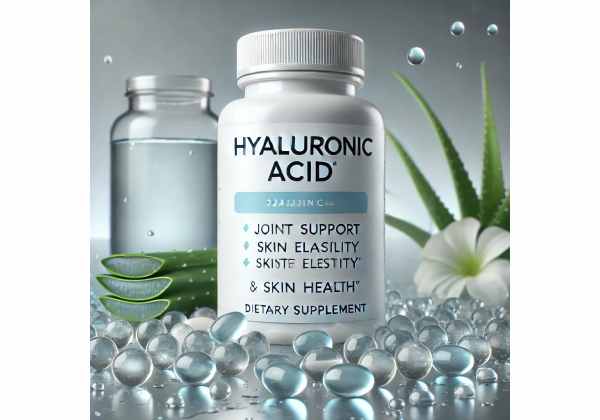
Hyaluronic acid is usually discussed in the context of skin hydration, joint comfort, and cosmetic treatments, so it can seem out of place in a brain health conversation. Yet the story is more interesting than it first appears. Hyaluronic acid is a natural part of the brain’s extracellular matrix, where it helps shape the environment around neurons, influences plasticity, and supports the structure of specialized networks involved in learning and memory. That biological role has led to growing interest in whether hyaluronic acid might also matter for cognitive aging, mental resilience, and neurological recovery.
The challenge is that biology and supplementation are not the same thing. The fact that hyaluronic acid matters inside the brain does not prove that taking an oral supplement improves focus, mood, or memory. This article takes a careful look at that gap. It explains what hyaluronic acid does in the brain, where the evidence is promising, where it remains speculative, how oral supplements are typically used, and what safety issues deserve attention.
Table of Contents
- Why Hyaluronic Acid Matters in the Brain
- Possible Benefits for Brain and Mental Wellness
- What the Human Evidence Actually Shows
- Best Uses and Where Expectations Should Stay Modest
- Dosage, Forms, and Practical Use
- Safety, Side Effects, and Precautions
Why Hyaluronic Acid Matters in the Brain
Hyaluronic acid, also called hyaluronan, is a large sugar-based molecule found throughout the body. In skin and joints, it is known for binding water and supporting tissue structure. In the brain, its role is less obvious but potentially more important. It forms part of the extracellular matrix, the material that surrounds cells and helps organize the environment in which neurons communicate.
That environment is not passive. Brain tissue depends on a finely tuned matrix to regulate spacing, signaling, plasticity, and protection. Hyaluronic acid acts as one of the main scaffolding molecules in that system. It helps shape diffuse extracellular matrix and also supports perineuronal nets, specialized structures that wrap around certain neurons and influence how flexible or stable neural circuits remain over time.
This is one reason hyaluronic acid appears in conversations about memory, learning, and brain aging. Perineuronal nets help stabilize connections, regulate excitability, and shape the balance between plasticity and protection. Too little stability can be disruptive. Too much rigidity can make adaptation harder. Hyaluronic acid is part of that balance.
Its effects also appear to depend on molecular size. Higher-molecular-weight hyaluronic acid is often discussed as more protective and structurally supportive, while lower-molecular-weight fragments may behave differently and sometimes promote inflammatory signaling or altered repair responses. This size-dependent behavior is one reason the science is more nuanced than the simple idea that “more hyaluronic acid is better.”
There is also a developmental and aging angle. Hyaluronic acid participates in early brain development, neuronal migration, and the shaping of extracellular space. Across the lifespan, changes in hyaluronic acid turnover, distribution, and fragmentation may influence neuroinflammation, myelination, and plasticity. That helps explain why researchers are interested in hyaluronic acid in conditions ranging from brain injury and stroke to neurodegeneration and stress-related dysfunction.
Still, one key distinction matters throughout this topic: endogenous hyaluronic acid in the brain is not the same as supplemental oral hyaluronic acid. The fact that hyaluronic acid is deeply involved in neural tissue does not tell us whether a capsule meaningfully changes brain function in living humans. That leap is much larger than marketing language often suggests. A useful frame is to think of hyaluronic acid as biologically relevant to the brain, but not yet clinically established as a brain supplement. That careful distinction keeps the topic grounded and avoids overstating what the science can actually support.
Possible Benefits for Brain and Mental Wellness
If someone searches for hyaluronic acid and mental wellness, the likely question is not whether the molecule exists in the brain. It is whether taking it might help memory, focus, mood, or long-term cognitive health. The most honest answer is that the possible benefits are mostly indirect or theoretical at this stage, not firmly proven in human supplement trials.
The most plausible brain-related benefits fall into a few categories.
- support for a healthy extracellular environment around neurons
- possible influence on plasticity, learning, and circuit stability
- a role in tissue protection and repair after injury
- indirect support through inflammatory balance and cellular signaling
- possible relevance to healthy brain aging
These are meaningful ideas, but they need context. Much of the interest comes from basic science and preclinical research, not from large human trials of oral hyaluronic acid for cognition or mood. In the brain, hyaluronic acid appears to help regulate the matrix around neurons in ways that can affect excitability, memory processes, and adaptability. It may also be involved in how the brain responds to stress, injury, and age-related wear.
That said, “possible benefit” is not the same as “useful supplement effect.” A molecule can be essential inside tissue and still fail to produce a noticeable outcome when taken orally. This is especially important here because brain claims for hyaluronic acid often outrun the evidence.
For mental wellness, the case is even more tentative. There are biologically interesting links between extracellular matrix remodeling, stress response, neuroinflammation, and psychiatric symptoms. Hyaluronic acid signaling may interact with these systems, which is part of a broader discussion around inflammation, brain fog, mood, and fatigue. But that does not mean oral hyaluronic acid has been shown to reduce anxiety, lift depression, or improve emotional resilience in a reliable way.
A more realistic way to think about hyaluronic acid is this: it may matter to the brain’s terrain more than to its immediate output. In other words, it may be more relevant to the structural and signaling environment that supports brain function than to a quick boost in mental performance. That is an interesting long-range idea, especially for aging and repair, but it is very different from a classic nootropic promise.
For most readers, the practical takeaway is caution. Hyaluronic acid may someday prove more useful in brain health than it currently appears, especially if future research clarifies how molecular size, metabolism, and tissue targeting work. Right now, though, it belongs in the category of “scientifically interesting and biologically relevant,” not “clearly effective for mental wellness.”
What the Human Evidence Actually Shows
The human evidence is the section that changes the tone of this topic. It is where many optimistic ideas become more modest. At present, there is no strong clinical evidence that oral hyaluronic acid supplementation reliably improves memory, focus, mood, or other mental health outcomes in humans.
That does not mean the topic is empty. It means the evidence sits in two separate buckets that should not be blurred together.
The first bucket is brain biology. Reviews of the central nervous system literature show that hyaluronic acid is deeply involved in extracellular matrix structure, perineuronal nets, plasticity, aging, and responses to injury. That makes it highly relevant to neuroscience.
The second bucket is oral supplementation. Human oral hyaluronic acid studies are concentrated elsewhere, mainly in skin and joint health. These studies suggest that oral hyaluronic acid can be absorbed or metabolically active enough to influence peripheral tissues in some settings, and they generally report good tolerability. But they do not provide convincing proof of direct brain or mental wellness benefits.
This gap matters because it is easy to overread mechanistic science. A molecule can be central to neuronal architecture and still lack evidence as a cognitive supplement. In fact, that is the current situation here.
The most defensible summary of the human evidence looks like this:
- Oral hyaluronic acid has been studied more for skin and osteoarthritis than for the brain.
- Typical oral doses in published human studies often range from about 30 mg to 300 mg per day.
- Safety findings are generally reassuring at common supplemental doses.
- Direct randomized human trials for memory, focus, anxiety, depression, or cognitive decline are lacking.
- Current brain-health claims rely more on plausibility than on demonstrated clinical benefit.
That makes hyaluronic acid very different from supplements with at least some direct human cognitive or mood data. In the broader landscape of nootropics and focus supplements, hyaluronic acid is still a niche and largely experimental idea rather than a well-supported choice.
There is also an important conceptual issue. Some of the most exciting neuroscience around hyaluronic acid involves local extracellular matrix remodeling, fragment signaling, and tissue-specific changes after stress or injury. Oral supplementation may not replicate those processes in a meaningful or targeted way. Even if an oral product has some systemic effect, that is not the same as showing useful brain delivery or measurable cognitive benefit.
So the human evidence does not justify strong claims. It supports a cautious, evidence-led conclusion: oral hyaluronic acid appears reasonably safe and biologically interesting, but it is not an established supplement for brain health or mental wellness. Anyone choosing it for that purpose should do so with measured expectations.
Best Uses and Where Expectations Should Stay Modest
Because the evidence for brain outcomes is limited, hyaluronic acid makes the most sense when people understand what it is and what it is not. It is not a front-line supplement for concentration, stress relief, or mood support. It is not the kind of ingredient most people would choose if their main goal is faster recall, fewer anxious symptoms, or a noticeable lift in daily mental energy.
Its best-supported uses remain outside the brain, especially in skin hydration and joint-related applications. That matters because many readers encounter hyaluronic acid in a broad wellness routine and then wonder whether it also belongs in a brain health plan. The answer is that it may fit in such a plan, but usually not as a primary tool for cognitive or emotional outcomes.
The people most likely to consider it for brain-related reasons are those interested in:
- healthy aging and long-term tissue support
- neurobiological topics such as plasticity and extracellular matrix function
- supplement routines aimed at broad foundational support rather than quick effects
- situations where skin, joint, and general wellness goals overlap with curiosity about brain aging
Even in these groups, expectations should remain conservative. A person looking for stronger cognitive support will usually have better evidence behind sleep improvement, exercise, metabolic health, hearing protection, blood pressure control, and dietary patterns than behind oral hyaluronic acid. The fundamentals still matter more. Many of the strongest non-supplement strategies overlap with established approaches to cognitive decline prevention and healthy brain aging.
Hyaluronic acid is also not a good substitute for a proper evaluation when symptoms are significant. If someone is dealing with worsening memory, brain fog, low mood, panic symptoms, or marked mental fatigue, the priority should be understanding the cause. Sleep apnea, iron deficiency, thyroid dysfunction, depression, medication effects, and chronic stress are all far more common explanations than “not enough hyaluronic acid.”
This supplement may be better viewed as a background wellness ingredient than a targeted brain nutrient. Some people may still choose it because they value its broader roles in the body and appreciate the theoretical brain relevance. That is a reasonable personal choice, provided the expectations are accurate.
A fair bottom line is this: hyaluronic acid may have a place in an overall wellness routine, especially when skin or joint goals are already part of the picture. But for brain health and mental wellness, it currently belongs in the “interesting but unproven” category. That is not a dismissal. It is simply the clearest reading of the evidence we have.
Dosage, Forms, and Practical Use
Because hyaluronic acid is not well established as a brain supplement, there is no brain-specific standard dose supported by clinical guidelines. Most real-world dosing comes from skin and joint studies, where oral amounts commonly fall between 30 mg and 300 mg per day. That is the most practical range to discuss.
A simple approach often looks like this:
- Start low, usually around 60 mg to 120 mg daily, especially if trying a new product.
- Take it consistently for at least 8 to 12 weeks before judging its effect.
- Use product directions as a ceiling unless a clinician advises otherwise.
- Treat “higher dose” marketing with skepticism unless the formulation and rationale are clear.
Form matters more than many people realize. Hyaluronic acid products vary in molecular weight, source, and whether they are paired with other ingredients such as collagen, chondroitin, vitamins, or plant extracts. Lower-molecular-weight forms are often marketed as easier to absorb, while higher-molecular-weight forms are sometimes positioned as closer to the body’s native structural functions. At present, there is no clear brain-health evidence showing that one marketed form is superior for cognition or mood.
Combination products create another issue. Many oral hyaluronic acid studies involve formulas that include multiple active ingredients. That makes it hard to know what is doing the work. If the goal is to assess hyaluronic acid itself, a simpler product is often the better choice.
From a practical standpoint, choose a supplement with:
- a clearly stated amount of hyaluronic acid per serving
- a reputable manufacturer with transparent testing practices
- minimal unnecessary ingredients
- a dosage that fits within commonly studied oral ranges
Timing is flexible. Hyaluronic acid does not appear to depend strongly on time of day for its effects. Taking it with a meal may improve routine and tolerance, even if timing is not critical.
If someone is building a broader routine for cognitive support, other supplements may have a stronger evidence base for direct brain outcomes. For example, nutrients that relate to membranes, mitochondrial function, or neurotransmission may be more central to a brain-focused plan than hyaluronic acid. In that sense, hyaluronic acid sits farther from the core than options such as CoQ10 for mental health or omega-3s.
The most practical advice is to use hyaluronic acid with clarity about its likely role. It may be worth taking for broader wellness goals, and any brain benefit would currently be better viewed as speculative or secondary rather than primary and expected.
Safety, Side Effects, and Precautions
The reassuring part of the hyaluronic acid story is that oral supplementation appears generally well tolerated at common doses. Human studies in non-brain settings, especially skin and joint research, typically report mild or infrequent adverse effects. That makes it a relatively low-drama supplement for many healthy adults.
Possible side effects are usually mild and may include:
- stomach upset
- bloating
- nausea
- loose stools
- headache in some users
These reactions are not common in every study, and many people notice no obvious side effects at all. Starting with a moderate dose and taking it with food can help reduce the chance of digestive discomfort.
Even so, “generally safe” is not the same as “automatically appropriate.” A few precautions matter.
- Pregnancy and breastfeeding deserve caution because supplement-specific safety data are limited.
- People with major chronic illness should avoid assuming that a low-risk supplement is always risk free in their situation.
- Anyone taking multiple supplements at once should think about the total burden of ingredients, not just the safety profile of hyaluronic acid alone.
- People with allergies or sensitivities should check the full ingredient list, not just the active compound.
There is also a different kind of safety issue here: expectation safety. Because hyaluronic acid sounds natural and familiar, it can be easy to overestimate what it can do. That is especially risky when someone is trying to self-manage persistent brain fog, low mood, or cognitive decline. Those symptoms deserve a broader lens that includes sleep, metabolic health, medication review, stress load, and proper medical assessment. In many cases, the more useful first step is not another supplement but a clearer understanding of the problem.
For readers specifically interested in mental wellness, it is also worth comparing goals. Someone whose main issue is anxious tension or nighttime overactivation may be better served by addressing sleep, stress habits, and more targeted options than by relying on hyaluronic acid. In other words, it is not usually a first-choice supplement for daily emotional relief.
The bottom line on safety is calm and balanced: oral hyaluronic acid is likely low risk for many healthy adults when used within common dosing ranges and purchased from a reputable source. The main concern is not severe toxicity. It is using a generally safe product for a job it has not yet clearly been shown to do.
References
- Perineuronal Nets in the CNS: Architects of Memory and Potential Therapeutic Target in Neuropsychiatric Disorders 2024 (Review)
- Hyaluronidases as Targets for the Treatment of Neurological Diseases 2025 (Review)
- Oral Hyaluronic Acid in Osteoarthritis and Low Back Pain: A Systematic Review 2024 (Systematic Review)
- Matters of size: roles of hyaluronan in CNS aging and disease 2021 (Review)
- Hyaluronic Acid: A Powerful Biomolecule with Wide-Ranging Applications—A Comprehensive Review 2023 (Comprehensive Review)
Disclaimer
This article is for educational purposes only and does not provide medical advice, diagnosis, or treatment. Hyaluronic acid is not a proven treatment for depression, anxiety, brain fog, dementia, or other neurological conditions. Supplement effects can vary based on formulation, dose, health status, and other medications or supplements you use. Speak with a qualified healthcare professional before starting hyaluronic acid if you are pregnant, breastfeeding, managing a chronic condition, taking prescription medication, or experiencing new or worsening cognitive or mental health symptoms.
If you found this article useful, consider sharing it on Facebook, X, or any other platform where it may help someone else.