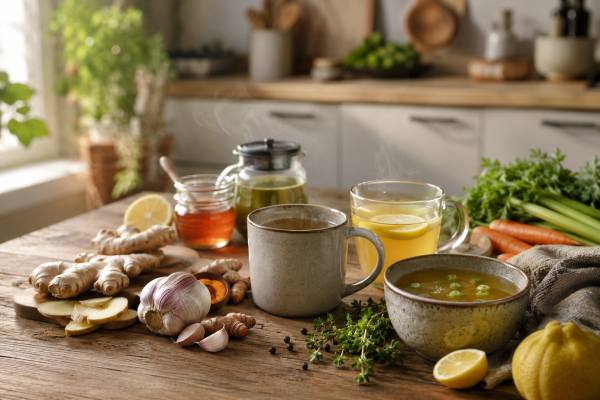
When people feel a cold coming on, they often reach for something warm to drink before they reach for anything else. Tea with honey, broth, hot lemon water, ginger drinks, and packaged “immune shots” all carry a promise of comfort, recovery, or stronger immunity. Some of that promise is real. Much of it is overstated. A drink can soothe a sore throat, improve hydration, loosen secretions, and make it easier to rest and eat. Those are meaningful benefits. But most drinks do not directly “boost” the immune system in the dramatic way labels and social media posts often suggest.
The better question is not which drink has the most heroic ingredients. It is which one helps the body most in the moment. This article explains what immune support drinks can realistically do, which options make practical sense, where teas and broths fit, and how to tell helpful comfort measures from expensive hype.
Key Takeaways
- Warm drinks can ease throat irritation, improve comfort, and encourage hydration even when they do not shorten the illness itself.
- Honey has the best evidence among common home drink add-ins for easing cough symptoms, but it is not safe for babies under 1 year.
- Broths can be especially useful when appetite is low because they provide fluid, warmth, and often some sodium.
- Most “immune drinks” do not prevent infection or cure a cold, especially if they rely on large doses of vitamins or herbal blends with little clinical evidence.
- A practical routine is to choose one or two tolerable drinks you will actually use consistently, then match them to symptoms such as dry throat, congestion, or poor appetite.
Table of Contents
- What immune support drinks can really do
- Teas that help most with comfort
- Why broths often work better than expected
- What to think about honey, ginger, and lemon
- Which drinks are mostly hype
- How to choose the right drink for the moment
What immune support drinks can really do
The strongest argument for immune support drinks is not that they transform immunity overnight. It is that they support the conditions the body needs to cope with illness well. A drink can help with hydration, warmth, swallowing comfort, mucus management, and energy intake when appetite is low. Those effects are modest, but they are real, practical, and often worth more than flashy promises about “boosting” immune function.
Warm fluids are especially useful because they combine hydration with sensory relief. A warm drink can make the nose feel more open, reduce the sting of a sore throat, and encourage a person to sip more than they would if they were offered plain water alone. During a cold or flu, that matters. People often eat less, sleep worse, and drink less than usual, especially when swallowing is uncomfortable. In that setting, a tolerable drink becomes part of how the body maintains its rhythm rather than a standalone treatment.
Hydration is part of this story, but not the whole story. Fluids help support saliva, mucus, circulation, and temperature control. If someone is mildly dehydrated, dry, and feverish, almost any acceptable fluid is useful. That is why the logic overlaps closely with hydration and immune resilience. The key benefit is not that tea or broth contains a secret immune trigger. It is that fluids help keep first-line defenses and recovery systems functioning more normally.
Warm drinks may also help through comfort-driven behavior. A person who feels soothed is more likely to rest, stay hydrated, and keep eating small amounts. Those simple behaviors often matter more than any one plant extract. Comfort is not trivial. It changes whether people can sleep, whether they keep up with fluids, and whether they worsen a manageable illness by neglecting basics.
This is also where the language of “immune support” needs to be more honest. A drink can support immune function indirectly by helping barrier tissues, symptom relief, and hydration. That is different from claiming it prevents infection or shortens illness in a reliable, clinically significant way. The distinction matters because it protects people from spending money on products that promise more than they can deliver.
So what should you expect from a well-chosen immune support drink? Think in terms of practical outcomes:
- easier swallowing
- less throat irritation
- more comfortable coughing
- better hydration
- improved willingness to rest and eat
- temporary relief from feeling chilled or congested
That may sound ordinary, but ordinary support is often exactly what helps most. The deeper shift is moving from “Which drink will cure this?” to “Which drink makes my body easier to care for while I recover?” That framing also fits better with immune resilience than with marketing-driven ideas about immune boosting.
Teas that help most with comfort
Tea is probably the most familiar category of immune support drinks, but not all teas deserve the same expectations. Their biggest strengths are warmth, hydration, throat comfort, and in some cases gentle symptom support. For most people, the question is not which tea has the most dramatic immune claim. It is which one is soothing, safe, and easy to tolerate.
Plain herbal tea often works well because it is warm, mild, and easy to sip slowly. Chamomile, ginger, peppermint, and simple lemon-based herbal blends are common choices. These do not have strong evidence as cold cures, but they may help people feel better enough to keep drinking. That matters more than it sounds. A drink that eases discomfort enough to promote rest can be genuinely useful even if it does not change viral clearance.
Green tea gets more attention because of its catechins and their possible immunomodulatory effects. There is interesting research around green tea compounds, inflammation, and immune signaling, but that should not be confused with proof that drinking green tea during a cold sharply reduces infection severity. Green tea may fit a generally healthy routine and may offer useful polyphenols, but in the context of an acute illness, its more immediate benefits are still warmth and fluid. It is also not ideal for everyone. Caffeine can be a drawback if someone is anxious, dehydrated, nauseated, or trying to sleep. That is why timing matters in choices like green tea and immunity.
A few practical tea choices tend to work well:
- ginger tea for nausea, throat comfort, and warmth
- chamomile tea for a gentle, non-caffeinated option
- green tea for people who tolerate caffeine and want a lighter drink
- peppermint tea for a cooling sensation, though some people with reflux may dislike it
- black tea if that is what someone already enjoys, but caffeine may limit its usefulness late in the day
Teas also work well because they are easy to customize. A spoonful of honey can make a bigger practical difference than the tea itself if cough or throat irritation is the main problem. A squeeze of lemon may improve taste and encourage drinking, though it can sting some throats and may not be ideal for people with reflux.
The safest overall rule is to choose tea for comfort, not for miracle expectations. Avoid forcing strong herbal blends just because they sound medicinal. Some products combine many botanicals, stimulants, or high-dose extracts that add cost and risk without clear benefit. A simple drink you actually want to finish is usually more useful than a complicated one that tastes medicinal and gets abandoned after a few sips.
When tea helps most, it usually does so quietly: it gets fluid in, reduces dryness, softens a cough, and makes the body feel less tense. That is enough. A drink does not need to be dramatic to be worthwhile.
Why broths often work better than expected
Broths are sometimes treated as old-fashioned comfort food rather than a serious recovery tool, but they often deserve more credit than trendy immune drinks. Their advantage is not that they contain magical immune compounds. It is that they solve several common problems at once: poor appetite, low fluid intake, throat discomfort, and mild sodium depletion.
When someone is sick, plain water is not always appealing. It can feel too bland, too cold, or too hard to keep drinking if nausea or fatigue is present. Broth is different. It is warm, savory, and often easier to tolerate when appetite is low. Even a light broth can provide fluid, a little sodium, and a sense of nourishment that makes a person more willing to keep drinking. That can be especially helpful during fever, after sweating, or when a person has been eating very little.
Sodium is part of why broth can feel effective. If someone is only mildly ill, this is not usually a dramatic electrolyte issue. But when food intake is down, a salty liquid may be more satisfying and easier to retain than plain water alone. That is one reason broth often works so well during the “I don’t want to eat but I know I need something” stage of a cold or flu. It sits between a beverage and a light meal.
Bone broth deserves a more realistic description than it usually gets. It can be a comforting fluid source, and it may provide some protein and sodium, depending on how it is made. But it is not a special immune elixir just because the label says collagen or minerals. In practical terms, what matters most is whether the broth is warm, drinkable, and tolerated. The strengths and tradeoffs are much better framed in broth as hydration and nourishment support than in immune miracle language.
Broths can be especially useful in these situations:
- low appetite during a viral illness
- sore throat or painful swallowing
- early recovery after fever
- mild dehydration with poor interest in plain fluids
- periods when a person wants something more substantial than tea but lighter than a meal
A few cautions matter too. Packaged broths can be very high in sodium, which may not suit everyone, especially people with certain heart, kidney, or blood pressure concerns. Broths can also be thin on protein unless they are part of a broader eating pattern. Someone who relies only on broth for too long may feel underfed. It works best as a bridge, not a complete recovery plan.
This is why broth often succeeds where more glamorous wellness drinks fail. It supports the basics. It is easy to sip, easy to flavor, and often easier to continue than sweeter drinks. For many people, the most effective “immune drink” is not a shot bottle with exotic ingredients. It is a mug of warm broth that gets them through the part of the day when eating and drinking feel hardest.
What to think about honey, ginger, and lemon
These three ingredients show up in nearly every home remedy recipe, but they help in different ways. Grouping them together can be useful, as long as they are not given the same kind of credit.
Honey has the strongest practical evidence of the three, especially for cough relief. It does not “kill a cold” in a broad sense, but it can reduce cough frequency and severity in some settings and may help people sleep better when coughing is the main problem. In real life, that is significant. Better sleep and less throat irritation can make an illness feel more manageable. The main safety caveat is important: honey should never be given to babies under 1 year because of botulism risk. For older children and adults, it is a reasonable option when used sensibly. Its role fits naturally beside other symptom-oriented measures such as honey for sore throat and cough.
Ginger is best viewed as a comfort ingredient rather than a proven immune treatment. It may help some people with nausea, throat warmth, and general tolerability of a drink. If someone finds ginger tea soothing, that is a legitimate reason to use it. But the step from “soothing” to “immune boosting” is where claims often run ahead of evidence. Ginger works best when it makes a drink easier to consume, not when it is treated as a replacement for hydration, rest, or medical care.
Lemon is similar. It can improve taste and make warm water or tea more appealing. That alone can be useful. It also contributes a small amount of vitamin C, but not in a way that should be oversold. Most people do not need to treat lemon water like a clinical immune intervention. It is simply a more appealing fluid for some throats and some tastes. For others, it can sting and worsen reflux. That is why “drink hot lemon water” should never sound like universal advice.
A practical way to think about these ingredients is by symptom match:
- honey: best for cough and throat coating
- ginger: best for warmth and possible nausea relief
- lemon: best for flavor and salivation if it feels good to drink
They can also be combined effectively. Warm tea with honey and ginger may work better than any one ingredient alone, not because the mixture becomes medicinally powerful, but because it becomes more pleasant, more soothing, and more likely to be finished.
One thing worth avoiding is the assumption that natural automatically means risk-free. Large amounts of ginger may not suit everyone, especially those with certain GI sensitivities or medication concerns. Honey is still a concentrated sugar source, which matters for some people with diabetes. Lemon can aggravate some throats and some stomachs. The right question is not “Is it natural?” but “Does it help this symptom without causing a different problem?”
That is the broader lesson with home drink add-ins. The best ones usually help because they improve comfort and adherence, not because they turn a beverage into a cure.
Which drinks are mostly hype
Some drinks genuinely help with comfort and recovery. Others mainly help the company selling them. The most overhyped products tend to share a few features: dramatic words like boost, detox, defend, or shot; very long ingredient lists; and promises that sound bigger than the evidence behind them.
“Immune shots” are a common example. Many contain concentrated ginger, turmeric, cayenne, citrus, and added vitamins. None of those ingredients is automatically useless. The problem is that the product is often sold as if intensity equals effectiveness. A drink that burns the throat or feels medicinal can create the illusion that it is “working,” even when its real benefits are no better than those of a simpler, cheaper drink. In some people, these concentrated products irritate the stomach or throat more than they help.
Mega-vitamin beverages deserve similar caution. If someone has a true deficiency, correcting that matters. But an acutely sick person does not usually need a sugar-heavy drink with very high vitamin doses to support immunity. This is where broader skepticism about immune myths and mega-dose thinking becomes helpful. More is not always better, and a fortified bottle is not automatically smarter than tea, broth, and a regular meal.
Energy drinks and highly caffeinated “wellness” beverages are another weak fit during illness. They may temporarily improve alertness, but they do not support restful recovery. In some people they worsen anxiety, palpitations, stomach upset, and sleep disruption. That tradeoff usually makes them a poor choice during respiratory illness.
Sweetened juices are more mixed. A small glass can help if it encourages fluid intake, but many people overestimate their immune value and underestimate the sugar load. Juice is not inherently bad, yet it is usually better used as one optional fluid among others, not as the centerpiece of illness care.
A few red flags can help you spot drinks that are more hype than help:
- promises to prevent illness outright
- emphasis on proprietary blends rather than clear doses
- very high vitamin amounts without a clear reason
- stimulant-heavy formulas
- language that treats comfort as proof of immune enhancement
- prices far above ordinary tea, broth, or simple ingredients
The bigger issue is not just wasted money. It is distraction. A person may focus on the fanciest product in the fridge while neglecting the more important steps: staying hydrated, resting, eating enough, and using symptom relief wisely. That is why the question “What actually helps?” is so useful. It cuts through branding and brings the focus back to function.
In many cases, the most helpful immune drink is also the least marketable one: plain tea with honey, broth with some salt, or a tolerable oral rehydration drink when fluid loss is the real issue.
How to choose the right drink for the moment
The best immune support drink depends less on trend and more on the symptom in front of you. A sore throat, nausea, fever, cough, and poor appetite do not all call for the same choice. Matching the drink to the moment is usually more effective than picking a favorite and using it for everything.
If the main problem is throat pain or a dry cough, warm tea with honey is often one of the most useful options. It is simple, easy to repeat, and can be taken in small amounts throughout the day. If the main issue is low appetite and mild dehydration, broth may work better because it adds warmth and sodium while feeling more substantial than plain tea. If nausea is prominent, ginger tea or another mild warm fluid may be easier to tolerate than richer drinks.
A practical symptom-based guide looks like this:
- Dry throat or nagging cough
Try warm tea with honey, if age-appropriate and tolerated. - Poor appetite and low energy
Try broth or a light soup-like drink that provides fluid plus some sodium. - Nausea or stomach sensitivity
Try small sips of ginger tea or another mild non-caffeinated fluid. - Fever, sweating, or diarrhea
Focus on hydration first, and consider oral rehydration options if losses are significant. - Evening symptoms with poor sleep
Choose non-caffeinated drinks and avoid strongly acidic or stimulant-heavy products.
This is also where context matters. Someone with reflux may do poorly with lemon and peppermint. Someone with diabetes may want to be more deliberate about honey or juice. Someone on fluid restriction should not follow generic hydration advice casually. Children, older adults, and people with chronic illness often need a more tailored approach. During more significant fluid loss, the guidance in dehydration when sick becomes more relevant than comfort drinks alone.
It also helps to remember that drinks are only one part of care. They work best alongside sleep, a tolerable diet, and sensible symptom management. In other words, they fit inside the larger framework of evidence-based immune support habits rather than replacing them.
A few final rules keep things simple:
- choose drinks you actually want to finish
- keep them gentle rather than extreme
- use warmth and flavor to encourage drinking
- avoid turning every sip into a supplement strategy
- seek medical advice if symptoms are severe, prolonged, or worsening
The real value of immune support drinks is not mystery. It is usability. The right drink helps you hydrate, rest, swallow, and recover with less friction. That may not sound flashy, but it is often exactly what actually helps.
References
- Effectiveness of honey for symptomatic relief in upper respiratory tract infections: a systematic review and meta-analysis 2021 (Systematic Review and Meta-Analysis)
- Honey for acute cough in children – a systematic review 2023 (Systematic Review)
- Immunomodulatory Effects of Green Tea Catechins and Their Microbial Metabolites 2024 (Review)
- Understanding Mucosal Physiology and Rationale of Formulation Design for Improved Mucosal Immunity 2024 (Review)
- The effects of a hot drink on nasal airflow and symptoms of common cold and flu 2008 (Randomized Study)
Disclaimer
This article is for general educational purposes only and is not a substitute for personal medical advice, diagnosis, or treatment. Drinks can support hydration, comfort, and symptom relief, but they do not replace medical evaluation for trouble breathing, chest pain, dehydration, high fever, worsening symptoms, or illness in infants, older adults, pregnant people, or those with chronic medical conditions. Honey should not be given to children under 1 year of age.
If you found this article useful, please share it on Facebook, X, or your preferred platform so more people can separate genuinely helpful drink choices from expensive immune hype.