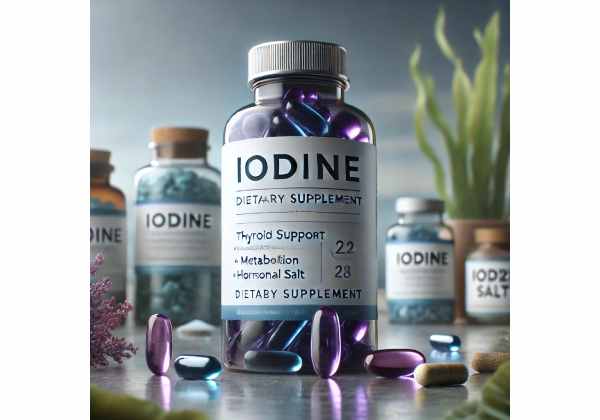
Iodine is a small nutrient with unusually large consequences. The body needs it to make thyroid hormones, and those hormones help regulate metabolism, energy use, and, crucially, brain development and neurological function. That is why iodine sits in an unusual position among supplements for mental wellness. It is not a classic nootropic, and it is not a mood enhancer in the usual sense. Its real importance is more foundational. When iodine intake is too low, thyroid function can suffer, and that can affect concentration, memory, mental speed, mood, and, during pregnancy and infancy, brain development itself. At the same time, more is not better. Too much iodine can also disrupt thyroid function and create problems of its own. This article explains how iodine affects the brain, who may benefit from supplementation, what doses make sense, and why careful use matters.
Table of Contents
- How Iodine Supports Brain Function
- Brain and Mental Effects of Low Iodine
- Who May Benefit From Iodine
- Food Sources and Supplement Forms
- Dosage and How to Use It
- Safety, Side Effects, and Thyroid Risks
How Iodine Supports Brain Function
Iodine supports brain health mainly through thyroid hormone production. It is an essential component of thyroxine, called T4, and triiodothyronine, called T3. These hormones regulate many biochemical processes, including protein synthesis, enzyme activity, metabolic rate, and the growth and maturation of the central nervous system. In practical terms, iodine does not sharpen focus the way caffeine might. Instead, it helps create the hormonal conditions the brain needs to develop, maintain energy balance, and function normally.
This role is most dramatic during pregnancy, infancy, and early childhood. During early pregnancy, the fetus depends heavily on maternal thyroid hormone supply, which in turn depends on adequate maternal iodine intake. Severe deficiency in that period can cause profound and irreversible neurodevelopmental harm. Even less severe deficiency has been linked with poorer verbal and cognitive outcomes in children in some observational research. That is why iodine is often discussed less as a performance supplement and more as a developmental necessity.
In adults, the connection is more indirect but still important. When iodine intake falls low enough to impair thyroid function, people may develop hypothyroid symptoms such as fatigue, slowed thinking, reduced concentration, and low mood. Those symptoms overlap heavily with complaints often described as brain fog or mental sluggishness, which is one reason thyroid-related causes deserve attention in any discussion of hypothyroid brain fog and cognitive slowing. Iodine does not directly “boost” cognition in iodine-replete adults, but it can help normalize function when deficiency is part of the problem.
That distinction matters. The search intent around iodine often mixes two very different questions: “Can iodine improve brain health?” and “Do I need iodine because low intake is quietly affecting my thyroid and mental function?” The second question is usually the more useful one. If intake is already adequate, adding more iodine is unlikely to improve memory, focus, or mood. If intake is inadequate, correcting it can be highly meaningful. This is why iodine is best seen as a corrective or preventive nutrient rather than a general-purpose nootropic.
Brain and Mental Effects of Low Iodine
The brain and mental effects of low iodine depend heavily on life stage and severity. In pregnancy and early development, the stakes are highest. Iodine-deficiency disorders can begin before birth and jeopardize children’s mental health and survival, with severe deficiency causing irreversible intellectual disability and other developmental harm. This is the clearest and strongest brain-health case for iodine in all of nutrition.
In school-age children, correction of deficiency can improve some cognitive outcomes, but the benefit is strongest where deficiency is already present. Research in children with low baseline iodine status has found that restoring iodine intake can improve iodine status and support some measures of cognitive performance. That is encouraging, but it also reinforces a key point: iodine seems most helpful when it corrects a real insufficiency, not when it is layered onto an already adequate diet.
In adults, mild to moderate deficiency can cause goiter and impaired mental function and work productivity secondary to hypothyroidism. That can look like slower processing, trouble concentrating, low motivation, and mental fatigue. These symptoms are nonspecific, which makes self-diagnosis risky. Many other problems can produce similar complaints, including low iron, poor sleep, depression, and vitamin deficiencies, which is why persistent memory or concentration problems often require a broader look at possible causes of memory and focus problems rather than a single supplement experiment.
It is also important not to overpromise on mood. Iodine is not an antidepressant, and there is no strong evidence that supplementation improves mood in people who are already iodine sufficient. Any mental-health benefit in adults is usually mediated through thyroid normalization rather than a direct effect on neurotransmitters. That is a more limited, but also more credible, claim. If low iodine intake contributes to hypothyroidism, correcting it may improve mental energy and steadiness. If thyroid function is normal and iodine intake is already adequate, extra iodine may do nothing or even cause harm.
There is also a U-shaped concern. Very high iodine intake may impair thyroid function and potentially affect neurological health through that route. The most defensible takeaway is not that iodine is a brain booster at any dose. It is that the brain depends on a healthy iodine range, and both too little and too much can be problematic. That makes iodine more like a precision nutrient than a supplement to take casually.
Who May Benefit From Iodine
Iodine supplementation makes the most sense for people who may not be getting enough from diet or who are in life stages where needs are higher. Pregnancy is the clearest example. Iodine requirements rise during pregnancy and lactation because thyroid hormone production increases and the developing baby depends on maternal iodine intake. This is why prenatal nutrition guidelines place so much emphasis on consistent iodine intake.
People who avoid major iodine-containing foods may also be at higher risk. Those at greater risk can include vegans and people who eat few or no dairy products, seafood, and eggs. This matters because modern eating patterns can unintentionally lower iodine intake. Lower salt diets, noniodized specialty salts, and plant-based diets can all reduce intake unless iodine is replaced deliberately.
Geography matters too. People living in regions with iodine-poor soil are at higher risk unless food is fortified or imported from iodine-replete areas. This is one reason salt iodization has been such an important public health intervention globally. It has dramatically reduced deficiency worldwide, but it has not eliminated it, and some populations remain vulnerable even in otherwise high-income settings.
Who is less likely to benefit? Most healthy adults who already use iodized salt or regularly eat fish, dairy, and eggs probably do not need a separate iodine supplement for cognition, mood, or focus. In that situation, more iodine is not a smarter brain strategy. A better route is usually strengthening the broader nutrition pattern with foods that support brain health overall rather than adding an extra trace mineral without a clear reason.
The most sensible candidates for iodine supplementation are people with a clear risk of low intake, not people chasing a generic mental-performance effect. That distinction protects against two common mistakes at once: missing a real deficiency in someone who needs support, and overtreating someone whose intake is already fine.
Food Sources and Supplement Forms
The best food sources of iodine include seaweed, fish and other seafood, eggs, dairy products, and iodized salt. The exact amount can vary a great deal. Common foods such as cod, milk, yogurt, and eggs can each contribute meaningful amounts, while iodized salt can help cover the gap for many people when used in moderation.
Seaweed deserves special caution because it can be both a rich source and an unpredictable one. Depending on the species and product, iodine content can range from modest to extremely high. That means seaweed can correct low intake in some cases, but it can also overshoot quickly, especially with kelp-heavy products. For the same reason, kelp supplements are not always the best first choice for routine supplementation.
Supplement forms usually contain iodine as potassium iodide or sodium iodide, and many multivitamin-mineral products include about 150 mcg. Prenatal products may contain iodine, but not all do. Kelp-based supplements are also common, though the overall dose can be higher and harder to judge. For routine use, labeled potassium iodide products tend to be easier to dose consistently than seaweed-derived products.
Diet quality still matters more than supplement marketing. In many countries, milk, dairy products, fish, and eggs remain major iodine sources, while plant-based diets can be relatively low unless they include fortified foods or iodized salt. This fits the broader principle that brain-health nutrition is usually built on patterns, not isolated pills, and works best when seen within overall nutrition and mental health support.
In practical terms, iodine from food is often the safest place to start. Supplements are useful when needs are higher or diet is inadequate, but because iodine has a relatively narrow safe range compared with some other nutrients, a food-first approach usually lowers the risk of overshooting.
Dosage and How to Use It
For most adults, the recommended dietary allowance for iodine is 150 mcg per day. It rises to 220 mcg during pregnancy and 290 mcg during lactation. These are intake targets from all sources, not necessarily the exact size of a supplement. Someone getting iodine from food and iodized salt may need little or no supplemental iodine, while someone on a restrictive diet may need more deliberate coverage.
If a supplement is used, 150 mcg per day is the common baseline amount in adult multivitamins and is also a standard amount used in many prenatal products. That target is about ensuring reliable baseline intake, not about pushing thyroid function above normal.
A practical way to think about supplementation is:
- Use food and iodized salt first if intake is likely adequate.
- Consider a modest supplement if diet is low in iodine-rich foods or needs are higher.
- Avoid high-dose products unless a clinician has a specific reason.
- Reassess rather than assuming that more iodine means more benefit.
The form matters less than the dose and consistency. Potassium iodide is a common and predictable option. Kelp and seaweed products may look more “natural,” but because iodine content in seaweed varies so widely, they can be less reliable for precise daily use. That matters especially for people with thyroid disease, pregnancy, or anxiety around symptoms that could actually reflect hormone shifts.
Supplement timing is usually not important. Iodine is not a stimulant or a sedative, so there is no special brain-health advantage to taking it in the morning or at night. It can simply be taken with food if that improves consistency. The more important point is context: iodine should be used to meet needs, not to experiment with megadoses for focus or mood. If someone feels mentally slow, tired, or foggy, the right next step is often to look at broader contributors, including sleep, iron, thyroid status, and other nutrient-related causes of cognitive symptoms, rather than treating iodine as a stand-alone fix.
Safety, Side Effects, and Thyroid Risks
Iodine is a nutrient where excess matters almost as much as deficiency. For adults, the tolerable upper intake level is 1,100 mcg per day. Above that range, the risk of adverse effects rises, particularly thyroid dysfunction. Excessive iodine intake can contribute to iodine-induced hyperthyroidism, hypothyroidism, autoimmune thyroid disease, or thyroid enlargement, especially in people with underlying thyroid vulnerability.
This is why iodine is not a supplement to take casually in large amounts. Too much intake can trigger or worsen thyroid problems, and those shifts can affect energy, mood, focus, and heart rate. Several groups should be especially careful:
- people with known thyroid disease
- people using kelp or seaweed supplements with variable iodine content
- pregnant people self-prescribing doses well above standard prenatal levels
- anyone taking multiple supplements that all contain iodine
- people using specialty salts and assuming they are iodized when they usually are not
Side effects from moderate doses are often not dramatic, but the thyroid consequences can take time to show up. That makes iodine different from supplements people judge by how they feel in the first few days. You may not notice anything at all while intake is drifting too high or too low, yet thyroid-related symptoms can emerge later as fatigue, palpitations, anxiety, weight change, or mental slowing. If symptoms start appearing, they should not be dismissed as a normal adjustment.
The clearest safety message is simple: iodine is essential, but the target is adequacy, not excess. It is most helpful when it corrects low intake and least helpful when used as an open-ended brain supplement. That balance is what makes it valuable and what also makes it worth respecting.
References
- Iodine – Health Professional Fact Sheet 2024 (Guideline Resource)
- Iodine deficiency 2025 (WHO Resource)
- Iodine: a scoping review for Nordic Nutrition Recommendations 2023 2023 (Scoping Review)
- A systematic review of iodine intake in children, adults, and pregnant women in Europe—comparison against dietary recommendations and evaluation of dietary iodine sources 2022 (Systematic Review)
- Iodine deficiency and thyroid disorders 2015 (Review)
Disclaimer
This article is for educational purposes only and is not medical advice. Iodine can meaningfully affect thyroid function, and both deficiency and excess can cause harm. It should not be used as a substitute for medical evaluation of fatigue, anxiety, brain fog, depression, memory problems, or thyroid symptoms. People who are pregnant, breastfeeding, have thyroid disease, take thyroid medication, or are considering high-dose iodine should speak with a qualified clinician before supplementing.
If this article helped you, please share it on Facebook, X (formerly Twitter), or any platform where it may be useful to others.