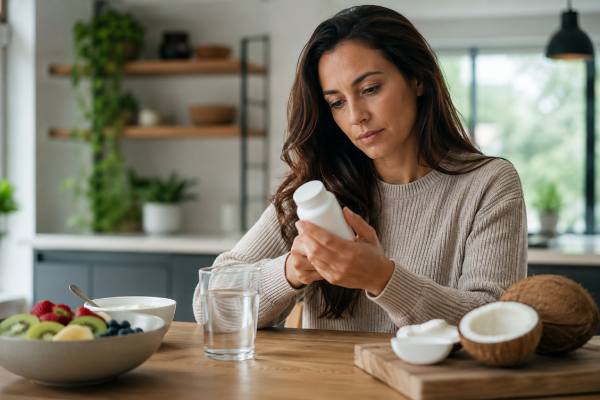
Lauricidin, often discussed interchangeably with monolaurin, has built a strong reputation online as a natural antimicrobial and immune-support supplement. People use it for everything from recurrent infections and gut issues to cold-season prevention, yet the confidence around it often comes from forums, practitioner handouts, and brand claims rather than large human trials. That gap matters.
Monolaurin is biologically interesting. It is derived from lauric acid, a fat found in coconut and human breast milk, and it has shown antimicrobial activity in lab settings. But “works in a petri dish” is not the same as “clearly helps people when swallowed as a supplement.” If you are considering Lauricidin, the useful questions are practical ones: what it really is, what evidence exists, how people usually take it, what side effects are most likely, and when it is smarter to skip it.
This guide walks through those questions in a clear, balanced way so you can make a calmer, better-informed decision.
Quick Facts
- Lauricidin is a branded form of monolaurin, a compound derived from lauric acid rather than a vitamin, probiotic, or herb.
- Monolaurin has credible laboratory antimicrobial activity, but oral human evidence remains limited and much weaker than marketing often suggests.
- The best human data involve topical uses, not routine oral supplementation for immune support.
- There is no well-established clinical oral dose, so starting with the lowest labeled serving and increasing slowly is a more sensible approach than copying aggressive internet protocols.
- Side effects are not well defined in formal oral trials, but stomach upset and poor tolerance are the most practical reasons people stop it.
Table of Contents
- What Lauricidin Actually Is
- What Evidence Really Shows
- How to Take It
- Side Effects and Cautions
- Who Should Skip It
- Choosing a Better Product
What Lauricidin Actually Is
Lauricidin is a branded monolaurin product. Monolaurin, also called glycerol monolaurate, is a monoglyceride made from glycerol and lauric acid. Lauric acid is a 12-carbon saturated fatty acid found in coconut fat, palm kernel oil, and human breast milk. That origin story is one reason the supplement sounds reassuring: it is often presented as something “natural,” food-derived, and already familiar to the body.
But it helps to be precise. Monolaurin is not the same thing as coconut oil, and taking a monolaurin supplement is not equivalent to eating coconut. It is also not an essential nutrient in the way vitamin C, zinc, or iron are. You do not develop a recognized deficiency syndrome from not taking monolaurin. That matters because much of the supplement marketing around it quietly blurs the line between “interesting compound” and “necessary support.”
What makes monolaurin appealing is its activity in laboratory research. It can disrupt lipid membranes and interfere with certain bacteria, fungi, and enveloped viruses under controlled conditions. That has made it attractive to people looking for a non-prescription tool for gut complaints, recurrent colds, yeast concerns, skin issues, or general “immune balance.” The problem is that the leap from lab mechanism to real-world benefit is large. Many compounds look impressive in vitro but fail to show clear clinical value once digestion, dose, metabolism, and human biology enter the picture.
There is also a branding issue. “Lauricidin” refers to a specific product, while “monolaurin” refers to the ingredient. Some people assume Lauricidin is a distinct substance or a medically established form. It is better to think of it as a monolaurin supplement sold in a recognizable pellet format. Other monolaurin products come as capsules, powders, or softgels.
Because it is often discussed in immune-health spaces, monolaurin also gets caught up in the language of “boosting” immunity. That framing is rarely helpful. A better question is whether it meaningfully supports resilience, reduces symptom burden, or changes infection risk in humans. That is a more grounded standard than vague promises about strengthening defenses. It also fits better with the broader idea of immune resilience than with the sales language around miracle support.
So the cleanest definition is this: Lauricidin is a branded oral monolaurin supplement with plausible antimicrobial mechanisms, but it is not a required nutrient, not the same as coconut oil, and not automatically effective just because it has a biologically interesting origin. Understanding that difference sets the right tone for everything that follows.
What Evidence Really Shows
The evidence base for monolaurin is weaker than most supplement pages suggest. That does not mean the compound is useless. It means the strongest claims tend to outrun the strongest data.
The central problem is simple: oral monolaurin has plenty of laboratory interest but very little direct human clinical evidence. A narrative review focused on the clinical literature came to a blunt conclusion: there was no peer-reviewed human evidence supporting monolaurin as an oral dietary supplement for the many benefits commonly claimed online. The human papers that did exist were mainly topical, such as vaginal or oral applications, not routine swallowed use for immune health, gut balance, or chronic infection control.
That distinction matters because people often take Lauricidin hoping it will help with problems like recurrent colds, herpes flares, sinus issues, Candida overgrowth, chronic fatigue, or vague “viral load” concerns. For many of those uses, the evidence is still mostly mechanistic, animal-based, or anecdotal. That is not enough to treat the supplement like established therapy.
Recent human data add interest but not certainty. A 2025 observational cohort study found that higher serum monolaurin levels were associated with a lower risk of COVID-19 over follow-up. That is worth noting, but it does not prove that taking a monolaurin supplement causes protection. Association is not causation. Higher serum levels may reflect diet, metabolism, or other health variables, and observational findings are not the same as randomized trials.
Topical monolaurin evidence is a little more tangible, though still limited. A randomized placebo-controlled trial of a 5 percent monolaurin vaginal gel for bacterial vaginosis did not show clear superiority over placebo for the main cure outcome, even though tolerability was acceptable. More recent work in atopic dermatitis suggests monolaurin may inhibit antibiotic-resistant Staphylococcus aureus on the skin, which is promising for dermatology-specific use. Still, these are not oral immune-support trials.
That leaves an important bottom line. Monolaurin is not a supplement with zero science behind it. It has a real biological story and some human research in topical settings. But oral Lauricidin remains clinically underproven. It belongs in the category of “interesting but not established,” not “clearly effective.”
This is why it is smart to read claims about immune benefits with the same skepticism you would bring to any other supplement that sounds too universal. A product that claims to help viruses, bacteria, yeast, inflammation, gut health, skin health, and energy all at once should trigger the same careful filter you would use when reading about immune support supplements more broadly. In practical terms, the evidence supports curiosity, not certainty.
How to Take It
This is the most frustrating part of the monolaurin conversation: there is no well-established clinical oral dose for Lauricidin or monolaurin in healthy adults. That is not because the perfect dose is hidden somewhere. It is because formal human oral trials are sparse, and dosing guidance is driven more by product labels, supplement practice, and user experience than by strong clinical evidence.
In real life, monolaurin is sold in pellets, capsules, powders, and combination formulas. Lauricidin is best known for pellets that are swallowed rather than chewed. Some people take monolaurin with food to reduce stomach irritation, while others prefer it away from meals. There is no universal rule that clearly improves outcomes across users, so tolerance usually decides the best timing.
A practical, cautious approach looks like this:
- Start with the lowest labeled serving rather than a full “target” dose.
- Stay there for several days before increasing.
- Increase only one variable at a time, such as dose or frequency.
- Stop escalating if your stomach, bowel habits, or general tolerance worsen.
That kind of slow titration is not just cautious for caution’s sake. It helps you distinguish whether the supplement itself is tolerable. People often jump into large servings because they read that “starting low only delays the benefits.” That logic is not evidence-based. A lower-friction start is often more useful than a dramatic one, especially when the supplement’s oral clinical effect is still uncertain.
It is also wise to decide why you are taking it before you open the bottle. Are you testing it for a brief, defined reason, like a recurring pattern of mild symptoms? Or are you planning to add it indefinitely because it sounds protective? Those are very different use cases. In general, a time-limited trial with a clear goal is more rational than indefinite daily use with no plan for reassessment.
Some good habits make the trial cleaner:
- do not start it on the same day as two or three other new supplements
- keep a simple note of dose, timing, and symptoms
- give it a defined review point, such as two to four weeks
- avoid treating “more” as automatically better
Because there is no standardized clinical dosing framework, the most honest advice is not to chase aggressive internet protocols. Follow the label of a reputable single-ingredient product, start low, and adjust slowly based on tolerance rather than hype. That is especially important in a supplement category where anecdotes can easily overpower restraint.
This is also one reason not to treat Lauricidin as a shortcut around more reliable foundations. If you want stronger overall support during cold season or periods of stress, basics like sleep, protein intake, exposure reduction, and nutrition usually have better evidence than piling on niche compounds. That broader perspective is easy to lose when a single supplement is marketed as an answer.
Side Effects and Cautions
One of the hardest things to say clearly about Lauricidin side effects is that the formal oral safety picture is thinner than many buyers assume. There is not a large set of robust human oral trials telling us the exact rate of stomach pain, diarrhea, headaches, or other adverse effects. So the honest answer is not “it has no side effects.” It is “oral side effects are not well characterized in high-quality trials.”
That said, the most plausible and commonly discussed practical issues are gastrointestinal. People who start too high may notice nausea, loose stools, abdominal discomfort, or a sense that the supplement is simply not sitting well. Those effects are not unique to monolaurin; they are common with many concentrated fat-derived or antimicrobial-leaning supplements. They also become more likely when someone begins with a large serving instead of building up slowly.
A second issue is misattribution. In monolaurin circles, unpleasant reactions are often framed as “die-off,” as if any new symptom proves the product is working. That idea can be convenient, but it is not a reliable way to interpret side effects. Feeling worse after starting a supplement may mean irritation, poor tolerance, an unrelated illness, or a product-quality problem. It should not automatically be rebranded as success. This is one of the places where immune-health myths can muddy judgment.
Allergy is another caution. Monolaurin is not the same as whole coconut, and many people with coconut sensitivity may not react to it the same way. Still, anyone with a known coconut allergy or a history of reacting strongly to coconut-derived products should be careful and discuss the product with a clinician before trying it.
You should also be cautious about formulations that bundle monolaurin with herbs, oregano oil, olive leaf, silver, or stimulant-like “immune” blends. When side effects happen, combination products make it much harder to identify the cause. They also increase the odds that you are reacting to something other than monolaurin.
A few sensible red flags for stopping and reassessing include:
- persistent stomach pain or diarrhea
- vomiting
- rash, itching, or swelling
- symptoms that steadily worsen after dose increases
- any reaction that makes you hesitant to continue
Because the oral safety data are limited, the smartest posture is moderate rather than casual. Monolaurin may be reasonably tolerated for many users, but “natural” does not mean side-effect free, and “available without a prescription” does not mean well studied. If a supplement keeps making you feel worse, that is a practical answer, even when the marketing story says you should push through it.
Who Should Skip It
Lauricidin is not an automatic no for everyone, but there are several groups who should be more cautious or avoid self-directed use altogether.
The first group includes people who are pregnant, breastfeeding, or choosing a supplement for a child. Monolaurin is related to components found in foods and breast milk, which makes it sound reassuring, but that should not be confused with evidence that concentrated supplemental dosing is well studied in these groups. The absence of good safety data is enough reason to be careful.
The second group includes people with significant digestive sensitivity. If you already deal with chronic diarrhea, inflammatory bowel symptoms, post-infectious gut issues, or strong reactions to supplements in general, monolaurin is more likely to become another variable your gut does not appreciate. It may not be dangerous, but it may be more nuisance than help.
Third, be careful if you take multiple medications or other supplements. Monolaurin does not have a well-mapped interaction profile, but “not well mapped” is not the same as “interaction-free.” If you are already using herbs, probiotics, antimicrobials, acid reducers, immunosuppressants, or medications with narrow safety margins, a pharmacist or clinician can help you think through whether adding another product is sensible. That is especially true in the broader context of supplement and medication interactions.
Monolaurin is also a poor substitute for proper evaluation in people with recurrent or unusual infections. If you keep getting sinus infections, mouth ulcers, shingles, pneumonia, persistent skin infections, or infections that are difficult to clear, the answer may not be “try a stronger supplement stack.” Sometimes the more useful next step is to ask whether there is an underlying immune, airway, allergy, or nutritional issue worth checking. Repeated self-treatment can delay that conversation.
You should also skip self-experimentation if you are using monolaurin to manage a clearly medical problem that deserves diagnosis. A supplement is not a stand-in for care when you have rapidly spreading rash, severe sore throat, facial swelling, shortness of breath, dehydration, or fever that is not behaving like a routine viral illness.
A final caution applies to people who are drawn to “broad antimicrobial” language because they feel chronically unwell but do not have a diagnosis. That situation can lead to long, expensive supplement routines built on hope rather than clarity. In those cases, it is often better to step back and ask what problem you are actually trying to solve. A supplement trial can be reasonable; a vague, endless search for hidden infection is usually less helpful.
Choosing a Better Product
If you decide monolaurin is worth a cautious trial, product quality matters more than clever branding. This is not a category where the most dramatic website is likely to be the most trustworthy.
Start with the basics. A good product should clearly state the ingredient, serving size, total amount per serving, and other ingredients. Single-ingredient monolaurin products are usually easier to evaluate than “immune defense” blends that combine monolaurin with several botanicals and proprietary powders. The cleaner the label, the easier it is to judge both dose and tolerance.
Third-party testing is also worth prioritizing. It does not prove clinical effectiveness, but it improves the odds that the product contains what the label says and is screened for common contaminants. That is especially important in a supplement market where bold claims can hide weak quality control. If you want to be more systematic about shopping, the same filters used for third-party tested supplements apply here too.
You can also compare format with your own needs:
- pellets can make dose adjustment easier, but some people dislike the texture
- capsules are simpler and more portable
- powders may be useful for flexible dosing but can be messier and less pleasant to take
Do not assume one format is more “potent” unless the ingredient amount actually differs.
Watch for red-flag marketing language. Be cautious with products that promise rapid detox, broad eradication of hidden infections, guaranteed “die-off,” or sweeping claims about viruses, bacteria, yeast, parasites, brain fog, fatigue, and immunity all at once. Those patterns usually signal marketing confidence rather than evidence quality.
It also helps to define what counts as success before you buy. A good supplement trial should answer a question. For example: Did I tolerate it well? Did a specific recurring symptom pattern improve? Did I need less other symptom support? Without a concrete question, it is easy to keep taking a supplement simply because stopping feels like giving up.
Finally, place monolaurin in proportion. Even if it turns out to be useful for you, it is still a supporting tool, not the foundation of immune health. Better sleep, enough protein, a diverse diet, and sensible infection-prevention habits usually carry more proven weight than niche antimicrobial supplements. A product like Lauricidin may fit into a broader plan, but it should not distract from the basics that repeatedly matter most.
References
- The Clinical Use of Monolaurin as a Dietary Supplement: A Review of the Literature 2020 (Review)
- Biomedical Applications of Lauric Acid: A Narrative Review 2024 (Narrative Review)
- Higher Serum Monolaurin Is Associated with a Lower Risk of COVID-19: Results from a Prospective Observational Cohort Study 2025 (Observational Study)
- Five Percent Monolaurin Vaginal Gel for the Treatment of Bacterial Vaginosis: A Randomized Placebo-Controlled Trial 2020 (RCT)
- Monolaurin inhibits antibiotic-resistant Staphylococcus aureus in patients with atopic dermatitis 2025 (Clinical Study)
Disclaimer
This article is for educational purposes only and is not medical advice, diagnosis, or treatment. Lauricidin and other monolaurin supplements are not proven replacements for evidence-based care, and oral human data remain limited. Speak with a clinician or pharmacist before using monolaurin if you are pregnant, breastfeeding, giving it to a child, managing a chronic illness, or taking prescription medications. Seek medical care promptly for severe infection symptoms, dehydration, breathing problems, rapidly worsening rash, or repeated infections that may need proper evaluation.
If this article helped you, please consider sharing it on Facebook, X, or another platform you use to help others sort marketing claims from evidence.