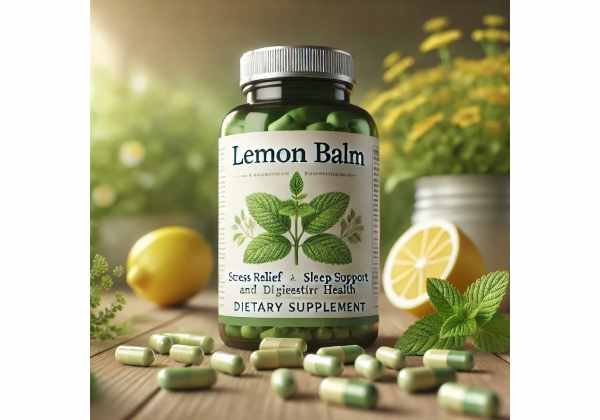
Lemon balm has been used for centuries when stress shows up as a restless mind, a tense body, an unsettled stomach, or a hard-to-settle bedtime. Today, it sits in an interesting middle ground between traditional herbal practice and modern brain health research: gentle enough to appear in teas, yet studied for calmness, sleep quality, mood, and selected aspects of cognition. That does not make it a cure-all. The best human evidence still points to modest benefits for stress-related symptoms and sleep, while the case for memory support and broader brain protection is more limited. That nuance matters. People considering lemon balm need more than a list of benefits. They need to know what it may help, which forms and doses make sense, and where caution is warranted. This guide covers how lemon balm works, what the research suggests, how to use it, and when it may not be the right fit.
Table of Contents
- What Lemon Balm Is and Why It Feels Calming
- What the Research Shows for Mood and Sleep
- Can Lemon Balm Support Memory and Focus
- Best Uses and Who May Benefit Most
- Dosage, Timing, and Forms That Make Sense
- Safety, Side Effects, and When to Avoid It
What Lemon Balm Is and Why It Feels Calming
Lemon balm, or Melissa officinalis, is a lemon-scented herb in the mint family. The leaf is the part most often used in teas, tinctures, extracts, and capsules. Traditional herbal systems have long used it for mild nervous tension, occasional sleeplessness, and stress that spills into digestion. That broad pattern still fits how many people use it now: not as a hard-hitting sedative, but as a calming herb that can make the body feel less keyed up.
Its chemistry helps explain that reputation. Lemon balm contains rosmarinic acid, flavonoids, triterpenes, and volatile compounds such as citronellal and geranial. These substances appear to influence several pathways relevant to mental wellness. One proposed mechanism is reduced breakdown of GABA, a neurotransmitter involved in quieting excessive neural firing. Researchers have also explored cholinergic effects, meaning potential interactions with acetylcholine signaling, which matters for attention and memory. On top of that, lemon balm has antioxidant and anti-inflammatory activity in laboratory studies, though those findings do not automatically translate into meaningful clinical brain benefits.
What makes lemon balm especially interesting is that it may help by lowering the “noise” level in the nervous system rather than by forcing stimulation. Many people do not need a sharper push. They need less internal friction. When stress is high, attention often gets worse, sleep becomes lighter, digestion becomes more reactive, and mood becomes less stable. That overlap is one reason lemon balm continues to attract attention in the broader conversation about stress, brain function, and burnout.
That said, preparation matters. A cup of tea, an alcohol tincture, a dried leaf capsule, and a standardized extract are not interchangeable. Different products can concentrate different compounds, and the research does not support treating all lemon balm products as if they produce the same effect. In practical terms, this means one person may feel gently relaxed from tea, while another may notice little from a non-standardized capsule.
The cleanest way to think about lemon balm is this: it is a calming botanical with a plausible brain-health role, especially where stress, sleep disruption, and emotional strain overlap. It is less convincing as a stand-alone memory enhancer than it is as a tool for helping an overactivated system settle down. That distinction keeps expectations realistic and makes it easier to use the herb well.
What the Research Shows for Mood and Sleep
For mood and sleep, lemon balm has enough human evidence to be taken seriously, but not enough to be viewed as definitive. The strongest signal is not that it transforms severe psychiatric symptoms. It is that it may modestly improve anxiety, stress-related symptoms, and sleep quality in selected groups, especially when symptoms are mild to moderate.
A systematic review and meta-analysis of clinical trials found that lemon balm improved average anxiety and depression scores compared with placebo, without serious side effects. That sounds impressive, but there is an important caveat: the trials were small, the products varied, and the study designs were not uniform. In research terms, that means the direction of benefit is promising, but the precision of the estimate is not ideal.
More recent trials help make the picture clearer. In one placebo-controlled study, adults with emotional distress and poor sleep took a standardized phospholipid carrier-based lemon balm extract for three weeks. Compared with placebo, the extract improved scores related to depression, anxiety, stress, and sleep quality. A newer cross-over trial also reported better sleep quality with a lemon balm phytosome preparation. Together, these studies support a practical takeaway: certain well-characterized lemon balm extracts may help people who feel mentally wound up and sleep poorly.
The likely benefit is modest and contextual. Lemon balm may be most useful when sleep problems are tied to tension, rumination, or feeling overstimulated at night. It is less clearly a treatment for chronic insomnia driven by circadian problems, sleep apnea, severe depression, substance use, or another medical cause. People dealing with those issues usually need a broader approach, which may include evaluation for underlying contributors and evidence-based sleep strategies like those covered in sleep and mental health.
It is also worth separating calmness from sedation. Lemon balm does not behave like a prescription sleep medication. Many users describe the effect as taking the edge off rather than knocking them out. That can be an advantage. Heavy sedation may shorten sleep latency while leaving a person groggy. Lemon balm’s appeal is often that it can promote a softer landing into rest, especially as tea or a gentle evening extract.
Still, the evidence has limits. Most studies are short. Different products emphasize different compounds. Some trials combine lemon balm with other herbs, which makes it hard to know how much credit belongs to lemon balm alone. So the balanced conclusion is this: lemon balm has credible early support for mild anxiety, emotional tension, and stress-related sleep disturbance, but it is not a substitute for comprehensive care when symptoms are intense, persistent, or functionally impairing.
Can Lemon Balm Support Memory and Focus
The idea that lemon balm might help memory or focus is not as far-fetched as it sounds. Some of that interest comes from early laboratory work suggesting cholinergic activity, which matters because acetylcholine is deeply involved in attention and memory. Some also comes from older clinical trials that hinted at cognitive effects in both healthy adults and people with Alzheimer’s disease. But this is the part of the lemon balm story that needs the most restraint.
In healthy adults, small acute studies have reported changes in calmness, mood, and selected cognitive tasks after single doses of lemon balm extract. Some findings suggest that when people are less tense, they may perform better on certain tasks, or at least feel more settled while doing them. That distinction matters. Better cognition does not always mean direct stimulation of memory systems. Sometimes it means the brain is working under less emotional interference.
In older adults or people with cognitive impairment, the evidence is mixed and still preliminary. A small older trial in mild to moderate Alzheimer’s disease found benefit with a standardized lemon balm extract over several months, which helped keep cognitive interest in the herb alive. But later work has not established lemon balm as a reliable cognitive treatment, and an aromatherapy trial in Alzheimer’s-related agitation did not show superiority over placebo when tested rigorously. That means the cognitive signal is intriguing, not settled.
A helpful frame is to think of lemon balm as an indirect cognitive aid. When stress is high, working memory, focus, and task persistence often worsen. A product that lowers tension may improve mental performance in the real world, even if it is not acting like a stimulant or classic nootropic. That is very different from promising faster processing, stronger recall, or protection against dementia progression. Anyone looking for a sharper-edged cognitive enhancer should not assume lemon balm belongs in the same category as products discussed in broader pieces on nootropics for focus and their risks.
For everyday use, the most realistic cognitive benefit is improved mental steadiness. Someone who feels less agitated may find it easier to read, complete a demanding task, or transition into focused work. That can be valuable. It is also a lower bar than claiming meaningful memory enhancement.
So, can lemon balm support memory and focus? Possibly, in a limited and preparation-dependent way. The current evidence suggests more confidence in its ability to calm the mind than in its ability to upgrade cognition directly. For many people, that calmer baseline is still the more useful effect.
Best Uses and Who May Benefit Most
Lemon balm tends to make the most sense when the goal is gentle regulation, not aggressive symptom control. It fits best in situations where stress, poor sleep, irritability, and mental overload cluster together. In those cases, a calming herb can create enough breathing room for other habits to work better.
People most likely to find it useful include:
- Adults with mild stress-related tension, especially when it shows up as racing thoughts, body restlessness, or a hard time winding down.
- People whose sleep is light or delayed because they feel mentally “on” at night rather than physically sleepy.
- Those who experience stress with digestive discomfort such as bloating or an unsettled stomach.
- Individuals who are sensitive to caffeine, jittery with activating supplements, or prone to feeling overstimulated by stronger nootropics.
Lemon balm is often a good fit for evening use, for stressful stretches at work, or for people who want help settling without feeling heavily drugged. It may also appeal to those who prefer starting with a tea or a relatively mild botanical before moving toward more complex supplement routines.
It is a weaker fit when symptoms are severe. Someone with major depression, disabling anxiety, panic attacks, significant insomnia, bipolar symptoms, obsessive thoughts, substance withdrawal, or rapidly worsening memory problems should not rely on lemon balm as a primary strategy. In those cases, the risk is not that lemon balm is harmful. The risk is that it delays more appropriate care.
Lemon balm also has a niche role for people who want daytime calm without strong drowsiness, but that depends heavily on the person and the product. Some feel centered on it. Others feel sleepy. For readers seeking a compound that is often used more specifically for calm alertness, L-theanine for anxiety and focus may be a better conceptual comparison.
Another common use is as part of a broader routine rather than as a stand-alone fix. Lemon balm can pair well with sleep hygiene, reduced late caffeine, evening light control, journaling, relaxation exercises, or therapy-based stress work. In that sense, it behaves more like a supportive tool than a full solution.
The best candidates for lemon balm are people with mild to moderate symptoms, realistic expectations, and a clear goal: calmer evenings, easier wind-down, softer stress reactivity, or a gentler mental state during demanding periods. That is a narrower promise than many supplement labels imply, but it is also where lemon balm is most credible.
Dosage, Timing, and Forms That Make Sense
Dosage is where lemon balm gets tricky, because the research does not support one universal number for every form. Tea, tinctures, liquid extracts, dried herb capsules, and standardized extracts all behave differently. The smartest approach is to match the form to the goal and avoid assuming that all preparations are interchangeable.
Traditional oral doses for lemon balm leaf include:
- Herbal tea: 1.5 to 4.5 grams of dried leaf infused in 150 mL of boiling water, 1 to 3 times daily.
- Powdered herb: 0.19 to 0.55 grams, 2 to 3 times daily.
- Liquid extract: 2 to 4 mL, 1 to 3 times daily.
- Tincture: 2 to 6 mL, 1 to 3 times daily.
For stress support during the day, tea or a lower-strength oral preparation often makes the most sense. For sleep, many people use lemon balm in the evening, roughly 30 to 60 minutes before bed, or as part of a repeat wind-down ritual such as tea after dinner and reduced screen exposure later in the night. The ritual itself can matter. Calm is easier to feel when the rest of the environment is working in the same direction.
For standardized extracts, follow the product label closely. Human trials have used specific branded or formulation-dependent products, so it is better to think in terms of “studied extract” than “generic lemon balm.” One placebo-controlled study used 400 mg daily of a standardized phospholipid carrier-based extract for three weeks. That does not mean every 400 mg capsule on the shelf is equivalent.
A few practical rules help:
- Start low. Especially if you are sensitive to sedating herbs.
- Give it a defined trial. Two to three weeks is a fair window for mood and sleep effects with a standardized product.
- Do not stack blindly. Lemon balm often appears in sleep blends with herbs such as valerian, which can be sensible, but combination products make it harder to judge what is helping. Readers considering that route may also want context on valerian root and sleep safety.
- Use the form that fits the problem. Tea makes sense for stress and evening tension. A standardized extract makes more sense when trying to mirror research more closely.
In practice, lemon balm works best when dosing is simple, timing is deliberate, and expectations are modest. It is usually more useful as a steady, low-drama support than as a supplement to push hard.
Safety, Side Effects, and When to Avoid It
Lemon balm is generally considered well tolerated, especially in normal oral amounts and short-term use. In clinical studies, serious side effects have not been a dominant concern. Still, “gentle” does not mean “risk free,” and the safest use depends on the person, the dose, the product, and what else is in the routine.
The most likely side effects are mild and non-specific, such as:
- sleepiness or reduced alertness
- dizziness
- headache
- nausea or bloating
- occasional GI discomfort
Because lemon balm can feel calming or mildly sedating, it may impair driving or other tasks that require full alertness in some people. That is especially relevant when starting a new product, increasing the dose, or using it at night and then waking early.
Some groups should be more cautious. Traditional regulatory guidance does not recommend lemon balm during pregnancy or lactation because there is not enough safety data. Use in children under 12 is also not well established in that same framework. People with thyroid disease deserve special mention. Preclinical data suggest that water extracts of lemon balm may affect thyroid-stimulating hormone activity, but the clinical relevance remains uncertain. Even so, that is enough reason for people with hypothyroidism, hyperthyroidism, thyroid nodules, or thyroid medication use to check with a clinician before using concentrated extracts regularly.
Medication interactions are not fully mapped, but caution is sensible in a few situations:
- when taking sedatives or other products that increase drowsiness
- when using sleep medications or sedating antihistamines
- when taking thyroid medication
- before surgery or procedures where excess sedation could matter
It is also important to know when lemon balm is the wrong tool. Seek medical guidance rather than self-treating if anxiety is severe, depression is worsening, sleep problems are persistent, cognition is declining, or symptoms are tied to chest pain, fainting, suicidal thoughts, or major functional impairment. A mild calming herb should not carry the weight of a high-stakes problem.
Used thoughtfully, lemon balm has a favorable safety profile for many adults. The keys are simple: choose a reputable product, start conservatively, pay attention to sedation, and treat persistent mood, sleep, or cognitive symptoms as signals worth evaluating rather than masking.
References
- Clinical Efficacy and Tolerability of Lemon Balm (Melissa officinalis L.) in Psychological Well-Being: A Review 2024 (Review)
- Effects of Melissa officinalis Phytosome on Sleep Quality: Results of a Prospective, Double-Blind, Placebo-Controlled, and Cross-Over Study 2024 (RCT)
- The possible “calming effect” of subchronic supplementation of a standardised phospholipid carrier-based Melissa officinalis L. extract in healthy adults with emotional distress and poor sleep conditions: results from a prospective, randomised, double-blinded, placebo-controlled clinical trial 2023 (RCT)
- The effects of lemon balm (Melissa officinalis L.) on depression and anxiety in clinical trials: A systematic review and meta-analysis 2021 (Systematic Review)
- Community herbal monograph on Melissa officinalis L., folium 2013 (Regulatory Monograph)
Disclaimer
This article is for educational purposes only and is not medical advice, diagnosis, or treatment. Supplements and herbal products can affect people differently based on health conditions, medications, dose, and product quality. Lemon balm may not be appropriate for everyone, especially during pregnancy, lactation, thyroid treatment, or when symptoms are severe or persistent. For personalized guidance, consult a qualified healthcare professional.
If this article was helpful, please consider sharing it on Facebook, X, or your preferred platform.