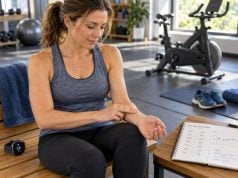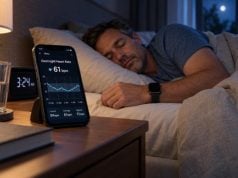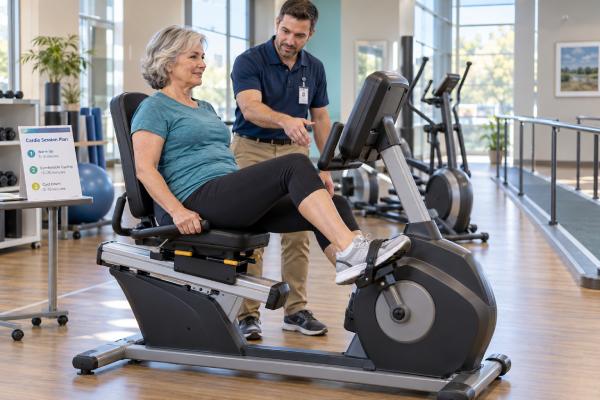
Joint pain does not mean you have to give up heart-healthy cardio. The best low-impact workouts raise your breathing and heart rate while limiting repeated pounding, deep joint loading, or movements that aggravate pain. Good options include level walking, stationary cycling, swimming, water aerobics, elliptical training, and—when lower-body pain is limiting—upper-body ergometry. For knee or hip osteoarthritis, exercise is not only compatible with treatment; it is a core part of maintaining function, and recent research shows that aerobic programs can improve cardiopulmonary fitness as well as symptoms. The key is choosing a mode your joints tolerate and progressing slowly enough that soreness settles back toward baseline by the next day. Mild discomfort during activity can be acceptable, but sharp pain, swelling that keeps increasing, limping, joint locking, or pain that remains clearly worse for more than a day suggests the session was too much. Start with short bouts, build total weekly minutes first, and increase resistance or speed only after your joints are adapting well.
Table of Contents
- Why Low-Impact Cardio Still Counts
- Best Low-Impact Cardio Options for Joint Pain
- How Hard and How Long to Exercise
- How to Exercise With Knee, Hip, or Back Pain
- A Four-Week Low-Impact Cardio Plan
- Pain Rules and Signs You Should Back Off
- When Joint Pain Needs Medical Evaluation
Why Low-Impact Cardio Still Counts
Your cardiovascular system responds to sustained effort, not to how much your feet pound the ground. If an activity raises your heart rate and breathing to a moderate or vigorous level, it can improve aerobic fitness even when the movement is gentle on the joints.
That matters because adults with chronic joint pain often become less active to avoid discomfort. Less activity can reduce aerobic capacity, weaken muscles, increase stiffness, and make ordinary tasks feel harder. It can also make it more difficult to reach the amount of physical activity associated with lower cardiovascular risk.
The American Heart Association recommends at least 150 minutes per week of moderate-intensity aerobic activity or 75 minutes of vigorous activity, plus muscle-strengthening exercise on at least two days per week. Those minutes do not have to come from running. Cycling, swimming, brisk walking, water exercise, and other low-impact activities can all contribute.
Recent evidence in knee osteoarthritis is especially relevant. A 2025 systematic review and meta-analysis found that aerobic exercise programs—including walking, cycling, and aquatic exercise—can improve cardiopulmonary fitness in people with knee osteoarthritis. That is important because the goal is not simply “moving the painful joint.” It is maintaining the heart, lungs, muscles, and overall function while managing symptoms.
Low-impact does not mean no load. Walking still puts body weight through the hips, knees, and feet. Cycling still requires repeated knee motion. Swimming still uses shoulders. The useful distinction is that these activities generally allow you to control impact and joint stress more easily than running, jumping, or high-impact classes.
Exercise also does not have to be pain-free to be useful. With osteoarthritis and many chronic musculoskeletal conditions, some discomfort can occur during activity without causing joint damage. What matters is the type of pain, how severe it becomes, whether mechanics change, and how well symptoms settle afterward.
Best Low-Impact Cardio Options for Joint Pain
The best cardio choice is the one that raises your effort without repeatedly provoking the painful joint. Different options shift stress to different areas, so having several modes can help.
Walking
Walking is accessible, easy to dose, and directly useful for daily function. Start on flat, predictable surfaces if hills or uneven ground irritate the knees, hips, ankles, or back.
Shorter steps can reduce braking forces and help you avoid overstriding. Supportive shoes may improve comfort. If continuous walking is uncomfortable, use intervals such as five minutes of walking followed by one or two minutes of easier movement or rest.
For a heart-focused progression, the guide to walking for heart health explains how pace and weekly volume can be built gradually.
Stationary cycling
Cycling is often well tolerated because body weight is supported by the seat and there is little impact. It can still produce a strong aerobic stimulus.
Bike setup matters. A seat that is too low can force excessive knee flexion and increase discomfort. At the bottom of the pedal stroke, the knee should usually remain slightly bent rather than deeply flexed or locked straight. Start with low resistance and a smooth cadence.
If knee pain rises when resistance gets heavy, lower the resistance and pedal a little faster rather than grinding a large gear. More detail is available in cycling for heart health.
Swimming and water exercise
Water reduces weight-bearing load while adding resistance in multiple directions. This can make aquatic exercise especially helpful when land-based walking is painful.
Systematic reviews in knee and lower-limb osteoarthritis have found that aquatic exercise can improve pain, stiffness, and physical function compared with no exercise. Water walking and aqua aerobics can provide cardio without requiring strong swimming skills.
Swimming itself is highly joint-friendly for the hips and knees, although shoulder problems may limit certain strokes. Swimming for heart health can be adapted by using shorter intervals and different strokes.
Elliptical trainer
An elliptical reduces impact because the feet stay in contact with the pedals. It resembles walking or climbing but with a smoother path.
Some people with knee pain like it; others dislike the fixed stride length or deeper knee bend. Keep resistance low initially and avoid steep incline settings until you know how your joints respond.
Upper-body ergometer
An arm bike can provide aerobic exercise when foot, ankle, knee, or hip pain makes lower-body cardio temporarily difficult. Because the active muscle mass is smaller, heart rate and perceived effort may behave differently than during leg exercise. Start conservatively.
Rowing
Rowing is low-impact but not automatically joint-friendly. It involves repeated hip and knee flexion plus trunk movement. It can work well for some people with good mobility, but it may aggravate knee or low-back symptoms in others. Shorten the slide and use light resistance if you are testing it.
How Hard and How Long to Exercise
Start with an intensity that challenges your heart without forcing your joints to compensate. For many people, moderate intensity is the best place to begin.
At moderate intensity, breathing is clearly faster but you can still speak in sentences. A perceived exertion around 4 to 6 on a 0-to-10 scale is a reasonable practical target. Vigorous exercise feels closer to 7 or 8 out of 10 and makes continuous conversation difficult.
You do not need to begin with 30-minute sessions. Ten-minute bouts can be useful, and even shorter bouts help build tolerance if you have been inactive.
A beginner progression might look like:
- 10–15 minutes, 3 to 5 days per week
- Then 15–20 minutes as symptoms allow
- Then 20–30 minutes
- Eventually build toward a weekly total near 150 minutes of moderate activity
Increase duration before intensity. Adding five minutes to a comfortable cycling session is usually easier on joints than sharply increasing resistance.
If you track heart rate, do not let the number overrule pain or mechanics. A joint-limited workout may stop before you reach a typical target zone. That is fine. Over time, stronger muscles and better tolerance can let you work harder aerobically.
Medications such as beta blockers can blunt the heart-rate response, making talk test and perceived exertion more useful than age-predicted target zones.
Warm up for five to ten minutes at an easy pace. Joints often feel better after they have moved for several minutes. A gradual cool-down can help your circulation settle and may make the session feel less abrupt.
How to Exercise With Knee, Hip, or Back Pain
Joint location changes which movements are most comfortable.
For knee pain, stationary cycling, pool exercise, and flat walking are common starting choices. Avoid suddenly adding steep downhill walking, deep squat-based cardio, or high resistance on a bike. Strong quadriceps, hamstrings, glutes, and calves support the knee, so combine cardio with appropriate strength work.
For hip pain, cycling, water exercise, and shorter-stride walking may reduce irritation. A very low bike seat or deep hip flexion can aggravate some hip conditions. If side-to-side movements hurt, choose straightforward sagittal-plane activities first.
For ankle or foot pain, cycling, swimming, and arm ergometry can maintain conditioning while reducing repeated foot strike. Persistent focal bone pain, swelling, or pain that worsens with each step needs assessment rather than simply switching shoes.
For low-back pain, walking and swimming are often tolerable, but the right choice is individual. A recumbent bike may feel more supported for some people, while prolonged flexion can bother others. Rowing requires good trunk control and may not be a first choice during a flare.
The idea is to match the exercise to the joint rather than labeling one modality “best” for everyone.
It is also useful to separate joint pain from muscle effort. Burning in the thigh muscles during cycling is different from sharp pain inside the knee. Mild post-exercise muscle soreness is expected when you start a new activity; increasing joint swelling or mechanical symptoms are not.
Strength training is an important partner to cardio. Stronger muscles can reduce the relative effort required for daily movement and improve joint support. Start with tolerable ranges of motion and controlled repetitions rather than chasing heavy loads.
If high blood pressure is also a concern, a gradual program of exercise for people starting with hypertension can help you manage intensity safely.
A Four-Week Low-Impact Cardio Plan
This sample plan is designed for someone with stable chronic joint pain who can already do short periods of low-impact activity. Choose the modality that feels best; you do not have to use the same one every day.
| Week | Frequency | Session length | Effort |
|---|---|---|---|
| 1 | 4 days | 10–15 minutes | Easy to moderate |
| 2 | 4 days | 15–20 minutes | Mostly moderate |
| 3 | 4–5 days | 20–25 minutes | Moderate; optional short brisk intervals |
| 4 | 5 days | 25–30 minutes | Moderate; 1–2 sessions may include brief harder work |
For example, week 1 could include two cycling days, one water-walking day, and one flat walking day. Cross-training spreads stress across different tissues and can reduce boredom.
If 15 continuous minutes hurts, break it into three five-minute bouts separated by easy movement. Your cardiovascular system still benefits from accumulating activity, and shorter bouts may allow better mechanics.
Add two days of strength training if appropriate. Exercises might include sit-to-stands from a comfortable height, calf raises, glute bridges, wall push-ups, rows, or resistance-band work. A physical therapist can individualize these when pain or mobility limitations are significant.
Do not progress automatically just because the calendar says “week 3.” Repeat a week if pain or swelling is not settling. Progression should be based on tolerance.
Once you can comfortably reach 25 to 30 minutes, increase weekly volume gradually toward your longer-term target. You can then add intensity with small resistance increases, faster intervals, or gentle incline—one change at a time.
Pain Rules and Signs You Should Back Off
A simple symptom-response rule can keep training from turning into repeated flare-ups.
Mild discomfort that stays stable during exercise and returns near baseline by the next day is often acceptable in chronic osteoarthritis. Pain that steadily climbs, changes your gait, produces guarding, or remains clearly worse the next day suggests you exceeded current tolerance.
Back off if you notice:
- Sharp, catching, or stabbing joint pain
- New limping or major movement compensation
- Increasing swelling during or after exercise
- Joint locking or repeated giving way
- Numbness or new weakness
- Pain that wakes you repeatedly at night after a session
- Symptoms that remain substantially worse more than 24 hours later
When this happens, reduce one variable: duration, resistance, speed, range of motion, or frequency. You do not always need to stop exercise completely.
For example, if 30 minutes of cycling at resistance level 6 leaves your knee swollen the next day, try 20 minutes at level 3 or 4. If that is tolerated, build back slowly.
Painkillers can make it tempting to push harder than the joint can tolerate. Do not use medication as a way to ignore a worsening mechanical problem. If you routinely need medication just to complete exercise, discuss the plan with a clinician or physical therapist.
Heat before activity can help some people feel less stiff. Ice after exercise may reduce soreness for others. Neither changes the underlying training load, so the main adjustment remains how much stress the joint receives.
When Joint Pain Needs Medical Evaluation
Chronic stable osteoarthritis pain often responds well to graded exercise, but not every painful joint should be self-managed as arthritis.
Seek prompt medical evaluation for a joint that is acutely hot, red, very swollen, or associated with fever. Sudden severe pain after a fall or twist, inability to bear weight, obvious deformity, or suspected fracture also needs timely care.
Arrange evaluation for persistent swelling, repeated locking or giving way, unexplained weakness, numbness, pain that keeps worsening despite reduced activity, or symptoms that do not improve after several weeks of sensible modification.
Cardiovascular symptoms during low-impact exercise matter separately from joint pain. Stop and seek urgent care for chest pressure, fainting, severe shortness of breath, or other serious symptoms. A joint-friendly exercise is not automatically safe if the cardiovascular response is abnormal.
People with inflammatory arthritis, recent joint replacement, severe osteoporosis, neuropathy, major balance problems, or complex heart disease may benefit from a tailored plan from a physician or physical therapist.
The goal is sustainable activity. Low-impact cardio works when it lets you exercise often enough to improve cardiovascular fitness without repeatedly triggering joint flare-ups. Choose the movement your body tolerates, start below your maximum, and let symptom response—not enthusiasm alone—set the pace of progression.
References
- Effect of aerobic exercise on cardiopulmonary fitness among people with knee osteoarthritis: a systematic review and meta-analysis 2025 (Systematic Review)
- Exercise Therapy for Knee Osteoarthritis: A Systematic Review and Network Meta-analysis 2023 (Systematic Review)
- Efficacy and safety of aquatic exercise in knee osteoarthritis: A systematic review and meta-analysis of randomized controlled trials 2023 (Systematic Review)
- Efficacy of aquatic exercise in chronic musculoskeletal disorders: a systematic review and meta-analysis of randomized controlled trials 2023 (Systematic Review)
- Effects of Aquatic Exercise in Older People with Osteoarthritis: Systematic Review of Randomized Controlled Trials 2025 (Systematic Review)
- American Heart Association Recommendations for Physical Activity in Adults and Kids 2024
Disclaimer
Joint pain has many causes, and the safest exercise choice depends on the diagnosis, severity, medications, and other health conditions. Seek prompt care for a hot swollen joint, major injury, inability to bear weight, or serious cardiovascular symptoms during exercise. A clinician or physical therapist can individualize activity when pain is persistent or function is limited.