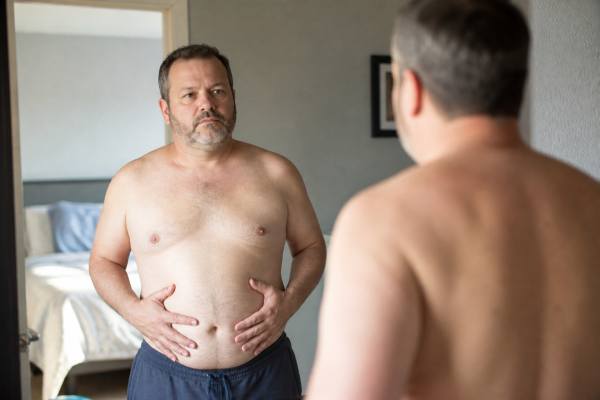
Weight gain in men is rarely caused by one factor alone. Diet, activity, sleep, age, medications, alcohol, stress, insulin resistance, and medical conditions can all affect body weight. Testosterone can be part of that picture, but it is often misunderstood.
Low testosterone can make fat loss harder by affecting energy, muscle, sexual function, mood, and body composition. At the same time, weight gain—especially abdominal fat—can lower testosterone. This creates a frustrating cycle: more body fat may suppress testosterone, and lower testosterone may make it harder to maintain the habits that support fat loss.
The important point is that low testosterone does not make weight loss impossible, and testosterone therapy is not a simple weight-loss treatment. The most useful approach is to confirm whether testosterone is truly low, look for reversible causes, protect muscle, improve metabolic health, and use medical treatment only when it is appropriate.
Table of Contents
- Why Low Testosterone and Weight Gain Overlap
- Symptoms That Matter Most
- How Testing and Diagnosis Work
- Lifestyle Changes That Support Testosterone
- Testosterone Therapy and Weight Loss
- Building a Weight-Loss Plan With Low Testosterone
- When to Get Medical Help
Why Low Testosterone and Weight Gain Overlap
Low testosterone and weight gain often move in both directions: excess body fat can lower testosterone, and low testosterone can make body composition worse. That does not mean testosterone is the only cause of weight gain, but it can be one important part of the metabolic picture.
Testosterone helps support lean muscle, bone strength, red blood cell production, libido, erectile function, and overall vitality. It also plays a role in how the body stores fat and maintains muscle. When levels are consistently low, some men notice less strength, lower training capacity, more fatigue, and a gradual increase in waist size.
Body fat, especially visceral fat around the abdomen, can also affect testosterone. Fat tissue is hormonally active. It can increase inflammation, worsen insulin resistance, and influence the conversion of testosterone into estrogen through an enzyme called aromatase. Obesity is also linked with lower sex hormone-binding globulin, which can make total testosterone look low even when the situation is more complex.
This is why a man may gain weight and then see his testosterone fall, rather than first having a primary testicular problem. In many cases, low testosterone in men with obesity is “functional” or “secondary,” meaning the brain-testicle signaling system is suppressed by health factors such as:
- excess abdominal fat
- insulin resistance or type 2 diabetes
- obstructive sleep apnea
- chronic poor sleep
- heavy alcohol intake
- certain medications
- long-term illness or inflammation
- major calorie restriction or overtraining
Low testosterone can also overlap with other hormone-related and metabolic issues. If weight gain feels sudden, unexplained, or out of proportion to changes in eating and activity, it may help to review broader signs of hormonal weight gain rather than assuming testosterone is the only issue.
A useful way to think about the relationship is this: low testosterone can reduce the “margin for error.” A man may still lose fat with a calorie deficit, adequate protein, strength training, and sleep, but he may feel more tired, recover more slowly, and lose muscle more easily if testosterone is truly low. That is why the goal is not simply to “boost testosterone,” but to identify what is driving the problem and treat the whole pattern.
Symptoms That Matter Most
The symptoms most suggestive of low testosterone are sexual symptoms, reduced morning erections, infertility, low libido, loss of muscle, anemia, and low-trauma fractures. Fatigue and weight gain can occur, but they are nonspecific and can come from many other causes.
This distinction matters because many men are told that any belly fat, tiredness, or low motivation means they have “low T.” Sometimes that is true. Often, it is only part of the story. Poor sleep, depression, thyroid disease, insulin resistance, medication side effects, alcohol, chronic stress, and low physical activity can cause similar symptoms.
| Symptom or finding | How to interpret it |
|---|---|
| Low libido, fewer morning erections, erectile changes | More suggestive, especially when persistent and paired with low morning testosterone |
| Infertility, reduced testicular size, delayed puberty history | Needs medical evaluation and often specialist care |
| Loss of muscle, reduced strength, increased waist size | Can fit low testosterone, aging, inactivity, inadequate protein, or weight gain |
| Fatigue, low mood, poor concentration | Common but nonspecific; sleep, mood, medications, and metabolic health should also be checked |
| Hot flashes, breast tenderness, nipple discharge, headaches, vision changes | Should be discussed promptly because pituitary or other endocrine causes may need evaluation |
Obstructive sleep apnea deserves special attention. Men with weight gain, loud snoring, daytime sleepiness, morning headaches, high blood pressure, or a large neck circumference may have sleep apnea, which can worsen fatigue, appetite control, insulin resistance, and testosterone regulation. If this pattern fits, reviewing sleep apnea and weight loss can be just as important as checking testosterone.
Medication history also matters. Opioids, glucocorticoids, some psychiatric medications, certain cancer treatments, and anabolic steroid use can affect the reproductive hormone axis. Past anabolic steroid use is especially relevant because testosterone may remain suppressed for a period after stopping.
The overall pattern is more useful than any single symptom. A man with gradual belly fat gain, poor sleep, low activity, and normal sexual function may need a metabolic and lifestyle-focused plan first. A man with low libido, fewer spontaneous erections, infertility, and repeated low morning testosterone needs a more direct endocrine or urologic evaluation.
How Testing and Diagnosis Work
Low testosterone should be diagnosed with both symptoms and properly timed blood tests, not symptoms alone. A single low value is not enough because testosterone fluctuates with sleep, illness, time of day, calorie restriction, alcohol, medications, and lab variation.
Most clinicians start with a total testosterone blood test taken in the morning, often between about 7 and 10 a.m. If the result is low, it is usually repeated on a different morning. Testing during acute illness, after a very poor night of sleep, or during extreme dieting can give a misleading result.
Many guidelines use a total testosterone level around 300 ng/dL, or about 10.4 nmol/L, as a common diagnostic threshold, but interpretation depends on the lab, symptoms, age, and clinical context. Some men also need free testosterone measured or calculated, especially when obesity, aging, thyroid disease, liver disease, or certain medications may change sex hormone-binding globulin.
A more complete evaluation may include:
- total testosterone, repeated in the morning
- free testosterone when total testosterone is borderline or SHBG may be abnormal
- luteinizing hormone and follicle-stimulating hormone to help distinguish testicular from pituitary or hypothalamic causes
- prolactin if pituitary causes are possible
- thyroid-stimulating hormone when thyroid disease is a concern
- hemoglobin A1c or fasting glucose for insulin resistance or diabetes
- complete blood count to check anemia or high hematocrit
- liver and kidney markers when clinically relevant
- fertility testing if pregnancy is a goal
A structured review of hormone tests for weight gain can be helpful when testosterone is only one possible issue.
The difference between primary and secondary hypogonadism matters. In primary hypogonadism, the testes do not produce enough testosterone despite strong signaling from the brain. Causes can include genetic conditions, testicular injury, infection, chemotherapy, radiation, or surgery. In secondary hypogonadism, the brain’s signaling to the testes is reduced. This can happen with pituitary disease, certain medications, obesity, sleep apnea, high prolactin, or chronic illness.
Testing is also important because treatment choices differ. A man with a pituitary tumor, high prolactin, fertility goals, or very low testosterone needs a different plan from a man with modestly low total testosterone related to weight gain and sleep apnea.
Direct-to-consumer testosterone testing can be useful as a starting point, but it should not replace clinical interpretation. Numbers need context. A result that looks “low normal” may still be relevant with strong symptoms, while a mildly low result during poor sleep or aggressive dieting may improve after addressing the underlying strain.
Lifestyle Changes That Support Testosterone
The most reliable non-drug way to improve obesity-related low testosterone is to reduce excess body fat while protecting muscle. This does not require extreme dieting; in fact, overly aggressive restriction can worsen fatigue, reduce training quality, and make weight regain more likely.
Weight loss can raise testosterone in many men with obesity, especially when abdominal fat decreases and insulin sensitivity improves. The effect is often larger with substantial, sustained weight loss, but even modest progress can improve energy, sleep, blood sugar, waist circumference, and confidence.
The strongest lifestyle priorities are:
- a moderate calorie deficit that can be sustained
- enough protein to preserve lean mass
- progressive strength training
- regular walking or other aerobic activity
- consistent sleep and treatment of sleep apnea when present
- reducing heavy alcohol intake
- improving blood sugar, blood pressure, and waist circumference
Insulin resistance is especially relevant because it often travels with abdominal fat, low SHBG, lower total testosterone, and metabolic syndrome. If waist gain, high triglycerides, fatty liver, prediabetes, or type 2 diabetes are part of the picture, a plan for weight loss with insulin resistance may address more than testosterone alone.
Sleep should not be treated as optional. Short sleep and broken sleep can reduce morning testosterone and increase hunger, cravings, and fatigue. Men who train hard but sleep poorly may feel as if their “discipline” is failing, when recovery is actually the weak link.
Alcohol is another practical lever. Heavy drinking can interfere with sleep, increase calories, worsen liver health, and affect reproductive hormones. This does not mean every man needs complete abstinence, but cutting back from frequent heavy intake can improve several drivers of weight gain at once.
Supplements deserve caution. Products marketed as testosterone boosters often rely on weak evidence, hidden stimulants, or exaggerated claims. Correcting a true deficiency, such as vitamin D deficiency, may support general health, but it is not the same as treating diagnosed hypogonadism. Men should be especially cautious with products that claim steroid-like results, contain undeclared hormones, or promise rapid fat loss.
The goal is not to chase a perfect hormone number through hacks. It is to create conditions where the reproductive hormone system, metabolism, sleep, and muscle mass can function better together.
Testosterone Therapy and Weight Loss
Testosterone therapy may help men with confirmed hypogonadism, but it should not be used as a general weight-loss drug. Its best-established role is treating men who have consistent symptoms and repeatedly low testosterone from a medical cause.
When testosterone therapy is appropriate, men may notice improved libido, sexual function, mood, anemia, bone density, and body composition. Body composition changes can include more lean mass and less fat mass, especially when therapy is paired with strength training and nutrition. The number on the scale, however, may not drop dramatically because gaining lean mass can offset fat loss.
A deeper discussion of whether testosterone therapy can help with weight loss is useful for men who already have confirmed low testosterone or are preparing for a medical discussion.
There are also important risks and tradeoffs. Testosterone therapy can suppress sperm production and may reduce fertility. Men who want children soon should discuss fertility-preserving options with a urologist or endocrinologist before starting treatment. Testosterone can also raise hematocrit, which thickens the blood, and it requires monitoring. Depending on the man’s age and risk profile, prostate evaluation and PSA monitoring may be recommended.
Testosterone therapy is usually not appropriate without careful evaluation in men with certain conditions, such as untreated severe sleep apnea, high hematocrit, active prostate or breast cancer, or significant uncontrolled medical problems. Men with recent major cardiovascular events, severe urinary symptoms, or complex prostate history need individualized medical guidance.
Forms of testosterone include gels, injections, patches, pellets, and oral options in some settings. Each has pros and cons. Gels provide steady dosing but require care to avoid transfer to others. Injections are convenient for some men but can cause peaks and troughs if dosing is not well managed. Pellets last longer but require a minor procedure. The best option depends on symptoms, labs, cost, preference, fertility plans, and monitoring.
A safe treatment plan should include clear goals. “More testosterone” is not enough. Better goals include improved sexual symptoms, restored levels into an appropriate range, stable hematocrit, preserved fertility when relevant, better training capacity, and progress on waist size or metabolic health.
TRT works best when it is part of a broader health plan. If calories remain high, sleep apnea is untreated, alcohol intake is heavy, and activity is low, testosterone therapy alone is unlikely to produce the body-composition change most men want.
Building a Weight-Loss Plan With Low Testosterone
A good weight-loss plan for men with low testosterone should protect muscle first, then create a manageable calorie deficit. The aim is not to eat as little as possible, but to lose fat while maintaining strength, energy, and long-term consistency.
Start with protein. Many men under-eat protein when they cut calories, especially if they skip breakfast or rely on convenience foods. Protein supports satiety and muscle retention, both of which matter when testosterone is low or borderline. Lean meats, fish, eggs, Greek yogurt, cottage cheese, tofu, tempeh, beans, lentils, and protein powders can all fit. A practical high-protein foods list can make meal planning easier.
Strength training is the second anchor. Testosterone supports muscle, but muscle also needs a training signal. A beginner does not need an advanced bodybuilding split. Two to four sessions per week with basic movement patterns is enough to start: squat or leg press, hip hinge, row, press, pulldown, carries, and core work. A simple 3-day strength training plan can be a realistic starting point.
Cardio and walking help create the calorie gap without forcing food intake too low. Walking is especially useful because it is easier to recover from than intense workouts. Men who feel exhausted or deconditioned can begin with short walks after meals, gradually increasing total daily steps.
A simple weekly structure might look like this:
- Protein at each meal: usually one palm-sized or larger serving, adjusted for body size and appetite.
- Strength training: two to four days weekly, with gradual progression.
- Walking: most days, with a step target that increases slowly.
- Sleep target: consistent bedtime and wake time whenever possible.
- Alcohol boundary: planned limits rather than open-ended drinking.
- Progress tracking: waist measurement, body weight trend, strength, energy, and symptoms.
The calorie deficit should be moderate. Losing about 0.5% to 1% of body weight per week is often enough for steady progress without excessive hunger or training decline. Larger men may lose faster at first, especially when water and glycogen shift, but the long-term goal is fat loss that can be maintained.
It is also important not to overinterpret daily scale changes. Testosterone, sodium, carbohydrate intake, constipation, alcohol, sore muscles, and poor sleep can all affect water weight. Waist measurements and strength trends often give a clearer picture than one morning weigh-in.
For men with very low energy, severe obesity, diabetes, fatty liver, or weight regain after repeated diets, medical weight management may be appropriate. That may include nutrition counseling, treatment of sleep apnea, diabetes medications, anti-obesity medications, or bariatric surgery evaluation. These options are not a failure of willpower. They are tools for treating a chronic metabolic problem when lifestyle changes alone have not been enough.
When to Get Medical Help
Men should seek medical evaluation when weight gain is rapid, unexplained, accompanied by sexual symptoms, or paired with signs of a hormonal or metabolic disorder. It is especially important to get help rather than self-treating with testosterone purchased online.
Make an appointment with a primary care clinician, endocrinologist, or urologist if you have:
- low libido, erectile changes, or fewer morning erections lasting several months
- infertility or plans to conceive
- unexplained loss of muscle or strength
- breast tenderness, breast enlargement, or nipple discharge
- hot flashes or night sweats
- low-trauma fracture or concern for low bone density
- symptoms of sleep apnea, such as loud snoring and daytime sleepiness
- rapid abdominal weight gain without a clear reason
- history of testicular injury, chemotherapy, radiation, pituitary disease, or anabolic steroid use
A broader guide to when to see a doctor for weight gain can help if you are unsure whether the pattern is medical, lifestyle-related, or both.
Some symptoms need more urgent attention. Severe headaches with vision changes, sudden testicular pain or swelling, chest pain, shortness of breath, fainting, severe depression, or thoughts of self-harm should be treated as urgent medical issues. These are not typical “low T” symptoms to manage with supplements or delayed lab testing.
It is also worth reviewing other medical reasons for unexplained weight gain. Hypothyroidism, Cushing syndrome, insulin resistance, depression, medication side effects, fluid retention, kidney or liver disease, and sleep disorders can all mimic or worsen the low-testosterone picture.
Avoid starting testosterone without a diagnosis. Non-prescribed testosterone, anabolic steroids, and “research chemicals” can suppress natural hormone production, worsen fertility, alter cholesterol, raise hematocrit, affect mood, and complicate future treatment. Even medically prescribed testosterone needs follow-up labs and symptom monitoring.
The most productive medical conversation is specific. Bring a list of symptoms, weight and waist changes, sleep patterns, medications, alcohol intake, training routine, fertility plans, and any prior testosterone results. Ask whether testing should include repeat morning testosterone, free testosterone, LH, FSH, prolactin, thyroid function, A1c, lipids, and blood count.
Low testosterone is treatable, but the best treatment depends on the cause. For some men, weight loss, sleep apnea treatment, strength training, and better metabolic health can improve testosterone enough. For others, testosterone therapy or specialist care is appropriate. The right plan starts with confirming the diagnosis, then treating the whole man rather than one lab number.
References
- Testosterone Therapy in Men With Hypogonadism: An Endocrine Society Clinical Practice Guideline 2018 (Guideline)
- Society for Endocrinology guidelines for testosterone replacement therapy in male hypogonadism 2022 (Guideline)
- Cardiovascular Safety of Testosterone-Replacement Therapy 2023 (RCT)
- Management of male obesity-related secondary hypogonadism: A clinical update 2024 (Review)
- Effects of Testosterone Replacement Therapy on Metabolic Syndrome in Male Patients-Systematic Review 2024 (Systematic Review)
- Approach to the Patient: Low Testosterone Concentrations in Men With Obesity 2025 (Review)
Disclaimer
This article is for general educational purposes only and is not a substitute for professional medical advice, diagnosis, or treatment. Men with symptoms of low testosterone, rapid weight gain, infertility concerns, or medical conditions should discuss testing and treatment options with a qualified healthcare professional.
If you found this helpful, consider sharing it on Facebook, X, or your preferred platform so others can better understand the connection between testosterone, weight, and men’s health.