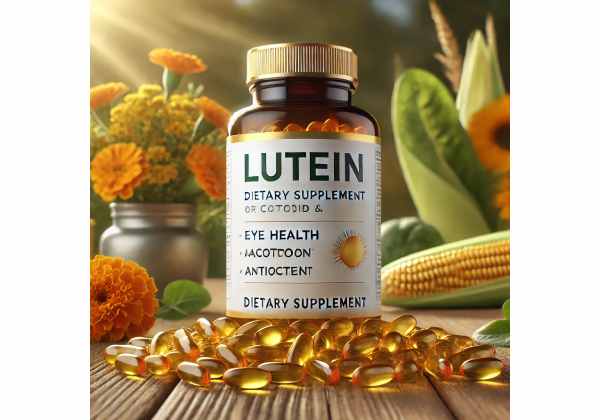
Lutein is usually discussed as an eye-health nutrient, yet that framing leaves out one of the most interesting parts of the story. Lutein is one of the few dietary carotenoids that also accumulates in brain tissue, which is why researchers now study it not only for visual aging, but also for memory, processing speed, learning, and broader cognitive resilience. That does not mean lutein is a fast-acting nootropic. Its role appears steadier and more structural, tied to antioxidant defense, inflammation control, membrane stability, and long-term brain support.
That distinction matters for mental wellness. The brain performs best when oxidative stress is lower, vascular function is healthier, and neural tissues are well protected over time. Lutein may contribute to those conditions, but the evidence is more nuanced than many supplement labels suggest. This guide explains what lutein is, how it may affect the brain, what the research really shows, how to use it well, and what safety points deserve attention.
Table of Contents
- What Lutein Is and Why It Matters
- How Lutein May Support the Brain
- Where the Benefits Look Most Promising
- What Human Research Actually Shows
- Dosage, Food Sources, and Supplement Forms
- Safety, Side Effects, and Precautions
What Lutein Is and Why It Matters
Lutein is a yellow-orange carotenoid found in foods such as spinach, kale, egg yolks, corn, peas, and avocado. It belongs to the xanthophyll family, along with zeaxanthin, and is best known for concentrating in the macula of the eye. That ocular role is important, but it is only part of the picture. Lutein also accumulates in brain tissue, which is unusual enough to make it one of the more compelling nutrients in discussions about cognitive health.
What makes lutein especially interesting is that its distribution in the body is not random. It tends to appear in tissues that face high oxidative demand, including the retina and the brain. Those tissues use a great deal of oxygen and are vulnerable to damage from free radicals, lipid oxidation, and inflammation. A nutrient that preferentially accumulates there is worth attention even before clinical trials are considered.
Lutein is not a stimulant, not a neurotransmitter precursor, and not an herb with an immediate calming effect. It is better understood as a protective nutritional compound. People looking for a sharp same-day focus boost may be disappointed. People thinking in terms of long-term brain support, better aging, and steadier neural performance are asking the more relevant question.
Another important point is that lutein is often studied together with zeaxanthin. In practice, many supplements combine them because they are found together in food and seem to work in overlapping ways. Still, lutein gets special attention because it appears to be a major carotenoid in brain tissue across multiple stages of life.
Lutein also sits at the border between food and supplement science. Unlike some nootropic ingredients that mostly exist in capsules, lutein is deeply tied to everyday diet. That makes it a good fit for people who prefer a food-first strategy, especially if they are already working on broader habits around brain-supportive nutrition. Supplements can still be useful, but lutein is one of those nutrients where dietary context matters a lot.
In practical terms, lutein matters because it offers a different model of brain support. It is less about pushing the nervous system harder and more about protecting it better. That is a slower promise, but it may also be a more realistic one for many adults, especially those thinking about cognitive aging, mental stamina, and overall resilience rather than instant performance enhancement.
How Lutein May Support the Brain
The most plausible case for lutein in brain health starts with biology rather than hype. Lutein appears to support the brain through several overlapping pathways, most of which are protective rather than stimulating.
The first is antioxidant defense. Brain tissue is rich in fats, highly metabolically active, and especially vulnerable to oxidative stress. Lutein can help neutralize reactive oxygen species and may limit lipid oxidation in neural tissues. That matters because oxidative damage is one of the recurring themes in age-related cognitive decline.
The second pathway is anti-inflammatory support. Chronic low-grade inflammation is often linked with slower thinking, reduced mental energy, and broader risk for neurodegenerative change. Lutein appears to influence inflammatory signaling in ways that may protect neurons and support healthier brain aging. That does not make it an anti-inflammatory drug, but it helps explain why it shows up repeatedly in neuroprotection research.
The third is membrane and neural tissue stability. Carotenoids such as lutein are fat-soluble and integrate into cell membranes. This may help stabilize neural membranes and preserve the efficiency of signaling under stress. The result is not necessarily a dramatic increase in performance, but possibly a more resilient system over time.
The fourth pathway may involve vascular support. The brain depends on good circulation, and nutrients associated with healthier vascular function can indirectly support cognition. This matters because many real-world complaints about “brain fog” or slowing are not purely neurotransmitter problems. They often overlap with inflammation, metabolic strain, poor sleep, and vascular health. Lutein fits better within that broader picture than within the classic stimulant model.
A fifth point is that lutein status in the retina, often measured through macular pigment optical density, has been linked in some research to cognitive performance. That does not prove cause and effect, but it gives researchers a useful noninvasive marker to study how lutein status relates to the brain.
Taken together, the mechanism story suggests that lutein may help by improving the conditions the brain depends on:
- less oxidative stress
- less inflammatory burden
- better tissue protection
- potentially healthier aging of neural networks
That makes lutein conceptually closer to other long-range support nutrients than to acute-performance compounds like caffeine or tyrosine. It belongs more naturally in conversations about protecting cognitive health over time than about getting through a single demanding afternoon.
The limitation is that strong mechanisms do not automatically mean strong clinical outcomes. A nutrient can make excellent biological sense and still produce modest benefits in human trials. That is why the human evidence matters so much. Lutein’s mechanistic case is persuasive, but it has to be matched against what supplementation actually changes in real people.
Where the Benefits Look Most Promising
The strongest argument for lutein is not that it turns healthy adults into sharper thinkers overnight. The more realistic case is that it may support certain aspects of cognitive performance and brain resilience, especially in people with lower baseline intake, older age, or early cognitive concerns.
The most promising area is healthy cognitive aging. Several lines of research suggest that lutein may be relevant to older adults because it is present in brain tissue and because higher lutein status has been associated with better performance on measures involving memory, executive function, and processing efficiency. That does not make it a treatment for dementia, but it does make it a sensible nutrient to consider in a long-term brain-health plan.
A second promising area is visual memory and learning. Some trials using lutein with zeaxanthin suggest improvements in visual memory-related tasks, even when broader cognitive changes are limited. This is more modest than marketing claims often suggest, but it is meaningful because it points to a specific rather than vague pattern of benefit.
A third area is brain structure and neural efficiency. Neuroimaging work in older adults has raised interest in the idea that lutein may influence how the brain ages, not only how it performs on a single test. That is a subtle but important distinction. A nutrient that supports healthier brain structure or connectivity may still be worth using even if short-term test changes are small.
Lutein may also be especially relevant for people whose overall dietary pattern is poor. Someone who rarely eats leafy greens, eggs, or other carotenoid-rich foods may have more room to benefit than someone whose diet already supplies these nutrients daily. This is one reason lutein fits naturally into broader guidance on Mediterranean-style eating for brain health.
Who may benefit most:
- older adults focused on prevention
- people with low fruit and vegetable intake
- adults with self-reported mild cognitive complaints
- people interested in a food-based approach to long-term brain support
Who may notice less:
- younger adults seeking an immediate focus boost
- people already consuming a carotenoid-rich diet
- people expecting lutein to work like a stimulant or sedative
It is also worth being precise about mood. Lutein is not mainly a mood supplement. Any mental wellness effect is likely indirect, through better overall neural resilience, lower inflammatory stress, and in some cases improved sleep or reduced strain from visual fatigue. That is different from saying it directly treats anxiety or depression.
In short, lutein looks most promising when the goal is protection, resilience, and gradual support, not instant mental performance. That is a quieter promise, but it is also a more credible one.
What Human Research Actually Shows
The human evidence on lutein is encouraging, but it is mixed enough that careful wording matters. The best-supported conclusion is not that lutein clearly improves cognition across the board. It is that lutein is biologically relevant to brain function and may improve selected outcomes in some groups, especially older adults or people with cognitive complaints.
A meta-analysis of randomized controlled trials found that lutein was associated with slight improvements in domains such as attention, executive function, and memory, but the overall effects were not statistically significant across the available trials. That is a useful reality check. It suggests potential, but not a broad proven effect.
At the same time, individual trials have produced more positive findings in specific settings. Studies combining lutein and zeaxanthin have reported improvements in visual memory, learning, complex attention, and cognitive flexibility in some participants. These effects have not been universal, and they do not show up equally across all tasks. That unevenness is important because it means lutein is not a guaranteed enhancer. It may help selected domains or selected people more than others.
Another interesting part of the evidence comes from neuroimaging and biomarker-based work. Reviews focused on older adults suggest that lutein intake and lutein status may relate to beneficial changes in brain activity, neural efficiency, and gray matter measures. This does not prove a large everyday cognitive effect, but it strengthens the idea that lutein is doing something meaningful at the tissue level.
The main limitations of the literature are familiar:
- many trials are small
- durations vary a lot
- lutein is often combined with zeaxanthin
- baseline diet is not always well controlled
- some outcomes may be influenced by practice effects
Those problems make it harder to say exactly how much benefit comes from lutein itself. They also explain why the evidence feels stronger for brain relevance than for consistent clinical effect size.
A balanced reading looks like this:
- Lutein clearly reaches the brain and appears biologically important.
- Human trials suggest possible benefits, especially in visual memory and certain older-adult measures.
- The current evidence does not justify calling it a proven nootropic.
- It makes more sense as a long-term support nutrient than a performance supplement.
This is why lutein belongs in a more cautious conversation about what evidence-based cognitive support really looks like. It is not a fake ingredient, but it also does not deserve sweeping claims. The strongest case is that lutein may contribute to healthier brain aging and selected aspects of cognition over time, particularly when paired with a good diet and consistent use.
Dosage, Food Sources, and Supplement Forms
Unlike many brain supplements, lutein can be obtained meaningfully from food. That is an advantage, but it also makes dosing more complicated because dietary intake varies widely. There is no universal official intake target for brain health, yet research and commercial products give a practical range to work with.
In supplements, lutein is commonly provided in amounts such as:
- 10 mg daily
- 12 mg daily
- sometimes 20 mg daily in eye-health formulas
For brain-related research, the most frequently studied pattern is lutein paired with zeaxanthin, often around 10 mg lutein plus 2 mg zeaxanthin daily. That does not prove this is the ideal dose for every person, but it is one of the more research-aligned starting points.
Food sources include:
- spinach
- kale
- collard greens
- egg yolks
- corn
- peas
- avocado
Because lutein is fat-soluble, absorption improves when it is eaten with dietary fat. That means a salad with olive oil or eggs with vegetables will generally deliver lutein better than dry greens alone. This also explains why whole-food approaches can work well in practice.
Supplement forms usually include:
- lutein alone
- lutein with zeaxanthin
- mixed carotenoid formulas
- eye-health products that also include vitamin C, vitamin E, zinc, or omega-3s
For brain-health use, many people will do best with either a food-first plan or a simple lutein-plus-zeaxanthin formula rather than a large proprietary blend. If the goal is broader cognitive support, it also makes sense to consider whether your overall pattern already includes nutrients such as omega-3 fats that support brain structure.
A practical approach is:
- Improve dietary intake of lutein-rich foods for several weeks.
- If intake is still low or goals are more targeted, consider a supplement in the 10 mg range.
- Take it with a meal that contains fat.
- Stay consistent for at least several months before judging results.
This last point matters. Lutein is not an acute supplement. It works more like nutritional reinforcement than a same-day enhancer. Someone expecting a noticeable shift after three capsules is using the wrong model.
Quality still matters. Look for products that clearly state the lutein amount, include zeaxanthin if desired, and come from brands with transparent testing. Since this is a carotenoid, formulation can influence stability and absorption.
In most cases, the best use of lutein is not isolated from lifestyle. It fits best when combined with a diet rich in colorful plants, regular movement, good sleep, and other low-inflammatory habits. Used that way, it becomes part of a broader brain-protective strategy rather than a stand-alone shortcut.
Safety, Side Effects, and Precautions
Lutein is generally considered safe and well tolerated at commonly used dietary and supplemental doses. That is one reason it appeals to people who want long-term support rather than a high-impact intervention. Still, “safe” does not mean “worthless to think about.” A few practical safety points still matter.
At usual supplement amounts, side effects are uncommon and typically mild. When they do occur, they may include:
- stomach upset
- nausea
- mild digestive discomfort
- headache in sensitive users
These effects are not common, and many people tolerate lutein without any noticeable problem. Because it is fat-soluble, taking it with food often improves comfort and absorption.
One issue people sometimes ask about is skin yellowing from carotenoids. This is more commonly associated with high beta-carotene intake than with standard lutein use, but very high carotenoid intake from multiple supplements can change skin tone slightly in some cases. It is usually harmless, but it is a reminder that more is not automatically better.
A few other precautions are worth noting:
- If you are using an eye-health formula, check for extra ingredients such as zinc or high-dose vitamins.
- If you are pregnant, breastfeeding, or managing a medical condition, review any concentrated supplement with a clinician.
- If you are taking multiple carotenoid products at once, watch for overlap rather than assuming each one is modest.
Lutein also should not be used as a substitute for proper evaluation when symptoms are significant. If you have worsening memory problems, marked brain fog, new neurological symptoms, or major mood changes, a carotenoid supplement is not the main issue to solve. Those situations call for medical assessment.
In real-world use, the bigger problem is usually not toxicity. It is mismatch of expectations. Someone may take lutein for two weeks hoping it will fix stress, sleep loss, poor diet, and low exercise all at once. That is not a fair test. Lutein is more likely to be helpful when used as one part of a broader plan for healthy aging and cognitive support.
That is also why lutein pairs well with foundational habits and not just with other capsules. A nutrient like this works best when the rest of the lifestyle is moving in the same direction, including sleep, exercise, and dietary patterns that lower inflammatory burden. In that sense, lutein is less like a rescue tool and more like a quiet long-term investment.
For most adults, that is exactly its value: a low-risk nutrient with a credible biological role, modest but real human evidence, and a sensible place in a long-range brain-health strategy.
References
- Dietary Lutein and Cognitive Function in Adults: A Meta-Analysis of Randomized Controlled Trials 2021 (Systematic Review and Meta-Analysis)
- Lutein Has a Positive Impact on Brain Health in Healthy Older Adults: A Systematic Review of Randomized Controlled Trials and Cohort Studies 2021 (Systematic Review)
- The Effects of Lutein and Zeaxanthin Supplementation on Cognitive Function in Adults With Self-Reported Mild Cognitive Complaints: A Randomized, Double-Blind, Placebo-Controlled Study 2022 (RCT)
- The Effects of Lutein and Zeaxanthin Supplementation on Brain Morphology in Older Adults: A Randomized, Controlled Trial 2019 (RCT)
- Lutein across the Lifespan: From Childhood Cognitive Performance to the Aging Eye and Brain 2019 (Review)
Disclaimer
This article is for educational purposes only and is not medical advice. Lutein is not a proven treatment for depression, anxiety disorders, dementia, or any neurological disease. If you have significant memory problems, persistent brain fog, visual changes, or major mood symptoms, speak with a qualified healthcare professional rather than relying on supplements alone. Seek urgent care for sudden confusion, stroke-like symptoms, chest pain, or suicidal thoughts.
If this article helped you, consider sharing it on Facebook, X, or your preferred platform.