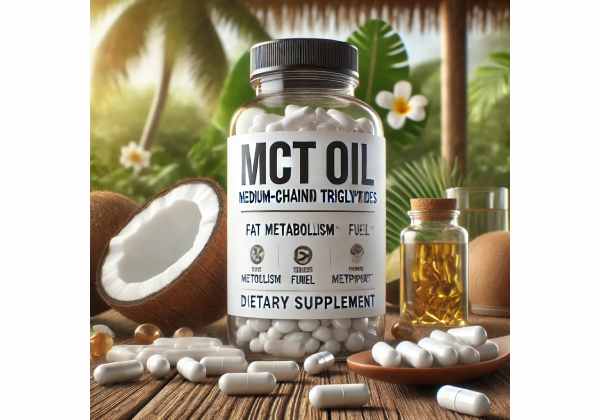
Medium-chain triglycerides, usually called MCTs, sit at an unusual intersection of nutrition and brain energetics. Unlike longer-chain fats, they are absorbed and metabolized quickly, and a meaningful share can be converted into ketone bodies that the brain may use as an alternative fuel. That is why MCT oil shows up in conversations about memory, cognitive aging, mental clarity, and neurological resilience. It promises something many supplements do not: a direct link to brain energy metabolism.
Still, the real picture is more nuanced than the marketing. MCTs reliably raise ketone levels, but that does not mean they improve mood or cognition for everyone. The strongest human evidence is in older adults and in people with mild cognitive impairment or Alzheimer-related changes, while benefits in healthy younger adults are less consistent. This guide explains how MCTs work, where the brain-health evidence is strongest, who may benefit most, how dosing is usually approached, and what side effects and safety issues matter most.
Table of Contents
- How MCTs work in the brain
- Where the cognitive benefits look most promising
- Mental wellness and mood: what is realistic
- Who might consider MCTs
- Dosage forms and how to start
- Safety side effects and practical cautions
MCTs are often sold as a simple shortcut to better brain function, but their real value depends on context. They tend to be more interesting when the question is fuel availability, aging, or mild cognitive decline than when the goal is a fast nootropic effect in an otherwise healthy, well-rested adult. That distinction matters, because it changes how to judge the evidence and whether the supplement is a good fit in the first place.
How MCTs work in the brain
MCTs are fats made of medium-length fatty acids, usually including caprylic acid (C8) and capric acid (C10). Their main difference from longer-chain fats is metabolic speed. They are absorbed more rapidly, carried to the liver more directly, and converted more readily into ketone bodies such as beta-hydroxybutyrate and acetoacetate. Those ketones can then circulate to the brain and serve as an additional fuel source.
That feature is central to the brain-health interest in MCTs. The brain normally relies heavily on glucose, but ketones can partly supplement that energy supply. This becomes especially relevant when brain glucose use is less efficient, which has been observed in aging and in some neurodegenerative conditions. The idea behind MCT supplementation is not that it replaces normal metabolism, but that it may offer the brain a second fuel stream when glucose-based energy is less reliable.
Researchers also study MCTs for reasons beyond raw fuel delivery. Ketones appear to influence several processes linked to brain resilience:
- mitochondrial efficiency and energy production
- oxidative stress and inflammatory signaling
- neurotransmitter balance
- cerebral blood flow and neural network function
- synaptic support during metabolic stress
That does not mean MCTs are a miracle brain oil. It means they may change the metabolic environment in ways that matter under certain conditions. In younger healthy adults with good metabolic flexibility, that effect may be modest or inconsistent. In older adults, or in people with cognitive impairment, the effect can be more interesting because the brain may have more to gain from an alternative energy source.
This is also why MCTs are often discussed alongside ketogenic diets, though they are not identical to them. A strict ketogenic diet changes the whole metabolic setting. MCTs can raise ketones without requiring the same degree of carbohydrate restriction. For many people, that makes them a more practical way to explore ketone-based support without fully adopting a ketogenic pattern. Readers trying to compare these approaches more broadly may also want to understand the current evidence around ketogenic diets and mental health.
Another detail that matters is the type of MCT. C8 tends to be the most ketogenic, which is why many “brain” formulas emphasize it. Blends containing more C10 may still be useful, but they do not always raise ketones to the same degree. This helps explain why one MCT product can feel very different from another, even when both are sold under the same category name.
In short, MCTs matter for the brain because they change fuel availability. That is their defining advantage. Everything else follows from whether that extra fuel meaningfully helps a specific person, at a specific stage of life, for a specific goal.
Where the cognitive benefits look most promising
The strongest brain-health case for MCTs is not in healthy biohackers chasing a productivity edge. It is in cognitive aging, mild cognitive impairment, and Alzheimer-related decline. That is where the research has been most active, and where the biological rationale is strongest.
Several systematic reviews have found that MCT supplementation can increase plasma ketones and, in some studies, improve aspects of cognition in people with mild cognitive impairment or Alzheimer disease. The benefits are not universal, and they are not always large, but they appear more credible in this population than in healthy adults with no obvious energy deficit. One recurring pattern is that some benefits may be more likely in people who are APOE ε4-negative, though that finding still needs cautious interpretation and better replication.
The cognitive effects that have shown up most often are not “instant genius” outcomes. They are more modest and domain-specific, such as changes in:
- general cognitive scores
- executive function
- working memory
- processing speed
- task performance under metabolic challenge
There are also intriguing imaging findings. In one pilot study of healthy older adults, a single ketogenic MCT meal improved performance on executive function tasks and was associated with changes in dorsolateral prefrontal cortex signaling. That kind of result matters because it suggests the mechanism is not purely theoretical. It supports the idea that MCT-induced ketones can influence active brain function in real time, at least in some older adults.
Still, the overall evidence needs careful framing. The best current summary is not “MCTs clearly improve memory.” It is closer to this:
- MCTs reliably raise ketone levels.
- They may improve some cognitive outcomes in mild cognitive impairment and Alzheimer-related conditions.
- The effects are inconsistent across studies.
- The evidence is weakened by small sample sizes, varied formulations, and heterogeneous protocols.
That means MCTs are promising, but not definitive. They are more of a targeted metabolic strategy than a proven stand-alone treatment. They also work best when expectations are aligned with the research. If someone expects MCT oil to reverse dementia, that is unrealistic. If someone expects a modest metabolic aid that may support cognition in the setting of impaired glucose use, that is much closer to the truth.
MCTs may also appeal to people thinking about healthy aging more generally, especially when cognitive prevention is the focus. But prevention is bigger than any one oil. Diet quality, movement, sleep, blood sugar regulation, and vascular health all still matter more in the long run. That is why MCTs make the most sense within a broader strategy for cognitive decline prevention and brain health habits rather than as a shortcut around the basics.
The main takeaway is that MCTs look most promising where brain fuel flexibility may be impaired. That is where the evidence becomes meaningful instead of merely interesting.
Mental wellness and mood: what is realistic
Mental wellness claims for MCTs need more caution than cognitive-aging claims. The theory is appealing: if ketones support brain energy, reduce oxidative stress, and influence neurotransmission, then perhaps MCTs might also help mood, resilience, or mental fatigue. But in humans, the evidence is still early, indirect, and much thinner than the marketing often suggests.
For depression and anxiety, most of the encouraging data come from ketogenic diet research or animal studies rather than strong human trials of MCTs alone. That means it is not accurate to present MCT oil as a proven mood supplement. There is a plausible mechanism, but a plausible mechanism is not the same thing as a reliable clinical outcome.
Where MCTs may have a more realistic mental-wellness role is in areas such as:
- mental energy during periods of low carbohydrate intake
- subjective brain fog in some older adults
- cognitive fatigue when fuel availability may be part of the problem
- support for people exploring ketogenic or lower-carb approaches under guidance
This is different from saying MCTs treat depression, panic, or chronic anxiety. They are not established anxiolytics, antidepressants, or sleep aids. Someone seeking direct relief for worry, tension, or overactivation will usually find a better fit with a supplement or strategy aimed more specifically at nervous system calm, such as L-theanine for anxiety and sleep.
There is also an important “feel versus function” difference. Some people do feel clearer or more alert after MCTs, especially when taken in the morning or during fasting. But that subjective experience is not the same as a measured improvement in memory or mood. It can also be influenced by expectations, meal timing, and what the MCT replaced. For example, a person who uses MCTs instead of a sugary breakfast may feel better for more than one reason.
In healthy younger adults, the evidence is mixed. Some studies suggest short-term improvements in specific cognitive tasks after MCT intake, while others show little or no clear effect. That inconsistency is not surprising. If the brain is already metabolically healthy, an extra ketone source may not change much.
A more grounded way to think about mental wellness and MCTs is:
- they may support brain energy in some contexts
- they may indirectly improve mental steadiness when energy swings are part of the problem
- they are not a validated first-line supplement for anxiety or depression
- they should not replace medical care for significant psychiatric symptoms
This is especially important for readers with persistent low mood, panic symptoms, or worsening concentration. Those symptoms can come from many causes, including sleep disruption, stress overload, thyroid issues, iron deficiency, medication effects, or depression itself. MCTs may play a support role, but they are not a substitute for understanding the bigger picture of nutrition, mental health, mood, and focus.
So what is realistic? For mood and mental wellness, MCTs are best viewed as a metabolic support tool with possible indirect benefits, not as a direct psychiatric supplement.
Who might consider MCTs
MCTs are not for everyone, and they are easiest to justify when the goal matches what they actually do. The people most likely to benefit are usually those who want metabolic brain support rather than a classic calming or stimulating effect.
MCTs may be worth considering for:
- older adults interested in cognitive aging support
- people with mild cognitive impairment who are discussing nutrition-based strategies with a clinician
- those already following a lower-carbohydrate or ketogenic eating pattern
- people who notice mental energy dips during fasting or between meals
- individuals looking for a non-caffeine way to experiment with ketone support
They may also interest people who want to explore brain energy support without going fully ketogenic. That is one of the main practical advantages of MCTs: they can raise ketones without requiring the same strict carbohydrate restriction as a ketogenic diet. For some people, that makes them a more sustainable entry point.
MCTs may be a weaker fit for:
- someone hoping for quick anxiety relief
- someone seeking a fast-working memory pill
- people with sensitive digestion who already struggle with oils or loose stools
- individuals with unexplained brain fog who have not addressed sleep, hydration, thyroid function, or anemia
- those expecting dramatic benefits despite a poor overall routine
That last group is important. If sleep is fragmented, blood sugar is unstable, movement is low, and stress is constant, MCT oil is unlikely to deliver the kind of benefit people imagine. In those cases, broader factors such as sleep, memory, focus, and mood regulation still matter far more.
Another reasonable use case is for people experimenting with morning mental performance. Some individuals report steadier energy when MCTs are added to coffee or breakfast, especially if they are prone to energy crashes later in the day. But even here, the result is highly individual. Some feel clearer; others just feel gastrointestinal discomfort.
It is also worth separating curiosity from necessity. MCTs can be useful without being essential. A healthy adult with no cognitive concerns, stable energy, and a balanced diet may not gain much. A person with mild cognitive decline or reduced metabolic flexibility may have more reason to try them.
In practical terms, MCTs make the most sense for people whose goals involve brain energy, aging, or ketogenic support. They make less sense for people whose goals are primarily emotional calm, direct treatment of psychiatric symptoms, or a general “brain boost” without a clear mechanism.
Dosage forms and how to start
MCT products vary more than many buyers realize. Some are pure C8, some are C8/C10 blends, and some are broad “MCT oil” products made from coconut or palm kernel sources with very different ratios. This matters because the ketone-raising effect can change depending on composition, and C8 is usually the most efficient at producing ketones.
Common forms include:
- liquid MCT oil
- powdered MCT products
- C8-only caprylic acid oils
- mixed C8/C10 formulas
Liquids are the most common and often the most cost-effective, but they can cause side effects more easily if a large amount is added too quickly. Powders may be more convenient in shakes or coffee, though they sometimes include carriers or fillers that change tolerance.
In studies and real-world use, daily intake often lands somewhere in the 10 to 30 gram range, though this is not a one-size-fits-all prescription. Lower doses are frequently used to test tolerance, while higher doses are more likely to cause digestive problems. Some research and exercise settings have used doses above 30 grams, but gastrointestinal complaints become more common as amounts rise.
A practical way to start looks like this:
- Begin with a small dose, often around 5 mL or 1 teaspoon.
- Take it with food at first if digestion is sensitive.
- Increase gradually over several days or weeks.
- Stop increasing if side effects become noticeable.
- Judge the effect over consistency, not one dramatic day.
Timing depends on the goal. For mental energy, many people use MCTs in the morning or early afternoon. For ketogenic support, some take them before mentally demanding work or alongside a lower-carb meal. They are less often used as an evening supplement because they are not a sleep aid and may be too activating for some people late in the day.
It is also wise to keep the rest of the stack simple. Combining MCTs with caffeine can feel powerful, but it can also make it harder to tell what is helping and what is causing jitters or digestive upset. People already using products for brain energy, such as creatine for brain health, memory, and fatigue, may want to introduce MCTs separately before layering them together.
The most important dosing principle is patience. MCTs are not a supplement to “slam” in large amounts on day one. Slow titration matters because tolerance varies a lot from person to person. Starting small is not timid. It is usually the difference between a useful trial and a miserable one.
Safety side effects and practical cautions
For most healthy adults, MCTs are reasonably safe, but they are not side-effect free. The biggest issue is gastrointestinal tolerance. This is so common that it should shape how the supplement is used from the start, not as an afterthought.
The most frequent side effects include:
- diarrhea
- stomach cramps
- bloating
- nausea
- vomiting at high doses
- an urgent need for a bathroom if too much is taken at once
These effects are one reason MCTs have a mixed reputation. People who start with a large spoonful often conclude the supplement is impossible to tolerate, while others do fine when they build up gradually. Dose size, product type, meal timing, and individual digestive sensitivity all matter.
A practical caution is that “more” often becomes counterproductive. In several studies, doses above about 30 grams were more likely to cause GI distress. Some exercise studies reported diarrhea, vomiting, or marked stomach discomfort at higher intakes. That does not make MCTs dangerous in the usual sense, but it does make careless dosing a bad idea.
There are also metabolic considerations. MCTs are still a calorie-dense fat, so they can add up quickly in people already struggling with excess calorie intake. They may also not suit everyone with lipid issues, gallbladder problems, pancreatitis history, or certain gastrointestinal disorders. People with liver disease or fat-malabsorption problems should be especially cautious and ideally discuss use with a clinician.
Other sensible precautions include:
- be careful if you have irritable bowel symptoms
- avoid taking a large first dose before exercise or travel
- review labels for extra additives in powdered products
- do not assume all “brain” MCT products are meaningfully different from standard ones
- watch how they fit into your overall diet, not just your supplement stack
It is also important not to confuse tolerability with effectiveness. Some people get side effects with no noticeable cognitive benefit. That is a valid outcome and a good reason to stop. A supplement is not automatically worthwhile just because there is a plausible mechanism.
MCTs are also not a substitute for evaluation when symptoms are significant. If someone has persistent forgetfulness, mental slowing, or worsening function, there are many possible explanations beyond brain fuel supply. It is often more important to investigate common causes of memory problems in adults than to keep escalating supplements.
The bottom line is straightforward. MCTs can be a useful metabolic tool for brain health, especially in the right context, but they work best when introduced slowly, dosed conservatively, and judged realistically. Their main risk is not usually serious toxicity. It is overenthusiastic use, digestive blowback, and expecting more than the evidence supports.
References
- Medium-Chain Triglycerides (MCTs) for the Symptomatic Treatment of Dementia-Related Diseases: A Systematic Review 2024 (Systematic Review)
- The Effects of Medium Chain Triglyceride for Alzheimer’s Disease Related Cognitive Impairment: A Systematic Review and Meta-Analysis 2023 (Systematic Review and Meta-Analysis)
- An fMRI Investigation into the Effects of Ketogenic Medium-Chain Triglycerides on Cognitive Function in Elderly Adults: A Pilot Study 2021 (Clinical Trial)
- Use of medium chain triglyceride (MCT) oil in subjects with Alzheimer’s disease: A randomized, double-blind, placebo-controlled, crossover study, with an open-label extension 2022 (RCT)
- The Effects of Medium-Chain Triglyceride Oil Supplementation on Endurance Performance and Substrate Utilization in Healthy Populations: A Systematic Review 2022 (Systematic Review)
Disclaimer
This article is for educational purposes only and is not medical advice, diagnosis, or treatment. MCTs are not a proven treatment for depression, anxiety, dementia, or persistent brain fog, and they should not replace professional care. If you have diabetes, pancreatitis, liver disease, a gastrointestinal disorder, or worsening memory or mood symptoms, speak with a qualified clinician before using MCT supplements.
If you found this article helpful, please consider sharing it on Facebook, X, or your preferred platform.