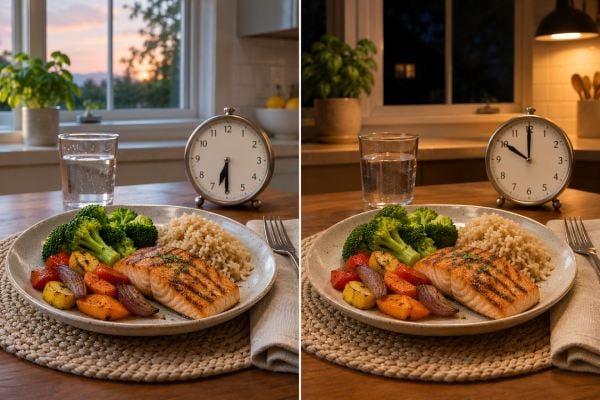
The same dinner can raise blood sugar more when you eat it close to bedtime than when you eat it earlier in the evening. Your body’s internal clock helps regulate insulin release and glucose handling, and both processes drift across the day. A late meal also pushes digestion into hours when you would normally be slowing down or asleep.
How much that matters depends on the meal, your sleep schedule, and how your body handles glucose. A high bedtime reading may simply reflect a recent dinner. A rise just before waking can have a different cause, even if you ate early. And while moving dinner earlier can improve some readings, a few nights of better numbers say little about your longer-term average. If late meals are a regular part of your life, start with something repeatable, such as pulling part of dinner forward on work nights.
Table of Contents
- Why Late Eating Can Raise Glucose
- After-Dinner, Overnight, and Fasting Glucose
- How Late Is Too Late to Eat?
- What to Do When Dinner Has to Be Late
- How to Test Whether Meal Timing Matters for You
- Earlier Eating Windows, Fasting Glucose, and A1C
- Diabetes Medications and When to Get Help
Why Late Eating Can Raise Glucose
When you eat carbohydrates, your digestive system breaks much of them down into glucose. As that glucose enters the bloodstream, your pancreas releases insulin. Insulin helps muscle and other tissues take up glucose and tells the liver to release less of its own. The amount of insulin released, and how well your tissues respond to it, shape both the size and the duration of the post-meal rise.
Your circadian rhythm, the roughly 24-hour cycle that helps regulate sleep and other body functions, also plays a role in glucose handling. In the biological evening, when the body is preparing for sleep, the same carbohydrate load can be harder to handle than it was earlier in the day. Melatonin, a hormone released in greater amounts as bedtime approaches, may contribute by reducing insulin release in response to glucose. The timing and size of that effect vary from person to person.
One trial gave 845 adults without diabetes the same 75-gram glucose drink on two evenings: once four hours before their usual bedtime and once one hour before it. Over the two-hour test, the overall glucose response was about 8% higher in the later session, and the insulin response was about 7% lower. The glucose effect was larger in people with a particular variant of a gene involved in melatonin signaling. Because the researchers used a glucose drink under controlled conditions, those percentages describe the group’s response to that test. A dinner containing carbohydrates, protein, fat, and fiber can produce a different pattern.
Work using actual meals helps explain why individual results vary. In a small trial of 13 healthy young women, participants ate dinner either one or five hours before their usual bedtime. The late dinners disrupted sleep, while the changes in glucose after dinner were temporary. If shifting dinner makes little difference to your readings, the meal’s size and composition, your starting glucose level, or your activity that evening may explain more of what you see. Those details are especially useful when you’re trying to understand recurring post-meal blood sugar rises.
After-Dinner, Overnight, and Fasting Glucose
A late dinner can show up in the numbers you see in three different ways. Glucose may rise more after the meal, stay elevated into the first part of the night, or be higher when you wake. Each reading answers a different question. A bedtime check at 10:30 p.m., for instance, is a snapshot 30 minutes after a 10 p.m. dinner or four hours after a 6:30 p.m. dinner. To compare meals, look at the same amount of time after the first bite. To understand your bedtime reading, keep both the clock time and the time since dinner in view.
| When glucose rises | What may be happening | What to check |
|---|---|---|
| Soon after dinner | Glucose is entering the bloodstream as you digest the meal. Portions, drinks, and dinner timing can all affect the rise. | Compare readings taken the same number of minutes after similar meals. |
| At bedtime or early in the night | A late dinner or snack may still be affecting glucose. A large meal high in both fat and carbohydrates can cause a later or more prolonged rise. | Note the time of your last food or caloric drink. If you already use a sensor, look at when the rise began and how long it lasted. |
| In the hours before waking | The liver may release more glucose as your body prepares to wake, a pattern called the dawn phenomenon. | Look for a rise after several hours of steady glucose, including on evenings when you ate earlier. |
Earlier dinner can improve overnight readings in some people even when a single after-dinner check barely changes. In a short study of 10 adults with type 2 diabetes whose glucose was above goal, participants shifted their average dinner time from about 10:30 p.m. to 7:30 p.m. Average glucose over the 10 hours after dinner fell from about 138 to 125 mg/dL, and fasting glucose also fell. The two-hour after-dinner measurement showed no clear change. Everyone tried the late schedule first, and the study lasted only days, so the results give little basis for predicting how much another person’s glucose might change.
If your morning numbers seem higher after late nights, start by checking how much time passed since you last ate. A snack at midnight followed by a check at 7 a.m. leaves seven hours. A fasting laboratory glucose test calls for at least eight hours without calories. A rise that begins shortly before waking, after glucose was fairly steady overnight, may fit the dawn phenomenon. Sleep disruption, illness, and medication timing can also influence morning readings. If fasting glucose stays high across several mornings, bring the pattern to your clinician, including the times you ate and tested.
How Late Is Too Late to Eat?
There’s no universal clock time when dinner starts to raise glucose more. An 8:30 p.m. meal leaves one hour before sleep for someone who goes to bed at 9:30 p.m. It leaves four hours for someone who goes to bed at 12:30 a.m. Usual bedtime gives you a practical reference point, though the body’s internal clock doesn’t immediately reset when you stay up later for one evening.
If you usually eat within an hour of sleep, try finishing dinner about two to three hours before your usual bedtime when your schedule allows. Treat that gap as a starting point. Studies often compare widely separated meal times, so they offer limited guidance on whether, say, a two-hour gap would work better for you than a 90-minute gap. Even moving dinner 30 to 60 minutes earlier may be a realistic change to try. If you usually finish at 10 p.m. and go to bed at 11 p.m., start by seeing whether 9 or 9:30 p.m. works on a few evenings.
Count any substantial snack or caloric drink when you think about when eating ended. Dinner at 7 p.m. followed by dessert and a sweet drink at 10 p.m. can produce a later glucose rise tied to the second round of eating. If you need an evening snack because you’re hungry or because it’s part of your diabetes care plan, include it when you review timing and readings.
For night-shift workers, bedtime alone is a less reliable guide. Being awake at 2 a.m. for work can overlap with the part of your internal rhythm normally set aside for sleep. In a small laboratory study, people who ate during simulated night shifts had more trouble handling glucose. Those who kept meals in daytime hours avoided that change during the study. A real shift brings different demands, including physical work and limited breaks. If your schedule permits, a practical option is to have your main meal before the shift and bring food you can eat during a break if you need it. If your medication schedule depends on when you eat, work out the timing with your diabetes care team.
What to Do When Dinner Has to Be Late
Move part of the meal earlier
If work or family commitments make a late dinner predictable, have enough food earlier in the day to avoid arriving at it ravenous. Someone who eats lunch at noon and gets home at 9 p.m. could pack a substantial afternoon snack, such as plain yogurt with fruit and nuts or half a whole-grain sandwich with hummus and vegetables. Another option is to pack part of dinner for an early evening break and finish the meal at home. How you divide it depends on when you have a chance to eat and how much you need to feel satisfied.
If eating together at 9 p.m. matters to your household, you can still share dinner. For example, have some of the chicken and bean soup you planned to serve when you get in from work, then sit down with the family for the rest of the soup and a salad. If you use mealtime insulin, discuss split meals with your care team before trying this approach. Two eating occasions may need a different plan from one.
Keep a late meal satisfying and pay attention to portions
When dinner is close to bedtime, look at how much carbohydrate the whole meal contains. A large bowl of rice, a sweet drink, and dessert can add up quickly. A meal with salmon or tofu, vegetables, and a portion of brown rice or beans gives you a way to keep carbohydrate foods on the plate while making room for protein and fiber. If you order takeout, consider how much rice or noodles you want before you eat and refrigerate the rest. You can make that choice while serving the food, when the portion is easier to see.
A brief, comfortable walk after dinner is another option if you feel well and it fits your routine. Working muscles use glucose, which can help reduce the rise after a meal. If you want to see what dinner timing itself changes, keep after-dinner activity similar on the nights you compare. If you take insulin or a medication that can cause lows, follow your usual guidance for activity, especially when it falls close to bedtime.
How to Test Whether Meal Timing Matters for You
If you already check glucose with a finger-stick meter or a continuous glucose monitor (CGM), you can compare a few similar dinners over one or two weeks. Decide what you’re trying to learn first. “Does my glucose rise more after a later dinner?” calls for readings at matching times after eating. “Is my glucose still elevated when I go to sleep?” calls for a bedtime comparison. “Does an earlier dinner change my morning reading?” calls for notes on when you last had calories and when you woke up.
- Pick two realistic dinner times. If you normally eat at 9 p.m., compare that with 7:30 or 8 p.m. on days with similar schedules. Keep bedtime close to your usual hour.
- Repeat a familiar meal. Use similar portions and drinks, and keep any dessert and after-dinner activity consistent. Record anything that differs, such as a poor night’s sleep, an unusually hard workout, or a stressful workday.
- Compare readings taken at the same intervals. If paired checks fit your care plan, compare the reading just before dinner with a reading one or two hours after you started. If you use a CGM, note the trend over the next few hours. Record bedtime and waking readings separately if those are the numbers you’re trying to understand.
- Look for a pattern across several evenings. If the late dinners consistently start at a similar glucose level and produce a bigger or longer rise, moving dinner earlier may help. If the starting levels differ, look at how far glucose rose as well as where it ended up.
For example, suppose glucose goes from 105 to 145 mg/dL after an early dinner and from 125 to 165 mg/dL after the same dinner at a later hour. Both readings rose by 40 mg/dL over the same interval. The later number is higher because glucose was already higher when dinner started. That points to another question to investigate, such as whether an afternoon snack, a longer period of sitting, or a change in routine preceded the meal.
For many nonpregnant adults with diabetes, a common treatment goal is a peak after-meal glucose below 180 mg/dL, checked one to two hours from the start of the meal. Individual targets can differ, including during pregnancy. That treatment goal serves a different purpose from a diagnostic cutoff. If you use a sensor, remember that it measures glucose in fluid around your cells, so it can lag behind blood glucose when levels are moving quickly. Follow your device instructions if the reading seems unusual or differs from how you feel. Sensor lag and other CGM accuracy issues can complicate a comparison.
If you don’t already monitor glucose, you can still try an earlier dinner and see whether the schedule works for your appetite, sleep, and household. If your concern is prediabetes or diabetes, ask about a laboratory test. An ordinary meal varies in size and composition, so a reading after dinner answers a different question from a standardized glucose tolerance test.
Earlier Eating Windows, Fasting Glucose, and A1C
Moving dinner earlier can mean shifting one meal while leaving the rest of your day as usual. Time-restricted eating is a broader change in which you fit meals and caloric drinks into a set daily window. An 8 a.m. to 6 p.m. schedule and a noon to 10 p.m. schedule both have a 10-hour eating window, but they place food intake at different points in the day. Some people also eat less overall when they adopt a window, which makes it harder to tell how much of any improvement came from timing alone.
A 2026 review pooled 10 randomized trials involving 599 adults with prediabetes or type 2 diabetes. The trials lasted about four months on average and used eating windows of four to 10 hours. Compared with the control diets, time-restricted eating lowered fasting glucose by about 5 mg/dL on average. The review found no clear overall change in A1C, although the prediabetes subgroup showed a small improvement. Participants also lost some weight on average. These results describe a range of eating-window strategies and can’t predict the effect of shifting dinner alone.
A1C reflects average blood sugar over roughly two to three months. An earlier dinner can change tonight’s reading or the time you spend at a higher glucose level overnight. Whether that changes A1C depends on how often the pattern occurs and how much of your overall glucose exposure it accounts for. If you’re already due for follow-up testing, your clinician can help interpret the next result alongside changes in meals, activity, sleep, or treatment. If your biggest challenge is a large dinner right before bed, moving that meal or part of it earlier is a smaller change to try before reorganizing the entire day.
Diabetes Medications and When to Get Help
If you take insulin or a sulfonylurea such as glipizide or glimepiride, delaying, shrinking, or skipping a meal can raise the risk of low blood sugar. Talk with your care team before making a regular change that affects medication timing or the amount you eat. The same applies if your care plan includes a bedtime snack. If glucose drops below 70 mg/dL, follow your low-glucose treatment plan promptly, even if it’s after your usual last meal. An eating window can wait.
Bring a record to your next appointment if waking or after-meal readings repeatedly exceed your personal targets, or if you keep getting lows after changing when you eat. Include dinner and snack times, medication doses and times, activity, and when you checked glucose. Those details help your clinician see whether the rise started after food, appeared much later in the night, or followed a change in treatment. If you’re pregnant or managing diabetes during pregnancy, ask your prenatal care team about meal timing and which readings to track, since pregnancy has its own glucose goals.
If you have no diabetes diagnosis and notice persistent high readings, or symptoms such as unusual thirst, frequent urination, or unexplained weight loss, arrange a medical evaluation. If high blood sugar occurs with vomiting, abdominal pain, fast or deep breathing, or confusion, seek emergency care. An occasional late dinner is an everyday scheduling problem. A recurring glucose pattern or symptoms deserve attention even if you can point to a meal that might have contributed.
References
- 6. Glycemic Goals, Hypoglycemia, and Hyperglycemic Crises: Standards of Care in Diabetes—2026 2026 (Guideline)
- Effects of time-restricted eating on markers of glucose metabolism and regulation in individuals with prediabetes or type 2 diabetes: a systematic review and meta-analysis of randomised controlled trials 2026 (Systematic Review)
- Interplay of Dinner Timing and MTNR1B Type 2 Diabetes Risk Variant on Glucose Tolerance and Insulin Secretion: A Randomized Crossover Trial 2022 (RCT)
- Effects of later dinner timing on subsequent metabolic function and nocturnal sleep in healthy young women 2026 (RCT)
- Early Dinner Improves the Glycemic Profile in Habitual Late Eaters With Uncontrolled Type 2 Diabetes Mellitus in the Short Term 2024 (Clinical Trial)
- Daytime eating prevents internal circadian misalignment and glucose intolerance in night work 2021 (RCT)
Disclaimer
This article provides general information about meal timing and blood sugar. Ask your clinician for advice tailored to your glucose targets and medication schedule before changing when you eat, especially if you take insulin or another medication that can cause low blood sugar.