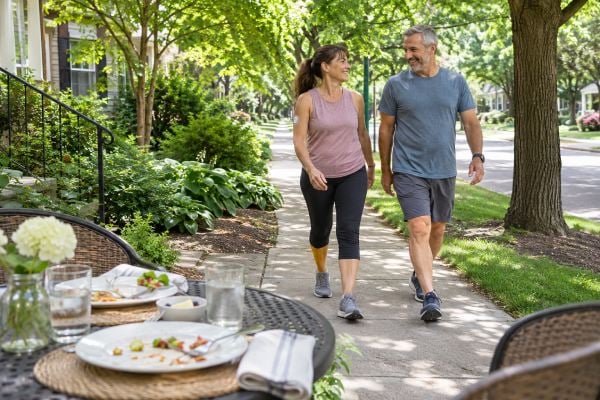
A short walk after eating can blunt the rise in blood sugar by engaging muscles that are ready to absorb glucose exactly when digestion releases it into the bloodstream. You do not need a rigorous workout; even 10–15 minutes of easy-to-moderate walking soon after a meal makes a measurable difference. Research consistently shows that post-meal activity is more effective for managing immediate glucose responses than performing the same exercise before eating. This strategy is particularly valuable following larger, higher-carbohydrate meals or for individuals who spend most of their day sitting.
While a brief walk is not a replacement for medication, comprehensive physical activity, or a balanced diet, it remains one of the simplest tools for improving post-meal glucose handling. Timing is critical: starting within about 30 minutes of finishing your meal is a practical target, though earlier is often better when feasible. The ideal routine is one you can repeat safely without turning it into an exhausting endeavor or triggering low blood sugar.
Table of Contents
- Why Walking Lowers Post-Meal Glucose
- Best Time to Walk After Eating
- How Long and How Hard to Walk
- Which Meals Benefit Most?
- Walking vs Other Activity Breaks
- How to Build the Habit
- Safety and Blood Sugar Medications
Why Walking Lowers Post-Meal Glucose
When you eat a carbohydrate-containing meal, digestion breaks starches and sugars down into glucose. As this glucose enters the bloodstream, your pancreas releases insulin to help muscles and other tissues absorb it while signaling the liver to reduce its own glucose output.
Walking adds a second, independent route for glucose disposal. Muscle contractions stimulate the transport of glucose into muscle cells through pathways that function partly without insulin. In practical terms, contracting muscles open additional “doors” for glucose to exit the bloodstream, creating an immediate sink for the fuel entering from your meal.
This mechanism is especially valuable in the post-meal window because glucose availability and muscle demand rise simultaneously. Instead of relying solely on the bloodstream to manage the incoming load while you sit, active muscles help clear some of that glucose right away. Furthermore, exercise increases insulin sensitivity for a period after activity ends, allowing the same amount of insulin to work more effectively. Over days and weeks, this repeated stimulation can improve overall insulin sensitivity beyond the immediate post-meal effect.
The result is often a lower glucose peak, a smaller total glucose excursion, or both. The exact reduction varies based on meal size, walking speed, fitness level, individual glucose tolerance, medications, and when the walk begins. This is why walking is particularly relevant for addressing post-meal blood sugar spikes. It targets the precise period when glucose is rising, rather than relying on a workout performed hours earlier.
A lower post-meal spike does not mean the carbohydrate has vanished. The body simply uses more of it in active muscle tissue, with the remainder potentially stored as glycogen or processed later. The benefit comes from altering glucose traffic, not from “burning off” every calorie in the meal.
Best Time to Walk After Eating
For the immediate glucose response, walking soon after eating appears to work best. A 2023 systematic review comparing exercise timing found that post-meal activity reduced glucose excursions more effectively than pre-meal exercise, with shorter delays between eating and activity associated with better results.
A practical target is to start within 10–30 minutes of finishing your meal. There is no need to watch the clock obsessively; if clearing the table and putting on shoes takes 15 minutes, that still falls within a useful window. Walking before the glucose peak occurs is advantageous because by the time a finger-stick or continuous glucose monitor (CGM) shows the highest value, the meal has often already been largely absorbed. A planned walk removes the need to react to specific numbers and makes the behavior consistent, even on days when you are not monitoring glucose.
Timing matters because glucose often rises quickly after a mixed meal. Waiting 90 minutes may mean the peak has already passed; while activity remains healthy, it may not blunt that specific spike as effectively. A small 2025 randomized crossover study in healthy adults found that a 10-minute walk immediately after a glucose drink lowered two-hour glucose exposure and reduced the peak compared with resting. A 30-minute walk started 30 minutes later also reduced overall exposure, but the immediate short walk had a particularly favorable effect on the peak.
For real-world meals, a simple rule applies: walk when you would otherwise sit down. If your normal pattern is dinner followed by the couch, move the walk into that transition. You do not need to walk after every meal. If you can only choose one, dinner is often the most practical target because evening meals tend to be larger and are commonly followed by long periods of inactivity. Older research in adults with type 2 diabetes found that three 10-minute post-meal walks improved post-meal glucose, with a particularly strong effect after the evening meal.
If you use a continuous glucose monitor, you can experiment with timing by comparing similar meals on different days. The article on personalized blood sugar responses explains why one person may see a large effect from timing while another sees a smaller change.
How Long and How Hard to Walk
Ten to 15 minutes is a useful starting dose. It is long enough to activate a substantial amount of muscle but short enough to fit into a workday or evening routine. Research has also used 20- to 30-minute post-meal walks, which can create a larger total energy demand, though more is not always necessary for the immediate glucose goal. The best duration depends on the meal, your fitness level, schedule, and whether you are already meeting weekly activity targets.
Intensity should be light to moderate. You do not need to run. A pace that feels purposeful, raises breathing slightly, and still allows you to speak in sentences is enough for many people. Even comfortable walking has shown benefits in controlled studies.
A simple progression looks like this:
- Start with 5–10 minutes after your largest meal.
- Increase to 10–15 minutes as the routine becomes easy.
- Add a second meal walk if you want more total movement.
- Increase pace before increasing duration indefinitely.
If walking outdoors is not practical, walk indoors, use a treadmill, climb a few easy flights of stairs, or march around the house. The key is rhythmic muscle contraction, not the scenery. Very vigorous exercise immediately after a large meal may be uncomfortable and is not required for glucose control. Hard intervals can also cause a temporary rise in glucose in some people because stress hormones tell the liver to release fuel. That response is normal and does not mean vigorous exercise is harmful; it simply serves a different purpose than a gentle post-meal walk.
For long-term metabolic health, combine meal walks with structured aerobic activity and resistance training. Short walks are excellent for glucose timing, while strength and aerobic training improve fitness, muscle function, and insulin sensitivity more broadly.
Which Meals Benefit Most?
The larger the post-meal glucose challenge, the more room there is for walking to help. Meals high in rapidly digested carbohydrate—such as large portions of white rice, bread, potatoes, sugary drinks, or desserts—often create bigger excursions than meals built around protein, vegetables, and smaller carbohydrate portions.
A useful mental model is that walking lowers the “glucose pressure” of the meal; it does not erase the meal. If you eat 90 g of rapidly digested carbohydrate, a 10-minute walk may reduce the peak, but the body still has to process a large glucose load. If you instead eat 45 g of carbohydrate with protein and vegetables and then walk, both the incoming load and the disposal side of the equation improve. That does not mean you should deliberately eat a high-carbohydrate meal because you plan to walk. Walking works best as an addition to a reasonable meal, not as a cancellation strategy.
A post-meal walk may be especially useful after:
- A restaurant meal that is larger than usual
- Breakfast with cereal, toast, or oats
- Lunch with a substantial rice, pasta, or bread portion
- Dinner followed by a normally sedentary evening
- A celebration or holiday meal
- Meals that your CGM repeatedly shows produce a large rise
In a 2022 randomized study, a 30-minute brisk walk reduced glucose peaks after both lower- and higher-carbohydrate meals, as well as after mixed meals and carbohydrate drinks. This suggests the strategy is fairly robust across meal types, even though the size of the effect can vary. Meal composition still matters. Protein, fiber, fat, and food structure influence digestion and gastric emptying. If you are repeatedly seeing large spikes, first check the amount and type of carbohydrate, then use walking as an additional tool. A short walk cannot fully compensate for an oversized meal every day.
People with prediabetes or type 2 diabetes may see a larger absolute change because baseline post-meal glucose is higher. People with normal glucose regulation can still benefit, but the glucose curve may already be relatively modest.
Walking vs Other Activity Breaks
Walking is not the only way to interrupt post-meal sitting. Light resistance movements, repeated sit-to-stands, stair climbing, and brief bouts of other aerobic activity can also increase muscle glucose uptake. Recent meta-analyses of sedentary interruption studies consistently find that breaking up prolonged sitting lowers post-meal glucose and insulin compared with uninterrupted sitting. Walking breaks tend to perform especially well because they involve large muscle groups and are easy to repeat.
Frequency matters too. A 2026 meta-analysis found that short walking breaks performed regularly during prolonged sitting produced meaningful improvements in post-meal glucose and insulin. Another recent network meta-analysis found that higher-frequency light or moderate activity breaks generally ranked well for acute glucose control. This gives you two practical options:
- One post-meal walk: 10–20 continuous minutes soon after eating.
- Repeated mini-breaks: 2–5 minutes of walking or movement every 20–60 minutes during a long sitting period.
You can combine them. For example, take a 10-minute walk after lunch, then stand and move for a few minutes each hour during the afternoon. This is where NEAT, or non-exercise activity thermogenesis, becomes important. Daily movement from walking to meetings, taking stairs, doing chores, or pacing during phone calls can add up even when none of it feels like a workout.
Stair climbing can be a compact alternative if you tolerate it. Controlled studies show that even very short stair bouts can reduce post-meal glucose, but stairs are more demanding on joints and balance. Choose the activity that is safe and repeatable for you.
How to Build the Habit
The metabolic effect is useful only if the behavior happens often enough. Make the walk part of the meal routine rather than a separate fitness decision. Use environmental cues to trigger the behavior: put walking shoes near the dining area, leave a jacket by the door, or set a recurring reminder for 15 minutes after lunch. At work, schedule a walking phone call after eating or choose a route around the building before returning to your desk.
Start with one meal for two weeks. Dinner is a common choice because it is often the largest and most predictable. Once the behavior feels automatic, add lunch or breakfast if you want more movement. If 10 continuous minutes feels impossible, break it into smaller pieces. Five minutes right after eating plus another five minutes 30 minutes later is still more activity than sitting for the entire period. The evidence base is strongest for repeated or continuous planned bouts, but perfect execution is not required for the habit to be useful.
Social support helps. A spouse, coworker, or family member may be more willing to join a short “digestive walk” than a formal workout. That can make the behavior easier to sustain and can replace after-dinner screen time with shared movement. Weather is not an excuse you need to solve every day. Keep an indoor backup: hallway laps, a treadmill, step-ups to a low platform, marching during a TV show, or walking around a shopping center.
If you want a simple weekly target, aim for five to seven post-meal walks rather than trying to walk after all 21 main meals. Once that feels automatic, increase frequency. This prevents an all-or-nothing mindset and still adds meaningful movement. Someone who walks 12 minutes after dinner six nights per week accumulates more than an extra hour of targeted activity without scheduling a formal workout.
Track adherence more than calories burned. A simple calendar with a check mark after each post-meal walk can be more motivating than a wearable’s calorie estimate, which is often imprecise. If you use a CGM, avoid turning the walk into a compulsive response to every glucose rise. Use planned routines and repeated patterns rather than chasing individual sensor readings.
Safety and Blood Sugar Medications
Walking is low risk for most people, but glucose-lowering medication changes the safety picture. Insulin and medications that increase insulin secretion can cause hypoglycemia, and exercise may increase that risk because muscles are taking up more glucose. If you use insulin or a sulfonylurea, ask your diabetes care team how to handle exercise around meals. Depending on the medication, meal size, and walking intensity, you may need to monitor glucose more closely, carry fast-acting carbohydrate, or adjust medication timing or dose under professional guidance.
Know the symptoms of low blood sugar: shakiness, sweating, fast heartbeat, dizziness, weakness, hunger, irritability, confusion, or blurred vision. A measured glucose below 70 mg/dL requires treatment according to your diabetes plan. People with diabetes-related neuropathy, foot ulcers, severe peripheral artery disease, major balance problems, or unstable heart disease may need a modified activity plan. Supportive footwear and regular foot checks are especially important when sensation is reduced.
Hydration and temperature matter too. On very hot days, an indoor walk may be safer, particularly for older adults or people taking medications that affect blood pressure. If you feel lightheaded after eating, begin with a slower pace and consider checking blood pressure or discussing the symptom with a clinician. After a large meal, people with reflux, gastroparesis, or abdominal discomfort may tolerate a slower walk better than brisk activity. Start gently and see how you feel.
If you are new to exercise, the goal is not to finish the walk exhausted. An easy 10-minute routine that you repeat most days is more useful for post-meal glucose than an intense 30-minute session that makes you avoid walking for the rest of the week. If joint pain limits walking, a recumbent bike, gentle pedaling, or repeated sit-to-stands may provide a similar muscle-activation strategy. The exact movement matters less than safely engaging large muscle groups soon after eating and avoiding a long uninterrupted sitting period.
Even on days when a full walk is impossible, standing up, clearing the kitchen, taking stairs, or walking for three to five minutes is preferable to remaining seated for the entire post-meal period. Small bouts can preserve the routine until a longer walk fits again. The simplest prescription is therefore: eat a balanced meal, get up soon afterward, and walk at a comfortable-to-purposeful pace for about 10–15 minutes. It is a small behavior with an immediate physiological target and a strong chance of becoming a sustainable daily habit.
References
- The Acute Effects of Interrupting Prolonged Sitting With Regular Activity Breaks on Postprandial Glucose and Insulin in Adults: A Systematic Review and Meta-Analysis 2026 (Systematic Review)
- Effects of different sedentary interruption strategies on blood glucose, insulin, and triglycerides: A network meta-analysis 2026 (Systematic Review)
- Positive impact of a 10-min walk immediately after glucose intake on postprandial glucose levels 2025 (RCT)
- After Dinner Rest a While, After Supper Walk a Mile? A Systematic Review with Meta-analysis on the Acute Postprandial Glycemic Response to Exercise Before and After Meal Ingestion in Healthy Subjects and Patients with Impaired Glucose Tolerance 2023 (Systematic Review)
- The Effects of Postprandial Walking on the Glucose Response after Meals with Different Characteristics 2022 (RCT)
Disclaimer
Exercise can lower blood glucose and may increase hypoglycemia risk in people who use insulin or insulin-secreting medications. If you have diabetes complications, cardiovascular disease, significant mobility limitations, or recurrent low glucose, ask your clinician for an individualized activity plan. This article is for general education and does not replace medical care.