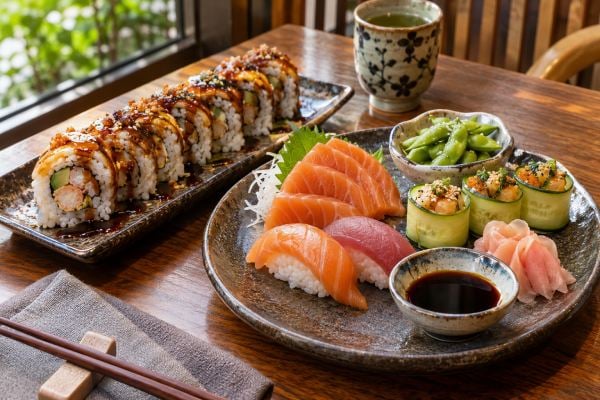
Sushi can fit comfortably into a blood-sugar-conscious diet, but the rice is usually the primary driver of the glucose response. Traditional sushi rice consists of short-grain white rice seasoned with vinegar, sugar, and salt. While the fillings are often fish and vegetables, a multi-roll meal can quickly accumulate into a significant carbohydrate load. Sweet sauces, tempura batter, crunchy toppings, and sugary drinks push this total even higher.
The good news is that a lower-spike order does not require avoiding sushi rice completely. The most practical strategy involves keeping the rice portion moderate, including sashimi or other protein-rich items, adding vegetables or edamame, and requesting sweet sauces on the side. Eating higher-fiber or protein foods before or alongside the rice-heavy pieces can also help. Vinegar may modestly reduce post-meal glucose in some settings, but it does not cancel out the carbohydrate in sushi rice. Because restaurant portions vary widely, focus on the overall pattern rather than chasing an exact carb number for every roll.
Table of Contents
- Why sushi rice can spike glucose
- How different sushi orders compare
- Sauces, tempura, and hidden carbs
- How to build a lower-spike order
- Meal order and portion strategies
- How to use CGM or meter data
Why sushi rice can spike glucose
The main carbohydrate in most sushi is white rice. Traditional preparation involves cooking a short-grain or medium-grain variety until sticky, then seasoning it with rice vinegar, sugar, and salt. Short-grain rice tends to digest relatively quickly, and the added sugar in the seasoning contributes a small but notable additional carbohydrate load.
The biggest issue, however, is quantity. A single nigiri piece contains a compact mound of rice. A standard maki roll may contain several ounces of cooked rice spread across six to eight pieces. Consequently, two or three rolls can deliver much more rice than the plate visually suggests.
White rice has a higher glycemic impact than many intact whole grains or legumes because much of its starch is rapidly available. The exact response depends on the rice variety, cooking method, cooling time, portion size, accompanying foods, and the individual eating it. Research comparing white and brown rice shows that brown rice provides more fiber and nutrients, though simply swapping varieties does not guarantee a dramatic glucose difference in every meal.
Sushi restaurants sometimes offer brown rice as an alternative. It can modestly increase fiber content, but it should not be treated as unlimited. A large brown-rice roll can still contain a substantial carbohydrate load. Portion size remains the strongest lever for control.
Protein and fat from fish can slow gastric emptying and alter the shape of the glucose curve, but they do not erase the rice carbohydrate. A salmon avocado roll may rise more gradually than plain rice, yet the total glucose exposure can still be meaningful if the serving is large.
Vinegar is another commonly misunderstood factor. Controlled studies and reviews suggest vinegar can modestly reduce post-meal glucose in some contexts. Sushi rice already contains vinegar, but the amount and recipe vary, and the seasoning often includes sugar. It is not reasonable to assume that vinegar makes sushi rice “low glycemic.”
If rice is a frequent part of your diet, comparing white rice and brown rice for blood sugar provides more context on portions and preparation.
How different sushi orders compare
Sushi is a broad category. The glucose impact of sashimi is very different from that of a tempura roll covered in sweet eel sauce. Thinking in terms of food types makes ordering easier.
| Choice | Main carbohydrate sources | Likely glucose impact |
|---|---|---|
| Sashimi | Usually minimal | Low unless paired with sugary sauces or sides |
| Nigiri | Seasoned sushi rice | Moderate; depends strongly on number of pieces |
| Simple maki roll | Rice plus filling | Moderate to high as roll count increases |
| Avocado or cucumber roll | Mostly rice | Can still be significant despite vegetable filling |
| Tempura roll | Rice, batter, possible sweet sauce | Often higher and more variable |
| Naruto-style roll | Cucumber wrap with little or no rice | Usually lower carbohydrate |
| Poke bowl | Rice base, sauces, toppings | Highly variable; rice portion can be large |
Sashimi is the lowest-carbohydrate choice because it consists of sliced fish without rice. While this does not make it nutritionally superior in every situation, it can be a useful way to increase protein intake while reducing the amount of rice in the meal.
Nigiri offers an easy portion cue. Each piece has one rice mound, so you can build a meal with several nigiri pieces plus sashimi and vegetables rather than ordering multiple rolls and losing track of the total rice count.
Simple rolls are not necessarily low carbohydrate. A cucumber roll may sound light, but most of its calories can still come from rice. A roll with fish and avocado provides more protein and fat, which may improve satiety, but the rice amount remains similar.
Hand rolls can be useful if the restaurant makes them with less rice, though this varies. Some restaurants will also prepare rolls with reduced rice or cucumber wrapping. Asking is often easier than trying to decode a menu description.
Sauces, tempura, and hidden carbs
Sauces can turn a moderate sushi meal into a much higher-carbohydrate one. Eel sauce, sweet soy glazes, teriyaki-style sauces, spicy sweet sauces, and some house dressings may contain sugar or syrup. A drizzle is different from a roll heavily covered in sauce, so requesting sauce on the side gives you control without giving up the flavor.
Spicy mayo is usually more fat than carbohydrate, but recipes vary, and some include sweet chili sauce or other sugar-containing ingredients. Regular soy sauce contains relatively little carbohydrate in a typical dipping amount, though it can be very high in sodium. Sodium does not spike glucose directly, but it matters for people managing blood pressure, kidney disease, or fluid retention.
Tempura introduces batter, and tempura crumbs or “crunch” toppings add refined starch. A tempura shrimp roll can therefore combine rice, batter, and sweet sauce in one item. The fat from frying may delay digestion, sometimes producing a later or more prolonged glucose rise rather than an immediate sharp peak.
Imitation crab is another variable. Surimi products usually contain fish plus starch and sometimes added sugar. The amount per roll is not usually enormous, but it is more carbohydrate than plain crab or fish.
Pickled ginger can contain added sugar, though typical portions are small. Seaweed salad often has a sweetened dressing. Miso soup generally contains modest carbohydrate but can be high in sodium. Edamame is a useful side because it provides protein, fiber, and relatively little rapidly available carbohydrate.
Drinks matter too. Sweet tea, soda, juice, sake cocktails, and sweetened alcoholic drinks can add a rapid glucose load that is easy to overlook because attention is focused on the rice. Water, sparkling water, or unsweetened tea keeps the meal easier to interpret.
A good rule is to spend your carbohydrate budget on the sushi you actually value. If rice is the point of the meal, skip unnecessary liquid sugar and heavy sweet sauces rather than trying to eliminate every grain of rice.
How to build a lower-spike order
A practical lower-spike sushi meal has three parts: protein, vegetables or fiber-rich sides, and a controlled amount of rice. You do not need to order everything “rice-free.”
One example is miso soup or edamame to start, followed by sashimi and four to six pieces of nigiri. Another option is one simple fish-and-avocado roll plus sashimi and a cucumber salad with dressing on the side. A third approach is a poke bowl with half the usual rice, extra greens, fish or tofu, vegetables, and a non-sweet sauce.
The exact amount of rice should reflect your glucose goals, appetite, body size, activity level, and the rest of the day. Someone with normal glucose regulation who is physically active may tolerate a larger portion than someone with marked insulin resistance. There is no universal “safe number of pieces.”
Use these ordering levers:
- Choose sashimi to add protein without more rice.
- Order one rice-based roll instead of two or three.
- Ask for less rice when the restaurant can accommodate it.
- Choose simple rolls over tempura or crunchy specialty rolls.
- Request sweet sauces and dressings on the side.
- Add edamame, cucumber salad, seaweed, or vegetables for volume.
- Choose water or unsweetened tea instead of a sugary drink.
If your restaurant offers a cucumber-wrapped or “naruto” roll, that can dramatically reduce rice while still delivering the flavors of fish, avocado, and vegetables. It is an option, not a requirement.
Be careful with the opposite extreme. Ordering only sashimi may keep glucose flat but leave some people unsatisfied, leading to snacking later. A moderate rice portion can be completely reasonable. The goal is a meal you enjoy and can repeat, not a one-time glucose contest.
For another general strategy, pairing carbohydrate with protein and vegetables is part of food-order approaches for blood sugar that can lower the post-meal rise in some people.
Meal order and portion strategies
Meal sequence can make a measurable difference. Randomized studies in healthy adults and people with impaired glucose regulation have found that eating vegetables and protein before carbohydrate can reduce the early post-meal glucose response compared with eating the same foods in a mixed or carbohydrate-first order.
You can apply that idea at a sushi restaurant without turning dinner into a protocol. Start with edamame, salad, soup, or a few pieces of sashimi. Then eat the rice-based sushi. You do not need a long delay; simply beginning with protein and vegetables can change the sequence in which nutrients enter the gut.
This works partly because protein, fat, and fiber can slow gastric emptying and stimulate gut hormones that influence insulin and appetite. The effect is not strong enough to cancel a very large rice portion, so sequence should complement portion control rather than replace it.
Another option is movement after the meal. A 10- to 20-minute walk can reduce the post-meal glucose rise by increasing glucose uptake in working muscles. It does not have to be intense. A walk back to the hotel, around the neighborhood, or through a shopping area can be useful. The evidence behind walking after meals for glucose control is stronger than many elaborate restaurant hacks.
Cooling rice can increase resistant starch under some conditions, which may reduce digestibility. Sushi rice may cool before serving, but preparation varies and the practical effect is not large or predictable enough to justify ignoring portion size. If you are interested in the broader mechanism, resistant starch from cooling rice explains why reheating and starch type matter.
Finally, eat at a normal pace. Sushi can be easy to consume quickly, especially when multiple rolls arrive at once. Slowing down makes it easier to notice fullness before ordering another plate.
How to use CGM or meter data
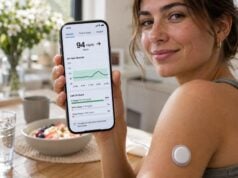
If you monitor glucose, sushi is a good meal to test because it can reveal how portion size and mixed nutrients affect your curve. The goal is to learn, not to label a meal as “good” or “bad” from one peak.
For a finger-stick meter, check immediately before the meal and at roughly one and two hours after the first bite. If you use a CGM, examine the entire three- to four-hour pattern. High-fat fried rolls may delay the peak, so stopping at 60 minutes can miss the later rise.
Record enough detail to make the result useful: number and type of rolls, approximate nigiri count, sashimi, sauces, drinks, and whether you walked afterward. A note such as “sushi” is too vague to compare later.
Repeat a similar order on another day before drawing conclusions. Sleep, stress, recent exercise, menstrual-cycle phase, illness, and sensor error can change the response. A repeated pattern matters more than one unusual trace.
If you see a large rise, change one variable at a time. Keep the same restaurant and fillings but order one less roll. Or keep the rice amount similar and remove sweet sauce. Or start with sashimi and edamame before the rice. This lets you discover which change actually helps.
People without diabetes should not diagnose prediabetes from a sushi spike on a CGM. Consumer sensors measure interstitial glucose, not laboratory plasma glucose, and temporary post-meal excursions can occur in people without diabetes. If readings are repeatedly high across many meals or you have symptoms such as excessive thirst, frequent urination, or unexplained weight loss, request appropriate laboratory testing.
Sushi does not need to be a forbidden food. Most of the leverage comes from a few simple choices: less total rice, fewer sweet or fried extras, more protein and vegetables, and a short walk when convenient. Those changes preserve the meal while making the glucose response more predictable.
Restaurant context can change the best strategy. At an all-you-can-eat sushi meal, ordering one round at a time can prevent accidental over-ordering and gives fullness signals time to catch up. At a business dinner, choosing sashimi plus a single roll may be easier than requesting multiple modifications. At home, you can make hand rolls with smaller scoops of rice and more fish, tofu, avocado, cucumber, or shredded vegetables. The principle stays the same even when the format changes.
If you are estimating carbohydrate, avoid false precision. Rice mounds differ by chef, and some specialty rolls are much larger than standard maki. Nutrition databases can give a starting estimate, but the visual portion and your glucose response are often more useful than assuming every salmon roll contains the same number of grams. If you use insulin and need accurate carbohydrate dosing, restaurant sushi can be especially variable, so conservative estimation and individualized guidance from your diabetes team may be important.
Food safety belongs in the decision too. Raw fish carries risks unrelated to blood sugar. Pregnant people, people with weakened immune systems, and others at higher risk for foodborne illness may need to avoid certain raw seafood. Choose reputable restaurants with good handling practices, and follow local pregnancy and seafood-safety guidance.
Finally, do not ignore how satisfied the meal leaves you. Protein-rich fish, vegetables, and a moderate rice portion often provide a better balance than a small “perfect” low-carb order that leaves you hungry an hour later. Blood sugar control works best when the meal is both metabolically reasonable and satisfying enough that you can stop eating without feeling deprived.
If you eat sushi frequently, consistency can make glucose management easier. Ordering a similar number of nigiri pieces or one familiar roll gives you a repeatable baseline, then you can vary the fish and vegetables for interest. This is more useful than trying a completely different specialty roll every time and wondering why the glucose curve changed. A repeatable order is especially helpful for people using insulin, because restaurant recipes and rice portions already introduce uncertainty. You can still enjoy variety; simply keep the biggest carbohydrate source—the rice—within a range you understand.
References
- White rice, brown rice and the risk of type 2 diabetes: a systematic review and meta-analysis 2022 (Systematic Review)
- Effects of Cooking Techniques on the Nutritional Profile, Glycemic Index, and Sensory Evaluation of Rice: A Systematic Review. 2025 (Systematic Review)
- Postprandial Glucose and Insulin Response to Meal Sequence Among Healthy UAE Adults: A Randomized Controlled Crossover Trial 2024 (RCT)
- Effects of meal sequence intervention on blood glucose response in healthy adults: a systematic review 2026 (Systematic Review)
- Vinegar Consumption and Health: An Umbrella Review of Meta-Analyses of Randomized Controlled Trials 2026 (Umbrella Review)
- The effects of SCFAs on glycemic control in humans: a systematic review and meta-analysis 2022 (Systematic Review)
Disclaimer
This article provides general nutrition information and is not individualized diabetes care. If you use insulin or other glucose-lowering medication, meal carbohydrate and post-meal activity may need to be coordinated with your treatment plan. People with kidney disease, hypertension, food allergies, or pregnancy-related dietary restrictions may also need personalized sushi choices.