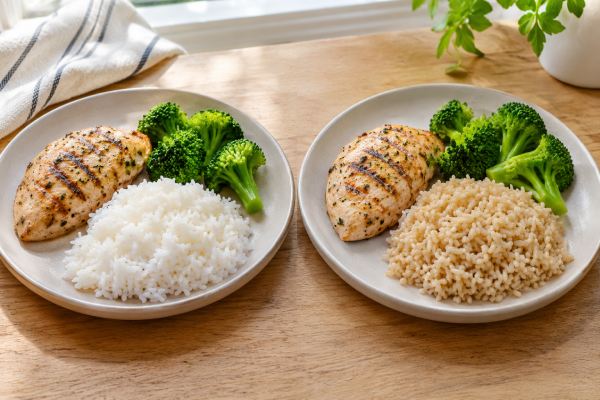
For most people managing blood sugar, brown rice is the superior everyday choice. By retaining the bran and germ, it offers more fiber and a less refined grain structure than white rice, typically resulting in slower digestion and a lower glucose rise. However, the color of the grain is not the sole determinant of its impact on your health.
Rice variety, amylose content, serving size, cooking method, and what you pair with it can matter just as much. Long-term trials comparing brown and white rice have not consistently shown large improvements in A1C or fasting glucose, even though observational studies generally link higher white rice consumption with increased type 2 diabetes risk and more brown rice with lower risk.
The most practical strategy is to choose brown, parboiled, or other higher-fiber rice more often while keeping portions reasonable. Pairing the grain with vegetables, protein, and legumes creates a balanced meal that supports stable blood sugar. If you prefer white rice, you do not need to eliminate it entirely; a smaller portion in a well-constructed meal can still fit within a blood-sugar-conscious diet.
Table of Contents
- Why Brown and White Rice Affect Glucose Differently
- What the Research Shows
- Glycemic Index Varies More Than You Might Think
- Portion Size and Meal Composition
- Cooking, Cooling, and Reheating Rice
- Which Rice Is Best for Different Goals
- A Practical Lower-Spike Rice Plan
Why Brown and White Rice Affect Glucose Differently
Brown rice is a whole grain, containing the starchy endosperm, bran, and germ. White rice undergoes further milling that removes most of the bran and germ. This process makes white rice softer, faster to cook, and more shelf-stable, but it also strips away much of the fiber, along with some vitamins, minerals, and plant compounds.
While the absolute difference in fiber grams is modest, its impact on digestion is significant. The intact grain layers in brown rice can slow down enzymatic access to starch during digestion. Additionally, rice starch consists mainly of two molecules: amylose and amylopectin. Higher-amylose varieties tend to digest more slowly, producing a lower glycemic response than low-amylose, sticky types. Consequently, some white rice varieties may produce a smaller glucose rise than certain brown varieties.
Brown versus white is only one variable. Processing methods and starch structure play equally critical roles. Brown rice also tends to provide more magnesium and other micronutrients, but this does not make it a “free food” for glucose control. A large bowl of brown rice still contains a substantial carbohydrate load capable of raising blood sugar considerably.
White rice has its own practical advantages. Its lower fiber content can be easier to tolerate during gastrointestinal illness, after specific surgeries, or when a clinician recommends a temporary low-residue diet. Furthermore, white rice is culturally central in many cuisines. Blood-sugar-friendly eating works best when it adapts familiar foods rather than treating them as forbidden.
If rice is one of several carbohydrate staples in your diet, the broader guide to choosing carbohydrates for blood sugar can help compare whole grains, beans, and other options.
What the Research Shows
The strongest overall evidence favors brown rice and whole grains for long-term health, but direct trials comparing brown versus white rice are less dramatic than many people expect. A 2022 systematic review and meta-analysis combined data from cohort studies and randomized trials. In observational studies, higher white rice intake was associated with a higher risk of type 2 diabetes, while higher brown rice intake was linked to lower risk. The dose-response signal for white rice became more apparent at higher intakes. However, randomized trials replacing white rice with brown rice did not consistently improve glucose, insulin, blood pressure, or most other cardiometabolic markers.
This discrepancy between observational and trial evidence is crucial. People who eat more brown rice may also have healthier overall diets, exercise more, or consume more whole grains generally. Randomized trials reduce these lifestyle confounders, but many rice trials are relatively short and may not last long enough to show changes in diabetes risk. A 2024 systematic review of whole grains found that higher whole-grain intake was associated with lower type 2 diabetes risk, while randomized trials showed a small reduction in fasting glucose overall. Brown rice is only one whole grain, so those findings should not be interpreted as proof that brown rice alone produces the same benefit.
In practical terms, choosing brown rice is reasonable because it improves whole-grain and fiber intake, but it is not a treatment by itself. Someone who swaps white rice for brown rice while doubling the portion may see no glucose improvement at all.
Glycemic Index Varies More Than You Might Think
Glycemic index (GI) ranks carbohydrate foods according to how much they raise blood glucose after a standardized amount of available carbohydrate. High-GI rice tends to raise glucose faster than low-GI rice. Brown rice often has a lower GI than white rice, but there is substantial overlap. Reviews of rice starch and cooking show that rice GI varies widely with variety and processing. Sticky or glutinous rice is generally high GI because it contains very little amylose. Long-grain, higher-amylose varieties, including some basmati rice, often produce a slower glucose response.
Several factors change the result:
- Amylose content: More amylose usually means slower starch digestion.
- Grain structure: Intact grains tend to digest more slowly than heavily processed or broken grains.
- Cooking time and water: Softer, more gelatinized starch is generally easier to digest.
- Food form: Rice porridge can raise glucose faster than firmer cooked rice when carbohydrate is matched.
- Cooling and reheating: These can increase resistant starch modestly.
- Meal composition: Protein, fat, fiber, and acidic foods can slow the overall meal response.
- Individual physiology: Insulin sensitivity, gut function, activity, sleep, and genetics affect the glucose curve.
A 2025 study that repeatedly tested standardized carbohydrate meals found large person-to-person differences in post-meal glucose. Rice was the most glucose-elevating test carbohydrate on average, but the size of the response varied substantially between participants. This is why someone else’s CGM screenshot cannot tell you exactly what rice will do to your glucose. The article on personalized blood sugar responses to food explains why these differences occur.
GI is also different from glycemic load. GI describes the response to a fixed amount of available carbohydrate, while glycemic load considers how much carbohydrate you actually eat. That is why portion size can overturn the apparent advantage of a lower-GI food. A large serving of lower-GI brown rice may deliver more total digestible carbohydrate than a small serving of higher-GI white rice.
This distinction is useful when reading labels or online lists. A rice may be called “low GI,” but that does not mean unlimited portions are glucose-neutral. Likewise, a higher-GI rice is not automatically off-limits if you eat a modest amount with protein, vegetables, and fiber. GI is a property of a standardized test; your meal is a real-world combination of foods, portions, and behaviors.
Portion Size and Meal Composition
For blood sugar management, the amount of digestible carbohydrate often matters more than a modest GI difference. A half cup of white rice may produce a smaller glucose load than two cups of brown rice simply because the portion contains much less carbohydrate. That makes portion size the easiest lever to adjust. Instead of making rice the base of the entire plate, use it as one component.
A useful plate pattern is:
- About half the plate non-starchy vegetables
- About one-quarter protein such as fish, chicken, tofu, eggs, or lean meat
- About one-quarter rice or another starch
- Optional beans or lentils for extra fiber and protein
For many adults, starting with about 1/2 to 1 cup cooked rice is more practical than eating a restaurant-sized bowl. Your ideal amount depends on body size, activity, medication, glucose tolerance, and the rest of the meal.
Think in cooked portions, not just “servings”
Rice portions are easy to underestimate because bowls, takeout boxes, and restaurant scoops vary widely. A cooked cup of rice commonly provides roughly 40–50 g of carbohydrate, depending on the variety and how much water it absorbed. A large restaurant bowl can contain two cups or more, which can turn a side dish into the main glucose load of the meal. Brown rice does not remove that carbohydrate; it mainly changes the grain structure, fiber, and rate of digestion.
For someone who sees a large post-meal rise, measuring cooked rice once or twice can be surprisingly useful. You do not need to weigh food forever. The goal is to learn what 1/2 cup, 3/4 cup, and 1 cup look like in the bowls you normally use. From there, build the rest of the meal around vegetables and protein so that reducing rice does not simply leave you hungry.
Also compare portions on an equal basis. Saying “brown rice spikes me just as much as white rice” is hard to interpret if the brown-rice meal contained a larger scoop, different sauce, sweet drink, or dessert. The fairest comparison uses similar cooked amounts and similar side dishes. If equal portions still produce similar glucose curves, choose based on whole-grain nutrition and preference, then use portion size, meal composition, and activity as the stronger levers for glucose control.
Beans are particularly helpful with rice because they add soluble and insoluble fiber, protein, and slower-digesting carbohydrate. A rice-and-beans meal usually produces a different response from the same rice portion eaten alone. Meal order may help as well. Eating vegetables and protein before the starch can reduce the early glucose rise for some people. A short walk after eating is another reliable option. The evidence behind walking after meals to lower glucose is useful whether the rice is white or brown.
Avoid trying to “flatten” a very large rice portion by adding large amounts of fat. Fat may delay the glucose peak, but a high-calorie meal can keep glucose elevated later and work against weight-management goals.
Cooking, Cooling, and Reheating Rice
Cooking changes starch structure. Heat and water gelatinize starch, making it easier for digestive enzymes to access. Longer cooking that produces very soft rice can therefore increase digestibility. When cooked rice is cooled, some gelatinized starch rearranges into a form that resists digestion. This is called retrograded resistant starch. Reheating does not necessarily remove all of it. The effect can modestly reduce available carbohydrate or slow digestion, though the size of the glucose benefit varies.
If you want to try this strategy:
- Cook rice normally.
- Cool leftovers promptly in shallow containers and refrigerate them.
- Reheat thoroughly when ready to eat.
- Keep the portion the same when comparing glucose responses.
Food safety matters more than resistant starch. Cooked rice can support growth of Bacillus cereus if it sits warm for too long. Refrigerate leftovers promptly rather than leaving rice at room temperature for hours. Cooling is not a magic conversion that turns white rice into a low-carbohydrate food. Most of the starch is still digestible. The article on resistant starch from cooled rice, pasta, and potatoes explains what this technique can and cannot do.
Cooking method may also matter. Rice cooked very soft with excess water can be digested rapidly, while firmer rice may be slower. Some “low-carb rice cooker” claims should be treated cautiously because measured carbohydrate reduction depends on the method and the amount of starch actually removed.
Which Rice Is Best for Different Goals
There is no single winner for every person. The best choice depends on glucose response, digestion, food preferences, and how often you eat rice.
| Goal | Often better choice | Why |
|---|---|---|
| More fiber and whole grains | Brown rice | Keeps bran and germ |
| Lower average glycemic response | Brown or higher-amylose/parboiled rice | Usually slower digestion, though variety matters |
| Sensitive digestion during illness | White rice | Lower fiber and often easier to digest |
| Quick cooking and mild texture | White rice | Softer and usually faster to prepare |
| Highest nutrition per serving | Brown rice | More fiber and several micronutrients |
| Lowest glucose response for you personally | Test comparable portions | Individual response can override averages |
Parboiled rice deserves attention because processing changes the starch and can produce a lower glycemic response than standard white rice. Basmati varieties, especially higher-amylose types, may also work well for some people. “Jasmine,” “sticky,” or “sushi” rice often digests faster, although brand and cooking method still matter.
If you dislike brown rice, forcing it into every meal is unnecessary. Try a 50/50 blend of brown and white rice, parboiled rice, quinoa, barley, or legumes. A sustainable pattern beats an idealized food you rarely want to eat.
A Practical Lower-Spike Rice Plan
If rice regularly pushes your glucose higher than you want, change one variable at a time. That helps you identify what actually works.
Start with this sequence:
- Measure the portion. See what 1 cup cooked rice looks like, then decide whether 1/2 to 3/4 cup is enough with a fuller plate.
- Choose a slower rice. Try brown, parboiled, or a firmer long-grain basmati variety.
- Add fiber and protein. Pair rice with vegetables, beans, tofu, fish, chicken, eggs, or another protein source.
- Avoid drinking extra sugar. A rice meal plus soda or sweet tea produces a much larger carbohydrate load than rice alone.
- Move after the meal. Ten to twenty minutes of easy walking can help working muscle take up glucose.
- Compare repeated responses. If you monitor glucose, test similar meals more than once before deciding one rice is “good” or “bad.”
If you use insulin, changing rice variety or portion can alter your insulin needs. Do not make large dose changes from one CGM curve; discuss recurring patterns with your diabetes team.
If you want to compare rice types with a glucose meter or CGM, make the test fair. Use the same cooked portion, similar side dishes, the same time of day, and similar activity after the meal. Compare more than one day because sleep, stress, exercise from the previous day, and even the previous meal can change your response. With CGM, look at the rise from baseline, peak, and how long glucose stays elevated rather than focusing on the highest number alone.
A useful experiment might compare 3/4 cup white rice with 3/4 cup brown rice in the same chicken-and-vegetable meal. If the curves are nearly identical, the brown rice can still be worthwhile for fiber and whole-grain intake, but you may get a larger glucose benefit by reducing the portion to 1/2 cup or adding beans. If brown rice clearly performs better and you enjoy it, the choice becomes easy.
For most people with prediabetes or type 2 diabetes, brown rice is a useful default but not a requirement. The bigger win is moving from large portions of rapidly digested rice toward smaller portions, more fiber, and a balanced plate. White rice can still fit when portion size and the rest of the meal are handled well. Rotating rice with barley, quinoa, lentils, or other whole grains can also increase dietary variety and reduce reliance on any single starch source. If rice is eaten several times a day, even modest improvements in variety, portion size, and meal balance can add up more than searching for a supposedly perfect rice brand or chasing a single glycemic-index number in isolation for every daily meal.
References
- White rice, brown rice and the risk of type 2 diabetes: a systematic review and meta-analysis 2022 (Systematic Review)
- Effects of whole grains on glycemic control: a systematic review and dose-response meta-analysis of prospective cohort studies and randomized controlled trials 2024 (Systematic Review)
- Effects of Cooking Techniques on the Nutritional Profile, Glycemic Index, and Sensory Evaluation of Rice: A Systematic Review 2025 (Systematic Review)
- Starches in Rice: Effects of Rice Variety and Processing/Cooking Methods on Their Glycemic Index 2025 (Review)
- Individual variations in glycemic responses to carbohydrates and underlying metabolic physiology 2025 (Clinical Study)
Disclaimer
This article is for general education and is not a personalized diabetes meal plan. If you use insulin or other glucose-lowering medication, have kidney disease, are pregnant, or have significant digestive or nutritional concerns, discuss major carbohydrate changes with your healthcare team.