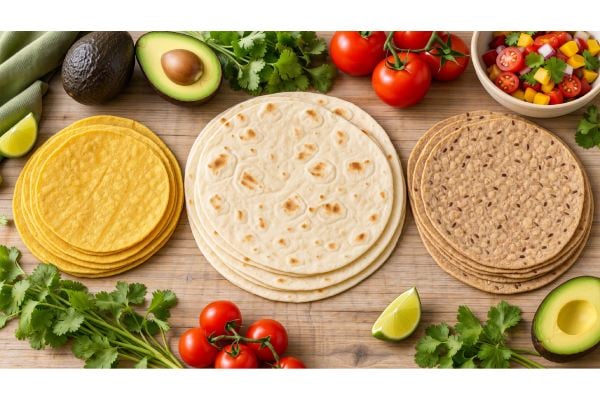
The best tortilla for blood sugar management is rarely the one with the most impressive marketing label. It is typically the option that delivers the least digestible carbohydrate in a portion you genuinely enjoy, while still leaving room for the rest of your meal. Corn tortillas often hold an advantage here simply because they are smaller and contain fewer calories and grams of carbohydrate per piece than large flour tortillas. Traditional flour tortillas can be more glucose-dense largely due to their size, thickness, and the ease with which people consume multiple servings. “Low-carb” wraps may produce a smaller glucose rise for some individuals, but the label requires careful scrutiny: many rely heavily on added fibers, modified starches, or unusual serving sizes, meaning a low “net carb” number does not guarantee a flat glucose response.
The filling matters just as much as the wrapper. Beans, vegetables, protein, and healthy fats significantly alter how quickly a tortilla meal is digested. Rather than asking whether corn or flour is universally better, consider size, total carbohydrate content, fiber sources, ingredients, and your own post-meal physiological response.
Table of Contents
- What Makes a Tortilla Raise Blood Sugar?
- Corn Tortillas
- Flour Tortillas
- “Low-Carb” Wraps
- How to Compare Tortilla Labels
- Build a Lower-Spike Tortilla Meal
- Which Tortilla Is Best for You?
What Makes a Tortilla Raise Blood Sugar?
The primary driver of blood sugar elevation is not whether a tortilla is yellow, white, wheat-based, or labeled “keto.” It is how much digestible starch and sugar reaches the small intestine, how rapidly it is broken down, and what else accompanies it.
Tortillas are starch-based foods. During digestion, most of that starch converts into glucose. Because larger tortillas contain more starch, portion size often matters more than the specific grain name on the package. Two small corn tortillas may contain less total carbohydrate than one burrito-size flour tortilla, even if both meals appear as “one serving” on the plate.
Several features influence the glycemic response:
- Total carbohydrate and portion size. More digestible carbohydrate generally equates to a larger glucose load.
- Fiber. Viscous or fermentable fibers can slow digestion or reduce the amount of rapidly available carbohydrate, though not every ingredient listed as fiber has the same metabolic effect.
- Starch structure and processing. Grinding, cooking, extrusion, chemical modification, and cooling all change how accessible starch is to digestive enzymes.
- Protein and fat in the meal. Meat, fish, eggs, cheese, tofu, beans, avocado, and other mixed-meal ingredients can slow gastric emptying or alter glucose and insulin responses.
- Your metabolism. Insulin sensitivity, physical activity, sleep quality, medications, gut function, and the size of the previous meal all affect the outcome.
This variability explains why glycemic index (GI) numbers should not be treated as permanent scores for every tortilla in a category. Older small studies found that corn and wheat tortillas produced different glycemic responses depending on the recipe and population studied. Newer food-development research indicates that changing the fiber or protein content of a corn tortilla can substantially alter its glycemic profile. The specific product matters.
For everyday decisions, focus on the whole meal. A tortilla paired with grilled chicken, black beans, salsa, cabbage, and avocado behaves differently from the same tortilla filled with fried potatoes and washed down with soda. The broader principles in building Mexican meals for steadier blood sugar often carry more weight than choosing one tortilla category in isolation.
Corn Tortillas
Corn tortillas are often the most practical default when you want a traditional tortilla with a moderate carbohydrate load. Their main advantage is usually size, not a magical property of corn itself.
A typical small corn tortilla weighs around 25–30 g and provides roughly 50–70 calories and about 10–15 g of total carbohydrate. Brand and restaurant portions vary widely, so the package label is more useful than generic numbers. Three small tortillas can add up to 30–45 g of carbohydrate before beans, rice, sauces, or drinks are counted.
Traditional corn tortillas are made from nixtamalized corn, meaning the kernels are cooked and treated with an alkaline solution before grinding. This process changes texture, flavor, and nutrient availability. It does not make the tortilla carbohydrate-free, but it produces a different food matrix from ordinary cornmeal bread or chips.
The glucose response to corn tortillas is not automatically lower than that of flour tortillas. Small clinical studies from Mexico found that standard corn tortillas could have a relatively high glycemic response when equal carbohydrate portions were compared. This may sound contradictory to the common advice to choose corn, but the comparison illustrates an important distinction: glycemic index and real-world portion size are different questions.
If one corn tortilla contains 12 g of carbohydrate and a large flour tortilla contains 35 g, the smaller corn tortilla may still create a smaller total glucose exposure even if its starch is digested fairly quickly. Glycemic load—which combines carbohydrate amount and glycemic effect—is often more practical at the meal level.
Corn tortillas are especially useful when you want multiple tacos without the tortilla portion becoming the bulk of the meal. Two or three small tortillas make it easy to distribute fillings such as beans, lean protein, vegetables, salsa, and avocado.
Look for a short ingredient list when possible. Corn flour or masa, water, lime or calcium hydroxide, and salt are common. Added gums or preservatives are not automatically harmful, but they are not needed to make a tortilla metabolically superior.
Flour Tortillas
Flour tortillas can fit within a blood-sugar-conscious diet, but their size deserves attention. A small taco-size flour tortilla may have a carbohydrate amount similar to a corn tortilla, while a restaurant burrito tortilla can be several times larger.
Traditional flour tortillas are made from refined wheat flour, water, fat, salt, and a leavening or conditioning system. Whole-wheat versions may provide more fiber, but “wheat tortilla” does not necessarily mean whole grain. Refined white flour is still wheat flour.
The common blood sugar issue is portion creep. A large wrap can contain 40–60 g of carbohydrate before anything is added. Then rice, beans, sweet sauces, chips, or a sugary drink can push the meal far higher. Someone may attribute a big spike to the chicken and vegetables when the oversized wrap supplies the largest carbohydrate dose.
Whole-grain flour tortillas can be a better choice when they truly contain more intact whole grain and fiber. Check whether “whole wheat flour” appears first in the ingredient list and compare the fiber grams with a similar-size refined tortilla. A higher-fiber option may improve satiety and glucose control, but total carbohydrate still counts.
Flour tortillas also often contain more added fat than corn tortillas. This can make them softer and more satisfying, but it increases calories. A slower glucose rise is not always the same as a healthier meal. Fat can delay the glucose peak without reducing total energy intake, so a large high-fat tortilla meal may produce a later, prolonged rise rather than a quick spike.
If you prefer flour tortillas, a simple strategy is to choose a smaller size and let the filling do more of the work. A 6- or 8-inch tortilla filled generously with vegetables and protein can be easier to fit into a moderate-carbohydrate meal than a 12-inch burrito wrap.
“Low-Carb” Wraps
“Low-carb” wraps can be useful, but the front-of-package number should be treated as a clue, not proof. Many products calculate “net carbs” by subtracting fiber and sometimes sugar alcohols from total carbohydrate. That convention is not a standardized physiological measurement of how much glucose your body will absorb.
A label might show 19 g of total carbohydrate, 15 g of fiber, and 4 g of “net carbs.” In some products, much of that fiber is genuinely poorly digested, and the glucose response may be small. In others, ingredients such as modified wheat starch or resistant starch can be partially digested, and individual responses vary significantly.
This is one reason net-carb labels can mislead blood sugar tracking. The Nutrition Facts panel and ingredient list provide a better starting point than a large “2 g net carbs” claim on the front.
Common ingredients in low-carb wraps include:
- modified wheat starch
- resistant wheat starch
- oat fiber
- cellulose
- wheat gluten
- psyllium
- inulin or chicory-root fiber
- pea or soy protein
- gums such as xanthan or guar gum
These ingredients do not all behave the same way. Psyllium and some viscous fibers have evidence supporting improved post-meal glucose control. Other fiber ingredients are added mainly for structure or bulk. Some ferment rapidly in the colon and can cause gas, bloating, or diarrhea when eaten in large amounts.
Sugar alcohols can also appear in low-carbohydrate foods, although they are less common in plain tortillas than in bars or sweets. Their effect on glucose differs by type. If a wrap contains them, the principles in choosing sugar alcohols for blood sugar apply.
A low-carb wrap is most useful when it solves a real problem: it allows you to eat a satisfying sandwich, taco, or quesadilla with substantially less digestible carbohydrate than the standard version and without digestive side effects.
One subtle issue is that a high fiber number can change how the label looks without changing the physical size of the food. A very large wrap may still contain a substantial amount of starch even after fiber is subtracted. If you are comparing products, look at both total carbohydrate and the ratio of fiber to total carbohydrate rather than treating the smallest net-carb claim as automatically best. Also notice whether the wrap leaves you satisfied. A smaller traditional tortilla that tastes better may lead to a more controlled meal than a giant specialty wrap that encourages extra cheese, sauces, and fillings.
Digestive tolerance is another useful quality check. Jumping from 15 g of fiber per day to 35 or 40 g because of high-fiber wraps can cause bloating, gas, or loose stools. Increase concentrated-fiber products gradually and drink enough fluid, especially if the ingredient list includes psyllium, inulin, or large amounts of resistant starch. It is less useful if its health halo encourages larger portions or turns a simple meal into a highly processed snack pattern.
How to Compare Tortilla Labels
Compare products on the same basis. A “serving” might be one giant tortilla on one package and two small tortillas on another, making side-by-side numbers misleading.
Use this quick label sequence:
- Check serving weight and tortilla size. Grams are more reliable for comparison than “1 tortilla.”
- Look at total carbohydrate. This is the safest starting number for blood sugar planning.
- Check fiber grams and fiber sources. A product with 8–15 g of fiber deserves an ingredient-list check so you know where that number comes from.
- Compare protein. Some high-fiber wraps also contain added protein, which can improve satiety.
- Check calories and saturated fat. A product can be low in net carbs yet calorie-dense.
- Scan sodium. Packaged tortillas can contribute a meaningful amount, especially when several are eaten.
- Read the first five ingredients. They reveal whether the product is mainly corn, whole wheat, refined flour, modified starch, fiber isolates, or a protein-fiber blend.
A practical comparison might look like this:
| Feature | Small corn tortilla | Standard flour tortilla | “Low-carb” wrap |
|---|---|---|---|
| Typical size | Small | Small to very large | Usually medium to large |
| Total carbohydrate | Often lower per piece | Highly size-dependent | May be moderate despite low net-carb claim |
| Fiber | Usually modest | Modest unless whole grain | Often high from added fibers |
| Calories | Often lower per piece | Often higher because of size and fat | Variable |
| Best use | Tacos, portion control | Wraps when size is controlled | Lower-carb meals if tolerated |
| Main caution | Several add up quickly | Burrito-size portions | Net carbs may not predict your glucose response |
These are category patterns, not guaranteed values. Always use the actual label for the product in your hand.
Build a Lower-Spike Tortilla Meal
The easiest way to lower the glucose impact of a tortilla meal is to reduce the total starch load and add protein, fiber-rich foods, and vegetables.
For tacos, try two small tortillas with a generous portion of grilled chicken, fish, tofu, eggs, or lean meat, then add cabbage, peppers, onions, pico de gallo, salsa, and avocado. Beans add carbohydrate, but they also provide protein and soluble fiber and often produce a steadier response than refined starches.
If you want rice too, reduce one of the other starch portions. A meal with tortillas, a large scoop of rice, chips, and sweetened beans can contain several overlapping carbohydrate sources. You do not need to eliminate them all; just decide which starch matters most to you.
Meal order can also help some people. Eating vegetables and protein before a large starch portion may blunt the early glucose rise. A short walk after the meal can lower the post-meal excursion further by increasing glucose uptake in working muscle.
Another option is to change the ratio of tortilla to filling. Instead of making three lightly filled tacos, use two tortillas and put the same amount of protein, beans, vegetables, and salsa into them. That preserves meal volume and flavor while lowering the starch dose. If you are still hungry, add a side salad, grilled vegetables, or extra lean protein rather than automatically adding another tortilla.
Restaurant meals require extra caution because tortillas are often larger than home versions. If a burrito comes in a very large flour tortilla, a bowl with the same fillings and a smaller tortilla on the side can give you more control over the amount. For fajitas, start with the meat and vegetables, then add tortillas one at a time rather than automatically eating the full stack.
Sauces deserve a glance too. Salsa and hot sauce are often low in carbohydrate, while sweet barbecue-style sauces, honey sauces, and some creamy dressings can add sugar or calories quickly.
Which Tortilla Is Best for You?
There is no universal winner. A small corn tortilla is often the simplest choice for portion control. A small whole-wheat flour tortilla can work just as well if you prefer the texture and the carbohydrate amount fits your meal. A low-carb wrap may produce the smallest glucose rise, but only if its fibers and modified starches behave well for you and do not cause digestive problems.
For most people, use this order of decision-making:
- Choose the tortilla style you actually like.
- Pick a portion that keeps total carbohydrate reasonable.
- Favor more fiber when it comes from a product you tolerate well.
- Build the meal around protein, vegetables, and beans rather than around the tortilla alone.
- Avoid assuming that “low-carb,” “keto,” “whole wheat,” or “corn” guarantees a specific glucose response.
If you monitor glucose, you can run a simple personal test. Eat the same filling on two different days, keeping portion size and activity similar, and compare your response at about one and two hours after the meal. A continuous glucose monitor can make patterns easier to see, but a single reading should not be overinterpreted. Repeated responses matter more.
If a tortilla meal repeatedly causes large post-meal blood sugar spikes, first reduce the number or size of tortillas and remove other refined starches from the same meal. Only then decide that you need a specialty product. In many cases, the most effective change is not buying a “zero-carb” wrap. It is eating two smaller tortillas instead of one giant one and filling them with more protein, vegetables, and fiber-rich foods.
References
- 5. Facilitating Positive Health Behaviors and Well-being to Improve Health Outcomes: Standards of Care in Diabetes-2026 2026 (Guideline)
- Effects of isolated single fibers, fiber mixtures, and fiber-rich whole foods on glucose homeostasis in individuals with overweight and obesity: A systematic review and meta-analysis 2025 (Systematic Review)
- A New Dietary Fiber Can Enhance Satiety and Reduce Postprandial Blood Glucose in Healthy Adults: A Randomized Cross-Over Trial 2023 (RCT)
- Reduced in vitro starch hydrolysis and in vivo glycemic effects after addition of soy presscake to corn tortillas 2023 (Clinical Study)
- Glycaemic and insulinaemic indices of Mexican foods high in complex carbohydrates in Type 2 diabetic subjects 2001 (Clinical Study)
Disclaimer
Blood sugar responses to tortillas and other carbohydrate foods vary by portion, meal composition, medication use, and individual metabolism. If you have diabetes and use insulin or glucose-lowering medication, make carbohydrate changes with your treatment plan in mind. This article is for general education and does not replace individualized nutrition or medical advice.