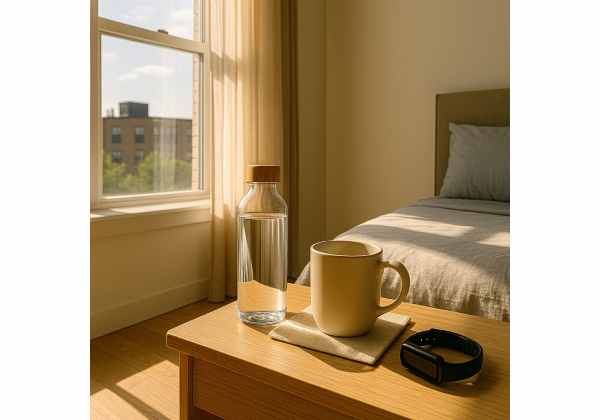
A good morning routine for weight loss does not need to be complicated, extreme, or perfectly timed. The most useful version is usually simple: drink some water, get outside for daylight, and move your body before the day gets too noisy. That combination will not “melt fat” by itself, but it can make weight loss easier by improving routine, sleep timing, energy, appetite awareness, and daily activity.
That is why hydration, sunlight, and steps are such a practical starting point. They are low-cost, repeatable, and flexible enough to work for busy people. This article explains why each part matters, how to combine them into a realistic morning routine, what to eat and drink around it, and how to make it stick even when mornings are messy.
Table of Contents
- Why mornings matter more than they seem
- Hydration first without overcomplicating it
- Why morning sunlight pulls extra weight
- How early steps help more than expected
- What to eat and drink around the routine
- Realistic routines for 5, 15 and 30 minutes
- Common morning routine mistakes
- How to make the routine stick
Why mornings matter more than they seem
Morning routines matter for weight loss not because mornings are magical, but because the first hour or two of the day often sets the tone for everything that follows. If you start rushed, dehydrated, indoors, and mostly sitting, it becomes easier for the day to feel reactive. Meals get delayed, stress rises, movement gets pushed off, and by late afternoon or evening you may feel hungrier, flatter, and more likely to overeat.
A steadier morning can interrupt that pattern. When you get some water, light, and movement early, you create structure before work, messages, errands, and other people’s needs start taking over. That structure tends to improve three things that matter for fat loss:
- Appetite control. More stable mornings often lead to more predictable hunger later.
- Decision quality. Small healthy actions early reduce the feeling that the day is already “off.”
- Energy and momentum. People who move and get daylight early often find it easier to stay active and intentional for the rest of the day.
This is especially relevant if your hardest moments happen later. Many people do not overeat because breakfast was “bad.” They overeat because the day became disorganized, under-fueled, and stressful. That is part of why morning habits that reduce overeating later can be surprisingly effective even when they seem simple.
Sleep also connects directly to this. A poor night often changes hunger, cravings, patience, and motivation the next day. When mornings have no structure, you are more likely to drift through that sleep-deprived state and keep making reactive choices. A better morning routine will not erase a bad night, but it can stop one bad night from turning into a full day of random eating and low movement. That is closely tied to why poor sleep can make you hungrier and why early-day structure helps limit the damage.
The key point is that your morning routine should make the rest of the day easier, not harder. It is not supposed to be a test of discipline. It is supposed to reduce friction. If it gives you a little more energy, a little more appetite awareness, and a little more movement before 9 a.m., it is already doing useful work.
Hydration first without overcomplicating it
Hydration is a smart first step in a weight loss morning routine because it is easy, fast, and helpful, but it is also one of the most overhyped parts of the conversation. Drinking water in the morning can support a better routine, but it is not a fat-loss trick on its own.
After a night without fluids, many people wake up at least a little thirsty, dry, or flat. A glass of water can help you feel more alert and less foggy, and it gives you an immediate action that signals the day has started. That matters more than it sounds. One simple repeated behavior can reduce mindless morning drifting and make the next helpful choice more likely.
Water may also help with appetite awareness. Sometimes morning hunger and thirst overlap, especially if you wake up and go straight to coffee, emails, or commuting. Drinking water first can help you read your body more clearly before deciding whether you are hungry, just thirsty, or both.
A practical target is not complicated:
- start with one glass,
- or fill one bottle and work through it during the first hour or two of the day,
- then adjust based on body size, heat, exercise, and personal preference.
You do not need to force large amounts of water. More is not always better. The goal is to be reasonably hydrated, not to turn the morning into a challenge. For some people, 8 to 16 ounces is enough to get started. Others prefer more, especially if they plan to walk, sweat, or live in a hot climate.
Coffee and tea can still fit. They do contribute to total fluid intake, and you do not need to avoid them to “count” as hydrated. But there is something useful about having plain water before your first caffeinated drink. It creates a better sequence: wake up, drink water, then move into coffee or breakfast. If hydration is an ongoing issue, broader hydration strategies with water, coffee and tea can help you build something more consistent throughout the day.
What hydration does not do is detox your body, cancel out poor sleep, or directly create meaningful fat loss by itself. Its real value is more practical:
- it supports routine,
- may help appetite management,
- can replace calorie-containing beverages,
- and makes mornings feel less chaotic.
If you have kidney disease, heart failure, or another condition that requires fluid limits, follow your clinician’s advice instead of generic hydration tips. For most people, though, starting the day with water is a low-effort habit that improves the odds of a more organized morning.
Why morning sunlight pulls extra weight
Morning sunlight does more work than people realize. It is not just about mood or “fresh air.” Light is one of the main signals that helps set your internal clock, also called your circadian rhythm. When you get natural light relatively soon after waking, you give your brain clearer information about when the active part of the day begins. That can help support alertness in the morning and sleepiness at the right time later at night.
That matters for weight loss because sleep and circadian timing influence appetite, food choice, energy, and consistency. When sleep timing is off, hunger can feel less predictable, cravings can rise, and it becomes harder to maintain good routines. Morning light helps because it strengthens the schedule your body is trying to keep. It is one reason morning sunlight for appetite control is such a useful concept, even when the effect is indirect.
The practical takeaway is simple: get outside soon after waking if you can. You do not need to stare at the sun or stand in the yard for an hour. You just need outdoor light hitting your eyes in a normal, safe way. In bright weather, even a short period can be useful. In cloudy weather, winter, or darker climates, you may need longer exposure to get a similar effect. Outdoor light is usually much stronger than indoor light, even near a window.
Morning sunlight is often most effective when it is paired with something else you already do:
- walking the dog,
- getting coffee,
- taking children to school,
- watering plants,
- or doing a short walk around the block.
That pairing matters because it turns sunlight into a routine instead of a separate task.
It is also important to be realistic about what morning light can and cannot do. It will not cause major weight loss on its own. But it can improve a chain of related factors:
- better wakefulness early in the day,
- better sleep timing later,
- less “dragging” through the morning,
- and a more stable structure around meals and movement.
Those effects are small individually, but together they can support better consistency. And consistency tends to matter more than any one “fat-burning” habit. If sleep timing is one of your weak points, this also connects strongly with sleep consistency for weight loss, since the benefits of morning light are greatest when your sleep and wake times are not changing wildly every day.
If your schedule is unusual, “morning” means your personal wake period, not necessarily sunrise. The goal is to give your body a clear daytime cue early in your waking window.
How early steps help more than expected
Steps are the movement side of this morning routine, and they matter partly because they burn calories, but mostly because they change the rest of the day. A short morning walk or a cluster of early steps tends to improve momentum, reduce stiffness, increase total activity, and make it less likely that you stay sedentary until afternoon.
That is why steps are such a strong habit for weight loss. They are simple, measurable, and much easier to repeat than a high-intensity workout. You do not need a gym, a program, or a perfect schedule. You just need a few minutes and a pair of shoes.
Early steps can help in several ways:
- they contribute to daily energy expenditure,
- they can improve mood and alertness,
- they often combine well with daylight exposure,
- and they reduce the “I will move later” trap that often turns into no movement at all.
A morning walk also creates a psychological advantage. Once you have moved early, you tend to think of yourself as someone who is already in motion. That can make lunch walks, stair choices, and after-dinner movement feel more natural. It is the same idea behind building more daily activity through walking for weight loss rather than relying only on intense exercise sessions.
You do not need a perfect step number before breakfast for this to matter. A useful starting point is one short loop, five to ten minutes, or a modest step target such as an extra 1,000 to 2,000 morning steps above your current baseline. If you are already fairly active, you can aim higher. If you are very sedentary, even a brief walk is meaningful.
A few practical points make this easier:
- Do not overfocus on fasted walking. Walking before breakfast is fine if you feel good doing it, but it is not required. If you wake up hungry, lightheaded, or stressed, a small snack first may work better.
- Brisk is helpful, but not mandatory. A purposeful pace is great, especially if you want a little more training effect, but easy walking still counts.
- Indoor steps still count. Outdoor walking is ideal when you want to combine light and movement, but hallway walks, stairs, walking pads, and indoor laps are far better than nothing.
- Small bouts are valid. Short walks before work, after parking, or during a child’s practice can all contribute.
If your mornings are packed, look for the smallest repeatable version. That is where step habits for busy days become useful. The win is not creating a dramatic workout. The win is creating an early movement cue that fits your real life often enough to keep happening.
What to eat and drink around the routine
Hydration, sunlight, and steps form the backbone of the routine, but what you do around breakfast and caffeine can determine whether the morning supports appetite control or creates problems later.
The first thing to understand is that there is no single “correct” breakfast schedule for everyone. Some people like to walk first and eat after. Others feel better eating something small before movement. Some are not hungry for an hour or two after waking. The right choice is the one that helps you stay steady rather than overly hungry and reactive later.
For many people, a good rule is:
- drink water first,
- get some daylight and movement,
- then eat a satisfying breakfast if you are hungry.
That breakfast does not need to be big, but it should be structured. A meal with protein and some fiber tends to be more useful than a fast hit of sugar or a pastry on the go. Examples include:
- Greek yogurt with berries,
- eggs with toast and fruit,
- oatmeal with protein added,
- cottage cheese and fruit,
- or a simple protein smoothie.
If mornings are busy, repeating a few easy high-protein options often works better than chasing variety. A list of high-protein breakfast ideas can be useful if you keep defaulting to coffee alone and then feeling ravenous later.
Coffee can fit well in this routine too. It can improve alertness, make a walk feel easier, and help some people feel more ready for the day. The issue is not coffee itself. The issue is when coffee replaces water, replaces food you actually need, or becomes the excuse for delaying all morning nutrition until you are overly hungry.
A few practical rules help:
- Have water before or alongside coffee.
- Avoid turning coffee into breakfast if that leads to overeating later.
- Be careful with large sugary drinks that add calories without much fullness.
- Keep an eye on timing if caffeine later in the day affects your sleep.
That last point matters more than people realize. A “good” morning routine can still backfire if it leads to too much caffeine and worse sleep at night. The following morning then starts harder, and the cycle repeats.
The best morning eating pattern is not the strictest one. It is the one that gives you enough fuel to stay steady, enough routine to reduce chaos, and enough flexibility that you can repeat it on workdays, weekends, and normal imperfect mornings.
Realistic routines for 5, 15 and 30 minutes
A morning routine only helps if it fits the amount of time you actually have. One of the biggest mistakes people make is designing a 45-minute ideal routine for a life that reliably gives them 12 minutes.
Instead of asking what the “best” routine is, ask what version you can repeat on an ordinary weekday.
| Time available | Hydration | Sunlight | Steps | Optional add-on |
|---|---|---|---|---|
| 5 minutes | Drink one glass of water | Step outside briefly | Walk the driveway, stairs, or block | Set out breakfast or lunch |
| 15 minutes | Drink water before coffee | Get outdoor light during a short walk | 5 to 10 minute brisk walk | Quick protein breakfast |
| 30 minutes | Drink water and refill bottle for later | Spend part of the walk outside in daylight | 15 to 20 minute walk | Calm breakfast and a packed snack |
A few realistic versions look like this:
The 5-minute version
- Drink water as soon as you get up.
- Step outside for a couple of minutes while checking the weather or taking a few breaths.
- Walk around the block, the yard, the building, or even inside if you truly cannot get out.
- Done.
This version sounds small because it is small. That is the point. It gives you a repeatable base.
The 15-minute version
- Drink water.
- Put on shoes.
- Walk outside for 8 to 10 minutes.
- Let the daylight do part of the work while the steps do the rest.
- Come back and eat a simple breakfast or continue into your usual morning.
For many people, this is the sweet spot between helpful and realistic.
The 30-minute version
- Drink water and bring a bottle with you.
- Do a 15- to 20-minute walk outdoors.
- Come back for a protein-rich breakfast.
- Pack a snack or prep lunch before leaving.
This version works well if mornings are your most controllable time and you want to create a stronger structure before the day gets away from you.
You can also combine the pieces with existing responsibilities. Walk while taking a child to school. Get daylight while walking the dog. Use the parking lot farthest from the entrance. Keep shoes by the door. A good morning routine is not supposed to look impressive. It is supposed to fit.
If your life is especially packed, the most useful principle is to build the routine around the reality of busy mornings rather than around fantasy productivity. That is the same mindset that makes broader weight loss habits for busy people more sustainable than elaborate routines that only work on calm days.
Common morning routine mistakes
Morning routines often fail for predictable reasons. Most of the time, the problem is not the idea of the routine. It is how the routine is built.
One major mistake is making it too ambitious. If your current morning is “wake up, rush, sit, and hope for the best,” then a plan that requires journaling, mobility, a 45-minute walk, meal prep, meditation, and a full breakfast is probably not going to last. Ambition feels productive, but overcomplication usually kills repetition.
Another mistake is treating the routine like a purity test. If you miss your walk, wake up late, or have to handle a family emergency, the routine is not ruined. You still have the rest of the morning. You can drink water at 8:15, walk for five minutes at 9:30, or get light during your commute. The all-or-nothing mindset is a major reason healthy routines collapse after minor disruptions.
A third mistake is relying on indoor light alone. A brightly lit kitchen is not the same as outdoor daylight. If the goal is circadian support, stepping outside usually works better than sitting near a window with your phone.
Other common problems include:
- using coffee instead of both water and breakfast when that leaves you shaky or overeager later,
- making steps too intense so the habit feels like punishment,
- expecting a routine to fix poor sleep while continuing to stay up very late,
- and waiting to “feel motivated” before doing something that only takes five minutes.
There is also a subtler mistake: assuming the routine needs to work perfectly every day to count. Morning routines help because they improve the odds of a better day, not because they guarantee one. Some mornings will still feel rushed. Some walks will be shorter than planned. Some days the sunlight piece will be poor because the weather is awful. That does not make the routine ineffective. It makes it real.
The best way to judge a morning routine is not “Did I do it exactly right?” It is “Did this make the next part of the day easier?” If the answer is yes more often than no, you are on the right track.
How to make the routine stick
The most effective morning routine is not the most optimized one. It is the one you keep doing after the first burst of enthusiasm wears off. That means routine design matters more than excitement.
Start by making the sequence obvious. Put a water bottle or glass where you will see it first. Leave shoes by the door. Put your jacket near the exit. The less morning friction you have, the less willpower you need.
Then attach the routine to things that already happen:
- after turning off your alarm, drink water,
- after using the bathroom, put shoes on,
- after opening the front door, walk for five minutes.
This is where habit stacking works so well. You do not need to invent a brand-new identity at 6:00 a.m. You just need to place one useful action directly after an existing cue.
It also helps to create a minimum version. Your minimum version should be so easy that you can still do it on rough mornings. For example:
- one glass of water,
- two minutes outside,
- five minutes of walking.
That is enough to preserve the pattern. On better mornings, you can naturally do more.
Another helpful tool is deciding in advance what happens when the routine gets disrupted. If you oversleep, then you do the 5-minute version. If it is raining, then you do indoor steps plus a brief trip outside. If you have an early meeting, then you move breakfast prep to the night before. That kind of backup planning is exactly where implementation intentions are useful. They reduce the chance that a small obstacle turns into skipping the whole routine.
A few final rules make routines more durable:
- Keep the first version small.
- Repeat it at the same point in the morning as often as possible.
- Treat missed days as normal, not as evidence that the routine is failing.
- Review the routine after a week or two and make it easier if it is not sticking.
Morning routines do not usually fail because the science is wrong. They fail because they are built for an imaginary life. When your routine matches your real mornings, it becomes much easier to keep. And once hydration, daylight, and steps become automatic, they stop feeling like effort and start feeling like the normal way your day begins.
References
- The role of sunlight in sleep regulation: analysis of morning, evening and late exposure 2025 (Study)
- The role of insufficient sleep and circadian misalignment in obesity 2023 (Review)
- Water intake, hydration, and weight management: the glass is half-full! 2025 (Review)
- Aerobic Exercise and Weight Loss in Adults: A Systematic Review and Dose-Response Meta-Analysis 2024 (Systematic Review and Meta-Analysis)
- Time to Form a Habit: A Systematic Review and Meta-Analysis of Health Behaviour Habit Formation and Its Determinants 2024 (Systematic Review and Meta-Analysis)
Disclaimer
This article is for general educational purposes only and is not a substitute for medical advice, diagnosis, or treatment. If you have a medical condition that affects sleep, hydration, mobility, or weight, or you feel unwell with morning walking or fluid changes, speak with a qualified healthcare professional.
If this article helped, consider sharing it on Facebook, X, or your preferred platform so someone else can build a simpler and more effective morning routine.