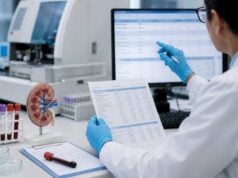
Neutrophil gelatinase-associated lipocalin, usually shortened to NGAL, is a kidney injury marker that can rise when kidney tubule cells are stressed or damaged. It is best known as an early marker of acute kidney injury, especially in hospital settings where kidney damage can develop quickly after sepsis, major surgery, shock, contrast dye, transplant complications, or exposure to kidney-toxic medicines. NGAL can be measured in urine or blood, and each sample type gives slightly different information.
Unlike creatinine, which often rises after kidney filtration has already fallen, NGAL may increase within a few hours of injury. That makes it useful as an early warning signal, but it is not a stand-alone diagnosis. A high NGAL result needs to be interpreted with urine output, creatinine, eGFR, blood urea nitrogen, electrolytes, symptoms, medications, infection status, and the clinical situation that led to testing.
- NGAL mainly measures kidney tubule stress or injury, not just kidney filtration.
- High NGAL can suggest acute kidney injury, especially after sepsis, surgery, contrast dye, shock, transplant, or kidney-toxic medicines.
- Urine NGAL often reflects local kidney tubule injury, while blood NGAL can also rise from inflammation, infection, and reduced kidney clearance.
- There is no single universal normal range for NGAL; results depend on the assay, sample type, age group, and clinical setting.
- NGAL may rise earlier than creatinine, but doctors still confirm kidney injury with standard kidney function tests and urine output.
- Urgent care matters when high NGAL occurs with low urine output, severe illness, swelling, shortness of breath, confusion, or rapidly worsening kidney tests.
Table of Contents
- What the NGAL Test Measures
- When an NGAL Test Is Ordered
- Urine NGAL vs Blood NGAL
- NGAL Results, Units, and Ranges
- Causes of High NGAL Levels
- How Doctors Interpret NGAL With Other Kidney Tests
- What to Do After an Abnormal NGAL Result
- Limitations and Common Mistakes
What the NGAL Test Measures
The NGAL test measures the amount of neutrophil gelatinase-associated lipocalin in urine, blood, or sometimes plasma. NGAL is also called lipocalin-2 or LCN2. It is a small protein made by several tissues, including neutrophils, which are a type of white blood cell, and cells lining the kidney tubules.
Kidney tubules are the tiny working channels that process filtered fluid after blood passes through the kidney’s filtering units. These tubules help reclaim water, sodium, bicarbonate, glucose, amino acids, and other substances the body needs. They are also vulnerable to low blood flow, inflammation, toxins, and infection. When tubular cells are injured, they can release NGAL into urine and blood.
This is why NGAL is often described as a “kidney injury marker.” It is different from a filtration marker. A filtration marker, such as creatinine, changes when the kidneys are not clearing waste from the blood as well as expected. NGAL can rise when structural injury is beginning, even before filtration markers clearly change.
NGAL became important because acute kidney injury can be hard to detect early. Serum creatinine may not rise until many hours or even days after injury begins. Creatinine also depends on muscle mass, hydration, age, medications, and baseline kidney function. Urine output can be helpful, but it may be affected by fluids, diuretics, catheter problems, and blood pressure changes. NGAL adds a different signal: it can point toward active tubular stress or damage.
NGAL is not only made in the kidneys. It can rise as part of the body’s response to inflammation, bacterial infection, sepsis, and some chronic diseases. This makes NGAL sensitive but not perfectly specific. A high value can be meaningful, but it does not automatically prove that the kidneys are the only source of the problem.
When an NGAL Test Is Ordered
NGAL is usually ordered when clinicians are worried about acute kidney injury, often shortened to AKI. Acute kidney injury means kidney function has worsened over hours to days. It can happen in people with previously normal kidneys or in people who already have chronic kidney disease.
The test is most useful when the risk of kidney injury is high and early action could change care. In many outpatient settings, NGAL is not part of routine screening. Standard kidney tests such as creatinine, eGFR, BUN, urinalysis, and electrolytes remain the usual first-line tests.
NGAL may be considered in settings such as:
- Intensive care monitoring after shock, sepsis, severe infection, respiratory failure, or major trauma
- Emergency evaluation when kidney injury is suspected but creatinine is not yet clearly abnormal
- After cardiac surgery, major vascular surgery, transplant surgery, or other high-risk operations
- After kidney transplant, especially when delayed graft function is a concern
- Before or after exposure to kidney-toxic medicines, including some antibiotics, chemotherapy drugs, antivirals, and calcineurin inhibitors
- Around contrast dye exposure in selected high-risk patients
- In children at risk for moderate or severe acute kidney injury, depending on the assay and local practice
NGAL can also appear in research panels with other kidney injury markers. For example, kidney injury molecule-1, or KIM-1, is another tubular injury marker used in some clinical and research settings. When available, KIM-1 testing may help characterize kidney tubule damage from a different angle.
In a typical hospital scenario, NGAL is not ordered by itself and then treated in isolation. A doctor may order it because a patient has low blood pressure, sepsis, rising creatinine, poor urine output, recent surgery, or exposure to a nephrotoxin. The result helps estimate risk, urgency, and whether kidney-protective steps should be intensified.
Urine NGAL vs Blood NGAL
NGAL can be measured in urine, serum, or plasma. The sample type matters because urine and blood NGAL do not always tell the same story.
Urine NGAL is often used as a more kidney-focused signal. When kidney tubule cells are injured, NGAL can appear directly in the urine. This can make urine NGAL helpful for detecting tubular injury before creatinine rises. It may be especially informative when a patient has a clear kidney stress event, such as cardiac surgery, sepsis, contrast exposure, or nephrotoxic medication use.
Blood NGAL can rise from kidney injury, but it can also rise because of systemic inflammation, infection, immune activation, and reduced kidney clearance. This does not make blood NGAL useless. In very sick patients, blood NGAL may still help identify higher-risk cases. But it may be harder to know how much of the increase comes from the kidney versus the rest of the body.
| Sample type | What it may reflect | Main strengths | Main cautions |
|---|---|---|---|
| Urine NGAL | NGAL released into urine from injured or stressed kidney tubule cells | Often more directly linked to tubular kidney injury | Can be affected by urinary tract infection, urine concentration, timing, and sample handling |
| Plasma or serum NGAL | NGAL circulating in blood from kidneys, neutrophils, inflammation, and other tissues | Useful when urine collection is difficult or urine output is very low | Can rise with sepsis, inflammation, chronic kidney disease, and non-kidney illness |
Urine NGAL may be reported as an absolute concentration, such as ng/mL, or adjusted to urine creatinine, such as ng/mg creatinine. Adjustment can help account for urine dilution. A very dilute urine sample can make a urine biomarker look lower, while a very concentrated sample can make it look higher. Some labs report both values, depending on the method.
Blood NGAL is usually reported as ng/mL or µg/L. These units are numerically equivalent: 1 ng/mL equals 1 µg/L. This is important because older papers, lab reports, and international sources may use different unit labels for the same concentration.
The best sample depends on the clinical question. If the question is “Are the kidney tubules showing early injury?” urine NGAL may be preferred. If the patient is producing little urine or urine collection is not practical, blood NGAL may be used. If the patient has sepsis or major inflammation, clinicians interpret both sample types with extra caution.
NGAL Results, Units, and Ranges
NGAL does not have one universal normal range that applies to every lab, every age group, and every clinical situation. This is one of the most important points about the test. Different assays use different antibodies, platforms, calibration methods, sample types, and reporting rules. A number that is “high” on one test may not have the same meaning on another.
Many NGAL results are reported in ng/mL. Some reports use µg/L, which is the same numerical value. For example, 100 ng/mL equals 100 µg/L.
A lab report may show a reference interval, a risk cutoff, or an interpretive comment. These are not the same thing. A reference interval describes values seen in a comparison group. A risk cutoff is chosen to help classify risk for a specific outcome, such as moderate to severe acute kidney injury within a defined time window. An interpretive comment may be based on the lab’s assay, validation studies, and intended use.
| Result pattern | Possible meaning | What usually happens next |
|---|---|---|
| Low or below cutoff | Lower risk of significant tubular injury at that time | Repeat kidney function tests if risk continues or symptoms change |
| Mildly elevated | Possible early kidney stress, inflammation, infection, CKD effect, or nonspecific rise | Review timing, symptoms, urine output, creatinine, eGFR, BUN, urinalysis, and medicines |
| Clearly elevated | Higher concern for active kidney injury or high-risk illness | Increase monitoring, avoid nephrotoxins when possible, assess fluids and blood pressure, repeat tests |
| Rising on repeat testing | Worsening or ongoing kidney stress is more likely | Escalate evaluation, check trends in creatinine and urine output, consider specialist input |
| Falling on repeat testing | Kidney stress may be improving, especially if other kidney tests stabilize | Continue follow-up until kidney function and urine output are stable |
Some assays and studies have used cutoffs in the range of about 100 to 150 ng/mL for early risk detection in selected settings. Other studies have used higher cutoffs, such as 300 ng/mL or more, when aiming for greater specificity. Higher cutoffs may reduce false positives but can miss milder or earlier injury. Lower cutoffs may catch more possible cases but can create more false alarms.
This is why a single NGAL value should not be treated like a simple normal-or-abnormal switch. The same value may mean different things in a child after surgery, an adult with sepsis, a person with chronic kidney disease, a kidney transplant recipient, or someone with a urinary tract infection.
A result is usually more useful when compared with timing. A urine NGAL of 160 ng/mL two hours after a kidney stress event may carry different meaning than the same result three days later during recovery. Repeating NGAL may help in some settings, but repeat testing is only useful when the result will change management.
Causes of High NGAL Levels
High NGAL means the body is producing or releasing more NGAL than expected, or the kidneys are clearing it less effectively. Kidney injury is a major cause, but it is not the only cause.
The most common kidney-related reason is acute tubular injury. This can happen when kidney tissue does not receive enough oxygen or blood flow, when inflammation damages tubule cells, or when medicines or toxins directly injure the kidney.
Common causes and settings linked with high NGAL include:
- Sepsis and severe infection. Infection can injure kidneys through inflammation, low blood pressure, microcirculation problems, and immune changes. Sepsis can also raise blood NGAL through non-kidney inflammatory pathways.
- Major surgery. Cardiac surgery, transplant surgery, vascular surgery, and long operations can reduce kidney blood flow or expose the kidneys to inflammatory stress.
- Shock or low blood pressure. Kidney tubules are sensitive to reduced perfusion, especially when low blood pressure lasts long enough to limit oxygen delivery.
- Nephrotoxic medicines. Aminoglycoside antibiotics, amphotericin B, cisplatin, some antivirals, calcineurin inhibitors, and high-risk medication combinations can injure kidney tubules.
- Contrast dye exposure. Some high-risk patients may develop kidney stress after iodinated contrast, especially with existing kidney disease, dehydration, diabetes, heart failure, or repeated exposures.
- Kidney transplant complications. NGAL may rise with delayed graft function, ischemia-reperfusion injury, rejection-related inflammation, or other transplant stressors.
- Chronic kidney disease. Baseline NGAL may be higher when kidney structure is already abnormal or filtration is reduced.
- Urinary tract infection or kidney infection. Infection in the urinary tract can raise urine NGAL and make interpretation harder.
- Inflammatory diseases and critical illness. NGAL behaves partly like an acute-phase protein, so systemic inflammation can raise levels.
- Heart failure or severe fluid imbalance. Reduced kidney perfusion and venous congestion can contribute to kidney stress.
High NGAL does not identify the exact cause by itself. It points to a risk pattern. For example, a patient with high NGAL after surgery may have early tubular stress from low blood pressure during the operation. A patient with high NGAL during sepsis may have both kidney injury and widespread inflammation. A patient with high urine NGAL and urinary symptoms may need evaluation for urinary tract infection as well as kidney injury.
NGAL also does not replace staging for acute kidney injury. AKI is usually staged using changes in creatinine and urine output. A high NGAL result may suggest injury before those criteria are met, but clinicians still track whether creatinine rises, urine output falls, potassium increases, acid-base balance worsens, or fluid overload develops.
How Doctors Interpret NGAL With Other Kidney Tests
NGAL is strongest when it is interpreted as part of a kidney risk picture. Doctors rarely make decisions from NGAL alone. They combine it with standard kidney function tests, the patient’s condition, and the timing of the suspected injury.
The most common comparison is with creatinine and eGFR. Creatinine reflects how well the kidneys are clearing a waste product from muscle metabolism. eGFR estimates filtration from creatinine, and sometimes cystatin C. NGAL reflects structural stress or injury, especially in tubules. A patient can have a high NGAL before creatinine rises because injury may begin before filtration falls enough to change the blood creatinine level.
This creates several possible patterns.
| NGAL | Creatinine or eGFR | Possible interpretation |
|---|---|---|
| High | Still normal or near baseline | Possible early tubular stress before filtration changes; repeat monitoring may be needed |
| High | Creatinine rising or eGFR falling | Higher concern for active acute kidney injury or worsening kidney function |
| Low | Creatinine rising | Consider non-tubular causes, delayed timing, hemodynamic changes, obstruction, lab variation, or another explanation |
| Falling | Creatinine still high | Tubular stress may be improving before filtration fully recovers |
BUN, or blood urea nitrogen, adds another angle. BUN can rise with kidney dysfunction, dehydration, high protein breakdown, gastrointestinal bleeding, steroid use, or low kidney blood flow. When NGAL is high and BUN is also rising, clinicians look closely at volume status, blood pressure, kidney perfusion, and possible AKI. A BUN test can be helpful, but it is less specific than many people assume.
Electrolytes are also important. Acute kidney injury can cause high potassium, low bicarbonate, high phosphorus, sodium problems, metabolic acidosis, and fluid overload. A kidney injury marker may warn that damage is developing, but electrolyte abnormalities often determine urgency. For example, a dangerously high potassium level can affect heart rhythm and may require immediate treatment. This is why NGAL is often interpreted beside an electrolyte panel.
Urinalysis can show protein, blood, casts, white blood cells, bacteria, or signs of inflammation. These clues help separate tubular injury from infection, glomerular disease, obstruction, or contamination. Imaging may be needed if obstruction is possible, especially in people with enlarged prostate, kidney stones, pelvic tumors, or sudden low urine output.
Cystatin C may be used when creatinine is hard to interpret because of low muscle mass, frailty, amputation, unusually high muscle mass, or major diet differences. A cystatin C test estimates filtration from a different marker and can sometimes clarify whether kidney function has truly changed.
Clinicians also look at the full kidney panel trend. A single value gives a snapshot; a trend tells the story. A kidney function blood test panel can show whether filtration, waste clearance, acid-base balance, and electrolytes are stable, improving, or worsening.
What to Do After an Abnormal NGAL Result
An abnormal NGAL result should lead to a focused review of kidney risk, not panic. The next step depends on how high the result is, whether it is rising, what sample type was used, and how sick the person is.
In a hospital, clinicians may respond to high NGAL by increasing kidney monitoring. This can mean repeating creatinine, checking urine output more closely, reviewing fluid balance, checking potassium and bicarbonate, and looking for low blood pressure, infection, bleeding, or medication-related causes. In some cases, doctors may repeat NGAL to see whether the signal is rising or falling.
Common kidney-protective steps include:
- Reviewing all medicines for nephrotoxic risk
- Adjusting drug doses for current kidney function
- Avoiding unnecessary nonsteroidal anti-inflammatory drugs, such as ibuprofen or naproxen, when kidney risk is high
- Treating sepsis or infection promptly
- Correcting low blood pressure or poor circulation
- Avoiding dehydration while also preventing fluid overload
- Using contrast dye only when needed and with appropriate precautions
- Monitoring potassium, bicarbonate, phosphorus, and urine output
- Consulting nephrology when kidney injury is severe, unclear, or worsening
For an outpatient who sees an NGAL result in a portal, the first step is to read the lab’s interpretive note and contact the ordering clinician. NGAL is not a routine wellness marker, and its meaning depends heavily on why it was ordered. A mildly high value after a urinary infection is different from a high and rising value after major surgery or chemotherapy.
Urgent medical attention is important when an abnormal NGAL result occurs with symptoms or signs that suggest clinically significant kidney injury. These include very low urine output, inability to urinate, severe dehydration, fainting, confusion, shortness of breath, chest pain, severe swelling, persistent vomiting or diarrhea, blood in the urine, fever with flank pain, or rapidly worsening creatinine and potassium.
Some people need follow-up after an episode of acute kidney injury even if they feel better. AKI can increase the risk of later chronic kidney disease. Follow-up may include repeat creatinine, eGFR, urine albumin, blood pressure checks, medication review, and sometimes nephrology care. If creatinine remains high, eGFR stays low, or urine abnormalities persist for months, the concern shifts from temporary injury toward chronic kidney disease or incomplete recovery.
Limitations and Common Mistakes
NGAL is promising, but it has real limits. The most common mistake is treating a high NGAL value as a diagnosis by itself. NGAL is a signal, not a final answer.
Another mistake is assuming every high value means acute kidney injury. NGAL can rise with systemic inflammation, sepsis, urinary tract infection, chronic kidney disease, and other illnesses. Blood NGAL is especially vulnerable to non-kidney influences because neutrophils and other tissues can release NGAL during inflammation.
A third mistake is comparing values across different labs or assay systems as if they were interchangeable. NGAL assays may use different platforms and calibration. A cutoff used in one hospital, study, age group, or device may not apply elsewhere. The lab’s own reference interval and clinical cutoff should carry more weight than a general number found online.
Timing can also mislead. NGAL may rise early and then fall while creatinine is still rising. Or it may be measured too late to show the earliest signal. A single result without timing can be hard to interpret. The question is not only “Is NGAL high?” but also “High compared with what baseline, after what exposure, at what time, and with what other kidney findings?”
Urine concentration matters too. Dehydration can concentrate urine, while high fluid intake or IV fluids can dilute it. Some labs adjust urine NGAL to urine creatinine, but this adjustment has its own limits, especially in people with abnormal muscle mass or changing kidney function.
NGAL should also not be used to ignore standard warning signs. Normal or low NGAL does not guarantee that kidney injury cannot develop later. If the patient remains septic, hypotensive, dehydrated, or exposed to nephrotoxins, kidney risk may continue. Repeat standard kidney tests may still be needed.
Finally, NGAL does not tell doctors when dialysis is needed. Dialysis decisions depend on the whole clinical picture, including potassium, acid-base status, fluid overload, uremic complications, urine output, toxin exposure, and overall illness. A high NGAL may suggest higher risk, but it does not replace bedside assessment.
References
- Biomarkers in acute kidney injury 2024 (Review)
- Advances in the diagnosis of early biomarkers for acute kidney injury: a literature review 2025 (Review)
- Neutrophil gelatinase-associated lipocalin (NGAL) in kidney injury – A systematic review 2022 (Systematic Review)
- Neutrophil Gelatinase-Associated Lipocalin: Biological Aspects and Potential Diagnostic Use in Acute Kidney Injury 2025 (Review)
- The Review of Current Knowledge on Neutrophil Gelatinase-Associated Lipocalin (NGAL) 2023 (Review)
- The NGAL Test for early diagnosis of acute kidney injury 2014 (Official Health Technology Briefing)
Disclaimer
NGAL results should be interpreted by a qualified clinician who knows the sample type, assay method, timing, symptoms, medications, and other kidney test results. A high NGAL level can suggest kidney stress or injury, but it does not identify the exact cause or replace urgent evaluation when kidney failure symptoms are present. Seek prompt medical care for very low urine output, severe illness, confusion, shortness of breath, chest pain, major swelling, or rapidly worsening kidney blood tests.