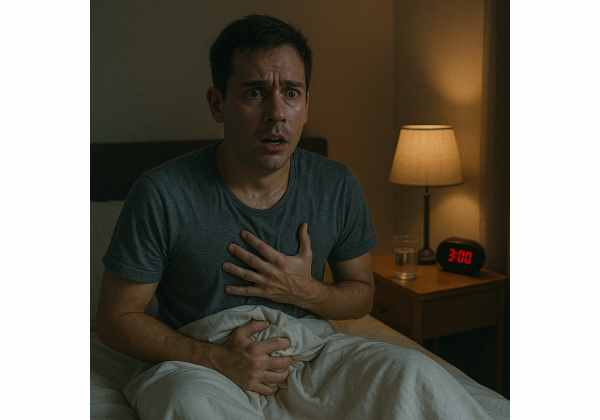
Waking suddenly in intense fear can be disorienting, especially when it happens from sleep with no obvious warning. A nocturnal panic attack can feel like a medical emergency: the heart races, breathing feels difficult, the body may shake or sweat, and the mind may jump quickly to the fear that something is seriously wrong.
Nocturnal panic attacks are panic attacks that occur during sleep, most often causing a sudden awakening with panic symptoms already underway. They are not the same as ordinary worry at bedtime, and they are not simply “bad dreams,” although they can be confused with nightmares, sleep terrors, sleep apnea, reflux, seizures, heart rhythm problems, and other conditions. Understanding the pattern matters because the right diagnostic context can prevent both missed medical problems and repeated fear of sleep.
What matters most during nighttime panic episodes:
- Nocturnal panic attacks usually involve abrupt awakening with intense fear and physical panic symptoms such as palpitations, shortness of breath, chest tightness, sweating, trembling, dizziness, nausea, chills, tingling, or fear of dying.
- They can occur without a remembered dream or obvious trigger, which makes them especially frightening and easy to misinterpret.
- Common look-alikes include nightmares, sleep terrors, obstructive sleep apnea, reflux, nocturnal seizures, medication or substance effects, and heart or lung conditions.
- Professional evaluation matters when attacks are new, recurrent, medically unusual, associated with chest pain or fainting, or causing avoidance of sleep.
- Nocturnal panic may occur on its own, but it is often discussed in relation to panic attacks, panic disorder, anxiety sensitivity, sleep disturbance, trauma symptoms, substance use, and medical conditions that produce panic-like sensations.
Table of Contents
- What Nocturnal Panic Attacks Are
- Symptoms and Signs at Night
- Conditions Confused With Nocturnal Panic
- Causes and Body Mechanisms
- Risk Factors and Associated Conditions
- Diagnostic Context and Red Flags
- Complications and Daily Effects
What Nocturnal Panic Attacks Are
A nocturnal panic attack is a panic attack that begins during sleep and wakes the person in a sudden state of fear or alarm. The episode is usually abrupt, intense, and physical, not simply a gradual buildup of worry while lying awake.
During a panic attack, the body’s threat-response system becomes highly activated. Heart rate, breathing, muscle tension, sweating, and alertness can surge quickly. At night, this activation can be especially confusing because the person may wake already in the middle of the episode, without the daytime context that might explain the fear.
Nocturnal panic is usually described as an unexpected event. A person may fall asleep normally, then wake suddenly with a pounding heart, a choking or smothering sensation, chest pressure, shaking, hot flashes or chills, nausea, dizziness, tingling, or a sense that death or loss of control is imminent. The fear often peaks quickly, then fades gradually, although the aftereffects can last longer than the peak of the attack.
Nocturnal panic attacks are closely related to panic attacks in general, but they have a distinct sleep context. Some people have both daytime and nighttime panic attacks. Others first notice panic symptoms at night and only later recognize similar patterns during the day. A single nighttime panic attack does not automatically mean a person has panic disorder. Panic disorder involves recurrent unexpected panic attacks along with ongoing worry about future attacks or behavior changes related to the attacks. For a diagnostic distinction, clinicians may consider whether the pattern fits panic disorder, another anxiety disorder, a sleep disorder, a medical condition, or a substance-related cause.
One reason nocturnal panic feels so alarming is that sleep removes the usual sense of control. The person may not remember any anxious thought before the episode. This can lead to understandable questions: “Why did this happen if I was asleep?” or “Was my body warning me about something dangerous?” Sometimes the answer is a panic attack; sometimes a medical or sleep-related trigger needs to be considered.
The term also differs from “nighttime anxiety.” Nighttime anxiety may involve lying awake with worry, rumination, dread, or a racing mind. Nocturnal panic is more sudden and episodic. It begins from sleep or at the transition out of sleep, and it has the full-body intensity of a panic attack. People who want to understand the broader difference between isolated panic episodes and a diagnosable anxiety pattern may find panic attack versus anxiety disorder a useful related distinction.
Symptoms and Signs at Night
The core sign of nocturnal panic is a sudden awakening with intense fear plus physical symptoms that rise quickly. The episode often feels out of proportion to the situation because there may be no obvious external danger.
Common physical symptoms include:
- Pounding, racing, or irregular-feeling heartbeat
- Chest tightness, chest pressure, or chest pain
- Shortness of breath, air hunger, choking, or smothering sensations
- Sweating, trembling, shaking, or feeling physically keyed up
- Dizziness, lightheadedness, faintness, or unsteadiness
- Nausea, abdominal distress, or a sudden need to use the bathroom
- Chills, hot flashes, flushing, or waves of heat
- Numbness, tingling, or pins-and-needles sensations
- Dry mouth, throat tightness, or difficulty swallowing
The mental and perceptual symptoms can be just as distressing. A person may wake with a fear of dying, fear of having a heart attack, fear of suffocating, fear of “going crazy,” or fear of losing control. Some people describe derealization, where the room feels unreal or dreamlike, or depersonalization, where they feel detached from themselves. These sensations can intensify the alarm because they make the episode feel unfamiliar and unsafe.
Nocturnal panic may also leave observable signs after the peak has passed. A person may sit upright suddenly, turn on lights, pace, check their pulse, repeatedly seek reassurance, avoid going back to sleep, or remain hyper-alert for another episode. The body may stay shaky or exhausted for minutes to hours. Some people describe a “panic hangover” the next day, with fatigue, sensitivity to body sensations, low mood, poor concentration, or fear that the attack will return.
The timing can vary. Many episodes occur after the person has already been asleep rather than during the first moments of lying down. Some people remember waking from deep sleep with no dream content. Others recall a vague unpleasant image or fear but not a structured nightmare. Because sleep stages are not visible to the person experiencing the attack, timing alone cannot confirm the diagnosis.
A useful clue is the pattern of symptoms. Panic symptoms tend to cluster across multiple body systems: heart, breathing, temperature, stomach, muscles, and perception. One symptom alone, such as waking with heartburn, coughing, or gasping, may suggest another sleep or medical condition. Still, overlap is common, and nighttime symptoms should not be assumed to be “only anxiety” when the pattern is new, severe, or medically concerning. A broader review of panic attack symptoms and causes can help clarify which symptoms commonly occur during panic episodes.
Conditions Confused With Nocturnal Panic
Nocturnal panic is commonly confused with other sleep, heart, breathing, neurological, and gastrointestinal problems. The confusion is understandable because many conditions can wake a person suddenly with fear, discomfort, or autonomic arousal.
The main distinction is that nocturnal panic is defined by a sudden panic episode during sleep, while many look-alikes begin with another primary event: airway obstruction, abnormal movement, dream-related fear, reflux, arrhythmia, or seizure activity. In real life, the boundary is not always obvious from symptoms alone.
| Condition | How it may resemble nocturnal panic | Clues that may point elsewhere |
|---|---|---|
| Nightmares | Waking frightened, upset, and physically activated | Clear dream recall, fear linked to dream content, easier orientation after waking |
| Sleep terrors | Sudden fear, sweating, rapid heartbeat, confusion, vocalizing, or movement | More common in childhood, limited recall, confusion during the event, difficult to fully awaken |
| Obstructive sleep apnea | Waking gasping, choking, panicked, sweaty, or with a racing heart | Loud snoring, witnessed pauses in breathing, morning headaches, daytime sleepiness |
| Nocturnal seizures | Sudden awakening, fear, confusion, unusual sensations, or body movements | Repetitive stereotyped episodes, tongue biting, injury, loss of awareness, unusual movements |
| Heart rhythm problems | Palpitations, chest discomfort, faintness, shortness of breath, fear | Irregular rhythm, fainting, exertional symptoms, known heart disease, family history of sudden cardiac death |
| Reflux or choking episodes | Waking suddenly with throat tightness, coughing, chest burning, or air hunger | Sour taste, burning pain, cough, symptoms after late meals or lying flat |
Nightmares usually involve remembered dream content. A person may wake terrified because something frightening happened in the dream. With nocturnal panic, the person often wakes in panic without a clear story attached. However, memory can be imperfect, and panic can occur after a disturbing dream, so this distinction is helpful but not absolute.
Sleep terrors are another common comparison. In sleep terrors, the person may appear intensely frightened, sit up, scream, sweat, or move around, but may be confused and hard to comfort. They often have little memory of the episode. Nocturnal panic more often involves clear awakening and later recall: the person knows they woke up terrified and remembers the physical symptoms.
Obstructive sleep apnea deserves special attention because choking or gasping can feel exactly like panic. The alarm may be a reaction to interrupted breathing rather than the primary event. People with snoring, witnessed pauses in breathing, morning headaches, high blood pressure, or daytime sleepiness may need sleep-focused assessment. Related diagnostic topics include home sleep apnea testing and what a sleep study measures.
Nocturnal seizures are less common than many sleep complaints, but they matter because they can be mistaken for panic or parasomnia. Episodes that are highly stereotyped, involve unusual movements, injuries, loss of awareness, or post-event confusion may prompt neurological evaluation. In some cases, clinicians consider an EEG test or other neurological workup based on the full history.
Causes and Body Mechanisms
Nocturnal panic attacks do not usually have one single cause. They are better understood as episodes in which the brain and body misread internal sensations as danger, often against a background of anxiety sensitivity, sleep disruption, stress biology, or other vulnerabilities.
The body continues to monitor breathing, heart rhythm, temperature, and internal signals during sleep. Small shifts in carbon dioxide, heart rate, muscle tension, reflux, or arousal can be interpreted by a sensitive threat system as urgent danger. In people prone to panic, that interpretation can trigger a rapid loop: a body sensation causes alarm, alarm increases physical arousal, and the stronger arousal confirms the fear that something is wrong.
Several mechanisms may contribute:
- Interoceptive sensitivity: heightened attention to body sensations, such as heartbeat, breathing, dizziness, or chest pressure.
- Catastrophic interpretation: rapid fear-based interpretation of sensations, such as “I am suffocating” or “I am having a heart attack.”
- Respiratory sensitivity: strong reactions to sensations of air hunger, breath restriction, or carbon dioxide changes.
- Autonomic arousal: activation of the sympathetic nervous system, including adrenaline-like effects on heart rate, sweating, trembling, and alertness.
- Sleep-state transitions: normal changes between sleep stages or brief arousals that become linked with panic sensations.
- Conditioned fear of sleep: repeated attacks can make the bed, bedroom, darkness, or falling asleep feel threatening.
The nighttime setting can intensify the experience. In darkness and silence, a racing heart or breathing sensation may stand out more sharply. The person may be groggy, which makes symptoms harder to interpret. There may also be fewer immediate distractions or reality checks. A symptom that might be noticed and dismissed during the day may feel ominous at 3 a.m.
Stress and chronic arousal can lower the threshold for panic. Ongoing work strain, relationship conflict, grief, trauma reminders, major life transitions, financial worries, or prolonged sleep deprivation may keep the nervous system on alert even when the person is trying to rest. This does not mean the attack is imaginary. The physical symptoms are real; the question is what system is generating them and whether other medical causes also need consideration.
Nocturnal panic can also become self-reinforcing. After one frightening episode, a person may begin monitoring for signs that another attack is coming. That monitoring can make normal sensations feel suspicious. Over time, fear of the next episode may become part of the cycle. This pattern is related to broader anxiety concepts such as fight-or-flight activation and anxiety sensitivity, both of which are also discussed in adrenaline rush anxiety symptoms.
Risk Factors and Associated Conditions
Nocturnal panic is more likely when panic vulnerability, sleep disturbance, stress load, and certain medical or psychiatric conditions overlap. Risk does not mean certainty, but it can help explain why episodes emerge during some periods of life and not others.
Panic disorder is one of the most important associations. People with recurrent unexpected panic attacks may have attacks during the day, at night, or both. The diagnostic focus is not only the attack itself but also the ongoing concern about future attacks and changes in behavior. Clinicians assessing recurrent episodes may look at symptom frequency, triggers, avoidance, impairment, substance use, medical history, and whether the panic is better explained by another condition. A more testing-focused explanation is available in panic disorder assessment.
Anxiety sensitivity is another major risk factor. This means a person is especially likely to fear the sensations of anxiety themselves. For example, a racing heart may be interpreted as dangerous rather than uncomfortable. A brief breath change may be interpreted as suffocation. This sensitivity can make normal nighttime body shifts feel threatening.
Sleep problems can also raise vulnerability. Insomnia, irregular sleep schedules, shift work, nightmares, sleep deprivation, and fragmented sleep may increase emotional reactivity and reduce the brain’s ability to interpret sensations calmly. Poor sleep can also worsen daytime anxiety, creating a two-way relationship between sleep disruption and panic-like symptoms.
Other associated factors include:
- Personal or family history of panic attacks, panic disorder, or other anxiety disorders
- High stress, recent trauma, grief, or major life change
- Depression, post-traumatic stress symptoms, obsessive fears, or health anxiety
- Substance use or withdrawal, including alcohol, cannabis, stimulants, sedatives, or other drugs
- High caffeine intake or sensitivity to stimulants
- Certain medications that can affect heart rate, sleep, breathing, or arousal
- Thyroid disease, asthma, vestibular disorders, anemia, arrhythmias, reflux, or other medical conditions that can create panic-like sensations
- Perimenopause, hormonal shifts, or other physiologic changes that affect sleep and body temperature
Trauma-related symptoms can complicate the picture. Some people wake in panic because of nightmares, body memories, hypervigilance, or a nervous system that remains primed for threat during sleep. Others have panic-like awakenings without clear trauma content. The distinction matters because the same nighttime fear may come from different pathways.
Health anxiety may also develop after repeated nocturnal panic. A person may begin checking pulse, oxygen readings, blood pressure, or online symptom descriptions after each episode. While it is reasonable to take new or severe symptoms seriously, repeated checking can sometimes strengthen fear of normal body sensations. The diagnostic challenge is to rule out important medical causes without turning every harmless sensation into a new emergency.
Diagnostic Context and Red Flags
Nocturnal panic is diagnosed by pattern, history, and exclusion of more likely medical or sleep-related causes when needed. The goal is not to dismiss symptoms as anxiety, but to understand whether the episodes fit panic, another sleep disorder, a medical condition, or a combination.
A clinician may ask when the episodes began, how often they occur, how long they last, what symptoms appear first, whether there is dream recall, whether the person wakes gasping or choking, and whether daytime panic attacks occur. They may also ask about snoring, witnessed breathing pauses, reflux, chest pain, fainting, medications, caffeine, alcohol, cannabis, stimulants, withdrawal states, trauma history, and family history of heart rhythm problems or seizures.
The description from a bed partner can be valuable. A person who has nocturnal panic may report a clear sudden awakening and recall the fear afterward. A partner may notice whether the person was confused, difficult to awaken, moving repetitively, gasping, snoring, or behaving in a way that suggests parasomnia or seizure activity.
Screening tools can support evaluation, but they do not replace diagnosis. Anxiety questionnaires may help identify panic severity, generalized anxiety, depression, trauma symptoms, or sleep-related impairment. They are best interpreted alongside a clinical interview and medical context. For a broader view of how anxiety is screened, see anxiety screening.
Some symptoms call for urgent medical evaluation rather than watchful waiting. This is especially true when the episode is new, severe, or medically atypical.
| Symptom or situation | Why it matters |
|---|---|
| Chest pain, pressure, or pain spreading to the arm, jaw, neck, back, or shoulder | Can resemble panic but may also signal a heart-related emergency |
| Fainting, near-fainting, or collapse | May suggest heart rhythm, neurological, blood pressure, or other medical causes |
| Severe shortness of breath, blue lips, or persistent low oxygen readings | May indicate breathing, heart, or airway problems |
| New neurological symptoms such as weakness, confusion, seizure-like movements, or trouble speaking | May require urgent neurological assessment |
| Suicidal thoughts, self-harm urges, or feeling unable to stay safe | Requires immediate mental health crisis evaluation |
| First panic-like episode after starting, stopping, or changing a medication or substance | Medication effects, withdrawal, or substance reactions may be involved |
Chest symptoms deserve particular care because panic and heart problems can overlap. Panic can cause chest tightness, palpitations, shortness of breath, and fear of dying, but those same symptoms can also occur in medical emergencies. People with unclear or severe chest symptoms may need emergency assessment; a related diagnostic comparison is panic attack versus heart attack. For broader urgent-symptom context, see when to go to the ER for mental health or neurological symptoms.
Complications and Daily Effects
The main complications of nocturnal panic come from fear of recurrence, sleep disruption, and misinterpretation of body sensations. Even when the attacks are not medically dangerous, their impact can be substantial.
One common effect is sleep avoidance. A person may delay bedtime, sleep with lights on, avoid sleeping alone, keep checking the body before bed, or stay awake until exhaustion. These behaviors are understandable after frightening awakenings, but they can gradually weaken sleep quality and increase fatigue. Poor sleep can then make the nervous system more reactive, creating a cycle of panic and sleep loss.
Daytime functioning may also suffer. Repeated nocturnal panic can contribute to tiredness, irritability, poor concentration, memory lapses, reduced work performance, and lower stress tolerance. Some people feel embarrassed or frustrated because the attacks happen when they are supposed to be resting. Others become preoccupied with whether the next night will be the same.
Health anxiety can become a major complication. Because nocturnal panic often includes chest, breathing, dizziness, and neurological-like sensations, a person may repeatedly fear a hidden disease. This can lead to frequent urgent visits, repeated reassurance seeking, body checking, or avoidance of exercise and normal activities that raise heart rate. Medical evaluation is appropriate when symptoms require it, but the ongoing fear loop can become a separate burden.
Nocturnal panic can also contribute to avoidance beyond sleep. Some people avoid travel, hotels, staying with others, overnight work, or situations where they fear being unable to get help during an attack. In more severe patterns, fear of panic symptoms can overlap with agoraphobic avoidance, where the person avoids places or situations because escape or help might feel difficult.
Mood can be affected as well. Chronic sleep disruption and fear of recurrence can contribute to demoralization, irritability, sadness, or a sense of being unsafe in one’s own body. People may begin to lose confidence in sleep, health, or independence. If panic attacks occur alongside depression, trauma symptoms, substance use, or suicidal thoughts, the overall risk picture becomes more serious and deserves careful professional assessment.
The most important practical point is that nocturnal panic should be taken seriously without assuming the worst. The symptoms are real, and the fear is real. At the same time, recurrent panic-like awakenings have a broad differential diagnosis. A careful history can often clarify whether the pattern is most consistent with panic, a sleep disorder, a medical condition, or overlapping contributors. That clarity is what helps prevent both unnecessary alarm and missed warning signs.
References
- Panic Disorder 2025 (Review)
- Generalized Anxiety Disorder and Panic Disorder in Adults 2022 (Review)
- Biobehavioral approach to distinguishing panic symptoms from medical illness 2024 (Review)
- Insomnia, anxiety and related disorders: a systematic review on clinical and therapeutic perspective with potential mechanisms underlying their complex link 2024 (Systematic Review)
- Assessment and treatment of nocturnal panic attacks 2005 (Review)
- Sleep Terrors: An Updated Review 2020 (Review)
Disclaimer
This article is for general educational purposes only and is not a substitute for professional medical advice, diagnosis, or treatment. Sudden nighttime chest pain, fainting, severe breathing difficulty, seizure-like symptoms, or thoughts of self-harm should be assessed urgently by qualified professionals.
Thank you for taking the time to read this sensitive topic; sharing it may help someone recognize when nighttime panic symptoms deserve careful evaluation.