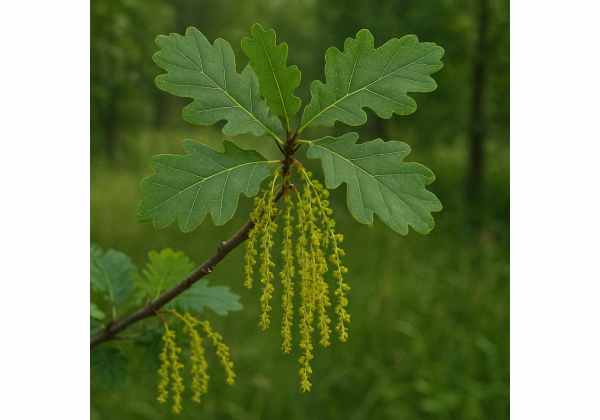
Oak bark is one of the classic European herbal remedies for irritated, overactive, or “too moist” tissues. Sourced mainly from Quercus robur and closely related oaks, the bark is valued for its high tannin content, which gives it a distinctly astringent action. In practical terms, that means it can help tighten superficial tissues, reduce excess secretions, and temporarily calm mild irritation. Traditional use has focused on a few specific situations rather than broad all-purpose wellness claims: short-term support for mild diarrhea, soothing inflamed skin or oral tissues, and relieving itching or burning linked with hemorrhoids after serious causes have been ruled out. Oak bark is usually prepared as a decoction, rinse, compress, or bath additive, though some forms are taken orally for brief periods. Its long history, combined with modern interest in its polyphenols, makes it a good example of a traditional remedy that still has a place when used carefully. The key is to match the right preparation to the right problem, keep use short term, and respect its safety limits.
Key Insights
- Oak bark is best known for short-term relief of mild diarrhea and minor skin or oral irritation.
- Its tannin-rich profile gives it a strong astringent effect that helps dry and calm irritated tissues.
- A common adult oral decoction is 3 g of oak bark in 250 mL of water, taken three times daily.
- It should generally be avoided during pregnancy, breastfeeding, and in people under 18.
- External bath use is not suitable for open wounds, large skin injuries, or infected skin.
Table of Contents
- What oak bark is and how it has been used
- Key ingredients and medicinal properties of oak bark
- Oak bark health benefits that make the most sense
- Practical uses for skin, mouth, hemorrhoids, and diarrhea
- Dosage, preparation, and how long to use it
- Safety, side effects, interactions, and who should avoid it
- What current research says and where the limits are
What oak bark is and how it has been used
Oak bark in herbal medicine refers to the dried bark of selected oak species, especially Quercus robur, Quercus petraea, and Quercus pubescens. It is not simply any bark from an oak tree. The medicinal bark is usually collected from younger branches, where the concentration of active compounds is more suitable for herbal use. In traditional European phytotherapy, this bark has long been valued for one main quality: it is strongly astringent. That makes it useful when tissues are irritated, inflamed, damp, or producing too much secretion.
Historically, oak bark was used in practical, symptom-based ways. Herbalists turned to it for brief digestive upsets marked by loose stools, for inflamed gums or mouth tissues, for irritated skin that felt moist or weepy, and for external hemorrhoid discomfort. These uses all share a common logic. Oak bark is less about nourishing or toning the body over time and more about restoring control when tissues feel loose, inflamed, raw, or overactive.
This traditional profile helps explain why oak bark remains relevant today. It fits situations where a short, focused intervention is more appropriate than a daily supplement. A person with mild diarrhea after a temporary irritation may use it very differently from someone seeking help for recurrent bowel disease. The first case matches traditional oak bark use; the second usually needs proper medical evaluation. The same is true for skin care. Oak bark can be sensible for minor superficial irritation, but it is not meant to replace treatment for severe dermatitis, infected wounds, or unexplained rashes.
It is also useful to understand what oak bark is not. It is not primarily used as a tonic herb, an adaptogen, or a broad anti-aging botanical. It is also not famous for salicylate-like pain relief in the way willow bark is often discussed. Oak bark has a narrower but clearer identity. Its strength lies in targeted local action, especially where there is excess moisture, irritation, or mild inflammation.
That focused role is part of its appeal. Many traditional remedies become confusing when people expect them to do too much. Oak bark tends to perform best when expectations stay grounded. If the goal is to calm mild irritation, reduce secretions, and create a temporary protective effect on tissues, it makes excellent sense. If the goal is long-term disease management, it is usually the wrong tool. That distinction is the starting point for using oak bark well.
Key ingredients and medicinal properties of oak bark
The most important compounds in oak bark are tannins. These large polyphenolic molecules are responsible for the bark’s strong astringent taste and much of its medicinal behavior. In simple terms, tannins interact with proteins on the surface of tissues. This can make irritated areas feel tighter, less swollen, and less prone to excessive fluid loss. It also helps explain why oak bark has traditionally been used for weeping skin, mild diarrhea, and inflamed oral tissues.
Oak bark contains more than one kind of tannin. It includes ellagitannins, gallotannins, and related phenolic compounds, along with flavonoids and phenolic acids. Together, these substances give the bark a broad phytochemical profile. Tannins usually get the most attention because they drive the bark’s classic astringent effect, but the supporting polyphenols also matter. They are part of the reason oak bark has attracted interest for antioxidant, anti-inflammatory, and antimicrobial activity in laboratory settings.
Its medicinal properties can be understood through four main actions.
- Astringent action: This is the defining property. It helps tighten superficial tissues, reduce excess secretions, and form a temporary protective layer over irritated surfaces.
- Mild anti-inflammatory support: Oak bark may help calm local irritation in the skin, mouth, and anorectal area.
- Antimicrobial potential: Tannins and related compounds have shown activity against certain microorganisms in laboratory research, especially in contexts relevant to skin care.
- Antioxidant activity: Oak bark polyphenols can help neutralize oxidative stress in experimental models, which may support tissue protection.
These properties explain why oak bark is so often used externally. A rinse, compress, or partial bath lets the bark work directly where irritation is occurring. This local application matches the plant’s chemistry very well. Internally, the same astringent action can help in mild diarrhea, but that use is usually kept brief because strong tannin-rich herbs are not meant for indefinite oral use.
Oak bark is often compared with other tannin-rich botanicals such as witch-hazel or tormentil. The overlap is real, but oak bark has its own place. Witch hazel is widely recognized for topical use, while oak bark bridges both external care and limited internal digestive use. That makes it versatile, but also more dependent on correct dosing and preparation.
A helpful way to think about oak bark is that it is a “control” herb. It helps rein in excess moisture, looseness, and irritation. It is less suitable when tissues already feel dry, cracked, or depleted. In those situations, a strongly astringent herb can feel too drying. Understanding that basic medicinal personality makes its traditional uses much easier to grasp.
Oak bark health benefits that make the most sense
When people search for oak bark benefits, they often encounter long lists that make the herb sound broader than it really is. A more useful approach is to focus on the benefits that best match both tradition and modern understanding of the bark’s chemistry. Oak bark is most convincing when used for mild, short-term issues involving inflammation, excess fluid, or local irritation.
One of its clearest benefits is support for mild diarrhea. The bark’s astringent compounds may help reduce fluid loss and calm irritated intestinal tissues during short-lived digestive upset. This does not mean oak bark is appropriate for all diarrhea. It is not a substitute for medical care when symptoms are severe, prolonged, recurrent, accompanied by blood, or linked with fever or dehydration. Still, for brief, uncomplicated diarrhea, its traditional use is sensible and well established.
A second important benefit is relief for minor skin inflammation. Oak bark is especially suited to skin that feels irritated and damp rather than dry and flaky. Its traditional use includes washes, rinses, baths, and compresses for minor superficial irritation. The bark’s astringent nature may help reduce oozing and leave the skin feeling calmer and less reactive.
A third benefit is soothing minor oral irritation. Used as a gargle or rinse, oak bark decoction can help calm inflamed mouth tissues. This makes it relevant for mild irritation of the gums or oral mucosa, though it should not be used to delay dental care when pain, infection, or ulceration is significant.
Another recognized use is symptomatic relief of itching and burning associated with hemorrhoids. Here again, oak bark works as a supportive local remedy. It may help calm irritated tissue and reduce discomfort, particularly when used in baths or rinses. It is not a cure for hemorrhoids themselves, and it is not suitable when bleeding or severe symptoms are present without proper evaluation.
What ties these benefits together is not a single disease category but a single tissue pattern. Oak bark tends to make the most sense when tissues are inflamed, irritated, and producing too much moisture or secretion. That is why its benefits look connected across gut, skin, mouth, and anorectal use.
For readers exploring other astringent digestive botanicals, tormentil is another herb sometimes discussed in similar contexts. Even so, oak bark stands out because it combines digestive, topical, and oromucosal relevance within one traditional remedy. Its real value lies in that precise, symptom-matched usefulness, not in exaggerated claims.
Practical uses for skin, mouth, hemorrhoids, and diarrhea
Oak bark works best when the form of the remedy matches the place where the symptom is happening. This sounds simple, but it is where many herbal mistakes begin. People sometimes drink a tea for a problem better suited to a bath, or they use an external rinse when what they really need is medical assessment. Oak bark is a practical herb, and practical use matters.
For mild diarrhea, oak bark is usually taken orally as a decoction or in a prepared product such as tablets, capsules, or a dry extract. This is the most structured internal use. It should be viewed as a short-course response to a temporary problem, not a daily digestive habit. If loose stools keep returning, last more than a few days, or involve blood, weakness, or fever, the situation is no longer appropriate for simple self-treatment.
For mouth and throat irritation, a cooled decoction can be used as a rinse or gargle. This route makes sense because oak bark acts locally. It comes into direct contact with the inflamed tissues and can briefly tighten, soothe, and protect them. It is more aligned with the herb’s nature than swallowing repeated doses for a problem that is mainly in the mouth.
For minor skin irritation, external preparations are often the best choice. Washes, compresses, rinses, and partial baths allow the bark to act where the problem is. Oak bark tends to be most useful when the skin feels mildly inflamed and moist. If the skin is already very dry, raw, or cracked, the bark may feel overly drying. In that kind of situation, some people may prefer a gentler soothing herb such as calendula.
For hemorrhoid-related itching and burning, oak bark is typically used in sitz baths, partial baths, or local rinses. The intention is to reduce irritation, not to self-manage persistent anorectal symptoms indefinitely. If discomfort is severe, if there is bleeding, or if symptoms do not improve, professional evaluation is important.
A few practical habits improve results:
- Choose the simplest form that matches the symptom location.
- Use measured amounts rather than improvised handfuls.
- Keep treatment short and purposeful.
- Stop if irritation worsens or the condition feels more serious than expected.
Oak bark is not a glamorous remedy, but it is dependable when used this way. It does not need to be trendy to be useful. In fact, its value lies in old-fashioned precision. It can be a very sensible herb for a small group of specific problems, provided it is used with restraint and good judgment.
Dosage, preparation, and how long to use it
Oak bark dosage is best understood by indication. There is no single ideal “daily amount” for everyone because the herb is used in several different ways. The right dose depends on whether the goal is oral use for mild diarrhea, a rinse for the mouth, or external use for skin or hemorrhoid discomfort.
For adult oral use in mild diarrhea, a commonly cited traditional preparation is 3 g of comminuted oak bark in 250 mL of water, taken three times daily. Powdered bark in capsules or tablets is also used, often at 1 g three times daily, and some dry extract preparations are taken at 140 mg four times daily. These figures show that oak bark is used in relatively defined, measured amounts rather than loosely as a casual tea.
For oromucosal use, such as mouth rinses or gargles, a decoction around 20 g/L is a traditional reference point. This stronger liquid is intended for local contact rather than everyday sipping.
For external use on skin or for hemorrhoid-related discomfort, a decoction for bath preparation may use 5 g of comminuted bark per 1 L of water, with a bath or partial bath duration of about 20 minutes. Topical rinses or poultice-style applications may be used several times daily, while a full or partial bath is usually used once daily.
Preparation matters. Oak bark is usually made as a decoction, not just a light infusion. Because bark is dense and woody, simmering is generally needed to extract its tannins effectively. A typical household method is:
- Measure the required amount of bark.
- Add it to cold water.
- Bring it gently to a boil.
- Simmer briefly.
- Strain and cool as needed for the intended use.
Duration is one of the most important parts of safe use. For mild diarrhea, oak bark should generally not be used for more than 3 days without medical advice. For minor skin inflammation, oral irritation, or hemorrhoid-related symptoms, use is usually limited to 1 week unless a clinician advises otherwise. Those time limits reflect the herb’s role as a short-term traditional remedy.
Timing with other medicines also deserves attention. Because tannin-rich preparations may interfere with the absorption of other oral products, it is sensible to separate oak bark from medicines by at least 1 hour before or after. This is a small detail, but it can make a practical difference.
The overall dosing principle is simple: use the smallest appropriate amount for the shortest useful time. Oak bark is not a “more is better” herb. It works best when it is measured, matched, and temporary.
Safety, side effects, interactions, and who should avoid it
Oak bark is a traditional remedy with a fairly clear safety profile, but that does not mean it is suitable for everyone. Its strongest safety advantage is that it is usually used briefly. Problems are more likely when people ignore contraindications, use it too long, or rely on it when symptoms suggest a more serious condition.
The main groups who should generally avoid oak bark include:
- people who are pregnant
- people who are breastfeeding
- children and adolescents under 18
- anyone with a known allergy or hypersensitivity to oak bark or similar preparations
For external bath use, there are also specific situations where it is not appropriate. Oak bark bath preparations should not be used on open wounds, large skin or mucosal injuries, or infected skin and mucosa. In these settings, self-treatment may be unsuitable, and an astringent bath is not the right first choice.
There are also warning signs that should stop self-care and prompt medical advice. These include:
- bloody stools
- diarrhea that is recurrent or severe
- rectal bleeding
- worsening pain
- fever
- signs of dehydration
- skin symptoms that are spreading, infected, or not improving
Side effects are not especially common, but allergic reactions can occur. Some people may also notice digestive discomfort with oral use. Because oak bark is rich in tannins, it can feel too drying or irritating if used in the wrong context or for too long.
Interactions mainly matter with oral use. Tannin-rich herbal products may reduce or delay the intestinal absorption of other medicines. For that reason, oak bark should not be taken at exactly the same time as prescription drugs or important supplements. Leaving at least an hour on either side is a prudent approach.
The herb’s astringency also helps explain why it is not ideal for every kind of irritation. Some people assume that any inflamed tissue needs a drying herb, but that is not always true. If a problem is marked more by dryness, fragility, or a need for soothing protection, a demulcent herb such as slippery elm may fit better in internal use, depending on the situation.
The safest mindset is to treat oak bark as a precise tool, not a general answer. It can be very helpful within its traditional lane, but it should not be used to postpone care when symptoms are persistent, unexplained, or clearly more serious than mild self-limited irritation.
What current research says and where the limits are
Current research on oak bark is promising, but it is important to interpret it carefully. Much of the herb’s accepted use still rests on long-standing traditional practice rather than large modern clinical trials. That does not weaken its traditional role, but it does shape how confidently claims should be made. Oak bark is best supported as a plausible, targeted herbal option for short-term symptom relief, especially where its tannin profile fits the problem.
Modern laboratory and review literature supports several aspects of the traditional picture. Researchers have described oak bark and related European tree barks as rich in antioxidant polyphenols, with noteworthy antimicrobial and dermal relevance. Studies have also explored wound-healing related behavior, inflammation-modulating effects, and inhibitory activity against certain bacteria that matter in skin care. This gives oak bark a solid mechanistic foundation for topical interest.
That said, mechanistic support is not the same thing as strong clinical proof. A bark extract may show antioxidant activity in a test system or help cell migration in an experimental model, yet still lack robust human evidence for a specific product and condition. This is why it is more honest to describe oak bark as a traditional remedy with supportive modern research than as a clinically settled mainstream treatment.
This limit matters most when people start stretching the herb beyond its natural scope. Oak bark is not especially well positioned as a long-term supplement for chronic inflammatory disease, immune dysfunction, or generalized gut health. Its best-supported uses remain narrow, local, and short term. The fact that it has interesting polyphenols does not automatically justify wider claims.
Still, the available research is not trivial. It helps explain why oak bark remained in herbal medicine for so long. Astringent plants often survived in traditional practice because people could feel their effects directly. With oak bark, modern phytochemistry helps explain that sensory experience. The herb does tighten tissues. It does have polyphenols that may support antioxidant and antimicrobial actions. It does make sense for carefully selected mild conditions.
Compared with highly standardized modern supplements such as pine bark extract, oak bark remains closer to classical herbalism. That is not a weakness. It simply means expectations should stay aligned with its tradition. It is a practical bark remedy, not a fashionable universal extract.
The most balanced conclusion is that oak bark deserves respect, but also restraint. Its research story supports its classic uses more than it supports broad reinvention. Used thoughtfully, that is more than enough.
References
- Final community herbal monograph on Quercus robur L., Quercus petraea. (Matt.) Liebl., Quercus pubescens Willd., cortex 2011 (Guideline)
- Addendum to Assessment report on Quercus robur L., Quercus petraea (Matt.) Liebl., Quercus pubescens Willd., cortex 2020 (Assessment Report)
- Antibacterial Activity of Medicinal Plants and Their Constituents in the Context of Skin and Wound Infections, Considering European Legislation and Folk Medicine—A Review 2021 (Review)
- Antioxidative and Antimicrobial Evaluation of Bark Extracts from Common European Trees in Light of Dermal Applications 2023 (Review)
- Leveraging crude extracts from European tree bark to combat oxidative stress, enhance wound healing, and inhibit pathogenic bacterial growth 2025 (Experimental Study)
Disclaimer
This article is for educational purposes only and is not a diagnosis, treatment plan, or substitute for professional medical advice. Oak bark may be appropriate for brief self-care in mild situations, but persistent diarrhea, bloody stools, rectal bleeding, severe pain, fever, suspected infection, pregnancy, breastfeeding, and use in children require added caution or medical guidance. Always speak with a qualified healthcare professional before using oak bark if you take prescription medicines, have a chronic condition, or are unsure whether your symptoms are appropriate for self-treatment.
Share this article on Facebook, X, or your preferred platform if you know someone looking for a grounded and practical guide to oak bark.