Panax ginseng has a long history of use for stamina, recovery, and resilience, but modern interest has shifted toward a more specific question: can it meaningfully support the brain? That question is worth asking because Panax ginseng is not just a traditional tonic. Its active compounds, called ginsenosides, appear to influence stress pathways, inflammation, circulation, and neurotransmitter signaling in ways that could matter for attention, mental fatigue, and cognitive aging. At the same time, Panax ginseng is often marketed too broadly. It is not a cure for burnout, not a substitute for sleep, and not a proven treatment for depression or dementia. The evidence is promising in some areas, mixed in others, and highly dependent on the extract used, the dose, and the person taking it. This guide explains how Panax ginseng works, where the human evidence looks strongest, who may benefit most, how to dose it more thoughtfully, and which side effects, interactions, and quality issues deserve attention before you try it.
Table of Contents
- How Panax Ginseng Affects the Brain
- What the Cognitive Evidence Shows
- Stress Mood and Mental Energy
- Who May Benefit Most
- Dosage Forms and Timing
- Safety Side Effects and Interactions
How Panax Ginseng Affects the Brain
Panax ginseng is best understood as a biologically active herbal medicine rather than a simple wellness ingredient. Its main compounds, ginsenosides, seem to act on several systems that influence mental performance and long-term brain health. That broader activity helps explain why Panax ginseng is studied in areas as different as memory, fatigue, stress, glucose control, inflammation, and vascular function.
Unlike a stimulant, Panax ginseng does not work by sharply pushing the nervous system in one direction. Its effects appear more regulatory than explosive. In some people, that feels like steadier focus, less mental weariness, or greater resistance to stress-related cognitive drag rather than a dramatic burst of energy.
Several proposed mechanisms help explain its relevance to brain health:
- Modulation of neurotransmitter systems involved in attention and mood
- Effects on the hypothalamic-pituitary-adrenal axis, which shapes stress responses
- Antioxidant and anti-inflammatory actions
- Support for cerebral blood flow and vascular function
- Possible influence on neurotrophic signaling and neuronal resilience
This combination matters because poor mental performance rarely comes from one single pathway. A person can feel mentally slowed down because of sleep debt, inflammation, metabolic strain, chronic stress, low mood, or vascular problems. A compound that touches several of those systems at once may therefore offer broader support than one that targets only a single receptor.
Still, “broad support” is not the same as “strong proven benefit.” Panax ginseng has a credible mechanism profile, but mechanistic plausibility is only the starting point. Many substances look impressive in cell and animal models without producing large, consistent effects in real people. That is especially true when extracts differ widely from one study to another.
This is also why product identity matters so much. Panax ginseng, Korean red ginseng, white ginseng, whole-root powders, and standardized extracts are not interchangeable in practice. Some studies use specific extracts with defined ginsenoside content, while many supplements on the market provide much less clarity. Without that standardization, it becomes harder to predict what a product will actually do.
A useful way to frame Panax ginseng is as a stress-and-resilience herb with cognitive relevance, not as a guaranteed nootropic. It may help some people think and perform better, especially under strain, but it is unlikely to create meaningful benefits if the real driver of poor cognition is something more basic and persistent, such as unaddressed sleep loss or chronic overload. That is why it fits better alongside broader work on stress and brain function than as a stand-alone answer to every focus problem.
What the Cognitive Evidence Shows
The cognitive evidence for Panax ginseng is encouraging enough to take seriously, but not clean enough to justify sweeping claims. In systematic reviews and clinical studies, the strongest signals tend to show up in memory-related tasks, selected measures of reaction time, and short-term improvements in mental performance under demanding conditions. Effects on global cognition, attention, and executive function are less consistent.
That pattern is important because it keeps expectations realistic. Panax ginseng is not best described as a universal “brain booster.” It seems more likely to help certain domains, in certain people, under certain conditions.
The research suggests a few broad points:
- Memory may be the most responsive cognitive domain.
- Benefits in healthy adults appear modest and variable.
- Short-term effects can differ from longer-term effects.
- Older adults with subjective memory complaints or mild impairment may have more room to benefit than young healthy adults.
- Study quality, sample size, and extract standardization remain major limitations.
This means a person taking Panax ginseng for “focus” may or may not notice a meaningful change. Some people may feel mentally steadier during demanding tasks. Others may notice very little. That does not mean the herb is ineffective. It means the evidence supports careful optimism, not certainty.
One reason people overestimate what Panax ginseng can do is that cognitive problems often have many causes. If the real issue is distraction from phone use, poor sleep, anxiety, or burnout, a modest herbal effect may be drowned out. In contrast, a person experiencing stress-related mental fatigue or age-related slowing may be more likely to notice a difference.
The distinction between acute and long-term use matters too. Some trials suggest single doses can influence psychomotor performance or aspects of cognition for a limited period. Other studies suggest longer-term intake may help older adults with subjective memory impairment or mild cognitive impairment. But even there, the evidence is not yet strong enough to treat Panax ginseng as a standard cognitive therapy.
For people worried about dementia, the evidence should be framed even more carefully. Panax ginseng is being studied in early Alzheimer disease and cognitive decline, but it is not an established replacement for medical treatment or prevention strategies. The basics still matter more: physical activity, vascular risk control, hearing support, sleep, and the habits linked to Alzheimer prevention through lifestyle.
So what is the most honest summary? Panax ginseng may provide modest cognitive support, especially for memory and stress-related mental strain, but the effect size is likely to be smaller and less predictable than supplement marketing suggests. It is a plausible adjunct, not a magic solution.
Stress Mood and Mental Energy
This is where Panax ginseng often makes the most intuitive sense. Many people do not want a supplement because they feel intellectually impaired. They want help because stress makes them feel mentally flattened, more irritable, less resilient, and harder to start or sustain work. Panax ginseng may fit that use case better than the narrow “memory pill” label implies.
A growing body of research suggests Panax ginseng may help reduce perceived stress, tension, and certain forms of mental fatigue. In some studies, participants reported improved well-being or reduced stress-related symptoms over several weeks. That does not make it an antidepressant or an anti-anxiety drug, but it does support its reputation as a resilience-oriented herb.
Panax ginseng may be most relevant when mental performance problems are tied to:
- Stress overload
- Mild mental fatigue
- Feeling depleted rather than sleepy
- A sense of reduced coping capacity
- Performance drop during cognitively demanding periods
The term “mental energy” is often used too casually, but it is useful here when defined carefully. Panax ginseng does not usually create the hard-edged alertness of caffeine. The more typical goal is a steadier sense of capacity: less drag, less stress reactivity, and better follow-through when demands are high.
Potential benefits people may notice include:
- Better task stamina
- Less tension during mentally demanding work
- A steadier subjective sense of focus
- Better resistance to stress-related mental fatigue
- Slightly improved mood under strain
Still, mood claims should remain restrained. Evidence for direct treatment of depression or anxiety with Panax ginseng is not strong enough to present it as a stand-alone mental health treatment. It may support stress adaptation, and that can indirectly improve mood, but it should not replace evaluation or care when symptoms are persistent or significant.
This is especially important because stress can mimic many other problems. Someone who feels mentally dull, unmotivated, and forgetful may assume they need a cognitive enhancer when the real issue is chronic stress, poor recovery, or insomnia. In that situation, Panax ginseng may help a little, but it will not repair the full pattern without broader changes.
For readers comparing herbs, Panax ginseng sits closer to the “adaptation and resilience” category than to the “sedation and calm” category. Someone with anxious overstimulation or sleep-driven distress may actually do better with a gentler option such as L-theanine for anxiety and sleep than with an activating adaptogenic herb.
Panax ginseng can be useful for mental wellness, but its sweet spot is often stress-related depletion rather than acute anxiety or major depression.
Who May Benefit Most
Panax ginseng is not equally likely to help everyone. It tends to make the most sense for people whose goals line up with what the evidence and mechanism suggest: better resilience under stress, support for mild mental fatigue, and possibly modest help with memory or cognitive aging.
The people most likely to find it worth considering include:
- Adults under sustained work or life stress
- People who feel mentally tired rather than physically sleepy
- Older adults with mild subjective memory complaints
- Those interested in a non-stimulant route to mental endurance
- People whose goal is resilience, not a dramatic short-term “boost”
These groups share a common theme: they are looking for steadier function rather than an intense immediate effect. That aligns well with how Panax ginseng seems to work.
Panax ginseng may be less satisfying for:
- People expecting a same-day productivity surge
- People with severe insomnia or a tendency toward overstimulation
- Those seeking a primary treatment for depression or anxiety
- Anyone with complex symptoms who has not addressed sleep, stress, or medical causes first
Older adults are an especially interesting group because some of the more promising cognitive findings have appeared in people with subjective memory impairment or early cognitive changes. Even there, the herb should be viewed as supportive rather than decisive. A person concerned about memory decline still needs to think about exercise, metabolic health, sensory health, and overall routine.
People experiencing ordinary mental fatigue may also be good candidates, especially when the fatigue feels stress-related rather than illness-related. If a person’s main complaint is “I can work, but I feel worn down and less sharp than usual,” Panax ginseng may fit better than a stronger stimulant. On the other hand, if the problem is classic sleep deprivation, it is unlikely to compensate fully for inadequate rest.
It is also worth asking whether the person actually needs a supplement at all. Someone with a low-quality diet, minimal movement, poor meal timing, and heavy digital distraction might get more benefit from repairing basics first. A herb can support a solid foundation, but it does not substitute for one.
A practical screening question is this: does the problem look like stress-related strain, mild cognitive aging, or low-grade depletion? Or does it look like a more serious issue that needs proper evaluation? If forgetfulness is worsening, attention is collapsing, or motivation has dropped for months, Panax ginseng should not delay assessment of why concentration problems happen in the first place.
The best user is usually someone with clear goals, reasonable expectations, and a willingness to judge the herb by real-world function rather than by hype.
Dosage Forms and Timing
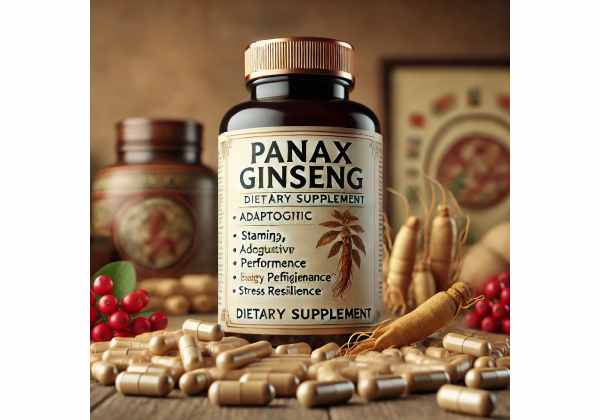
One of the biggest problems with Panax ginseng is that “ginseng” on a label does not tell you very much. Products differ by species, root age, processing method, extract strength, and ginsenoside content. A trial using a standardized extract cannot be assumed to apply to every capsule on a store shelf.
Common forms include:
- Whole root powder
- Standardized root extracts
- Korean red ginseng
- White ginseng
- Multi-ingredient blends containing ginseng plus other compounds
Because of that variation, dosage is best discussed in broad practical terms rather than as a single perfect number. Many commonly used supplemental ranges fall somewhere around:
- 200 to 400 mg daily of a standardized extract
- 1 to 2 grams daily of crude root powder or nonconcentrated products
- Sometimes higher amounts in specific clinical studies, depending on preparation
The most useful dosing principles are often more important than the raw number:
- Know what kind of product you are taking.
- Check whether ginsenoside content is standardized.
- Start lower rather than higher.
- Use it long enough to judge a real pattern, not just one day’s impression.
- Take it earlier in the day if you are sensitive to activation.
Timing depends on the goal. For people using Panax ginseng to support daytime mental endurance or stress resilience, morning or early afternoon usually makes the most sense. Late-day use may bother sleep in sensitive people. It is not a perfect rule, but it is a sensible place to start.
Cycling is commonly discussed with adaptogens, though hard rules are limited. Some people use Panax ginseng for several weeks and then pause to reassess whether it is still useful. That can be more sensible than assuming it should be taken continuously without review.
When evaluating whether it works, use concrete markers:
- Is task stamina better?
- Is stress reactivity lower?
- Do you feel steadier rather than more wired?
- Is sleep still intact?
- Are headaches, palpitations, or irritability appearing?
That last point matters. A supplement that improves alertness but worsens sleep or makes you feel irritable is often not a net gain.
Panax ginseng also fits better when combined with supportive routines rather than used in isolation. If someone wants cleaner focus, they may get more from pairing it with habits that stabilize attention and reduce overload, such as structured work blocks or broader efforts to improve focus naturally.
The right dose, then, is not the biggest one a person can tolerate. It is the smallest one that produces a useful effect without pushing sleep, mood, or physical comfort in the wrong direction.
Safety Side Effects and Interactions
Panax ginseng appears reasonably safe in short-term oral use for many adults, but that statement needs context. Most clinical trials have been fairly small and often under six months, so “appears safe” is not the same thing as “proven safe in all situations.” It is better to think of Panax ginseng as generally well tolerated when used appropriately, with real but usually manageable cautions.
Commonly reported side effects include:
- Insomnia
- Headache
- Digestive upset
- Feeling overstimulated
- Palpitations or awareness of heartbeat
- Hot flushes or a sense of internal warmth
- Irritability in some users
These effects tend to be mild and reversible, but they matter because they can defeat the point of using the herb in the first place. A product taken for mental stamina is not especially helpful if it leaves a person more restless or interferes with sleep.
Certain groups should be more cautious:
- Pregnant or breastfeeding people
- Children
- People with insomnia
- Those with autoimmune conditions
- People with diabetes or unstable blood sugar
- Anyone taking multiple medications
Drug interaction questions are especially important. Panax ginseng may interact with:
- Blood thinners and medicines that affect clotting
- Diabetes medications, because it may influence blood sugar
- Stimulant-like compounds that increase activation
- Drugs with narrow therapeutic windows
It is also wise to be cautious when combining Panax ginseng with a lot of caffeine. That combination can feel fine for one person and too activating for another, particularly if anxiety, high stress, or poor sleep is already present. The same principle applies to multi-ingredient nootropic stacks. Once several active ingredients are layered together, it becomes much harder to know which one is helping and which one is causing side effects.
Long-term use is another area where the evidence is less reassuring simply because it is thinner. Some authorities consider up to six months of oral use reasonably safe in recommended amounts, but beyond that the evidence becomes less certain. That does not prove long-term harm. It means confidence should be more modest.
Finally, Panax ginseng should never become a way to avoid proper assessment. If someone has persistent low mood, worsening fatigue, cognitive decline, or major sleep disruption, adding supplements without asking bigger questions can delay the right care. The goal is thoughtful support, not herbal self-distraction from mental fatigue and its causes.
For most healthy adults, the safest approach is simple: use a standardized product, stay within a moderate dose, protect sleep, and review medications and medical conditions before starting.
References
- Effects of Ginseng on Cognitive Function: A Systematic Review and Meta-Analysis 2024 (Systematic Review and Meta-Analysis)
- Emerging evidence that ginseng components improve cognition in subjective memory impairment, mild cognitive impairment, and early Alzheimer’s disease dementia 2024 (Review)
- Effects of white ginseng on reducing stress and tension by enhancing default mode network connectivity: A randomized, double-blinded placebo-controlled clinical trial 2025 (RCT)
- Asian Ginseng: Usefulness and Safety | NCCIH 2024 (Fact Sheet)
- Safety Analysis of Panax Ginseng in Randomized Clinical Trials: A Systematic Review 2015 (Systematic Review)
Disclaimer
This article is for educational purposes only and is not medical advice. Panax ginseng is a biologically active herb that can cause side effects and interact with medications, especially those related to blood sugar, clotting, sleep, and stimulation. It is not a substitute for evaluation or treatment of anxiety, depression, insomnia, memory loss, or other medical conditions. If you are pregnant, breastfeeding, have a chronic illness, or take prescription medications, speak with a qualified clinician before using Panax ginseng.
If this article helped you, consider sharing it on Facebook, X, or another platform so others can make a more informed decision.