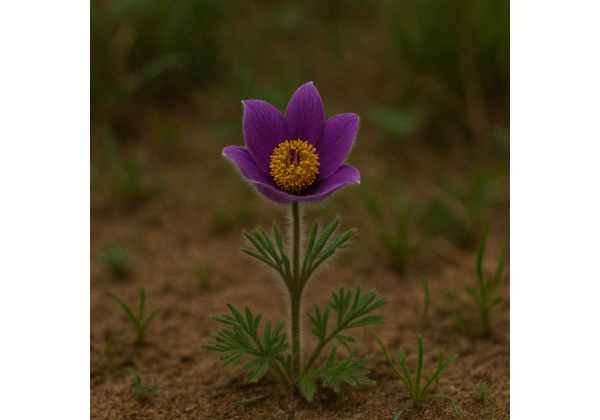
Pasque flower, Pulsatilla vulgaris, is one of those plants that attracts attention for two opposite reasons at once: it is beautiful, and it demands caution. Known for its silky spring blooms and deep roots in European herbal tradition, pasque flower has been used for nervous tension, painful menstrual conditions, certain inflammatory complaints, and occasional external applications. Yet it is not a casual kitchen herb. Fresh plant material contains irritating compounds that can blister the skin and upset the digestive and urinary tracts, which is why modern discussion of pasque flower has to begin with respect for its toxicity as well as its potential value.
That balance shapes the entire story. Chemically, pasque flower offers ranunculin-derived compounds, anemonin, protoanemonin-related chemistry, triterpenoid saponins, flavonoids, and other bioactive constituents that help explain its traditional reputation and current research interest. At the same time, most evidence remains preclinical, and many stronger pharmacology findings come from the broader Pulsatilla genus rather than from Pulsatilla vulgaris alone. The most helpful way to understand pasque flower today is as a potent traditional herb with limited modern clinical evidence, meaningful risks, and a narrower practical role than many promotional articles suggest.
Core Points
- Pasque flower shows potential anti-inflammatory and calming activity, but most evidence is preclinical rather than clinical.
- Its strongest traditional uses involve nervous tension, painful menstrual states, and short-term practitioner-led formulas.
- Traditional dosing is small, often around 0.12 to 0.3 g dried herb per cup up to three times daily, or 1 to 2 mL of a 1:10 tincture up to three times daily.
- Pregnant or breastfeeding people, children, and anyone using the fresh plant or managing kidney, urinary, or high-sensitivity conditions should avoid self-treatment with pasque flower.
Table of Contents
- What Pasque Flower Is and Why It Needs Caution
- Key Ingredients and Medicinal Properties
- Potential Health Benefits and What the Research Supports
- Traditional Uses for Tension, Pain, and Menstrual Discomfort
- How Pasque Flower Is Used in Practice
- Dosage, Timing, and Duration
- Safety, Toxicity, Interactions, and Who Should Avoid It
What Pasque Flower Is and Why It Needs Caution
Pasque flower is a perennial member of the buttercup family, Ranunculaceae, native to calcareous grasslands and long valued as both an ornamental and a medicinal plant. The herb’s common name reflects its spring flowering around Easter or Passover. In the garden, it looks gentle: low-growing, silky, purple to violet, and almost soft enough to invite handling. In herbal medicine, however, it has never really been treated as a gentle beginner’s herb. Older Western traditions considered pasque flower useful, but also sharp, reactive, and best handled with care.
That double identity still matters. Pasque flower has a real medicinal history, especially in European herbalism and later homeopathic practice, where it became associated with nervous agitation, painful reproductive complaints, headaches, catarrhal states, and certain skin conditions. But unlike herbs that entered modern herbal use mainly through food or tea culture, pasque flower arrived with warnings attached. Fresh plant material contains ranunculin, which breaks down into protoanemonin, an irritant compound known for causing blistering, mucosal irritation, and gastrointestinal upset. Drying reduces this problem because protoanemonin is unstable and converts further, which is one reason dried preparations have traditionally been preferred over fresh ones.
That detail changes how the plant should be approached. Many herb articles start by asking what the plant can do. With pasque flower, the better first question is what form of the plant is being discussed. Fresh herb, dried herb, tincture, practitioner formula, and highly diluted homeopathic preparation are not interchangeable. A claim that sounds reasonable for one form can be unsafe or misleading for another. This is also why pasque flower has largely disappeared from everyday household herbalism, even while it continues to hold interest among specialist practitioners. It asks for more precision than a typical calming or anti-inflammatory herb.
Modern readers also need to understand that evidence for pasque flower is uneven. Species-specific work on Pulsatilla vulgaris exists, but much broader pharmacological discussion comes from the larger Pulsatilla genus, especially species used in East Asian medicine. That means some mechanism data are relevant but not perfectly transferable. The plant is neither useless nor well-proven. It sits in the difficult middle ground: a traditional herb with biologically plausible actions, some promising preclinical findings, and enough toxicology concerns to make casual experimentation a poor idea.
In that sense, pasque flower is better seen as a specialist botanical than a wellness herb. It is attractive to readers who want nuance, because its story is not a simple “super-herb” narrative. It is a plant that may help in carefully chosen situations, but only when its limits are understood first. That safety-first framing is not a drawback. It is the most accurate way to make the herb genuinely useful.
Key Ingredients and Medicinal Properties
Pasque flower’s medicinal profile comes from a mix of reactive irritant chemistry, more stable secondary metabolites, and broader genus-level compounds that help explain why Pulsatilla species continue to attract scientific interest. The most important place to begin is ranunculin. In fresh plant tissue, ranunculin can degrade into protoanemonin, a highly reactive compound linked to the plant’s blistering and mucosal irritation. Protoanemonin is part of what makes fresh pasque flower pharmacologically active, but it is also a major reason the fresh herb is not considered safe for ordinary self-use. Over time and with drying, protoanemonin can change further, including into anemonin, which is generally less reactive and more practical for study.
This chemistry explains a central paradox of pasque flower. The same pathway that contributes to its irritant toxicity also helps account for some of the plant’s traditional medicinal activity. Protoanemonin and anemonin have been discussed for antimicrobial, anti-inflammatory, and biologically active effects, but those properties do not erase their risks. In herbal terms, pasque flower is not “strong” merely because it has many compounds. It is strong because some of its most characteristic compounds are pharmacologically active in ways the body notices very quickly.
Beyond these ranunculin-derived substances, pasque flower and related Pulsatilla species contain triterpenoid saponins, phenolic acids, tannins, flavonoids, and other secondary metabolites. Species-wide reviews often emphasize the role of pulsatilla saponins in anti-inflammatory, antioxidant, organ-protective, and antitumor research. In Pulsatilla vulgaris specifically, modern phytochemical analysis of leaf and root extracts has highlighted triterpenoid saponins alongside phenolic acids as likely contributors to observed biological activity. That suggests the herb’s reputation is not based on irritant compounds alone. There is a more layered chemistry underneath the older warnings.
This matters because medicinal properties are often oversimplified. Pasque flower is sometimes described as sedative, antispasmodic, analgesic, antimicrobial, and anti-inflammatory as though these are all equally established. They are not. A better reading is that pasque flower contains compounds that plausibly support calming, inflammatory modulation, and antimicrobial action, but the degree of support differs sharply by effect and by preparation. The strongest modern laboratory interest is often not in folk-style tea use at all, but in isolated or characterized fractions, especially saponin-rich extracts and compound-level work on ranunculin derivatives.
The herb is also a good reminder that “natural” does not automatically mean chemically gentle. Some plants soothe by dilution and softness. Others, like pasque flower, have a medicinal profile shaped by compounds that can calm in one context and irritate in another. That is why it makes more sense to compare pasque flower with complex traditional herbs than with simple floral teas. Even among calming plants, it behaves differently from more forgiving options such as chamomile, which is far easier to place in ordinary self-care. Pasque flower’s chemistry gives it interest, but also justifies restraint.
Potential Health Benefits and What the Research Supports
The most responsible way to talk about pasque flower’s health benefits is to rank them by confidence. At the top are traditional uses supported by plausible chemistry. In the middle are preclinical findings that look promising but remain unproven in humans. At the bottom are modern marketing claims that borrow too heavily from genus-wide or laboratory results without enough species-specific clinical evidence.
Anti-inflammatory potential is one of the most credible themes. Reviews of ranunculin derivatives and Pulsatilla saponins describe multiple pathways through which these compounds may reduce inflammatory signaling, oxidative stress, or tissue injury in cell and animal models. That does not make pasque flower a proven anti-inflammatory medicine in everyday practice, but it does help explain why older herbalists used it for painful, irritated, and congestive conditions. The plant’s reputation for easing tension, discomfort, and some inflammatory states is at least biologically plausible.
Another area of interest is antimicrobial activity. Protoanemonin is often described as having antibiotic or fungicidal properties, and historically this helped shape the herb’s use in certain externally applied remedies and skin-oriented traditions. But the toxicological side of the same compound limits how far that line of thinking should go. A compound can be antimicrobial and still be too irritating for casual therapeutic use. This is a recurring issue with pasque flower: mechanisms that look attractive in the lab do not automatically translate into safe home applications.
Antitumor and antiproliferative research has drawn attention more recently, especially after species-specific work on Pulsatilla vulgaris extracts found inhibition of several cancer-related signaling pathways in a cervical cancer cell model. The root extract appeared especially active, and the authors linked this effect mainly to triterpenoid saponins with support from phenolic acids. These findings are interesting and scientifically meaningful, but they remain far from human treatment evidence. They should be read as a signal for further pharmacological study, not as a reason to use pasque flower as a self-directed anticancer herb.
Calming and sedative effects are more traditional than modern-clinical in their support, but they remain relevant. Older pharmacology and herbal practice connected pasque flower with tension, irritability, restlessness, painful nervous states, and sleep disturbance tied to emotional strain. Mechanistically, anemonin and related compounds have been discussed in relation to sedating or neuroactive effects, though the data are not robust enough to present pasque flower as a standard sleep herb. In practice, it occupies a more niche place: a practitioner herb sometimes chosen when emotional tension and physical spasm seem closely linked.
The real verdict, then, is selective rather than sweeping. Pasque flower may offer anti-inflammatory, calming, antispasmodic, and antimicrobial value, but the evidence is mostly mechanistic, historical, or preclinical. It does not have the human research depth of more established anti-inflammatory botanicals such as boswellia. That does not make it irrelevant. It makes it a herb that deserves careful wording. The potential is real. The proof is still limited. For most readers, that means pasque flower belongs more in informed herbal practice than in casual trial-and-error wellness use.
Traditional Uses for Tension, Pain, and Menstrual Discomfort
Traditional Western herbalism gave pasque flower a distinct personality. It was not usually described as a general tonic or broad daily wellness herb. Instead, it was associated with certain patterns: nervous sensitivity, emotional upset with physical tension, painful reproductive states, headaches linked with irritability, and some forms of catarrh or congestion. This pattern matters because it reveals how the herb was actually used in practice. Pasque flower was chosen when discomfort seemed mixed with restlessness, sensitivity, or spasm.
One of its best-known historical uses involved painful menstrual conditions. Herbalists described it for dysmenorrhea, ovarian pain, delayed or scanty flow accompanied by discomfort, and pain that seemed sharper than congestive. That does not mean it should be treated as a first-line household herb for menstrual symptoms today. It means the plant developed a reputation where spasm, mood, and pelvic discomfort overlapped. This older logic still makes sense. Some herbs seem better for heavy congestion, others for cramping, and others for frazzled nervous-system states that intensify pain. Pasque flower was often placed in the last two categories rather than the first.
Traditional use also extended to male reproductive discomfort, including epididymal or testicular pain, though this is exactly the kind of indication that should not encourage self-treatment. A historical use is not a substitute for diagnosis. Modern readers should treat these older indications as evidence of traditional pattern recognition, not as a guide to bypassing medical assessment.
The herb also built a reputation as a nervine for tension, panic, emotional oversensitivity, and difficulty settling. Some contemporary practitioners still describe it as a plant for people who feel easily overwhelmed, tearful, agitated, or physically affected by emotional stress. There is a long tradition of plants being matched not only to symptoms but to how those symptoms feel in the whole person. Pasque flower’s old reputation fits that framework. It was not merely a “sedative.” It was more often seen as a remedy for nervous pain, emotional volatility, and tension with an inward, sensitive quality.
That said, traditional use should not be confused with safety or sufficiency. A plant can be traditionally valued and still demand expert handling. Pasque flower is a good example. Many of its historical uses now overlap with conditions for which safer, better-studied herbs or medicines are usually preferred. For menstrual cramping, for instance, herbs such as cramp bark often fit more comfortably into modern self-care. Pasque flower’s traditional niche is more specific and less forgiving.
Perhaps the most useful lesson from its traditional record is this: pasque flower was seldom an herb of abundance. It was an herb of small doses, brief courses, and context. Practitioners reached for it when they believed the picture justified it, not because it was a universally appropriate calming flower. That older restraint is probably one of the smartest parts of the tradition. It is also one of the easiest parts to lose when the herb is reduced to a generic benefits list.
How Pasque Flower Is Used in Practice
In practice, pasque flower is used far less like a household tea herb and far more like a carefully measured specialist botanical. That is one of the clearest differences between traditional reputation and modern real-world use. While some references describe infusion and tincture forms, most serious herbal discussion emphasizes that pasque flower is best handled in dried preparations and in small amounts. Fresh plant use is the main dividing line. Fresh herb has a higher likelihood of causing skin and mucosal irritation because of its ranunculin-to-protoanemonin chemistry, so it is generally avoided outside specialist contexts.
Dried herb infusions have historically been used for internal support, particularly in tiny doses and short courses. The idea was not to create a strong beverage in the modern wellness sense, but to prepare a measured medicinal infusion. The same goes for tinctures. Older and contemporary herbal references often describe pasque flower as something taken in drop doses or small milliliter amounts, not in large spoonfuls. That dosing style is a clue to the plant’s character. Herbs that are friendly to self-care usually tolerate imprecision better. Pasque flower does not.
External use has also appeared in traditional practice, especially in older discussions of skin complaints, boils, or localized irritation. Yet this is another area where modern caution is wise. A plant known to blister fresh skin is not an ideal candidate for improvised topical experimentation. If pasque flower is used externally at all, it should be in dried, properly prepared, diluted forms and with a clear sense of why it is being chosen over gentler options.
Another route of use is homeopathy, where Pulsatilla became one of the better-known remedies. That is a separate therapeutic system with highly diluted preparations and a different theory of action. It should not be treated as evidence that raw pasque flower is safe or that herbal and homeopathic dosing are equivalent. Many readers blur these categories because the names are the same. In practical terms, they are not.
The smartest modern use of pasque flower may actually involve knowing when not to use it. For many complaints once associated with pasque flower, safer analogues now make more sense. Someone seeking gentle support for stress and restlessness is often better served by herbs such as passionflower. Someone needing help for menstrual spasm or surface skin irritation usually has better options too. Pasque flower tends to earn its place only when a skilled practitioner believes its particular pattern of action is genuinely relevant.
That does not diminish the herb. It clarifies it. Pasque flower is not obsolete, but it is not broad-spectrum self-care either. Its modern role is narrow, preparation-sensitive, and dependent on careful distinction between dried medicinal use, fresh-plant toxicity, and homeopathic dilution. Readers who understand those boundaries already understand more about pasque flower than many simplified herb profiles ever explain.
Dosage, Timing, and Duration
Pasque flower dosing should be read as traditional guidance, not as modern standardized clinical dosing. That distinction is essential. There is no widely accepted, evidence-based therapeutic dose established by robust human trials for Pulsatilla vulgaris. What exists instead are historical herbal ranges and contemporary practitioner-oriented recommendations that all point in the same direction: use only small amounts, avoid fresh plant self-use, and keep duration short unless guided by an experienced professional.
Traditional infusion guidance is often modest. One commonly cited approach uses about one half to one teaspoon of dried herb per cup, infused for 15 to 20 minutes and taken up to three times daily. Other traditional references describe roughly 0.12 to 0.3 g of dried herb per infusion, also up to three times daily. Tincture guidance is similarly restrained, with older references often placing a 1:10 tincture in the range of about 1 to 2 mL up to three times daily, while other monographs describe daily totals such as 0.9 to 3 mL. What matters most is not choosing the highest figure. It is recognizing that every serious source presents pasque flower as a low-dose herb.
Timing depends on the purpose. When chosen for nervous tension or spasm-related discomfort, small divided doses through the day are more consistent with the traditional pattern than one large dose at night. When used around menstrual discomfort, practitioners have often favored short-term use during the symptomatic window rather than continuous daily dosing. This again reflects the herb’s old role as a problem-specific medicine rather than a daily tonic.
Duration should stay conservative. Even when the plant is dried and used in traditional quantities, pasque flower is not a good candidate for open-ended self-prescribing. A short course is one thing. Repeated, loosely supervised use is another. If a symptom pattern is significant enough to keep requiring pasque flower, that is usually a sign the person needs a clearer diagnosis, a gentler long-term option, or both.
Preparation quality also matters. Because protoanemonin is unstable and because fresh plant material is notably more irritating, readers should not assume that homemade preparations from freshly harvested garden pasque flower are equivalent to dried materia medica from professional herbal supply channels. They are not. Freshness is often prized in herbalism, but pasque flower is a case where fresh does not mean better. It usually means riskier.
The most honest dosage advice, then, has two parts. First, the traditional dose range is small. Second, the herb is best used only when there is a good reason to choose it over safer alternatives. That combination is what keeps dosage information from becoming an invitation to casual experimentation. Even herbs with a long medicinal history can be misused when the dose is technically correct but the context is not.
Safety, Toxicity, Interactions, and Who Should Avoid It
Safety is the section that determines whether an article on pasque flower is truly useful. Without it, the herb can sound more versatile than it really is. Fresh pasque flower is the main concern. Fresh material can irritate the skin, mouth, digestive tract, and urinary tract, largely because of ranunculin-derived protoanemonin. Contact may cause burning, blistering, or dermatitis. Internal use of the fresh herb can provoke nausea, vomiting, diarrhea, abdominal pain, and in more serious accounts neurological or collapse-type symptoms. This is why traditional and modern sources alike repeatedly advise against ingesting the fresh plant.
Drying lowers risk, but it does not turn pasque flower into a carefree herb. Dried preparations are less irritating because the reactive chemistry changes over time, yet the plant remains one that many herbalists recommend only under qualified guidance. Large doses have long been associated with renal and urinary irritation, sensory disturbance, paralysis-like symptoms, stupor, and convulsions. Even when older texts sound dramatic, the underlying message is consistent: this is not a plant to improvise with.
Pregnancy and breastfeeding are clear areas to avoid. Pasque flower has been described as a uterine stimulant, and safety references caution against its use during pregnancy and lactation. Children should also not be given pasque flower casually. The margin for dosing error is too small to justify routine self-use. People with kidney or urinary tract irritation, very sensitive digestion, or known reactivity to buttercup-family plants should be especially cautious. Because pasque flower may also share practical overlap with salicylate-sensitive symptom patterns, highly reactive individuals are generally better off choosing better-characterized alternatives.
Interaction data are limited, which means uncertainty should be treated as a warning rather than reassurance. If someone is already using sedatives, pain medicines, strong hormonal therapies, or complex prescription regimens, pasque flower is not the herb to add casually. Limited data do not mean no interactions. They mean we do not know enough to be casual.
There is also a practical gardening point. Ornamental pasque flowers are beautiful, but beauty should not hide toxicity. Gloves are sensible when handling damaged fresh material, and pets or children should not be encouraged to explore the plant. If skin irritation occurs after contact, simple washing and supportive care are more sensible than experimenting with more plant material; soothing options such as aloe vera make more sense than any attempt to treat irritation with the irritant herb itself.
The best overall safety summary is straightforward. Pasque flower is a legitimate medicinal plant with meaningful traditional use, but it is not a safe herb for casual, unsupervised self-treatment. Fresh plant use should be avoided. Dried herb use should be small, brief, and deliberate. And for many common complaints, a gentler herb is usually the wiser choice.
References
- Ranunculin, Protoanemonin, and Anemonin: Pharmacological and Chemical Perspectives 2024 (Review)
- Pulsatilla vulgaris Inhibits Cancer Proliferation in Signaling Pathways of 12 Reporter Genes 2023
- Pharmacological activities and molecular mechanisms of Pulsatilla saponins 2022 (Review)
- Stability of protoanemonin in plant extracts from Helleborus niger L. and Pulsatilla vulgaris Mill 2020
- Pasqueflower (Pulsatilla vulgaris): Benefits, Safety, Uses | Herbal Reality 2024 (Monograph)
Disclaimer
This article is for educational purposes only and is not medical advice. Pasque flower is a potentially toxic medicinal plant, especially in fresh form, and it should not be used as a substitute for diagnosis, prescription care, or emergency treatment. Pregnant or breastfeeding people, children, and anyone with significant symptoms, chronic illness, or regular medication use should seek qualified medical or practitioner guidance before considering pasque flower in any medicinal form.
If this article helped you, please share it on Facebook, X, or your preferred platform so more readers can find careful, evidence-aware herbal information.