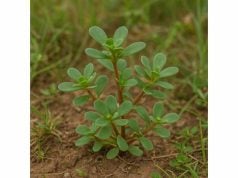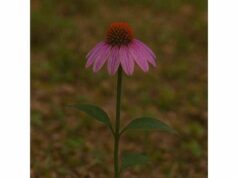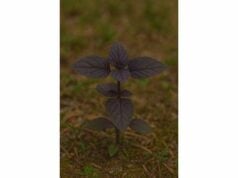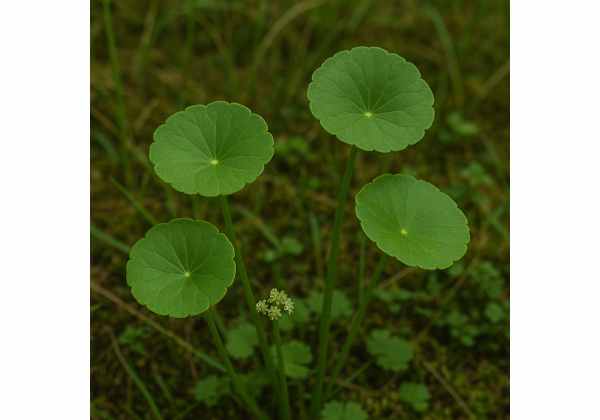
“Pennywort” is one of those plant names that sounds simple but is not. In practice, it can refer to more than one species, most notably Centella asiatica and Hydrocotyle vulgaris. That distinction matters because the two plants are not interchangeable medicinally. Centella asiatica, also known as gotu kola or Indian pennywort, is the species with the stronger record in herbal medicine, skincare, circulation support, and cognitive research. Hydrocotyle vulgaris, often called marsh pennywort, shares the common name in some regions but has a much thinner medicinal evidence base.
For that reason, most modern health claims linked to “pennywort” actually belong to Centella asiatica. Its best-known properties include support for wound healing, collagen balance, microcirculation, venous tone, and possibly mild cognitive and stress-related benefits. It also contains distinctive triterpenoid compounds that help explain its long-standing use in both traditional medicine and modern topical products. This article explains the difference between the two plants, highlights what evidence is strongest, and shows how to use pennywort more carefully and realistically.
Quick Overview
- Most evidence behind “pennywort” benefits applies to Centella asiatica, not Hydrocotyle vulgaris.
- Centella asiatica may support skin repair, microcirculation, and mild cognitive or stress-related wellness.
- For Centella asiatica extracts, common supplemental ranges are about 300 to 680 mg per day.
- People who are pregnant, breastfeeding, have liver concerns, or plan to use unidentified “pennywort” products should avoid self-treatment.
Table of Contents
- What pennywort means and why the name can be misleading
- Key ingredients and the compounds that drive Centella asiatica benefits
- Pennywort health benefits with the strongest support
- How pennywort is used in traditional and modern practice
- Dosage, timing, and duration: what is reasonable
- Common mistakes when buying or using pennywort
- Safety, side effects, interactions, and who should avoid it
What pennywort means and why the name can be misleading
The first thing readers should know is that “pennywort” is a common-name trap. It does not point to one single medicinal herb in all places. In many herbal and supplement contexts, “pennywort” refers to Centella asiatica, a creeping plant widely used in Ayurveda, Traditional Chinese Medicine, and modern botanical skincare. In other contexts, especially botanical or regional gardening language, “pennywort” may refer to Hydrocotyle vulgaris, a separate species more often associated with wetlands, marshy growth, and ornamental or wild-plant identification.
This matters because the medicinal reputations of the two plants are very different. Centella asiatica has been studied for wound healing, scar support, venous circulation, microvascular function, cognitive performance, mild anxiety-related symptoms, and antioxidant effects. It is the plant behind most gotu kola supplements, creams, serums, and standardized extracts. Hydrocotyle vulgaris, by contrast, is much less established in mainstream phytotherapy. It may have traditional or regional folk uses, but it does not have the same clinical profile, the same standardized preparations, or the same strong association with triterpenoid actives.
In practical terms, this means people should not buy “pennywort” and assume all labels describe the same herb. A product may use a common name in a way that feels familiar while leaving out the species name. That can lead to confusion in dosage, expectations, and safety. If a person wants the herb associated with gotu kola research, skincare formulas, or circulation support, the correct species is Centella asiatica. If a plant label says Hydrocotyle vulgaris, it should not automatically be treated as a substitute.
There is also a cultural reason for the confusion. Folk names often travel faster than botanical precision. The same common name may move across countries, plant families, or gardening traditions. For everyday conversation that may not matter. For medicinal use, it matters a great deal. Two plants can look broadly similar in growth habit and still differ substantially in chemistry and evidence.
The safest editorial position is this: when the subject is pennywort and health benefits, the discussion should center on Centella asiatica unless a source clearly states otherwise. That is the herb with the meaningful therapeutic literature. In this article, most of the medicinal claims, dosage discussion, and practical use guidance refer to Centella asiatica. Hydrocotyle vulgaris is included because the shared common name creates confusion, but it should be viewed as the less studied plant.
That distinction helps readers avoid one of the most common botanical mistakes: assuming a shared nickname means shared pharmacology. It does not. With pennywort, species identity is the first step in safe, useful herb knowledge.
Key ingredients and the compounds that drive Centella asiatica benefits
Most of the real medicinal interest in pennywort comes from the chemical profile of Centella asiatica. Its best-known active compounds are triterpenoid saponins and related triterpene acids, especially asiaticoside, madecassoside, asiatic acid, and madecassic acid. These are the compounds most often linked to the plant’s wound-healing reputation, collagen-related effects, microcirculatory support, and anti-inflammatory activity.
These triterpenes are important because they appear to influence tissue repair and structural skin processes rather than just offering general antioxidant activity. That helps explain why Centella asiatica became so closely associated with scar care, skin soothing formulas, and products designed to support the skin barrier. In many topical preparations, the value of the herb lies not only in calming redness but in how it may help the skin organize repair more effectively.
The plant also contains flavonoids, phenolic compounds, phytosterols, and smaller amounts of volatile constituents. These help round out its antioxidant and anti-inflammatory profile. Together, they suggest that Centella asiatica is more than a single-compound herb. Still, the triterpene fraction remains the most important marker for quality and relevance in many supplements and topical products.
In commercial settings, some formulas highlight total triterpenes or use branded, standardized extracts rather than plain dried herb. That is because standardization can make effects more predictable. With herbs used for connective tissue, skin, or venous support, consistency matters. A tea made from unidentified “pennywort” is not equivalent to a standardized Centella asiatica extract that has been adjusted for triterpene content.
This is also where Hydrocotyle vulgaris falls behind. It may contain plant polyphenols and other common botanical constituents, but it is not widely known for the same triterpene signature that defines Centella asiatica. That difference is one reason the two plants should not be merged into a single medicinal profile. A person looking for the compounds associated with gotu kola’s classic reputation is really looking for Centella asiatica.
Readers sometimes assume that antioxidant herbs all work in roughly the same way. In reality, herbs can have very different strengths. Some are more notable for polyphenol-rich antioxidant activity, such as green tea and its catechin profile. Pennywort is different. Its fame comes less from “general antioxidants” and more from tissue-oriented triterpenes that appear especially relevant to skin, venous tone, and structural repair.
The practical lesson is simple. When reading a pennywort label, the species and the extract type matter more than the common name. If the goal is skincare, scar support, circulation, or the classic gotu kola use pattern, the key ingredient question is really a Centella asiatica question. That is where the meaningful actives are best described and best studied.
Pennywort health benefits with the strongest support
When people search for pennywort benefits, the most evidence-backed discussion centers on Centella asiatica. Its strongest areas of support are skin repair, connective tissue support, venous and microcirculatory function, and modest cognitive or stress-related benefits. These are not equally strong, but they are the areas where the herb has built the most plausible bridge between traditional use and modern research.
Skin and wound support are among the most credible uses. Centella asiatica has a long-standing reputation for helping damaged or irritated skin recover more efficiently. This is one reason it appears so often in creams, scar products, after-sun formulas, and barrier-support serums. The herb is especially interesting because it is not marketed simply as a soothing plant. It is often positioned as a connective-tissue herb that may support collagen-related repair and the overall organization of healing tissue. That does not mean it erases scars or acts like a drug, but it does make it more than a generic calming botanical.
Venous and microcirculatory support are another classic area. Some research and traditional use suggest Centella asiatica may help support vein tone, capillary integrity, leg heaviness, and fluid-related discomfort linked to poor microcirculation. This is one of the more distinctive parts of the herb’s profile, and it helps explain why it is often discussed alongside circulation-focused botanicals such as horse chestnut in venous support discussions.
Cognitive and mood-related effects are promising but more modest. Pennywort is often described as a “brain herb,” yet that phrase can oversell what we actually know. The better interpretation is that Centella asiatica may support mental clarity, calm focus, and certain aspects of memory or stress resilience, especially over time rather than immediately. It is not usually a stimulant. Instead, it tends to be framed as a steadying herb that may support cognition through antioxidant, anti-inflammatory, and neuroprotective mechanisms. Readers comparing it with more clearly nootropic herbs may find bacopa’s cognitive support profile a useful contrast.
The herb also has anti-inflammatory and antioxidant properties that likely contribute to its broader medicinal reputation. These properties may help explain why it shows up in skin products, calming formulas, and wellness supplements. But they should not be inflated into broad disease claims.
What about Hydrocotyle vulgaris? Here the answer is much simpler. It does not have the same depth of support for these benefits. While it may have botanical interest and occasional regional folk relevance, the best-supported pennywort benefits belong overwhelmingly to Centella asiatica.
So if someone asks, “What is pennywort good for?” the most grounded answer is this:
- skin repair and scar-related support
- vein and microcirculation support
- mild cognitive and stress-related support
- broad antioxidant and anti-inflammatory support as background mechanisms
That is a solid and useful profile. It is also much narrower and more credible than the inflated claims often seen online.
How pennywort is used in traditional and modern practice
Pennywort has been used in several distinct ways, and the form of the herb often shapes the goal. In traditional medicine, Centella asiatica has been consumed as a fresh herb, decoction ingredient, powdered herb, or formulation component. In some parts of Asia, it is also eaten as a leafy food or used in fresh beverages. That food-and-medicine overlap is part of what made the herb so durable across generations. It could be used gently, repeatedly, and in different strengths depending on the need.
In Ayurvedic practice, Centella asiatica has often been associated with mental clarity, memory, vitality, and skin balance. In other systems it has been used for heat, inflammation, wound support, venous weakness, and general tissue recovery. These uses do not all translate directly into modern supplement claims, but they do show that the herb was historically treated as versatile rather than narrowly targeted.
Today, modern use falls into three main categories. The first is topical use. Pennywort appears in creams, gels, serums, balms, and scar-focused products. This is one of the most practical ways people encounter the herb, and for many users it is the most intuitive. They may not think of pennywort as an internal herbal supplement at all. They know it as an ingredient in restorative skincare.
The second category is standardized oral supplements. These are often marketed for circulation, cognitive clarity, or general tissue support. Compared with raw herb, standardized extracts are easier to dose consistently and are more closely aligned with the part of the research that focuses on triterpenoid content.
The third category is traditional oral use through teas, powders, or fresh preparations. This route is still meaningful, but it requires more care because the strength can vary and species confusion becomes more likely. A fresh leafy preparation identified clearly as Centella asiatica is one thing. An unlabeled “pennywort tea” is another.
It also helps to distinguish pennywort from other soothing topical herbs. Someone seeking a gentle surface-calming botanical may do well with calendula in topical skin support. Pennywort tends to be chosen when the goal leans more toward repair, connective tissue quality, or scar-focused support.
Modern practice has made pennywort more specialized than it once was. Traditional systems may have used it broadly. Current consumers usually meet it in targeted products: a scar gel, a barrier serum, a circulation formula, or a brain-support supplement. That change is not necessarily bad. It simply reflects how modern wellness organizes herbs around specific concerns.
The key takeaway is that pennywort works best when the form matches the purpose. Topical products suit skin goals. Standardized extracts make more sense for internal support than vague unlabeled raw products. And in all cases, species identity comes first. Without that, even a traditional herb becomes a guessing game.
Dosage, timing, and duration: what is reasonable
Dosage guidance for pennywort should begin with a caution: most practical internal dosing information applies to Centella asiatica, not Hydrocotyle vulgaris. Marsh pennywort should not be assigned gotu kola doses just because the common name overlaps. If the species is not clear, dosing should not proceed as though the product were a standard Centella asiatica supplement.
For Centella asiatica, common supplemental ranges often fall around 300 to 680 mg per day of standardized extract, depending on the preparation and the intended use. Some traditional dried-herb use ranges are broader, often around 2 to 4 g of herb taken one to three times daily, but modern products usually rely more on extracts than on plain herb powders. The exact amount depends on standardization, especially if a product is concentrated for triterpenes.
Topical use follows a different logic. Here the concern is not milligram intake so much as product quality, frequency, and skin tolerance. Many creams and serums use centella as part of a blend rather than as a single-ingredient treatment. In those cases, the user typically follows the product’s directions rather than trying to calculate an herb dose independently.
Timing also matters. Internal Centella asiatica is often used once or twice daily, and many people prefer taking it with food to reduce the chance of stomach discomfort. Products aimed at circulation or cognitive support are usually taken consistently over weeks rather than sporadically. This is not a fast-acting herb for most people. Its best-known uses tend to reward steady use rather than dramatic single-dose expectations.
Duration should stay reasonable. People sometimes take botanical supplements indefinitely simply because they seem gentle. That is not ideal. With pennywort, it makes more sense to use a defined period, reassess, and avoid assuming that “natural” means suitable for endless unsupervised use. Skin applications may be used longer depending on tolerance and product design, but internal use should still be treated thoughtfully.
A useful real-world framework looks like this:
- use only clearly labeled Centella asiatica products for medicinal dosing
- follow standardized extract guidance instead of guessing from raw herb
- take internal products with food unless a product directs otherwise
- reassess after a few weeks rather than using continuously without a reason
For readers interested in circulation and cognitive herbs, pennywort’s dosing mindset is more gradual and structured than that of many casual wellness plants. It is not a flavor herb, and it is not something to take in loose, improvised amounts. That is one reason it differs from more food-like botanicals.
The safest dosage conclusion is simple: Centella asiatica has a meaningful, though not universal, supplemental range. Hydrocotyle vulgaris does not have that same practical evidence base. When the name pennywort appears alone, species clarity matters before dose clarity.
Common mistakes when buying or using pennywort
The single biggest mistake with pennywort is treating the common name as enough information. It is not. Buying a product labeled only “pennywort” without confirming whether it contains Centella asiatica or Hydrocotyle vulgaris is the fastest route to confusion. This matters even more online, where common names are often used for marketing simplicity rather than medicinal accuracy.
A second common mistake is assuming all forms of pennywort do the same job. A topical centella serum for skin barrier support is not the same as an oral extract aimed at circulation or cognitive wellness. A garden plant called pennywort is not automatically a supplement herb. The form, species, and purpose need to line up.
Another mistake is expecting dramatic short-term results. Pennywort, especially Centella asiatica, is often a gradual herb. People who use it for skin quality, scar appearance, venous tone, or calm cognitive support usually benefit more from steady, moderate use than from impatient overuse. Taking more does not guarantee faster results and can increase the chance of side effects.
Many users also overgeneralize from the herb’s reputation. Because centella is sometimes described as a brain herb, a skin herb, and a circulation herb, people may assume it is universally suited to all those goals at once. In reality, the evidence varies by use case and by product form. A centella cream may be a sensible skincare choice without implying that an internal capsule is necessary.
A related problem is using pennywort as a substitute for better-fitted herbs. For example, someone wanting primarily gentle relaxation may do better with lemon balm for calm daily support rather than choosing pennywort because it has a reputation for mental clarity. Pennywort can support calm focus, but that does not make it the best first choice for every nervous-system goal.
People also make mistakes by ignoring product standardization. With centella, triterpene content matters. A vague raw powder with no standardization is harder to compare with the literature than a well-labeled extract.
Finally, there is the mistake of ignoring route-specific safety. Topical use, oral supplementation, and fresh herb use each carry different expectations and risks. The plant’s identity may be the same, but the practical experience is not.
The best troubleshooting questions are these:
- what exact species is this product?
- what form am I using?
- what outcome do I actually want?
- is this the right herb for that outcome?
- am I giving it enough time without overusing it?
Those questions solve most pennywort confusion before it becomes a safety or disappointment problem.
Safety, side effects, interactions, and who should avoid it
Pennywort is often described as gentle, but that should not be mistaken for risk-free. Most safety guidance here again belongs to Centella asiatica, because it is the species most often used medicinally. Compared with many harsher botanicals, it can be reasonably well tolerated when used appropriately. Still, side effects, product quality problems, and species confusion all deserve attention.
Possible side effects of internal Centella asiatica use include stomach upset, nausea, headache, dizziness, drowsiness, or skin reactions in sensitive people. Topical products can sometimes cause irritation or allergic dermatitis, especially if the formula includes other active ingredients or fragrance components. People with reactive skin should patch test first rather than assuming a skin-support herb will automatically be soothing.
One of the most important safety themes is liver caution. Pennywort is not widely known as a strongly hepatotoxic herb, but some references advise care in people with existing liver concerns or with prolonged, unsupervised use. That does not mean the herb is unsafe for everyone. It means internal use should stay measured, labeled, and purposeful rather than casual and indefinite.
Drug interactions are not always dramatic, but caution makes sense with sedatives, liver-metabolized medications, diabetes treatments, and drugs used for circulation-related conditions. Because pennywort may modestly affect calmness, vascular function, or inflammation-related pathways, it is wiser to be conservative rather than experimental when multiple medicines are involved. People preparing for surgery should also avoid loose self-medication with herbal supplements unless a clinician says otherwise.
Pregnancy and breastfeeding are another area for caution. Because safety evidence is not strong enough to support routine medicinal use in these situations, self-treatment is not the best choice. Children, too, should not be given pennywort supplements casually just because the herb has a reputation for cognitive support.
The “who should avoid it” group includes:
- pregnant or breastfeeding individuals
- people with unclear product labeling or uncertain species identity
- anyone with active liver disease or major liver concerns
- people taking multiple medications without professional review
- users with a history of strong plant or topical product allergies
There is also a practical safety point specific to this article: Hydrocotyle vulgaris should not be treated as a stand-in for gotu kola. The lack of similar medicinal evidence is itself a safety issue because it creates false confidence.
For topical users, pennywort may be more approachable than some stronger astringent herbs, but readers with highly reactive skin sometimes prefer milder, simpler options such as witch hazel or other focused topical botanicals depending on the goal and formula.
The best safety summary is not fearful, just precise. Pennywort can be useful when clearly identified, sensibly dosed, and matched to the right goal. Most problems come from vagueness: vague names, vague products, vague expectations, and vague duration. Precision is what makes this herb safer.
References
- Gotu Kola 2023
- Centellae asiaticae herba 2024
- Centella asiatica in cosmetology 2016 (Review)
- Gotu Kola (Centella asiatica): Botanical, Phytochemical, Ethnopharmacological and Pharmacological Studies 2011 (Review)
Disclaimer
This article is for educational purposes only and does not replace medical advice, diagnosis, or treatment. The name pennywort can refer to more than one species, and most medicinal evidence discussed here applies to Centella asiatica, not Hydrocotyle vulgaris. Do not use pennywort products for self-treatment during pregnancy, breastfeeding, childhood, major chronic illness, or alongside prescription medicines without guidance from a qualified healthcare professional.
If you found this article useful, please share it on Facebook, X, or any platform you prefer.