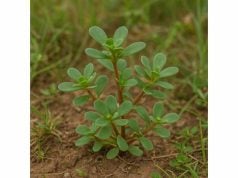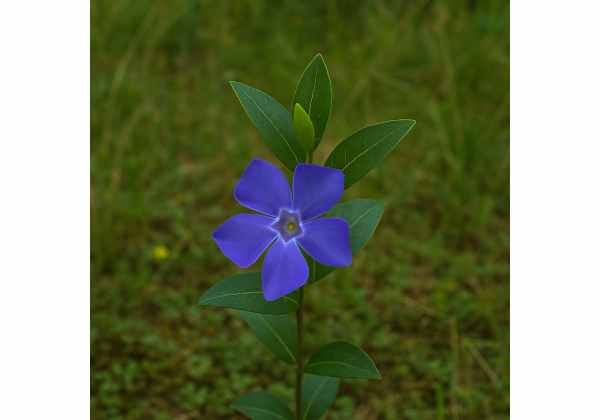
Periwinkle, or Vinca minor, is a low evergreen plant with glossy leaves and blue-violet flowers that has lived a long double life as both an ornamental ground cover and a traditional medicinal herb. In older European herbal practice, it was valued for astringent, circulatory, and wound-supporting uses, and it later drew scientific attention because its leaves contain indole alkaloids, especially vincamine. That chemistry helps explain why periwinkle became associated with cerebral blood flow, memory support, and vascular tone. Yet the modern picture is more complicated than the old reputation suggests. Much of the serious pharmacology now centers on isolated vincamine or its derivative vinpocetine, not on casual whole-herb use.
That distinction is the key to understanding periwinkle well. It is not a harmless tea herb, and it is not the same as Madagascar periwinkle, the related plant linked to famous chemotherapy drugs. Vinca minor is best approached as a potent traditional herb with real phytochemical interest, modest direct evidence for whole-herb benefits, and a safety profile that calls for caution rather than experimentation.
Quick Facts
- Periwinkle contains vincamine and other indole alkaloids that help explain its traditional vascular and cognitive reputation.
- Its most plausible benefits are mild astringent support, traditional topical use, and interest as a source of bioactive alkaloids.
- A prudent evidence-based self-care oral range is 0 mg/day because no validated safe whole-herb dose has been established for routine unsupervised use.
- Avoid self-treatment if you are pregnant, breastfeeding, have low blood pressure, take blood thinners, or plan to use it for memory or circulation problems without medical guidance.
Table of Contents
- What Is Periwinkle and Why Is It Still Discussed
- Periwinkle Key Ingredients and Medicinal Properties
- Potential Health Benefits and What the Evidence Actually Says
- Traditional Uses and the Vincamine and Vinpocetine Distinction
- Dosage, Preparations, and Why Self-Dosing Is Difficult
- Common Mistakes and How to Think About Periwinkle Clearly
- Safety, Side Effects, Interactions, and Who Should Avoid It
What Is Periwinkle and Why Is It Still Discussed
Vinca minor, often called lesser periwinkle or common periwinkle, is a perennial evergreen in the Apocynaceae family. It spreads along the ground by rooting stems, making it useful as a dense ornamental cover in shaded gardens. The plant is native to parts of Europe and western Asia but is now naturalized in many other regions. Its neat appearance makes it look gentle, almost decorative to the point of harmlessness, yet that impression is misleading. Periwinkle is not mainly interesting because of its flowers. It remains discussed because its leaves contain a rich collection of indole alkaloids that have attracted both traditional healers and modern phytochemical researchers.
Historically, periwinkle occupied an unusual place in European herbalism. It was used externally for minor bleeding, bruises, sore throat gargles, and skin complaints, and internally for conditions described in older language as weakness of circulation, “thin blood,” diarrhea, or inflammatory irritation. Some traditions also associated it with headache, low vitality, and memory or cerebral complaints. Those older claims were broad, sometimes poetic, and rarely standardized, but they show a consistent pattern. Periwinkle was never just a pretty plant. It was regarded as active, astringent, and worthy of respect.
Modern interest in the herb sharpened when scientists isolated vincamine and related alkaloids from Vinca minor. That discovery shifted the conversation away from simple folk use and toward pharmacology. Once alkaloids enter the story, herbal writing becomes more serious because alkaloids often exert stronger physiological effects than the milder polyphenols found in many kitchen herbs. Periwinkle therefore sits in a very different category from something like mint or chamomile. It is not a casual wellness tea for everyday self-experimentation.
Another reason it is still discussed is confusion. The word “periwinkle” often gets tangled with other plants, especially Madagascar periwinkle, now classified as Catharanthus roseus. That related plant is famous as the natural source of vincristine and vinblastine, chemotherapy alkaloids that transformed cancer treatment. Lesser periwinkle is not the same plant, and its medicinal profile is different. Vinca minor is better known for vincamine and for a long list of other indole alkaloids, not for being the household source of oncology drugs.
For a general reader, the most useful frame is this: periwinkle is a traditional medicinal herb with significant alkaloid chemistry, a long folk history, and limited modern evidence for whole-herb self-care. It still matters because it bridges folk medicine and alkaloid pharmacology, but it should be approached with the seriousness that bridge deserves. People interested in more established circulatory and cognitive herbs usually end up comparing it with ginkgo for cognitive and vascular support, which illustrates how different a well-studied herb looks when direct human evidence is stronger.
Periwinkle Key Ingredients and Medicinal Properties
Periwinkle’s medicinal profile begins with its indole alkaloids. These are the compounds that made the genus scientifically important and that continue to shape how Vinca minor is discussed in pharmacology. Vincamine is the best-known alkaloid in lesser periwinkle, but it is far from the only one. Modern review literature on the genus describes Vinca minor as especially rich in eburnamine-type alkaloids and notes that the species has yielded a striking number of structurally diverse monoterpene indole alkaloids. This helps explain why the plant has remained a subject of interest long after many older European herbs faded from scientific attention.
That alkaloid richness is not just a chemical curiosity. It is closely tied to the plant’s traditional reputation for circulatory and nervous-system effects. Vincamine, the best known constituent, has been linked historically with cerebral circulation and neuronal homeostasis, and that is the main reason periwinkle became associated with memory and “brain blood flow” language. Still, readers need to be careful here. The strongest pharmacological conversation usually centers on isolated vincamine or on vinpocetine, a semisynthetic derivative, not on crude whole-herb preparations. The chemistry gives the tradition plausibility, but it does not automatically turn the whole herb into a validated modern nootropic.
Periwinkle also contains phenolic acids, flavonoids, and other secondary metabolites that contribute to antioxidant and antimicrobial interest. Comparative phytochemical work has shown that Vinca minor leaf extracts contain chlorogenic acid, caffeic acid derivatives, quercetin-related compounds, and measurable total alkaloid content, along with species-specific antioxidant and antibacterial behavior. This is useful context because it prevents the herb from being reduced to one alkaloid alone. Like many medicinal plants, periwinkle works as a matrix. Its biological behavior likely reflects more than one compound class, even if the alkaloids dominate the conversation.
What medicinal properties follow from that chemistry? The most credible ones are these: mild astringent potential, traditional topical utility, laboratory antioxidant activity, some antibacterial activity in extracts, and pharmacological interest in vascular and nervous-system actions through isolated alkaloids. That is a meaningful list, but it needs boundaries. It does not prove that whole-herb periwinkle safely improves memory, treats circulation disorders, or deserves routine internal use. It shows that the plant is pharmacologically interesting and historically understandable.
A good way to think about periwinkle is to separate plant-level properties from compound-level properties. At the plant level, it appears to be astringent, chemically active, and biologically interesting. At the compound level, vincamine has received much more focused pharmacological attention. Those are not the same thing. In practice, herbal overstatement often happens when people take a real constituent such as vincamine and then quietly transfer all of its associated pharmacology onto the whole plant. That leap is exactly what a careful article should avoid.
Readers curious about the broader astringent side of traditional topical plant use may find it useful to compare periwinkle conceptually with witch hazel for topical astringent support, which is much more familiar and easier to use safely. Periwinkle is more chemically intense and less forgiving, even when the traditional language sounds similar.
Potential Health Benefits and What the Evidence Actually Says
Periwinkle’s potential health benefits sound impressive when listed in the broad language of traditional herbals: support for circulation, mental clarity, sore throat, minor bleeding, skin irritation, diarrhea, and tissue tone. But a modern evidence-based discussion has to narrow that list. The strongest present-day statement is not that Vinca minor has proven human benefits across many conditions. It is that the herb contains alkaloids and other compounds that make some of its old uses biologically plausible, while direct evidence for routine whole-herb internal use remains limited.
The most widely repeated benefit claim concerns circulation and cognition. This is understandable because vincamine, an alkaloid from Vinca minor, has a history of being studied and used in relation to cerebral circulation. Yet the important detail is often lost: the research interest attaches most clearly to isolated compounds, not to casual self-treatment with the herb itself. Whole-herb periwinkle has not earned the kind of modern clinical standing that would justify marketing it as a reliable memory or blood-flow supplement. Anyone reading older claims about “brain stimulation” or “cerebral insufficiency” should mentally translate them as historical interest, not present-day proof.
A second reasonable benefit area is mild topical and astringent support. Traditional use for minor skin complaints, small bleeds, bruising, inflamed throat gargles, and simple external applications makes sense in light of the plant’s astringent reputation and its extract-level antibacterial and antioxidant findings. That still does not mean periwinkle is a first-line wound herb or a dependable home remedy. It means that among old European herbs, its topical history is one of the easier areas to understand. Yet even here, safer and better-known options usually exist.
A third possible benefit lies in laboratory antioxidant and antibacterial activity. Recent phytochemical work found that Vinca minor extracts show biological activity against common bacterial strains and have measurable antioxidant capacity. This is interesting and may help explain folk medicinal persistence. But laboratory activity is the beginning of a question, not the end of it. Many plants inhibit bacteria in vitro. Much fewer prove useful, safe, and standardized in actual human treatment.
There is also a persistent temptation to pull cancer language into a periwinkle article because related alkaloids in related plants have enormous oncology significance. This is where caution matters most. Lesser periwinkle is not the same as Madagascar periwinkle, and whole-herb Vinca minor should not be presented as an anticancer remedy. At most, it can be described as part of a pharmacologically important alkaloid landscape. That is a meaningful distinction, because it honors the science without misleading readers.
So what does the evidence really support? Periwinkle appears to be a chemically rich traditional herb whose constituents justify interest in circulatory, antioxidant, antibacterial, and tissue-toning actions. What it does not support is confident self-prescription for memory decline, vascular disease, or serious chronic illness. Readers looking for more established herbs in the cognitive-support category generally get better practical value from rosemary for memory and antioxidant support or from better-studied extract-based approaches than from experimenting with whole-herb periwinkle.
Traditional Uses and the Vincamine and Vinpocetine Distinction
Traditional uses of periwinkle were broad but surprisingly coherent. In European folk medicine, the plant was used internally for diarrhea, throat irritation, inflammation, and what older writers described as weakness of circulation or metabolism. Externally, it was applied for nosebleeds, bruises, abscesses, eczema, bleeding, and sore tissues. Some traditions also described it as a sedative or a mild support for headache and nervous complaints. None of these uses prove efficacy by modern standards, but together they show how people actually encountered the herb: as an astringent, active household plant rather than as a rare specialty drug.
The modern complication is that periwinkle now carries the shadow of its alkaloids. Once vincamine was isolated from Vinca minor, and once vinpocetine was developed from vincamine, the conversation shifted. This is where many articles become confusing. They speak about the plant as if it has been clinically validated for the same purposes as the isolated or modified compounds. That is not a safe shortcut. Traditional periwinkle, isolated vincamine, and semisynthetic vinpocetine do not belong in the same practical category.
Vincamine can reasonably be described as a naturally occurring indole alkaloid from Vinca minor that has been investigated and used for cerebrovascular indications. Vinpocetine can reasonably be described as a derivative of vincamine that has been marketed or prescribed for cognitive and circulatory indications in some settings. But neither description proves that drinking periwinkle tea or taking a crude whole-herb extract is a good substitute. In fact, the distinction argues the opposite. When pharmacology narrows from herb to alkaloid to derivative, it usually means the whole plant is too variable, too blunt, or too complex for the desired clinical precision.
This distinction matters especially for readers seeking “natural” options for brain fog, age-related cognitive decline, tinnitus, headache, or poor circulation. The historical language around periwinkle can sound attractive because it seems to promise a plant solution for modern neurological complaints. But if the evidence base for the whole herb is thin and the active compounds are potent enough to matter, the rational response is caution. A potent plant with weak dosing guidance is not a beginner’s herb.
Traditional use still has value. It tells us what kinds of effects people noticed often enough to remember: astringency, topical usefulness, circulatory relevance, and tissue support. It also tells us that periwinkle was never treated as a culinary plant or a casual tonic. That historical seriousness aligns with the chemical seriousness of the plant. Even when the language changes from “bleeding piles” or “weak nerves” to vascular tone and alkaloid pharmacology, the same message returns: this is an herb with enough effect potential to deserve restraint.
Readers who are specifically interested in gentler plant traditions around nervous-system support often do better with herbs that are easier to dose and less alkaloid-heavy, such as gotu kola for cognitive and connective-tissue support. Periwinkle belongs to a narrower lane where chemistry matters more than marketing.
Dosage, Preparations, and Why Self-Dosing Is Difficult
Dosage is the most important practical question and also the one that demands the most honesty. For Vinca minor whole herb, there is no widely accepted, clinically validated oral dose that can be recommended for routine unsupervised use. That is the clearest answer. Traditional herbal literature describes teas, tinctures, syrups, gargles, and external applications, but those preparations belong to older systems of use and do not add up to a modern evidence-based self-care protocol.
That is why the safest evidence-based self-care oral range is effectively 0 mg/day unless a qualified clinician with specific knowledge of the herb advises otherwise. This may feel unsatisfying, but it is better than pretending certainty where none exists. Periwinkle is not a mild kitchen herb whose dose can be guessed by taste. It contains active alkaloids, and many of the pharmacological claims attached to it arise precisely because it is not chemically bland.
The challenge with self-dosing periwinkle is not just lack of research. It is also category confusion. When people search for periwinkle dosage, they often encounter material that mixes together whole herb, vincamine-containing extracts, homeopathic products, and vinpocetine supplements. Those are not equivalent. A historical tea, an alkaloid-bearing extract, and a semisynthetic derivative do not share the same safety assumptions. Even products that look similar on a label may differ drastically in alkaloid content, extraction profile, and physiological effect.
Traditional preparations were usually modest and context-driven. A gargle for irritated throat tissue is different from a swallowed extract. A topical wash for minor skin use is different from an oral dose aimed at memory or circulation. Once this is understood, the dosage problem becomes clearer: many of the older uses do not translate neatly into modern self-prescribing because they depend on form, intent, and context as much as on quantity.
It is also worth noticing what modern pharmacology did with periwinkle’s chemistry. Rather than encouraging widespread whole-herb use, it isolated vincamine and then built more defined pharmacological approaches from there. That is often a sign that the plant itself is not the cleanest or safest delivery system for the intended action. In practice, that means readers should resist the very common assumption that whole herb is automatically safer because it is less refined. Sometimes refinement happened precisely because the herb was too inconsistent or too difficult to dose well.
So how should a careful person interpret the dosage question? Use whole-herb periwinkle externally only with care, use internal forms only under knowledgeable guidance, and do not improvise a cognitive or circulatory dose from internet folklore. If someone wants a gentler herb for sore throat or topical astringent tradition, there are easier plants to work with. If someone wants a cognitive or vascular intervention, there are better studied options. Periwinkle sits in the awkward middle where pharmacology is interesting but self-dosing is not simple.
Common Mistakes and How to Think About Periwinkle Clearly
The first mistake is confusing Vinca minor with Madagascar periwinkle, Catharanthus roseus. The names are similar, the historical literature overlaps, and the word “periwinkle” often encourages sloppy thinking. But the plants are not interchangeable. Catharanthus roseus is the plant most closely tied to vincristine and vinblastine. Vinca minor is the lesser periwinkle associated with vincamine and a different traditional use profile. Mixing them up leads to some of the worst herbal misinformation on the internet.
The second mistake is assuming that because vincamine or vinpocetine has pharmacological history, the whole herb must work the same way. That leap sounds natural, but it is exactly where plant articles go off course. Whole herbs contain complex mixtures, variable alkaloid content, and shifting extraction behavior. A purified alkaloid or derivative may have a known dose, kinetics, and target profile. A whole herb does not inherit those qualities automatically. When a plant is pharmacologically famous mainly because of one constituent, readers need to be especially careful not to back-project that fame onto every form of the plant.
The third mistake is treating old folk uses as modern therapeutic evidence. Historical use is valuable. It helps researchers know where to look and helps readers understand why a plant stayed culturally important. But it does not function like a modern clinical trial. Periwinkle’s use for sore throat, diarrhea, bleeding, bruises, or memory complaints does not prove it should still be used that way without qualification.
A fourth mistake is assuming “natural” means “gentle.” Periwinkle is a perfect example of why that assumption fails. Alkaloid-bearing plants can be potent, narrow in their safe range, and easy to misuse. Their risks do not disappear because their source is botanical. In some cases, a plant’s traditional seriousness is exactly the clue that it is not a casual herb.
Another mistake is ignoring the difference between topical and internal use. Many household herbs have a safer traditional life on the outside than on the inside. Periwinkle’s topical history is easier to understand and, in many cases, easier to justify cautiously than its oral use. That does not make it universally safe on skin, but it does remind readers that route matters.
A better way to think about periwinkle is to ask five questions before considering use:
- Is this claim about the whole herb, vincamine, or vinpocetine?
- Is the intended use topical, gargled, or swallowed?
- Is the evidence traditional, laboratory-based, or clinical?
- Is there a clearer, safer, or better-studied herb for the same goal?
- Does the goal involve memory, blood pressure, bleeding, or pregnancy, where self-treatment is riskier?
Those questions immediately reduce confusion. Periwinkle is neither a fraud nor a miracle. It is a traditional medicinal plant whose chemistry is strong enough to matter and whose evidence is limited enough to demand humility.
Safety, Side Effects, Interactions, and Who Should Avoid It
Safety is the section where periwinkle deserves the most caution. The same alkaloids that make the plant interesting also make it harder to use casually. Whole-herb Vinca minor is not well characterized in modern self-care studies, so the safest approach is to assume meaningful physiological activity and avoid improvisation. Reports and pharmacological discussions around vincamine and vinpocetine provide useful warning signals even if they do not map perfectly onto every form of the herb.
The clearest practical concern is cardiovascular and neurologic sensitivity. Vincamine- and vinpocetine-related literature describes effects and adverse reactions that can include dizziness, nausea, blood pressure changes, flushing, headache, dry mouth, tachycardia, and sleep-related complaints. That does not mean a leaf infusion will reliably cause those effects, but it does mean the plant belongs to a category where low blood pressure, cardiovascular instability, and drug interactions deserve serious attention. People sometimes underestimate herbs that are marketed for circulation or cognition. In reality, those are exactly the herbs that can become problematic in vulnerable users.
Pregnancy is another major caution zone. Direct human pregnancy data on whole-herb Vinca minor are not adequate, and developmental toxicity concerns around vinpocetine reinforce the need for avoidance. When a plant has alkaloid activity and is historically associated with circulatory or nervous-system effects, pregnancy is not the time to experiment. The same conservative logic applies to breastfeeding, where uncertainty is enough reason to stay away from medicinal use.
Because periwinkle has been historically linked with circulatory effects, it also makes sense to be cautious with blood thinners, antihypertensives, other vasoactive agents, and supplements marketed for cognition or focus. Even when a specific interaction has not been precisely documented for the crude herb, the direction of concern is clear. Layering an under-characterized alkaloid herb on top of prescription therapy is rarely a good self-care strategy.
Topical use is not automatically free of risk either. Sensitive skin can react to plant alkaloids and other active constituents. Any external application should be limited, patch-tested, and stopped at the first sign of irritation. Internal use for children is difficult to justify because the safety margin is not well defined. Older adults with cardiovascular disease, people with arrhythmia risk, and anyone with unstable blood pressure should also avoid unsupervised use.
The people who should most clearly avoid self-treatment with periwinkle include:
- Pregnant or breastfeeding people
- Anyone with low blood pressure or significant heart disease
- People using blood thinners or multiple cardiovascular drugs
- Children and adolescents
- Anyone with unexplained memory decline, neurologic symptoms, or fainting
- Anyone hoping to use it instead of proper diagnosis for circulation or cognitive complaints
The most practical safety summary is simple: periwinkle is a pharmacologically interesting traditional herb, but not a beginner-friendly one. For most readers, the safest “dosage” is non-use unless a qualified professional has a specific reason to choose it. That may sound conservative, but with alkaloid herbs, conservatism is usually a virtue.
References
- Alkaloids from the genus Vinca L. (Apocynaceae): a comprehensive biological and structural review 2025 (Review)
- The Phytochemical Analysis of Vinca L. Species Leaf Extracts Is Correlated with the Antioxidant, Antibacterial, and Antitumor Effects 2021
- Vincamine, from an antioxidant and a cerebral vasodilator to its anticancer potential 2023 (Review)
- Clinical Pharmacology of Vinpocetine: Properties Revisited and Introduction of a Population Pharmacokinetic Model for Its Metabolite, Apovincaminic Acid (AVA) 2023
- NTP Developmental and Reproductive Toxicity Technical Report on the Prenatal Development Studies of Vinpocetine (CASRN 42971-09-5) in Sprague Dawley (Hsd:Sprague Dawley® SD®) Rats and New Zealand White (Hra:Nzw Spf) Rabbits (Gavage Studies) 2020 (Toxicology Report)
Disclaimer
This article is for educational purposes only and does not replace medical advice, diagnosis, or treatment. Periwinkle is an alkaloid-bearing medicinal plant, and its traditional use does not make it automatically safe for self-treatment. Do not use Vinca minor internally during pregnancy or breastfeeding, or for circulation, memory, blood pressure, or neurologic symptoms without professional guidance. Seek medical care promptly for chest pain, fainting, severe headache, new cognitive decline, abnormal bleeding, or suspected adverse reactions.
Please share this article on Facebook, X, or your preferred platform if you think a careful, evidence-aware guide to periwinkle could help someone else.