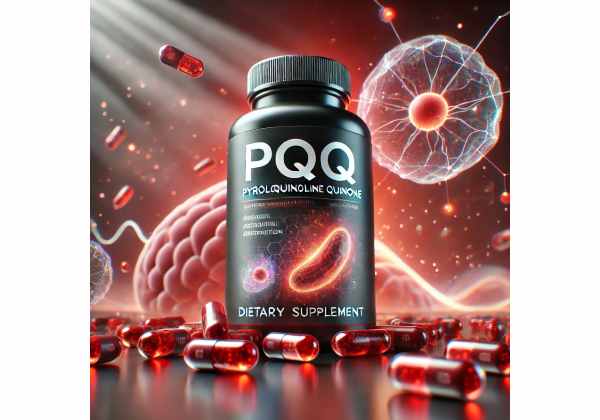
PQQ, short for pyrroloquinoline quinone, is one of those supplements that sounds highly technical for a reason. It is a redox-active quinone that has drawn interest not because it acts like caffeine or because it fills a classic vitamin gap, but because it may support mitochondrial function, cellular energy signaling, and protection against oxidative stress. Those themes matter in brain health, where energy demand is constant and small losses in metabolic efficiency can show up as mental fatigue, slower processing, or age-related cognitive decline.
That appeal has made PQQ a frequent ingredient in “mitochondrial” and “brain performance” formulas. Still, it is a supplement that deserves careful framing. Its mechanisms are scientifically interesting, and a handful of human trials suggest possible benefits for memory, attention, and mental status, especially at 20 mg daily. But the clinical evidence is still modest, and the strongest claims go well beyond what has been proven. This article explains what PQQ is, how it may work, how it is used, and where caution matters.
Table of Contents
- What PQQ Is and Why the Brain Cares
- How PQQ May Support Cognitive Function
- Possible Benefits for Memory, Mood, and Mental Energy
- What Human Research Actually Shows
- Dosage, Forms, and How to Use PQQ
- Safety, Side Effects, and Practical Precautions
What PQQ Is and Why the Brain Cares
PQQ is a small quinone compound found naturally in trace amounts in foods and human tissues. It is sometimes described as vitamin-like, though it is not officially classified as a vitamin. What makes it interesting is not its presence in the diet alone, but the kind of cellular work it appears to influence. PQQ is involved in redox chemistry, meaning it can participate in electron transfer reactions that shape oxidative stress, signaling, and energy metabolism. That matters because the brain is one of the most energy-demanding organs in the body.
Neurons need a steady supply of ATP to maintain membrane function, neurotransmission, repair processes, and plasticity. When mitochondrial performance slips, the brain often notices. The consequences may not show up as a dramatic disease at first. They can appear as slower mental processing, weaker attention, poorer stress resilience, or a growing sense of cognitive drag. This is why compounds linked to mitochondrial function often attract attention in brain-health research.
PQQ is especially intriguing because it has been linked in preclinical work to mitochondrial biogenesis, antioxidant defense, anti-inflammatory signaling, and protection against excitotoxic or oxidative injury. Those are major themes in age-related cognitive decline and neurodegenerative disease. In plain language, PQQ is interesting not because it seems to force the brain into a more stimulated state, but because it may help support the cellular machinery that lets the brain work well in the first place.
That makes it different from common focus aids. A stimulant changes how awake or driven you feel. A sedative changes how calm or sleepy you feel. PQQ fits neither model. It belongs more naturally in the same broad metabolic conversation as compounds that support cellular energy, such as CoQ10, though the two are not interchangeable. CoQ10 is more directly tied to the electron transport chain and membrane antioxidant protection, while PQQ is often discussed in relation to signaling pathways that affect mitochondrial number, resilience, and oxidative balance.
There is also a practical reason the brain conversation around PQQ has grown. Unlike many theoretical nutraceuticals, PQQ has some human data behind it. The data are still limited, but they are enough to move the discussion beyond pure mechanism. That does not make PQQ a proven brain supplement, but it does make it a serious candidate for cautious interest.
A fair starting point is this: PQQ matters because brain health is deeply tied to cellular energy, and PQQ may influence that terrain. The question is not whether the mechanism is interesting. It is how much of that promise shows up in real people.
How PQQ May Support Cognitive Function
The central theory behind PQQ and cognition is that healthier mitochondria can support healthier brain function. That sounds simple, but it reaches into several major biological systems at once. PQQ has been studied for its ability to influence mitochondrial signaling, redox balance, inflammatory tone, and neuronal protection. Together, those pathways create a plausible framework for why it might affect memory, focus, or mental stamina.
One of the most discussed mechanisms is mitochondrial biogenesis. In preclinical studies, PQQ has been linked to signaling pathways involving PGC-1 alpha, CREB, and related regulators of mitochondrial number and function. The practical implication is that PQQ may help cells maintain or build more efficient energy-producing capacity, especially under stress. In the brain, that could matter because neurons are unusually sensitive to energy shortfalls.
PQQ is also a potent redox-active molecule. That does not simply mean “antioxidant” in the vague marketing sense. It means PQQ can participate repeatedly in oxidation-reduction cycling and may help modulate the balance between reactive oxygen species and cellular defense. Oxidative stress plays a known role in cognitive aging, neurodegeneration, and stress-related cellular wear. If PQQ helps reduce that burden, even modestly, it may contribute to a more stable environment for neuronal function.
Several other mechanisms may matter as well:
- support for mitochondrial efficiency and energy metabolism
- modulation of inflammatory pathways that can affect neural tissue
- protection against glutamate-related or oxidative injury in preclinical models
- possible support for nerve growth-related signaling
- indirect benefits to sleep, fatigue, or stress that can feed back into cognition
That last point is practical. Cognitive function does not exist in isolation. A supplement that modestly improves sleep quality, lowers fatigue, or reduces oxidative stress may improve mental performance without acting as a direct “memory drug.” This is part of why brain-health supplements often overlap with topics such as brain fog and cognitive sluggishness. The mechanism may not be a simple neurotransmitter boost. It may be a broader improvement in the conditions the brain depends on.
Still, mechanism is not the same as proof. One of the most important things to understand about PQQ is that the biochemical story is stronger than the clinical story. The preclinical literature makes it reasonable to believe PQQ could support cognition, especially where mitochondrial strain is involved. But translating that into meaningful, reliable human outcomes is more difficult.
So how should this mechanism profile shape expectations? It suggests that PQQ is better thought of as a slow-burn support nutrient than a quick focus hack. If it helps, it is more likely to help through accumulated effects on brain energy, oxidative balance, and resilience than through a noticeable same-day shift in alertness. That makes it appealing to some users and disappointing to others, depending on what they are actually looking for.
Possible Benefits for Memory, Mood, and Mental Energy
PQQ is most often used for three broad goals: better cognitive performance, steadier mental energy, and long-term brain support. Among these, the cognitive angle has the strongest direct human signal. The mood and mental wellness story is more tentative, though still worth discussing because it shapes how many people decide whether the supplement feels helpful.
The cognitive benefits people usually hope for include:
- better memory, especially verbal or working memory
- improved attention or information processing
- less mental fatigue
- better executive function or cognitive flexibility
- support for healthy brain aging
These are reasonable targets, but the size of the likely effect matters. PQQ is not a stimulant, and it is not an approved treatment for memory disorders. The improvements reported in human studies tend to be selective and modest. That still matters. Small gains in attention, recall, or processing can be meaningful in everyday life, especially for middle-aged and older adults who feel less mentally sharp than they once did.
Mental energy may be one of PQQ’s more intuitive use cases. Because the supplement is tied to mitochondrial function, some people use it when they feel mentally worn down rather than emotionally distressed. That is an important difference. A person who feels “foggy,” slower, or more easily depleted may be a better candidate than someone looking for fast relief from panic, rumination, or insomnia.
Mood and emotional wellness are trickier. There are small signals suggesting PQQ may help with stress, fatigue, sleep, or subjective mood in some people, but that evidence is not strong enough to present it as a proven mood supplement. Any emotional benefit may be indirect. Better sleep, lower fatigue, or more stable energy can meaningfully improve how a person feels day to day. That is not the same thing as treating depression or anxiety. For that reason, PQQ fits differently than options often chosen more directly for nervous system calming, such as L-theanine.
A helpful way to frame PQQ is as a possible support for the “infrastructure” of mental performance. It may help the systems that let the brain keep working efficiently, especially under the pressure of aging, stress, or high energy demand. That kind of benefit is often subtle. It may show up as fewer off days, a bit less mental friction, or slightly more stable cognitive endurance rather than a dramatic feeling of being sharper.
Who may notice more? Older adults, people with self-perceived forgetfulness, or those under substantial metabolic stress may be more likely to notice a benefit than healthy young adults already functioning well. Who may notice less? Anyone expecting the clear immediacy of caffeine, or anyone whose main issue is plainly poor sleep, untreated depression, burnout, or an underlying medical condition.
The benefit profile is promising, but it rewards realistic expectations. PQQ may help some people think more clearly and feel less mentally drained. It is less convincing as a direct treatment for major mood symptoms or severe cognitive problems.
What Human Research Actually Shows
The human research on PQQ is encouraging enough to take seriously, but not strong enough to treat as settled. That balance matters. Many supplements sound promising in mechanistic reviews and then fade when tested in people. PQQ has not faded completely. It has shown enough positive human results to stay relevant, especially for cognition, but the clinical base is still small.
Several patterns emerge from the available trials. In studies using 20 mg of PQQ daily for 8 to 12 weeks, improvements have been reported in selected cognitive domains such as composite memory, verbal memory, attention, judgment, and cognitive flexibility. These findings appear in both middle-aged and older adults and, in one study, also in younger adults. That is notable because it suggests the supplement may not be limited only to late-life cognitive support.
At the same time, the results are not broad enough to justify sweeping claims. The trials are modest in size, product-specific, and often focused on narrow outcome measures rather than large clinical endpoints. This means the evidence supports a possibility of cognitive benefit, not a guarantee.
A balanced reading of the research looks like this:
- PQQ has shown positive effects on selected aspects of cognitive function in some human trials.
- The most common studied dose is 20 mg per day.
- Benefits usually appear over weeks rather than after a single dose.
- Mood, stress, fatigue, and sleep benefits are more preliminary than cognitive findings.
- The evidence is promising, but it is still not large-scale or definitive.
One reason this matters is that PQQ is often marketed as though its mitochondrial mechanism automatically proves major clinical benefit. It does not. Mechanism helps explain why the trials are plausible, but it does not remove the limits of the evidence.
Another nuance is product specificity. Much of the human research has been conducted with particular branded forms of PQQ disodium salt. That does not invalidate the findings, but it means consumers should be careful about assuming every product on the market is equivalent. Formulation, purity, and testing still matter.
The research also suggests that PQQ may be more helpful for long-range support than for acute performance enhancement. In that respect, it fits more naturally with preventive brain-health strategies than with classic “study supplement” expectations. That is why it belongs alongside broader conversations about healthy cognitive aging and prevention habits, even though it is nowhere near strong enough to stand in for those habits.
What the research does not show is just as important. PQQ has not been proven to prevent dementia, reverse major cognitive decline, or treat depression, anxiety, or ADHD. Those claims move too far beyond the data. The clinical signal is strongest for modest cognitive support and perhaps for related areas like mental fatigue or perceived mental wellness.
So the human literature supports careful optimism. PQQ is not just a theory, but it is also not a miracle molecule. It sits in the middle ground where a supplement can be genuinely interesting, possibly useful, and still very much in need of better trials.
Dosage, Forms, and How to Use PQQ
In real-world supplement use, PQQ is most commonly sold as PQQ disodium salt, usually in capsules providing 10 mg or 20 mg per serving. For brain-related goals, 20 mg per day is the most relevant benchmark because that is the dose used in much of the published human research on cognition. While higher doses have appeared in safety-related data, they are not the standard starting point for routine brain-health use.
A practical approach looks like this:
- Start with 10 mg daily if you prefer a cautious introduction.
- Move to 20 mg daily if your main goal is cognitive support and you tolerate it well.
- Take it consistently for at least 8 to 12 weeks before deciding whether it is helping.
- Consider taking it in the morning or with breakfast, since that mirrors several study protocols and may fit better with daytime mental performance goals.
PQQ can be taken alone, but it is also commonly paired with other mitochondrial or brain-health ingredients. Combination formulas with CoQ10 are especially common. The rationale is understandable because both compounds relate to cellular energy, but combination products make it harder to know which ingredient is doing what. If you are testing whether PQQ helps you, a simpler formula is usually easier to judge.
When choosing a product, it helps to look for a few basics:
- clearly labeled PQQ amount per capsule
- identification of the form as PQQ disodium salt
- third-party testing or transparent manufacturing standards
- minimal unnecessary fillers or vague proprietary blends
PQQ is not a supplement where “more is better” has been clearly established. Most of the useful brain-health conversation still clusters around 20 mg daily. That matters because some buyers assume that a more expensive formula with multiple add-ons or a much larger dose must be stronger. The evidence does not clearly support that assumption.
Timing is flexible, but consistency matters more than clock time. PQQ is not usually taken for an immediate burst of focus, so the goal is steady exposure rather than strategic acute use. It is better suited to being part of a routine than part of a “performance stack” used only on demanding days.
People also sometimes compare PQQ with other energy-oriented supplements such as creatine. That comparison is useful because both can be relevant to brain energy, but they work through different pathways. Creatine supports phosphocreatine buffering and rapid energy transfer, while PQQ is more often framed around mitochondrial signaling, oxidative balance, and resilience. For some people, that distinction shapes which one feels more relevant to their needs.
In practical terms, PQQ is best used as a steady, measured intervention, not a flashy one. The right dose is usually the dose that matches the research and that you can tolerate consistently.
Safety, Side Effects, and Practical Precautions
PQQ appears generally well tolerated in healthy adults at typical supplemental doses, and that is one of its strengths. Regulatory and clinical safety data are reassuring enough to support routine use in adults under the intended conditions, especially at 20 mg daily. At the same time, “generally well tolerated” is not the same as “fully characterized in every situation,” so a careful review of the limits is still important.
The side effects most likely to matter in ordinary use are usually mild and may include:
- stomach discomfort
- nausea
- headache
- restlessness in some sensitive users
- a general sense that the supplement feels too stimulating, even though it is not a classic stimulant
Not everyone experiences these effects, and many people report none. Starting lower can help if you tend to react strongly to supplements.
Safety discussions around PQQ often reference the fact that clinical studies have used doses up to 100 mg per day for up to 24 weeks without major safety concerns emerging. That sounds reassuring, and it is. But there is a nuance. Those studies were not all designed primarily to assess detailed organ safety, and some safety reviews note that evidence remains limited in areas such as renal monitoring. So while the safety picture is positive, it is not the same as having decades of exhaustive long-term data.
Certain groups should be more cautious:
- pregnant or breastfeeding individuals
- children and adolescents
- people with significant kidney disease or other major chronic illness
- those taking multiple supplements or prescription medications and trying to sort out adverse effects
- anyone with new or worsening cognitive symptoms who has not been medically evaluated
Drug interaction data for PQQ are not well developed, which means the safest language is simple: known interactions are limited, but absence of good data is not proof that interactions do not exist. If you take prescription medications, especially for chronic medical or psychiatric conditions, it is worth asking a clinician before adding it.
There is also a practical safety issue that is not about side effects. Because PQQ is associated with energy, mitochondria, and brain health, it can tempt people to use it as a substitute for more important interventions. It should not be used that way. If the problem is major sleep debt, metabolic dysfunction, depression, iron deficiency, medication side effects, or progressive memory loss, PQQ is at most a supporting player. The fundamentals of sleep and brain function, along with proper diagnosis and treatment, matter much more.
The bottom line is balanced. PQQ looks reasonably safe for many healthy adults at standard doses, especially around 20 mg daily, but it still deserves the same caution you would apply to any supplement that claims meaningful physiologic effects. Use it thoughtfully, buy it carefully, and keep expectations proportionate to the evidence.
References
- Pyrroloquinoline quinone: a potential neuroprotective compound for neurodegenerative diseases targeting metabolism 2024 (Review)
- Pyrroloquinoline-Quinone Is More Than an Antioxidant: A Vitamin-like Accessory Factor Important in Health and Disease Prevention 2021 (Review)
- Pyrroloquinoline quinone disodium salt improves brain function in both younger and older adults 2023 (Randomized Controlled Trial)
- Effect of Dietary Pyrroloquinoline Quinone Disodium Salt on Cognitive Function in Healthy Volunteers: A Randomized, Double-Blind, Placebo-Controlled, Parallel-Group Study 2022 (Randomized Controlled Trial)
- Safety of pyrroloquinoline quinone disodium salt as a novel food pursuant to Regulation (EC) No 258/97 2017 (Safety Opinion)
Disclaimer
This article is for educational purposes only and does not provide medical advice, diagnosis, or treatment. PQQ is not a proven treatment for depression, anxiety, dementia, ADHD, or other neurological or psychiatric conditions. Supplement effects can vary based on dose, formulation, health status, medications, and overall lifestyle. Speak with a qualified healthcare professional before using PQQ if you are pregnant, breastfeeding, take prescription medication, have a chronic medical condition, or have new or worsening cognitive or mental health symptoms.
If you found this article useful, consider sharing it on Facebook, X, or another platform that fits your audience.