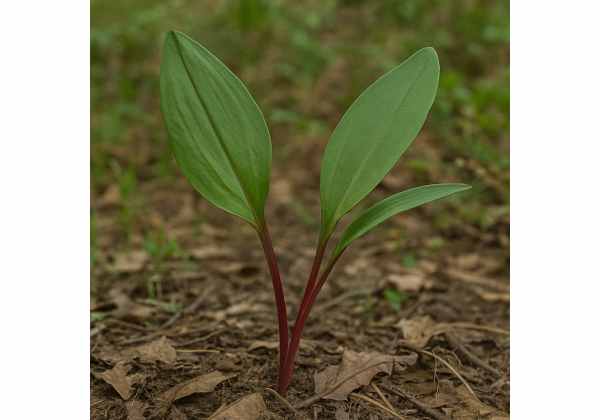
Ramps, also called wild leeks, are one of spring’s most distinctive edible herbs. Native to eastern North America, they emerge briefly from cool woodland soil with broad green leaves, a slender stem, and a flavor that sits somewhere between garlic, onion, and leek. That intense aroma points to the compounds that make ramps nutritionally interesting: sulfur-containing molecules, flavonol antioxidants, vitamin C, and other protective plant chemicals shared across the allium family.
What makes ramps especially appealing is that they bridge food and herbal tradition. They have long been valued as a seasonal spring tonic, but today they are better understood as a nutrient-dense wild food with plausible cardiovascular, antimicrobial, and antioxidant benefits rather than a proven stand-alone medicine. Their strongest case lies in regular culinary use, not in concentrated supplementation. At the same time, ramps deserve careful handling because overharvesting, plant misidentification, and digestive sensitivity are real concerns. A useful guide therefore has to cover both sides: what ramps may offer, and how to enjoy them safely, responsibly, and with realistic expectations.
Quick Facts
- Ramps provide sulfur compounds and flavonol antioxidants that may support cardiometabolic and cellular health.
- Their leaves and stems also contribute vitamin C and a concentrated onion-garlic flavor with very little energy.
- A practical culinary portion is about 0.25 to 1 cup fresh ramps, or roughly 25 to 100 g, depending on the recipe.
- People with allium allergy, strong digestive sensitivity, or uncertainty about wild identification should avoid foraged ramps.
Table of Contents
- What Ramps Are and Why They Matter
- Key Ingredients and Nutrition in Ramps
- Potential Health Benefits of Ramp and What the Evidence Supports
- Medicinal Properties and How to Interpret Them
- Culinary Uses, Preparation, and the Best Ways to Eat Ramps
- Dosage, Serving Size, Timing, and Duration
- Safety, Interactions, Look-Alikes, and Sustainable Harvesting
What Ramps Are and Why They Matter
Ramps are the spring-emerging leaves and bulbs of Allium tricoccum, a woodland allium native to the deciduous forests of eastern North America. They are often called wild leeks, though the flavor is usually sharper than the cultivated vegetable most people know from the grocery store. In the kitchen, ramps behave like a concentrated blend of onion, garlic, and leek. In the field, they behave like a spring ephemeral: they appear quickly, gather light before the forest canopy closes, then fade back underground after a short growing window.
That brief season is part of their appeal. Ramps are not a year-round staple, so they carry a culinary excitement that cultivated onions do not. But they also matter for deeper reasons. They sit at the intersection of local food traditions, foraging culture, Indigenous and Appalachian foodways, and modern interest in nutrient-dense seasonal plants. Historically, they were valued not only for flavor but also as one of the first fresh greens available after winter.
As a health topic, ramps should be understood first as a food, not as a supplement. That distinction helps keep the discussion grounded. Unlike a standardized extract, a bunch of ramps delivers its compounds in a whole-food matrix that includes water, fiber, sulfur metabolites, flavonols, and micronutrients. Their likely benefits come from repeated food use and the broader pattern of eating more allium vegetables, not from taking large medicinal doses.
Ramps also matter because they show how strongly chemistry shapes flavor. Their pungency comes from sulfur-containing compounds produced when the plant is cut or crushed. Those same families of compounds help explain why alliums have long attracted interest for heart health, microbial defense, and inflammatory balance. Still, not every allium is interchangeable. Ramps share much with garlic, onions, chives, and cultivated leeks, but their specific phytochemical balance, seasonality, and culinary role are distinct.
One more point deserves attention: ramps are culturally important enough that careless harvesting can damage wild populations. That makes them different from most common grocery vegetables. A responsible article on ramp health benefits therefore has to include more than nutrition and folk medicine. It also has to cover stewardship, because a plant can be good for people and still be harmed by the way people pursue it.
For most readers, the best starting frame is simple. Think of ramps as a strongly flavored spring allium with promising food-based health value, meaningful traditional importance, and a need for more restraint than trend-driven foraging often shows. That frame leaves room for appreciation without turning a seasonal wild food into a miracle herb.
Key Ingredients and Nutrition in Ramps
The most important compounds in ramps come from the same broad chemical families that make other alliums so interesting. Two stand out most clearly: sulfur-containing compounds and flavonol antioxidants.
The sulfur side of the story explains the smell. When ramps are chopped, crushed, or blended, the plant’s natural chemistry shifts quickly and forms reactive sulfur compounds, including thiosulfinate-type molecules associated with the characteristic garlic-onion bite. Earlier ramp chemistry work identified organosulfur compounds related to those found in garlic and onion, while newer ramp research continues to treat allicin and related sulfur chemistry as central markers of quality and potential function. These molecules are important because they are the ones most often linked with antimicrobial activity, vascular effects, and the pungent sensory profile that tells you a ramp is fresh.
The second major group is flavonols. Ramp-specific work has shown that the main flavonol backbones are quercetin and kaempferol, mostly present as glycosides. An important detail is where they are found. In ramps, these flavonol conjugates are concentrated mainly in the leaves, with far less in the stem and essentially none detected in the bulb in one key analysis. That means the green tops are not just garnish. They may be the most phytochemically valuable part of the plant from an antioxidant standpoint.
Nutritionally, ramps are still vegetables, so their profile is not about massive calories or macronutrients. Their strengths are lighter and more strategic:
- Vitamin C and other antioxidant-supportive compounds
- Polyphenols, especially flavonol glycosides
- Sulfur compounds associated with allium pungency and bioactivity
- Small amounts of fiber and minerals
- Strong flavor that can improve meal satisfaction without much energy load
A useful practical point follows from this chemistry: the leaves and bulbs are not nutritionally identical. If you want the full character of ramps, using both parts makes sense. If your interest leans more toward flavonols, the leaves deserve special respect. If your interest is stronger aroma and deeper allium punch, the bulbs and lower stems tend to matter more.
This also helps explain why ramps are sometimes discussed as both food and herb. They are too culinary to be treated like a niche supplement, yet too chemically active to be dismissed as just another green. In that way, they resemble garlic’s sulfur-rich food chemistry, though ramps are used more seasonally and have much less direct human trial evidence behind them.
The safest conclusion from the ingredient profile is balanced: ramps clearly contain meaningful bioactive compounds, but the presence of those compounds does not automatically prove large medical effects in humans. What it does show is that ramps are a legitimate functional food with real phytochemical value, especially when eaten fresh and handled in ways that preserve aroma and texture.
Potential Health Benefits of Ramp and What the Evidence Supports
The most honest way to discuss ramp health benefits is to separate direct ramp evidence from broader allium evidence. Ramps have promising chemistry, and they belong to a plant family with a strong research base, but they do not have the same depth of clinical study as garlic or onion. That means the benefit story is credible but still somewhat indirect.
The best-supported potential benefit is cardiometabolic support. Sulfur compounds and flavonols found across alliums are often studied for their roles in blood vessel function, oxidative stress, inflammation, platelet activity, and lipid metabolism. Traditional accounts of ramps also describe them as spring foods associated with circulation and vitality. Modern ramp research does not yet prove that eating ramps lowers blood pressure or cholesterol in the same way a garlic trial might examine those outcomes, but the chemistry gives a plausible reason why ramps can fit well into a heart-supportive dietary pattern.
A second likely benefit is antioxidant support. Ramps provide quercetin- and kaempferol-based flavonols, along with vitamin C and phenolic compounds. These compounds help the body manage oxidative stress, at least in theory and in broader allium research. In practical terms, this does not mean ramps are an antioxidant cure. It means they are one more useful plant in a varied diet built around vegetables, herbs, legumes, and whole foods.
A third possible benefit is antimicrobial and immune support. Allium sulfur chemistry has long been associated with antimicrobial activity in laboratory settings. That applies most strongly to garlic research, but it gives ramps a reasonable foothold in food-based wellness traditions. The evidence is much better for saying that ramps contain compounds with antimicrobial potential than for saying they can treat infection in real-world human use.
A fourth area is digestive stimulation through flavor intensity. Bitter, pungent, and aromatic plants often encourage salivation, appetite, and digestive readiness. Ramps are not bitter in the classic digestive-herb sense, but their sharpness can make meals feel more lively and satisfying. For some people, that can support better vegetable intake overall. For others, especially those with reflux or sensitive digestion, the same sharpness can backfire.
That last point matters because “benefit” is context-dependent. What helps one person may irritate another. A modest amount of ramps folded into eggs, grains, or beans is very different from a heavy serving of raw bulbs.
So what does the evidence really justify?
- Ramps are a nutrient-dense allium with plausible antioxidant and cardiometabolic value.
- Their strongest role is as a functional seasonal food, not as a proven therapeutic agent.
- Most large medicinal claims rest more on allium-family science than on ramp-specific human trials.
- Expectations should stay measured, closer to “helpful food” than “powerful remedy.”
Readers who enjoy gentler onion-family herbs may notice that ramps feel more forceful than milder alliums such as chives. That stronger sensory profile is part of what makes them exciting, but it is also a reminder that a little often goes a long way.
Medicinal Properties and How to Interpret Them
When older food and herb traditions describe ramps as medicinal, they are usually pointing to a cluster of overlapping properties rather than to one specific drug-like action. The most commonly suggested properties are antioxidant, antimicrobial, circulatory, and gently stimulating. Those descriptions are not unreasonable, but each needs interpretation.
Antioxidant is the easiest to defend. Ramp leaves contain flavonol glycosides built on quercetin and kaempferol, both of which are well-known antioxidant polyphenols in the wider plant world. In everyday terms, that means ramps contribute compounds that may help buffer oxidative stress and support cell signaling tied to resilience and repair. This is not unique to ramps, but ramps are one of the more flavorful ways to get those compounds in a spring diet.
Antimicrobial is plausible but often overstated. Allium sulfur compounds are biologically reactive, and laboratory work on allium vegetables frequently shows antimicrobial activity. The problem is that laboratory inhibition of microbes is not the same as reliable treatment in a living human body. Ramps may deserve a place in the long tradition of foods used during cold seasons or recovery meals, but that is very different from saying they replace standard treatment.
Circulatory or cardiovascular-supportive is also plausible, largely because of allium-family evidence. Garlic has the strongest data here, followed by onion and related vegetables. Ramps share some of the same chemical logic, which helps explain the folk view that they support “spring cleansing” or circulatory renewal. Even so, a food-based inference should stay a food-based inference.
Stimulating is perhaps the most practical property. Ramps wake up a dish. Their aroma, bite, and savoriness can stimulate appetite, encourage vegetable-centered cooking, and make simple meals feel more complete. This kind of property may sound less dramatic than “anti-inflammatory,” but it is often more useful in real life. Foods that make healthy meals easier to enjoy have genuine value.
The challenge is that medicinal language can quietly drift into hype. Once a plant is called antimicrobial, antioxidant, anti-inflammatory, and heart-protective, readers may assume it has been clinically proven in each of those areas. With ramps, that is not the case. The medicinal profile is best understood as chemically promising, traditionally respected, and clinically underdeveloped.
That is why ramps fit most comfortably into modern wellness as a whole food. They are not a standardized botanical with a recognized therapeutic dose. They are not a substitute for prescribed cardiometabolic treatment. They are not a high-evidence immune product. Instead, they are a traditional spring allium whose likely value comes from repeated culinary use alongside other protective foods, including other onion-family vegetables with similar sulfur and polyphenol themes.
Interpreted this way, the medicinal properties of ramps become easier to trust. They are real enough to matter, modest enough to stay believable, and strongest when they are allowed to remain what ramps have always been: food first, medicine second.
Culinary Uses, Preparation, and the Best Ways to Eat Ramps
The best use of ramps is also the simplest: eat them as a seasonal food. Their flavor is potent enough that they can act as both vegetable and seasoning, which gives them unusual flexibility in the kitchen. The leaves are tender and greener in character, while the bulbs and lower stems are sweeter, sharper, and more onion-like. Using both together gives the fullest profile.
Common culinary uses include:
- Sautéing them lightly with eggs, beans, mushrooms, or potatoes
- Folding chopped leaves into soups, broths, and grain dishes
- Blending leaves into pesto, herb sauces, or compound butter
- Pickling bulbs in small batches
- Finishing roasted vegetables, fish, or legumes with sliced ramp greens
- Stirring them into creamy spreads, yogurt sauces, or savory pancakes
Preparation affects both flavor and possible health value. Raw ramps preserve the brightest pungency and likely preserve more reactive sulfur chemistry. Light cooking softens the bite and makes them easier to digest, but it also changes their aromatic compounds. That does not make cooked ramps inferior. It simply means raw and cooked ramps do slightly different jobs.
A useful kitchen approach is to split the difference. Briefly sauté the bulbs or lower stems for sweetness and texture, then add the chopped greens near the end so they wilt without becoming dull or overcooked. This method preserves some freshness while avoiding the harshness that a large raw serving can bring.
Because ramps are seasonal and often expensive, many people try to stretch them. That is sensible. You do not need a plate full of ramps to benefit from their flavor. A small handful can perfume an entire dish. In that sense, ramps behave more like an herb than a bulk vegetable. Their strongest value often comes from strategic use.
Storage matters too. Fresh ramps are highly perishable. Keep them cool, slightly humid, and loosely wrapped rather than sealed airtight. Wash just before use, not far in advance. If you need longer keeping quality, freezing a chopped ramp butter or blended sauce is often more effective than trying to hold the raw plant too long.
There is also a responsible-use angle. Since ramps are wild-harvested in many markets, using the full plant you buy matters. Waste is especially hard to justify with a plant that grows slowly and faces harvesting pressure. If you use the bulbs in one dish, save the greens for another. If you have only leaves, treat them like a luxury herb rather than a missing second-best option.
For readers who enjoy other spring greens, ramps pair especially well with eggs, potatoes, white beans, mushrooms, asparagus, peas, and soft cheeses. They also sit naturally beside grassy, peppery vegetables and other seasonal herbs. In that role they resemble the culinary pleasure of European wild garlic, though ramps are generally more substantial and often more assertive in flavor.
Dosage, Serving Size, Timing, and Duration
Because ramps are primarily a food, “dosage” is best understood as serving size, frequency, and tolerance, not as a pharmaceutical-style prescription. At present, there is no established medicinal supplement dose for ramps backed by human clinical trials. That is the most important starting point.
A practical culinary range is about 0.25 to 1 cup fresh ramps, or roughly 25 to 100 g, depending on whether they are being used as an accent ingredient or as a featured spring vegetable. One ramp-specific phytochemical paper uses 1 cup of fresh ramps as 100 g, which is a helpful anchor for translating recipes into meaningful food amounts.
In practice, the right portion depends on how they are used:
- Small accent use: 10 to 25 g, such as chopped greens stirred into eggs or soups
- Moderate side-dish use: 25 to 60 g, such as lightly sautéed ramps with other vegetables
- Larger featured serving: 60 to 100 g, usually in mixed dishes rather than eaten alone
For many people, the middle range works best. It gives enough flavor and phytochemical exposure without turning the meal overwhelmingly pungent. Very large raw portions are more likely to cause digestive pushback, especially in people sensitive to onions or garlic.
Timing also matters. Fresh ramps are most appealing during their short spring window, and both flavor and plant development change across the season. Later-season ramps are often larger and can provide more usable material per plant, which has implications not just for the kitchen but for responsible harvest timing. From a food standpoint, this means you do not need to rush to the earliest, smallest shoots to enjoy them well.
As for duration, think in terms of seasonal repetition, not long-term supplementation. Ramps are not usually eaten daily for months. Their most natural pattern is several meals across a short spring season. That is perfectly consistent with how many traditional foods work: brief, recurring, food-based exposure rather than chronic concentrated use.
A few practical guidelines help:
- Start modestly if you have never eaten ramps before.
- Prefer mixed dishes over very large raw servings.
- Use leaves and bulbs together when possible for broader flavor and compound coverage.
- Let culinary enjoyment guide quantity more than health ambition.
- Avoid treating ramps like garlic capsules or standardized herbal extracts.
This food-first approach is important because ramps do not yet have the research base to justify stronger claims. For readers who want consistent allium exposure year-round, cultivated onions, garlic, chives, and leeks are easier to use regularly. Ramps are better thought of as a concentrated seasonal bonus than as an herb that must be “taken” every day.
In other words, the best dosage for ramps is usually the amount that makes a meal taste unmistakably alive without leaving the stomach or palate overwhelmed.
Safety, Interactions, Look-Alikes, and Sustainable Harvesting
Ramps are generally safe for most healthy adults when eaten in normal food amounts, but “safe” does not mean risk-free. The main concerns are digestive tolerance, allergy, plant identification, medication context, and ecological impact.
The most common issue is digestive irritation. Like garlic and onions, ramps can cause bloating, reflux, stomach burning, or loose stools in sensitive people, especially when eaten raw or in large amounts. People following a low-FODMAP pattern or those with irritable bowel symptoms may find that even small servings are enough.
Allium allergy or intolerance is another clear reason to avoid ramps. Anyone who reacts strongly to garlic, onions, or leeks should be cautious with ramps as well. Food allergy is different from simple pungency intolerance, but either way the response matters more than the plant’s popularity.
Medication interactions are less defined for ramps than for concentrated garlic supplements, but some caution is reasonable. Large amounts of allium-rich foods or concentrated preparations may theoretically matter for people with fragile digestion or those taking medications where platelet or anticoagulant balance is already an issue. Ordinary culinary use is usually the safer context. There is no established ramp extract dose to combine confidently with medicines, which is another reason not to treat ramps as a supplement.
The biggest practical safety issue for foragers is look-alike confusion. Ramps can be mistaken for poisonous plants such as lily-of-the-valley or false hellebore in parts of their range. The garlic-onion smell helps, but smell alone should never be the only test. Every collected plant should be identified confidently by multiple features, not by hope or habit.
Then there is sustainability, which is part of safety in a broader sense. Ramps grow slowly, and wild populations can be damaged by aggressive harvesting. Digging every bulb from a patch may produce a short-term haul and a long-term loss. Responsible practice favors restraint: harvest lightly, favor cultivated sources when possible, and know local rules before collecting.
A few clear guardrails help:
- Buy cultivated ramps when you can.
- If foraging, harvest only where it is legal and where identification is certain.
- Prefer taking leaves selectively rather than clearing bulbs from a patch.
- Keep portions moderate if you are new to ramps or sensitive to alliums.
- Do not use ramps as a replacement for medical treatment or as an untested concentrated extract.
Pregnancy and breastfeeding do not usually make normal culinary allium use unsafe, but there is no established medicinal ramp dosing standard for these stages, so food amounts remain the prudent lane. Children can eat small food amounts if tolerated, but foraged plants should never be introduced casually or without confident identification.
Ramps reward respect. Used thoughtfully, they are one of spring’s best edible herbs. Used carelessly, they can upset the stomach, be confused with toxic plants, or contribute to declining wild stands. That balance is what responsible herb writing should always protect.
References
- Characterization and Quantification of Major Flavonol Glycosides in Ramps (Allium tricoccum) | MDPI 2019 (Primary Research)
- Natural Antioxidants, Health Effects and Bioactive Properties of Wild Allium Species 2020 (Review)
- Harnessing the nutraceutical and therapeutic potential of Allium spp.: current insights and future directions – PMC 2024 (Review)
- Ramp (Allium tricoccum Ait.) weight differs across the harvest season: implications for wild plant stewardship and forest farming 2023 (Research Article)
- Cultivation of Ramps (Allium tricoccum and A. burdickii) | NC State Extension Publications 2025 (Official Extension Guide)
Disclaimer
This article is for educational purposes only and is not a substitute for medical advice, diagnosis, or treatment. Ramps are best approached as a seasonal food rather than a proven medicinal therapy. If you have food allergies, digestive disease, take prescription blood-thinning medication, are pregnant, or plan to forage wild plants, seek individualized guidance before making major changes. Never eat a wild plant unless you can identify it with confidence.
If this guide helped you, please share it on Facebook, X, or another platform you trust so more readers can enjoy ramps safely and responsibly.