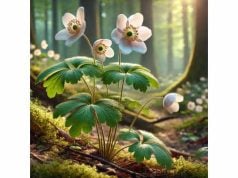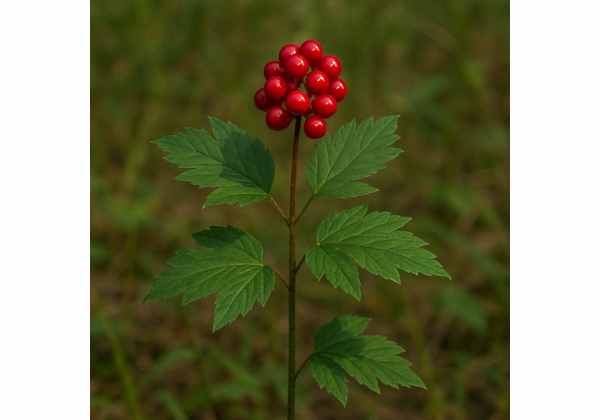
Red baneberry is a woodland wildflower with an arresting appearance and a complicated medicinal reputation. Its finely divided leaves, white flower clusters, and glossy red berries make it visually memorable, but the same berries are also the reason this plant belongs in a caution-first discussion rather than an enthusiastic wellness guide. Botanically, Actaea rubra is part of the buttercup family and closely related to other Actaea species that have far more documented medicinal use. Historically, the root and leaves of red baneberry were used in selected traditional practices for problems such as colds, rheumatic pain, boils, and other localized complaints. Modern chemistry has also identified triterpene glycosides and polyphenolic compounds that help explain why the plant drew attention in the first place.
Still, the most important fact is simple: red baneberry is a poisonous plant, and that safety reality outweighs any speculative self-care benefit. Its practical value today is mainly educational. Understanding its compounds, traditional context, and toxicity can help readers separate historical herbal interest from modern evidence-based use and avoid dangerous mistakes.
Essential Insights
- Red baneberry contains triterpene glycosides and polyphenolic compounds that have shown limited laboratory activity, but human clinical benefits are unproven.
- Historical use centered on weak root preparations and external applications for colds, pain, and skin complaints rather than routine daily use.
- No safe evidence-based internal dose in g, mg, or mL has been established for self-care use.
- Children, pregnant or breastfeeding people, and anyone tempted to eat the berries should avoid all internal exposure.
Table of Contents
- What red baneberry is and why caution comes first
- Key compounds and medicinal properties of red baneberry
- Potential benefits and what the evidence actually shows
- Traditional uses and why modern use is so limited
- How red baneberry has been prepared and why self-use is discouraged
- Dosage timing and why no safe self-care range can be recommended
- Safety poisoning risk side effects and who should avoid it
What red baneberry is and why caution comes first
Red baneberry is a perennial forest herb native to large parts of North America. It thrives in cool, moist woodlands, mountain forests, streamside thickets, and shaded slopes. The plant usually grows from a rhizomatous base, sends up one or more leafy stems, and produces clusters of small white flowers in spring or early summer. By midsummer to early autumn, those flowers mature into striking scarlet berries. The fruit is what most people notice first, and it is also what makes the plant risky.
From a medicinal-history perspective, red baneberry occupies an unusual position. It was clearly known and used, but it never developed into a broadly accepted modern herbal remedy. That matters because many readers assume that any herb with a long history must also have a well-established place in current plant medicine. Red baneberry does not. It is better described as a toxic woodland plant with some historical medicinal use than as a practical herb for everyday self-care.
A second reason caution comes first is taxonomic and practical confusion. Red baneberry belongs to the genus Actaea, which includes better-known plants such as black cohosh with its far more established medicinal history. That relationship can mislead people. Similar genus does not mean similar safety, similar dosage, or similar appropriate use. In fact, this is one of the biggest mistakes people make with lesser-known plants: borrowing dosage ideas or benefit claims from a relative that has been studied more thoroughly.
The plant is also sometimes confused in old literature with white baneberry and other related species. Historical writers often merged species that modern botanists keep separate. That means older therapeutic claims should be read as context, not as proof. Some records discuss roots, others mention leaves, and still others blur red baneberry with related cohosh-like herbs. This makes modern interpretation more difficult and increases the risk of oversimplified advice.
For most modern readers, the single most useful takeaway is this:
- red baneberry is not a beginner herb
- it is not a food plant
- it is not a substitute for proven treatment
- and it should not be experimented with casually at home
In practical terms, the plant matters more as an identification and safety topic than as a self-treatment option. Learning to recognize it can help prevent accidental ingestion, especially by children who may be attracted to the bright berries. Learning its historical uses can enrich one’s understanding of North American ethnobotany. But learning both of those points only helps if the safety message stays at the center.
Key compounds and medicinal properties of red baneberry
Red baneberry contains chemically active constituents, but that fact needs careful framing. “Active” is not the same as “safe,” and “interesting in the laboratory” is not the same as “useful in people.” Still, the plant’s chemistry is one reason it appears in phytochemical research.
The best-documented compounds in Actaea rubra roots are cycloartane-type triterpene glycosides. These are structurally complex molecules found across the broader Actaea group and often discussed as signature compounds in the genus. In the case of red baneberry, researchers isolated multiple xylosides of 9,19-cyclolanostane-type triterpenes, including a compound named rubraside A, along with beta-sitosterol glucoside. Those findings matter because they show the plant is not chemically vague or folkloric in a loose sense. It has a definable phytochemical profile.
A second important chemical category is the plant’s polyphenolic content. Work comparing North American Actaea species has shown that red baneberry roots and rhizomes contain polyphenols that contribute to measurable antioxidant behavior in laboratory assays. This sounds impressive, but it needs translation into plain language. Antioxidant activity in a test system suggests that certain molecules can neutralize reactive compounds under controlled conditions. It does not automatically mean the plant functions as a useful antioxidant therapy in daily human life.
Taken together, the main chemical themes in red baneberry include:
- cycloartane triterpene glycosides
- polyphenolic compounds
- sterol-related constituents
- other small bioactive molecules still discussed mainly in research settings
These compounds help explain why old healers may have perceived the plant as potent. But modern pharmacology adds an important complication: when isolated compounds from red baneberry were screened in several laboratory models, they did not show broad activity across every test. One constituent showed moderate anticomplement activity, while others were inactive in several screenings. That is a valuable reality check. The chemistry is real, but the pharmacology is not a blank check.
So what medicinal properties can be discussed responsibly? The safest wording is that red baneberry appears to have:
- limited laboratory antioxidant potential
- genus-consistent triterpene chemistry
- possible immune- or tissue-active effects worth further study
- no confirmed clinical medicinal property strong enough to justify routine internal self-use
That last point is the one that matters most. Red baneberry is a chemically interesting plant, not a clinically validated herbal medicine. In fact, its toxic nature makes the chemistry more relevant to caution than to recommendation. The presence of potent constituents helps explain why traditional systems noticed it at all, but it also helps explain why modern users should not assume that “natural” means gentle.
In short, the medicinal properties of red baneberry are best viewed as preliminary, historically suggestive, and scientifically incomplete. Its phytochemistry supports curiosity, but not confidence.
Potential benefits and what the evidence actually shows
A strong article on red baneberry has to handle the word “benefits” carefully. There are possible benefits in the historical and laboratory sense, but there are no well-established human clinical benefits that make this plant suitable for general self-care. That difference is the heart of the evidence discussion.
The most plausible potential benefit is antioxidant activity. Red baneberry extracts have shown free-radical scavenging behavior in laboratory analysis, which aligns with the plant’s polyphenolic content. This is scientifically useful because it suggests real biochemical activity rather than folklore alone. But antioxidant assays are an early stage of evidence. Many plants perform well in such tests, and only a small number translate into meaningful clinical use.
A second possible area of benefit lies in the broader activity of the plant’s triterpene glycosides. Since related Actaea species contain compounds with immune, inflammatory, and signaling effects, it is reasonable to say that red baneberry may contain pharmacologically relevant molecules. Yet the available red baneberry-specific screening data are modest, not dramatic. That means the plant has pharmacological promise, not proven therapeutic value.
The historical record points to several traditional benefit categories:
- relief of cold-like complaints
- support for aching joints or rheumatic discomfort
- external application for boils, wounds, or inflamed spots
- general “stimulant” use in weak or depleted states
These traditional categories deserve respect, but they also need modern interpretation. Historical use tells us the plant was considered medicinal. It does not tell us that it was consistently effective, broadly safe, or appropriate for current home use.
This is where practical judgment matters. If a person is looking for mild help with aches, they are usually better served by a better-studied option such as willow bark for gentle pain-support strategies. If someone wants an herb for immune-season support, red baneberry would not be a rational first choice. If the goal is soothing skin care, there are safer plants to consider before turning to a poisonous woodland species.
The most honest evidence-based summary looks like this:
- red baneberry has real phytochemical interest
- it has a documented history of medicinal use
- it shows limited laboratory activity
- it lacks modern clinical evidence strong enough to support routine internal use
That is not a disappointing conclusion. It is a useful one. It prevents the common error of turning a toxic plant with historical uses into a wellness product story. In the case of red baneberry, the evidence is better for caution than for recommendation.
So, does red baneberry have benefits? In a narrow sense, yes: it may contain bioactive compounds with antioxidant or other limited pharmacological relevance, and it clearly held a place in traditional herbal practice. But in the broader, practical sense that most readers mean by “health benefits,” the answer is much more restrained. Its potential is real, yet its risks and uncertainties are greater than its current usefulness for self-treatment.
Traditional uses and why modern use is so limited
Red baneberry has a richer traditional history than many people expect. Ethnobotanical records indicate that the plant was used in selected Indigenous and regional folk practices, especially the root and, at times, the leaves. Some accounts describe weak root decoctions as stimulants or remedies for colds, arthritis-like pain, rheumatism, and wasting states. Other reports mention leaves applied to boils or wounds to increase local circulation. Some records also describe use for stomach pain or other seasonal or situation-specific complaints.
These historical uses show that the plant was not regarded as inert. It was perceived as strong, purposeful, and worthy of careful handling. That historical attitude is important because it differs from modern supplement culture, which often treats herbs as lifestyle add-ons. Red baneberry was traditionally approached more like a potent tool than a daily tonic.
Still, modern use is very limited for good reasons.
The first reason is toxicity. A plant with poisonous berries and concerning systemic effects does not fit comfortably into contemporary home herbalism, especially when many safer herbs are available for the same general symptom categories. An external skin-comfort herb such as witch hazel for topical astringent support is far easier to justify in a modern household than a poisonous baneberry preparation.
The second reason is lack of standardization. Traditional use often relied on weak decoctions, precise local knowledge, seasonality, and direct experience with the plant. Modern readers usually do not have that context, and commercial red baneberry preparations are not common, standardized, or well studied. That means the practical safety net is weak.
The third reason is evidence quality. With many traditional herbs, modern research eventually builds a bridge between history and present-day use. Red baneberry has not made that transition. The available evidence does not strongly confirm most historical uses, and there are no modern clinical dosing frameworks that would let practitioners feel confident recommending routine internal use.
The fourth reason is ethical interpretation. Traditional use deserves accuracy and respect. It should not be stripped of context and used as a marketing shortcut. A plant being used historically for wounds, pain, or cold complaints does not automatically make it a good candidate for modern retail herbal medicine.
A balanced modern interpretation of red baneberry’s traditional uses would be:
- historically meaningful
- medically interesting
- culturally important
- scientifically underconfirmed
- and practically restricted by safety concerns
That does not reduce its value. It simply locates that value in the right place. Red baneberry is a plant that teaches caution, context, and the limits of herbal extrapolation. Its traditional uses are worth documenting because they help preserve medicinal knowledge and guide future research questions. They are not enough, on their own, to turn the plant into a recommended home remedy.
How red baneberry has been prepared and why self-use is discouraged
Historically, red baneberry was prepared in relatively simple forms. The root was the most important medicinal part in many accounts, and weak decoctions were a recurring method of use. Some traditions also mention the leaves, especially for external application on boils, wounds, or painful skin areas. These preparations were usually practical and local rather than standardized.
The main traditional preparation styles included:
- weak root decoctions
- external washes or steam-like uses
- chewed or crushed leaves for surface application
- occasionally blended use alongside other herbs
That historical pattern tells us something useful: when red baneberry was used, it was not typically treated like a casual tea herb or a food-like botanical. The plant seems to have been prepared in a controlled, purposeful way. Even then, those uses existed within knowledge systems that were far more familiar with the plant than most modern readers are.
For present-day use, however, the more useful question is not “how was it prepared?” but “should it be prepared at all?” For most people, the answer is no.
There are several reasons homemade preparations are a poor idea.
Uncertain strength
Red baneberry is not a standardized herbal product. A root preparation made from one population, season, or drying method may differ from another. With a toxic plant, that unpredictability is a serious problem.
Poor margin for error
The plant’s safety concerns mean that the usual herbal advice to “start low and see how you feel” is not an adequate safeguard. That approach may work with gentler herbs, but it is not a wise framework for poisonous species.
Easier access to safer substitutes
If the practical goal is skin soothing, an herb like calendula for external skin support and compresses makes more sense in modern care. If the goal is digestive, pain, or respiratory support, there are also safer and better-studied choices. Red baneberry simply does not clear the threshold of usefulness that would justify routine home preparation.
False confidence from historical recipes
Old herbal formulas can be fascinating, but they can also create a misleading impression that a recorded preparation equals a safe preparation. It does not. Historical documentation is not the same thing as modern validation.
From a modern safety standpoint, several preparation methods should be avoided outright:
- eating the berries
- making concentrated tinctures at home
- simmering strong root preparations for internal use
- giving the plant to children or pets
- combining it casually with other herbs to “balance” toxicity
The most responsible use of preparation knowledge is educational. Understanding how red baneberry was once prepared can illuminate medical history and ethnobotany. It does not create a strong case for current self-use. In modern herbal practice, knowing when not to prepare a plant is often as important as knowing how to prepare it.
Dosage timing and why no safe self-care range can be recommended
This is the section where red baneberry differs sharply from ordinary medicinal herb articles. There is no well-established modern dosage range for safe self-care use, and that absence is not a minor gap. It is a core part of the plant’s risk profile.
With many herbs, a dosage section helps readers translate evidence into practice. With red baneberry, the more responsible goal is the opposite: to explain why a dose cannot be responsibly recommended for unsupervised internal use.
There are four main reasons.
1. No clinical dosage framework
There are no meaningful human trials that establish a therapeutic dose, safe range, treatment window, or standardized modern preparation for red baneberry. Without that framework, giving a neat number in grams or milliliters would create false confidence.
2. Historical use is too variable
Traditional and historical uses describe weak preparations, but the details are inconsistent and often shaped by region, species interpretation, and local practice. That means historical dosing is informative as context but unreliable as a modern instruction set.
3. Species confusion muddies old records
Older literature did not always separate red baneberry cleanly from white baneberry or related Actaea species. That makes old dose descriptions less dependable than they may appear at first glance.
4. Toxicity changes the standard
For a toxic plant, the absence of a clear safe dose should lead toward avoidance, not experimentation. The right takeaway is not “use a smaller amount.” It is “do not treat this as a home-dosing herb.”
A practical modern dosage statement would therefore be:
- no safe evidence-based internal self-care dose can be recommended
- no timing protocol can be recommended for general use
- no unsupervised duration of use can be endorsed
This may frustrate readers who want a number, but honesty matters more than symmetry. Not every herb article should end with a teaspoon range. In some cases, the safest dose guidance is refusal to normalize dosing at all.
That is especially important because people sometimes try to borrow dosage logic from related plants. Red baneberry should not be dosed like black cohosh, white cohosh, or any other member of the broader herbal marketplace. Different species, different evidence, and different risk profiles make that approach unsafe.
If a reader is specifically seeking gentle urinary or digestive support, a herb with a known range such as corn silk for mild urinary comfort is a much more rational candidate. Red baneberry is not the plant to use when you want a measurable home dosing plan.
In plain terms, the dosage section for red baneberry is a safety lesson. The lack of a safe self-care dose is not an omission in the literature that the user should try to solve alone. It is a warning sign that the plant belongs outside casual internal use.
Safety poisoning risk side effects and who should avoid it
Safety is the most important part of any red baneberry article. All parts of the plant should be treated with caution, and the berries are especially important from a poisoning perspective because they are visually attractive and easier to ingest accidentally. Official poison references also warn about the rootstock and sap. In short, this is not a plant to test casually.
Potential poisoning symptoms may include:
- burning or irritation of the mouth and throat
- stomach cramps
- nausea and vomiting
- diarrhea
- dizziness
- headache
- weakness or circulatory symptoms
- more serious heart-related effects in severe poisoning
Even when symptoms begin as gastrointestinal distress, the plant should not be treated lightly. Some official safety sources note that severe poisoning may affect the heart and circulation. That matters most for children, who are more vulnerable because of smaller body size and curiosity about bright berries.
The people who should avoid internal use are, realistically, everyone outside tightly controlled professional or research settings. But the risk is especially important for:
- children
- pregnant people
- breastfeeding people
- older adults with medical complexity
- anyone with heart disease
- anyone with liver or kidney disease
- people using multiple prescription medicines
- pets and livestock that may encounter the plant
A few practical safety rules are worth stating clearly.
Never eat the berries
This is the most obvious risk. The fruit is decorative, not edible.
Do not use homemade extracts
Concentrated alcohol extracts or strong boiled preparations can magnify uncertainty and exposure.
Do not use it as a substitute for care
Red baneberry is not appropriate for self-treating infection, persistent joint pain, skin lesions, fever, or any serious symptom.
Seek help promptly if exposure occurs
If a child, adult, or pet may have eaten the berries or another part of the plant, contact a poison center or seek urgent medical guidance promptly rather than waiting for symptoms to evolve.
There is also a broader safety lesson here. Red baneberry is a good example of why “traditional medicinal plant” and “safe modern herb” are not interchangeable categories. Some historically used plants remain best handled as toxic botanicals with narrow ethnomedical importance rather than as generalized wellness tools.
For routine home support, gentler herbs usually make far more sense. If the issue is mild digestive upset, a better-known option such as peppermint for digestive and upper-airway support is easier to dose, easier to source, and far safer. That comparison is helpful because it shows what responsible herbal decision-making looks like: not finding the most exotic plant, but finding the safest plant that reasonably fits the need.
The safest final conclusion is straightforward. Red baneberry is botanically beautiful, historically interesting, and chemically notable, but it is not a practical self-care herb. For modern readers, its most valuable use may be recognition, respect, and avoidance.
References
- Progress in the Study of Chemical Constituents of Actaea cimicifuga and Actaea erythrocarpa and Their Biological Potential 2025 (Review)
- A review of the genus Actaea L.: ethnomedical uses, phytochemical and pharmacological properties 2023 (Review)
- Poisonous Plants in Alaska 2023 (Government Safety Reference)
- Analysis of polyphenolic compounds and radical scavenging activity of four American Actaea species 2007
- Phytochemical study of actaea rubra and biological screenings of isolates 2006
Disclaimer
This article is for educational purposes only and is not medical advice, diagnosis, or treatment. Red baneberry is a poisonous plant with limited historical medicinal use and no established role in routine self-care. It should not be eaten, self-prescribed, or used in place of professional medical care. If exposure or ingestion is suspected, especially in a child or pet, contact a poison center or seek urgent medical help promptly. People who are pregnant, breastfeeding, medically fragile, or taking prescription medicines should avoid internal use altogether unless supervised by a qualified professional with specific expertise.
If you found this article helpful, please share it on Facebook, X, or your preferred platform so others can learn about this plant with the right balance of curiosity and caution.