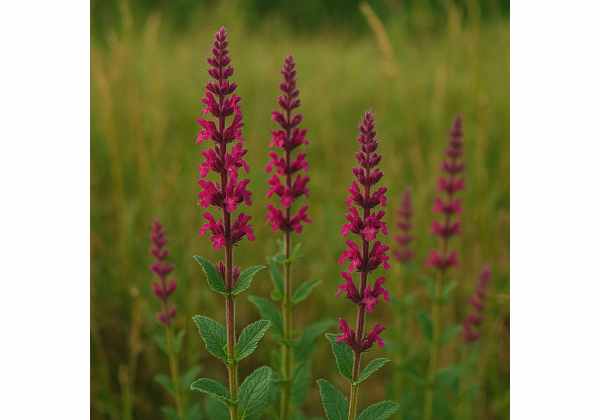
Red sage, better known in traditional Chinese medicine as danshen, is the dried root and rhizome of Salvia miltiorrhiza, a plant prized less for everyday culinary use than for its long clinical history. Unlike common kitchen sage, red sage is a circulation-focused medicinal herb, traditionally used to “invigorate blood,” ease blood stasis, and support conditions linked with pain, vascular congestion, and menstrual discomfort. Modern research has drawn attention to two main groups of compounds—salvianolic acids and tanshinones—which help explain its antioxidant, anti-inflammatory, vascular, and antiplatelet effects.
That said, red sage is not a simple wellness herb. It sits much closer to the line between herbal medicine and pharmacology than a mild tea plant does. Some modern studies suggest benefit in areas such as dyslipidemia, microcirculation, and certain cardiometabolic patterns, especially as an adjunct to conventional care. But many trials involve combinations, injections, or poorly standardized products, which makes sweeping claims unreliable. The most helpful guide, then, is one that presents red sage with both respect and restraint.
Top Highlights
- Red sage contains salvianolic acids and tanshinones that may support circulation, oxidative balance, and vascular function.
- Its best-known modern use is as a circulation-focused adjunct herb, especially in cardiometabolic and blood-stasis traditions.
- Traditional decoctions commonly use about 9 to 15 g of dried root daily under practitioner guidance.
- People who are pregnant, breastfeeding, bleeding easily, or taking warfarin or other blood thinners should avoid self-prescribing it.
Table of Contents
- What Red Sage Is and Why It Has Clinical Interest
- Key Ingredients and Medicinal Properties of Red Sage
- Health Benefits and What the Evidence Actually Supports
- Traditional Uses, Modern Forms, and Practical Applications
- Dosage, Timing, and How to Choose Red Sage Products
- Side Effects, Interactions, and Who Should Avoid Red Sage
What Red Sage Is and Why It Has Clinical Interest
Red sage is the medicinal root and rhizome of Salvia miltiorrhiza Bunge, a perennial plant in the mint family. In Chinese herbal medicine it is known as danshen, a name far more common in clinical literature than “red sage.” The herb has been used for centuries in East Asian medicine for patterns associated with impaired circulation, chest discomfort, menstrual pain, abdominal pain, traumatic injury, and blood stasis. In that traditional framework, it is considered a blood-moving herb with a particular affinity for the heart and liver systems.
One of the first useful clarifications is botanical. Red sage is not the same plant as culinary sage, Salvia officinalis. They belong to the same genus, but they are not interchangeable in chemistry, dose, or purpose. Culinary sage is used in food and mild herbal care; red sage is a far more specialized medicinal root. That difference matters, because people sometimes assume “sage” signals a familiar, gentle herb. Red sage is more pharmacologically active and needs more respect.
Modern clinical interest focuses on its vascular and inflammatory profile. Researchers have studied red sage for coronary disease, angina, ischemic injury, dyslipidemia, diabetic complications, fibrosis, and microcirculatory disorders. In many cases, the herb is used not as a stand-alone remedy but as a complementary agent alongside conventional treatment. This pattern tells you something important about its real place in modern care: red sage is most often discussed as an adjunct, not a replacement.
It also helps to understand why the evidence base can be hard to interpret. Much of the published literature involves:
- Combination formulas rather than red sage alone
- Injectable preparations used in hospitals, especially in China
- Products standardized differently across studies
- Trial designs that vary in quality and reporting
That does not mean the herb lacks value. It means precision matters. A dried-root decoction, a standardized capsule, a phenolic-acid extract, and a hospital injection are not the same intervention. When people say “red sage works,” the first question should always be: in what form, for whom, and alongside what else?
This is one reason red sage continues to attract serious attention rather than casual wellness enthusiasm. Its pharmacology is rich enough to be medically interesting, but its safety and product variability prevent it from fitting neatly into the self-care model. That tension shows up clearly in official European assessment work, which has acknowledged the herb’s long history and extensive literature while still concluding that the data do not support a simple, well-established self-medication monograph.
So the best opening frame is straightforward. Red sage is a traditional circulation herb with meaningful scientific interest, especially around vascular biology, oxidative stress, and blood-flow-related conditions. It may be useful in the right setting, but it is not a broad everyday tonic, and it is not the kind of herb to use casually because it sounds natural.
Key Ingredients and Medicinal Properties of Red Sage
Red sage has one of the more chemically interesting profiles in herbal medicine because its major compounds fall into two distinct groups: water-soluble phenolic acids and lipid-soluble diterpene quinones. This split helps explain why different extracts can behave differently and why the herb is often discussed in terms of both antioxidant and circulatory actions.
The best-known water-soluble compounds include salvianolic acid B, danshensu, rosmarinic acid, and related phenolic acids. These molecules are often associated with antioxidant activity, endothelial support, anti-inflammatory signaling, and protection against oxidative injury. In simple terms, they help explain why red sage is frequently studied in conditions where blood vessels, microcirculation, and tissue stress are involved.
The second major group includes the tanshinones, especially tanshinone IIA, tanshinone I, and cryptotanshinone. These are more lipophilic compounds and are often discussed for anti-inflammatory, antifibrotic, antiproliferative, and vascular effects. They are also part of the reason red sage looks so attractive in laboratory and preclinical work. Tanshinones interact with signaling pathways that influence inflammation, tissue remodeling, oxidative stress, and even platelet behavior.
Taken together, these compounds support the medicinal properties most often linked with red sage:
- Antioxidant activity, especially through phenolic acids
- Anti-inflammatory effects, across several signaling pathways
- Antiplatelet and anticoagulant tendencies, which create both therapeutic interest and safety concern
- Vasodilatory and microcirculatory effects, relevant to blood flow and tissue perfusion
- Antifibrotic potential, especially in preclinical liver, kidney, and cardiovascular models
These properties make the herb sound broadly beneficial, but the important word is “potential.” Mechanism is not the same as proven clinical outcome. A compound can reduce oxidative stress markers in a cell model and still fail to produce meaningful benefit in real human disease. That gap is especially important with red sage, because the pharmacology is impressive but the clinical literature is uneven.
Another complication is standardization. Some products are richer in salvianolic acids, while others emphasize tanshinones. That means two red sage supplements can share a plant name and still differ meaningfully in effect profile. One may lean more toward phenolic, water-based extraction; another may concentrate lipophilic fractions. Product labels that do not specify standardization leave consumers with very little information.
This is where red sage differs from gentler circulation-support herbs such as hawthorn in cardiovascular support. Hawthorn is often used for slow, supportive heart care. Red sage, by contrast, has a more intervention-like reputation because its compounds touch platelet function, vascular tone, and multiple inflammatory pathways more directly.
A final point worth making is that red sage’s “medicinal properties” are not all equally useful in self-care. Antioxidant language sounds friendly, but anticoagulant and vasodilatory activity can make an herb less appropriate for unsupervised use. In other words, the same chemistry that makes red sage clinically interesting is also what makes it less suitable as a casual supplement. That balance should shape how every other part of the article is read.
Health Benefits and What the Evidence Actually Supports
Red sage is one of those herbs where the list of possible benefits is long, but the list of well-established self-care benefits is much shorter. The most responsible way to present the evidence is to separate plausible clinical roles from stronger marketing language.
The first and most recognizable area is circulatory and cardiovascular support. Traditionally, red sage has been used for chest discomfort, impaired circulation, and blood stasis patterns. Modern research has examined it in coronary disease, angina, myocardial injury, vascular dysfunction, and atherosclerosis-related processes. Some meta-analyses suggest that red sage, especially when combined with standard care, may improve lipid profiles or selected cardiovascular markers. But that does not automatically make it a stand-alone heart herb for home use.
In fact, one carefully controlled water-extract trial in adults with hyperlipidemia and hypertension did not find beneficial effects on cardiovascular risk factors. That single study does not cancel all other evidence, but it does provide an important corrective: red sage is not a universally effective circulation tonic just because the herb has vascular pharmacology.
The second area is dyslipidemia and metabolic support. This is one of the more promising current lanes, particularly when red sage compounds are used alongside statin therapy rather than instead of it. Some recent analyses suggest additional improvements in total cholesterol, LDL, triglycerides, and HDL when combined with conventional treatment. That kind of adjunct effect is worth noting, but it still leaves a crucial boundary in place: red sage is not established as a primary cholesterol treatment.
A third area is microvascular and diabetes-related complications. Reviews increasingly discuss red sage for diabetic nephropathy, neuropathy, retinal changes, and inflammation-driven vascular injury. The mechanistic logic here is strong because oxidative stress, inflammation, endothelial injury, and fibrosis all sit within red sage’s known pharmacologic range. Yet much of this evidence still comes from preclinical work, combination therapy, or regionally clustered studies. It is promising, but not settled.
Other frequently mentioned benefits include:
- Menstrual and pelvic pain support in traditional blood-stasis patterns
- Antifibrotic effects in liver, kidney, and cardiovascular tissues
- Neuroprotective potential in ischemic or inflammatory injury models
- Supportive use in formula-based traditional practice, especially where pain and impaired flow coexist
The overall message is not that red sage lacks benefit. It is that the benefit profile is narrower and more conditional than many herb guides suggest. The strongest reading of the evidence is that red sage may be useful as a practitioner-guided, circulation-oriented adjunct in selected cardiometabolic or blood-stasis contexts. The weakest reading is the consumer fantasy that it is a general cure for poor circulation, high cholesterol, inflammation, and pain.
That distinction is important when comparing red sage with more consumer-facing circulation botanicals such as ginkgo for circulation and vascular support. Ginkgo is usually framed around cognitive and peripheral circulation questions in self-care. Red sage lives closer to clinician-guided, interaction-sensitive territory.
So what does the evidence actually support? A cautious answer would be this: red sage has biologically meaningful compounds, some encouraging adjunctive evidence, and a long traditional reputation. But the clinical literature is too heterogeneous, too product-dependent, and too interaction-heavy to justify broad, unsupervised claims. That may be less exciting than supplement advertising, but it is much more useful for real decision-making.
Traditional Uses, Modern Forms, and Practical Applications
Traditional Chinese medicine uses red sage in a way that is both more nuanced and more restrained than many modern supplement descriptions. It is classically used to move blood, dispel blood stasis, cool blood heat in some contexts, and calm irritability linked with constrained or stagnant patterns. In practice, this means it appears in formulas for chest discomfort, dysmenorrhea, abdominal pain, trauma-related pain, restlessness, or vascular stagnation patterns rather than as a general vitality herb.
That formula-based tradition matters. Red sage is rarely a “one-herb solves everything” plant in classical use. Practitioners select it because of how it behaves alongside other herbs, and that context often determines whether it is appropriate at all. A person with cold deficiency, fragile digestion, active bleeding, or pregnancy would not be approached the same way as someone with clear blood-stasis signs.
Modern preparations are much more diverse than traditional decoctions. Today red sage may appear as:
- Dried root slices for decoction
- Powdered root capsules
- Granules used in TCM practice
- Standardized extracts emphasizing phenolic acids or tanshinones
- Compound formulas that combine red sage with other herbs
- Injectable preparations used in medical settings in China
That last category is particularly important. A substantial part of the clinical literature involves injectable or hospital-based forms, often used with conventional therapy. These studies may sound persuasive, but they are not directly transferable to someone buying a capsule online. An injection used in a clinical setting is a different intervention from a dried-root supplement.
In real-world practice, red sage makes the most sense in a few settings. One is practitioner-guided TCM use, especially where pattern diagnosis matters. Another is structured adjunctive use, when a clinician familiar with herb-drug interactions is comfortable adding it to an existing plan. What makes much less sense is using it casually for vague goals such as “better blood flow” without knowing whether the product, dose, or medical context fits the herb’s actual profile.
Red sage also overlaps conceptually with other East Asian formula herbs that influence circulation and blood-related patterns. For example, it may appear in the same broader therapeutic neighborhood as dong quai in traditional Chinese formulas, though the two are not interchangeable. Dong quai is often chosen for menstrual and blood-nourishing uses with a different chemistry and safety pattern. Red sage is more distinctly circulation-moving and anticoagulant-leaning.
A practical application point worth emphasizing is that red sage should be matched to a clear question. Is the goal circulatory support? Lipid adjunctive care? Traditional menstrual pattern work? Recovery from a specific diagnosed condition under supervision? The herb becomes much less useful when its role is vague.
In modern consumer use, the safest application is not “take red sage for general health.” It is closer to “consider red sage only when the goal is specific, the product is clear, and the interaction profile has been reviewed.” That may sound stricter than many herb guides, but it is the best way to keep a clinically interesting herb from being used in the wrong context.
Dosage, Timing, and How to Choose Red Sage Products
Dosage is one of the most difficult parts of red sage guidance because the herb is used in so many forms, and those forms are not equivalent. The traditional dried-root dose most commonly cited in Chinese medicine is about 9 to 15 g per day in decoction. That range is useful as historical and clinical context, but it should not be interpreted as a universal self-care dose for every extract or capsule on the market.
The first rule is simple: dose the form, not the name. A decoction of sliced root, a powdered capsule, a concentrated extract, and a phenolic-acid-rich formula can differ substantially in strength and effect. Product labels should ideally tell you:
- Whether the product is whole root powder or an extract
- The extract ratio, if one is used
- Standardization details such as salvianolic acid B or tanshinone markers
- The actual daily serving size recommended by the manufacturer
Without that information, dosing becomes guesswork.
A second issue is that much of the better-known research does not support a single straightforward self-medication schedule. Some studies use hospital products. Others use combination formulas. Others rely on extracts calibrated quite differently from traditional decoctions. Official European assessment work has even noted that no specific oral adult dose can be confidently recommended for self-medication because the literature is too inconsistent and the safety profile is too interaction-sensitive.
That means the most honest dosing advice looks like this:
- For traditional use: 9 to 15 g dried root daily in decoction is a common classical range, but it is best interpreted as practitioner-guided rather than consumer-directed.
- For commercial extracts: follow only well-labeled products with clear standardization, and do not convert loosely between grams of root and grams of extract unless the extract ratio is known.
- For adjunctive use in complex health conditions: dosing should be individualized, especially if the person is already taking cardiovascular, antiplatelet, anticoagulant, or antihypertensive medication.
Timing also matters more than people assume. Because red sage can affect circulation, blood pressure, and medication handling, it is usually better taken consistently rather than randomly. Some clinicians favor use with food for tolerability, while others use decoctions between meals in traditional settings. The more important point is consistency and monitoring, not an exact universal clock time.
Quality selection is equally important. Better products usually have:
- Clear botanical identification as Salvia miltiorrhiza
- Plant part specified as root and rhizome
- Marker compounds or extract standardization
- Third-party testing for contaminants
- A manufacturer willing to state sourcing and batch controls
This is also why red sage should not be chosen the way people choose simple kitchen-support herbs. With circulation herbs, label quality can influence both effectiveness and safety. Even familiar warming roots such as ginger in concentrated medicinal use can shift from food-like to pharmacologically relevant depending on dose and form. Red sage does this even more clearly.
The best practical conclusion is that dosage for red sage should be conservative, form-specific, and guided by purpose. If a product does not clearly explain what is in it, how strong it is, and how it should be used, that uncertainty is not a minor issue. For an herb like this, uncertainty itself is a reason to pause.
Side Effects, Interactions, and Who Should Avoid Red Sage
Safety is where red sage stops looking like a generic herbal supplement and starts looking like a plant that demands real clinical judgment. The most important concern is bleeding risk, especially when the herb is combined with anticoagulants, antiplatelet agents, or other products that affect hemostasis. This is not a theoretical issue. Case reports and reviews have documented clinically relevant interactions, especially with warfarin.
The side effects most often mentioned include:
- Dizziness or lightheadedness
- Low blood pressure or a sense of weakness
- Headache
- Gastrointestinal discomfort or reduced appetite
- Itching or allergic-type reactions
- Increased bleeding tendency, especially with excessive use or interacting medicines
The best-known interaction is with warfarin, where red sage may increase INR and bleeding risk through both pharmacodynamic and pharmacokinetic mechanisms. That alone is enough to make self-prescribing unacceptable in anyone using warfarin. Caution is also appropriate with aspirin, clopidogrel, heparin, direct oral anticoagulants, and even regular NSAID use when bleeding risk is already present.
Other interaction concerns include:
- Antihypertensive drugs, because red sage may contribute to excessive blood pressure lowering
- Digoxin and other cardiac glycosides, where interaction concerns have been raised in the literature
- CYP-metabolized drugs, especially where product concentration and duration of use increase interaction potential
- Other antiplatelet or anticoagulant herbs, which may quietly compound risk
This is one reason the herb should not be stacked casually with “natural blood thinners.” Even familiar botanicals such as garlic in concentrated medicinal use can complicate bleeding-risk plans when combined indiscriminately. With red sage, that caution becomes even more important.
Who should avoid red sage unless specifically supervised?
- Pregnant people
- Breastfeeding people
- Anyone with a bleeding disorder
- Anyone taking warfarin or other blood thinners
- Anyone preparing for surgery or invasive dental work
- People with very low blood pressure or unexplained dizziness
- Children and adolescents, because safe oral use is not well established
- Anyone trying to self-treat abnormal bleeding or severe chest pain
Pregnancy deserves especially strong caution. Traditional sources and modern official assessments both advise against use because of the herb’s blood-moving and anticoagulant profile, with concern about miscarriage or bleeding. Breastfeeding is also not a setting for self-directed use because infant safety data are inadequate.
Another overlooked issue is indication creep. People sometimes start red sage for one reason, such as circulation, and then keep using it indefinitely because they assume herbs are safer than medicines. That is not a sound approach here. If the herb is used at all, it should have a defined goal, a clear stop point, and a medication review.
The safest overall message is this: red sage may be valuable in the right context, but it is not well suited to casual self-medication. Its chemistry is active enough to create both benefit and harm. With this herb, the line between “medicinal” and “too risky for self-use” is not very wide, and that reality should guide every decision around it.
References
- Ethnomedicine, phytochemistry, pharmacology, pharmacokinetics, and clinical application of Salvia miltiorrhiza Bunge (Lamiaceae): A comprehensive review – PubMed 2025 (Review)
- Salvia miltiorrhiza and Its Compounds as Complementary Therapy for Dyslipidemia: A Meta-Analysis of Clinical Efficacy and In Silico Mechanistic Insights – PMC 2024 (Meta-Analysis)
- Salviae miltiorrhizae radix et rhizoma – herbal medicinal product 2022 (Official Assessment Summary)
- Salvia Miltiorrhiza Root Water-Extract (Danshen) Has No Beneficial Effect on Cardiovascular Risk Factors. A Randomized Double-Blind Cross-Over Trial – PMC 2015 (RCT)
- Herb-drug interactions with Danshen (Salvia miltiorrhiza): a review on the role of cytochrome P450 enzymes – PubMed 2012 (Review)
Disclaimer
This article is for educational purposes only and is not medical advice, diagnosis, or treatment. Red sage is a pharmacologically active herb with meaningful interaction potential, especially around bleeding risk and cardiovascular medicines. It should not be used to self-treat chest pain, circulation disorders, menstrual abnormalities, or diabetes-related complications without qualified guidance. Anyone who is pregnant, breastfeeding, preparing for surgery, or taking anticoagulants, antiplatelet drugs, or blood pressure medicines should seek professional advice before using red sage.
If you found this article helpful, please share it on Facebook, X, or another platform you trust so more readers can approach red sage with both interest and care.