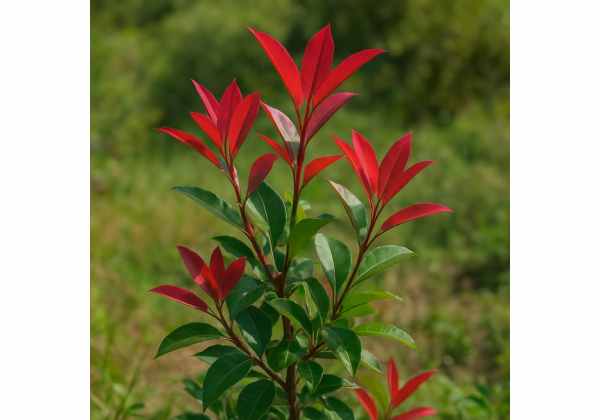
Red tip photinia is a familiar ornamental shrub, prized for glossy green leaves and vivid red new growth, but it is not a standard medicinal herb in the way peppermint, calendula, or chamomile are. Botanically, Photinia × fraseri is a hybrid shrub, and most serious interest in it comes from horticulture and plant chemistry rather than from established human therapeutic use. Recent studies show that its leaves contain anthocyanins, polyphenols, tannins, and proanthocyanidins, which helps explain why laboratory researchers have examined its antioxidant activity and other bioactive effects. At the same time, the safest and most accurate starting point is restraint: current evidence does not support routine self-treatment with red tip photinia, and safety concerns exist because Photinia foliage and fruits can contain cyanogenic glycosides. In other words, this is a plant with experimental medicinal potential, not a validated home remedy. A genuinely helpful article on red tip photinia should therefore focus on what is known, what is only preliminary, and why dosage and safety must be handled very carefully.
Essential Insights
- Red tip photinia shows experimental antioxidant and polyphenol-rich leaf chemistry, but no established human medicinal use.
- Laboratory studies suggest enzyme-inhibiting and other bioactive effects, yet these findings do not prove clinical benefit.
- No evidence-based oral dose in g or mL has been established for self-care use.
- Children, pregnant or breastfeeding people, and anyone considering ingestion of leaves or berries should avoid unsupervised use.
Table of Contents
- What red tip photinia is and why its medicinal role is limited
- Key compounds and medicinal properties of red tip photinia
- Potential health benefits and what the evidence actually supports
- Traditional and modern uses and why self-care use remains narrow
- How red tip photinia has been studied and why home preparation is not advised
- Dosage timing and why no safe oral range can be recommended
- Safety side effects and who should avoid red tip photinia
What red tip photinia is and why its medicinal role is limited
Red tip photinia, Photinia × fraseri, is a large evergreen shrub best known as a hedge and screening plant. It was discovered at Fraser Nursery in Birmingham, Alabama, and is a hybrid of Photinia glabra and Photinia serratifolia. In garden settings, it is valued for fast growth, dense branching, white spring flowers, and especially the bronze-red to bright red flush of new leaves that later turn glossy dark green. That eye-catching foliage is the reason most people know the plant at all. Its horticultural value is clear. Its medicinal value is much less clear.
That difference matters because many plants with striking colors or strong laboratory chemistry are assumed to be medicinally important, even when human use is poorly established. Red tip photinia is a good example. The shrub has been studied for leaf pigments, phenolic compounds, antioxidant behavior, and even experimental cell-level effects, but that is not the same as having a documented place in clinical herbal medicine. In the sources that most directly address the hybrid itself, it is treated first as an ornamental plant and only secondarily as a plant of experimental biochemical interest.
Another reason its medicinal role remains limited is that the plant is a hybrid rather than a classic long-used medicinal species. Some Photinia relatives have records of traditional use in regional herbal systems, but that does not automatically transfer to Photinia × fraseri. A hybrid shrub grown mainly for landscaping should not be treated as medicinal simply because related plants contain active compounds. This is one of the most common errors people make with ornamental plants: they move too quickly from “bioactive” to “beneficial.” In reality, a plant may be chemically interesting and still be a poor choice for home herbal use.
The safety question also narrows its practical role. Photinia species are reported to contain cyanogenic glycosides in foliage and fruits. That does not mean every casual touch is dangerous, but it is enough to shift the burden of proof. A plant with cyanogenic potential should not be treated as a casual tea, tonic, or kitchen remedy unless clear medicinal evidence and dosing guidance exist. For red tip photinia, they do not.
So where does that leave the plant? In a sensible middle position. Red tip photinia deserves attention as an ornamental shrub with experimentally interesting leaves, especially because its red foliage contains measurable anthocyanins and polyphenols. But a careful reader should approach it as a plant for study, not for routine ingestion. Its role today is best described as horticultural first, phytochemical second, and medicinal only in a highly limited, research-stage sense.
Key compounds and medicinal properties of red tip photinia
If red tip photinia has any serious medicinal relevance, it begins with its leaf chemistry. Recent work on Photinia × fraseri leaves shows that the red foliage is especially rich in anthocyanins, phenols, tannins, phenolic acids, condensed tannins, flavanols, and flavonols. Researchers have also identified specific phenolic patterns, including caffeoylquinic acid derivatives and cyanidin-3-O-glucoside, which appear to be important contributors to the red coloration and antioxidant profile. That means the plant is not chemically empty at all. On the contrary, the leaves are packed with classes of compounds that often attract pharmacological interest.
The most relevant compound groups include:
- anthocyanins
- phenolic acids
- tannins
- flavanols and flavonols
- proanthocyanidins
Anthocyanins are especially important because they are linked to the shrub’s red new growth. These pigments are often studied for antioxidant capacity, but in red tip photinia they also help explain a practical horticultural observation: the reddest leaves tend to be the most chemically active in antioxidant assays. In that sense, the ornamental quality and the biochemical profile partly overlap. That is interesting, but it still does not make the leaves a proven medicinal material. It simply means the vivid color reflects measurable chemistry.
Proanthocyanidins add another layer. A 2021 study isolated proanthocyanidins from Photinia × fraseri leaves and found that they showed tyrosinase-inhibiting and melanoma-cell effects in laboratory settings. The compounds were largely built from catechin and epicatechin units, with oligomers being major components. This is scientifically intriguing because tyrosinase inhibition can matter in pigmentation research and in cosmetic or dermatologic product development. Still, the key phrase is “in laboratory settings.” Cell-line activity is not the same as safe and effective human treatment.
These compounds suggest a few reasonable medicinal-property labels, but only if they are stated cautiously:
- antioxidant potential
- phenolic-rich leaf activity
- experimental tyrosinase inhibition
- preliminary bioactive and possibly surface-relevant properties
That last category should not be inflated. A plant showing polyphenol richness and enzyme interaction in vitro is not automatically an herbal remedy. For perspective, many better-known plants also contain antioxidant polyphenols, and a safer comparison for readers interested in everyday botanical antioxidants would be green tea and its far better-understood polyphenol profile. Red tip photinia is more experimental and much less suitable for self-care.
One more chemical point matters for safety: not every active compound is beneficial. Photinia foliage and fruits may contain cyanogenic glycosides, which can release cyanide after digestion. That hazard sits alongside the polyphenols and means medicinal interpretation must remain cautious. In red tip photinia, the chemistry supports interest, but not confidence. Its medicinal properties are best described as preliminary, laboratory-based, and unsuitable for casual home use.
Potential health benefits and what the evidence actually supports
A good article on red tip photinia has to answer the “benefits” question without pretending the plant is a validated remedy. The most honest answer is that the plant has experimental bioactive potential, not established human health benefits. That distinction protects readers from the common mistake of treating preliminary research as direct self-care guidance.
The strongest experimental benefit category is antioxidant activity. In recent leaf-color research, red leaves showed higher totals of anthocyanins, phenols, tannins, phenolic acids, condensed tannins, flavanols, and flavonols, along with stronger antioxidant assay readouts. This gives the plant a credible antioxidant profile in vitro. But it does not show that eating, brewing, or applying the shrub in home remedies improves human health. Antioxidant assays are useful research tools, yet they are still early-stage evidence.
A second experimental benefit involves tyrosinase inhibition and melanoma-cell effects from isolated leaf proanthocyanidins. This may sound dramatic, but it must be framed carefully. The published study did not show that red tip photinia treats skin disorders or cancer in people. What it showed is that isolated compounds from the leaves interacted with tyrosinase-related processes and affected melanoma cells in vitro. That is interesting for drug-discovery or cosmetic-science discussions. It is not a reason to use the plant medicinally at home.
A third type of bioactivity, though not really a human “benefit,” is allelopathy. A recent study found that aqueous flower and leaf extracts of Photinia × fraseri inhibited seed germination in a concentration-dependent way, with flower extracts showing stronger effects. This finding supports the idea that the plant contains potent secondary metabolites, but it is not a medicinal virtue. In fact, it underlines the opposite lesson: biologically active plants can have strong effects that are useful in agriculture or biochemistry without being appropriate for ingestion.
So what can be said responsibly? Red tip photinia may offer:
- experimental antioxidant potential
- experimentally observed enzyme-related activity
- chemically rich red leaves with measurable phenolic content
What cannot be said responsibly is that it helps digestion, immunity, skin aging, inflammation, or respiratory health in actual patients. There are no human clinical trials establishing those outcomes for this hybrid. If a reader is genuinely looking for safe topical plant support, a far better choice is usually calendula, which has a much more practical and established place in external care. Red tip photinia is best viewed as a research plant, not a ready-made herbal product.
In short, the evidence supports possibility, not practice. Red tip photinia may be chemically promising, but its “health benefits” remain experimental, indirect, and too uncertain to recommend as routine self-care.
Traditional and modern uses and why self-care use remains narrow
One of the most important things to understand about red tip photinia is that its modern identity is overwhelmingly ornamental. It is planted as a hedge, screen, and decorative shrub, not stocked in most herbal dispensaries. That already tells you something about its practical medicinal status. When a plant is common in landscapes but rare in responsible herbal medicine, there is usually a reason. In this case, the reason is a mix of limited medicinal tradition, uncertain safety, and a lack of validated human applications.
Traditional medicinal use for the hybrid itself is not well established in the sources most directly focused on Photinia × fraseri. That sharply distinguishes it from many classic herbs, whose identity is built around persistent folk use, formal pharmacopeia inclusion, or both. Some related Photinia species have regional medicinal histories, but it is poor herbal reasoning to copy those uses onto this hybrid without strong support. Hybrids can differ from their parent species not only in appearance but also in phytochemical balance and safety profile.
Modern uses are therefore much narrower and mostly non-therapeutic:
- ornamental hedging and screening
- visual interest from red young foliage
- experimental leaf studies on phenolics and antioxidants
- laboratory exploration of proanthocyanidins and enzyme inhibition
- exploratory agricultural work on allelopathic extracts
That is a very different list from what people expect when they search for “health benefits.” It means the most defensible “use” of red tip photinia today is as a plant to study, not a plant to self-prescribe. Some readers may find that disappointing, but it is actually useful. It keeps the discussion grounded in what the plant truly offers rather than what people hope it offers.
A sensible modern application might arise in controlled cosmetic or phytochemical research, especially where tyrosinase inhibition or polyphenol-rich extracts are being explored. But that is not the same as recommending a homemade tincture, tea, salve, or chewable leaf. If someone wants a practical plant for soothing or surface care, a more appropriate option would usually be aloe vera for better-known gentle external use. Red tip photinia simply has not earned that level of direct self-care trust.
This is also why “uses” and “benefits” have to be separated. A plant can be used in laboratory systems or horticulture without becoming an herb for home medicine. In red tip photinia, the narrowness of medicinal use is not a gap waiting to be filled by experimentation. It is a warning that the plant remains outside established therapeutic practice. The most helpful takeaway is therefore a conservative one: admire it in landscapes, respect its chemistry, and do not confuse experimental activity with proven herbal usefulness.
How red tip photinia has been studied and why home preparation is not advised
The most revealing way to discuss preparation is to note how researchers, not herbalists, have worked with red tip photinia. In the current literature, the plant is studied through analytical extraction and controlled experimental methods rather than through traditional tea-making or clinical herbal formulations. Leaves have been analyzed for anthocyanins, polyphenols, and antioxidant activity. Proanthocyanidins have been isolated and characterized with instrumental chemistry methods. Flower and leaf extracts have been prepared in aqueous concentrations for germination assays. None of this resembles a validated home-remedy tradition.
That matters because people often assume that if a scientific paper mentions an extract, they can improvise a tea or tincture at home. With red tip photinia, that would be poor judgment. Laboratory extraction is designed to isolate, quantify, and test compounds under controlled conditions. It is not the same thing as establishing safe household use. When a plant also carries cyanogenic concerns, the gap between laboratory method and home preparation becomes even more important.
The main experimental preparation types include:
- phenolic and anthocyanin profiling from leaves
- isolated proanthocyanidin fractions from leaves
- aqueous flower and leaf extracts in graded concentrations
- antioxidant assays such as DPPH, ABTS, and FRAP
Notice what is missing from that list:
- no established folk infusion protocol
- no recognized clinical tincture standard
- no accepted topical formulation for consumers
- no validated oral dosage form for self-care
This absence is not a technicality. It is the clearest signal that home preparation is not advisable. A person trying to make a tea, decoction, powder, capsule, or salve from red tip photinia would be moving far ahead of the evidence and working against the plant’s safety uncertainties. If the real goal is topical botanical support, a far safer and better-established route is usually tea tree or another clearly defined topical botanical, depending on the need and the person’s tolerance. Red tip photinia does not belong in the same practical category.
There is another reason to avoid home preparation: ornamental plants are not automatically harvested or stored with medicinal-quality handling in mind. Landscape shrubs may be exposed to pesticides, fungicides, road dust, and environmental contamination. Red tip photinia is also well known horticulturally for disease issues, especially leaf spot. That makes backyard harvesting even less appropriate. A plant already weak in medicinal justification becomes a poorer candidate when the material source is uncertain.
The responsible conclusion is straightforward. Red tip photinia has been studied as a chemically active ornamental shrub, not developed as a safe home herbal material. Its extracts belong in research settings. Its leaves and berries do not belong in improvised self-treatment.
Dosage timing and why no safe oral range can be recommended
This is the section where red tip photinia differs most sharply from ordinary herb articles. There is no evidence-based oral dose for self-care use, and that fact should shape the entire discussion. A plant with uncertain safety and no validated medicinal tradition is not improved by forcing it into a familiar dosing template. In this case, the most useful dosage guidance is to explain why a range cannot responsibly be recommended.
The reasons are clear.
First, there are no human clinical trials establishing an oral therapeutic dose, timing schedule, or duration of use for Photinia × fraseri. The available work is chemical, horticultural, cell-based, or laboratory-extract research. Second, the plant carries a safety concern because Photinia foliage and fruits can contain cyanogenic glycosides. Third, even the experimental aqueous extract concentrations reported in allelopathy studies were designed for seed-germination assays, not for human intake. Using those numbers as a medicinal dose would be both illogical and unsafe.
So the most accurate dosage statements are:
- no safe oral self-care dose has been established
- no recommended timing schedule exists for ingestion
- no validated duration of internal use exists
- no home standard exists for tea, tincture, powder, or capsule use
This may feel unsatisfying if you expected a teaspoon or milligram range, but honesty is more useful than symmetry. Not every plant should be dosed simply because the article format asks for dosage. For some plants, “no recommended oral dose” is the most responsible and medically sound answer. Red tip photinia is one of them.
A related mistake is assuming that a low dose would make the plant acceptable. That logic does not hold up well here. Lowering the amount does not solve the fact that no beneficial oral range has been established in the first place. In herbal medicine, a dose only matters when there is a plausible safe window and a defined intended use. With red tip photinia, neither is settled.
This is also where comparison can help. If a reader is actually seeking gentle oral botanical support, something like chamomile offers a much clearer combination of traditional use, reasonable dosing, and everyday safety. Red tip photinia does not. The most practical “dosage advice” is therefore avoidance of oral self-experimentation, especially with leaves, berries, and concentrated homemade extracts.
In short, the absence of an oral dose is not a missing detail waiting to be guessed. It is a meaningful safety conclusion. Red tip photinia should not be treated as a self-dosed medicinal herb.
Safety side effects and who should avoid red tip photinia
Safety is the most important part of any realistic article on red tip photinia. The central issue is that Photinia species can contain cyanogenic glycosides in foliage and fruits, which can release cyanide after digestion. This has been highlighted most clearly in animal toxicology contexts, but the underlying lesson is broader: this is not a shrub to treat casually as edible or medicinal. The plant’s ornamental popularity should never be mistaken for proof of safety in self-care use.
Potential side effects or risks from inappropriate exposure may include:
- stomach upset
- nausea
- abdominal discomfort
- poisoning risk if significant plant material is ingested
- unknown interaction risk with other plant preparations or medicines
- skin irritation if crude plant material is handled aggressively on sensitive skin
The risk profile is still somewhat uncertain for humans because direct clinical use data are thin. But uncertainty is not a reason for optimism. It is a reason for caution. A plant with possible cyanogenic content, no validated dose, and no established internal benefit should be kept out of casual home remedies.
The groups who should avoid red tip photinia most clearly include:
- children
- pregnant people
- breastfeeding people
- pets and grazing animals
- anyone with liver, kidney, or significant metabolic disease
- people tempted to ingest berries, leaves, or homemade extracts
- people looking for a substitute for actual medical treatment
Another practical safety issue is confusion between “natural” and “low risk.” Red tip photinia is a good example of why that assumption fails. Ornamental shrubs often produce defensive chemicals precisely because they need protection against herbivores and stress. Those same defensive compounds may make them unsuitable as household remedies. In this case, the bright leaves are beautiful, the chemistry is real, and the medicinal self-care value remains poor.
If a person wants a plant for everyday topical support, a much safer direction is usually witch hazel or another better-established external-use botanical. Red tip photinia is not the shrub to experiment with when safer and clearer options already exist.
The safest bottom line is simple. Red tip photinia may be chemically interesting and experimentally promising, but it is not a practical medicinal plant for self-treatment. Do not ingest the leaves or berries, do not improvise internal preparations, and do not assume ornamental familiarity equals herbal safety. For this plant, respect means distance, not experimentation.
References
- Photinia × fraseri – Plant Finder current page
- Light intensity plays the key role in the regulation of leaf color, anthocyanin and polyphenol profiles, as well as antioxidant activity of Photinia × fraseri leaves 2024
- Proanthocyanidins isolated from the leaves of Photinia × fraseri block the cell cycle and induce apoptosis by inhibiting tyrosinase activity in melanoma cells 2021
- In vitro allelopathic potential of Photinia × fraseri extracts on the seed germination of selected crop and weed species 2025
- Table: Poisonous Range Plants of Temperate North America-Merck Veterinary Manual current page
Disclaimer
This article is for educational purposes only and is not medical advice, diagnosis, or treatment. Red tip photinia is primarily an ornamental shrub with limited experimental medicinal research and no established oral therapeutic use for self-care. Because Photinia foliage and fruits may contain cyanogenic glycosides, the plant should not be ingested or used as a homemade remedy without expert toxicological and botanical guidance. Seek urgent medical or poison-center advice if significant ingestion is suspected, especially in a child, pet, or grazing animal.
If you found this article useful, please share it on Facebook, X, or your preferred platform to help others find careful, evidence-aware plant information.