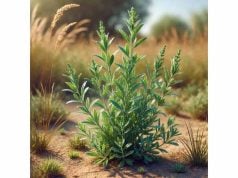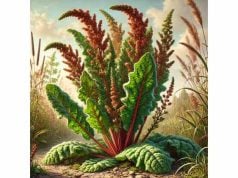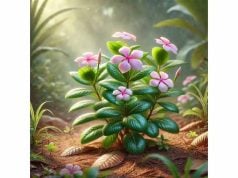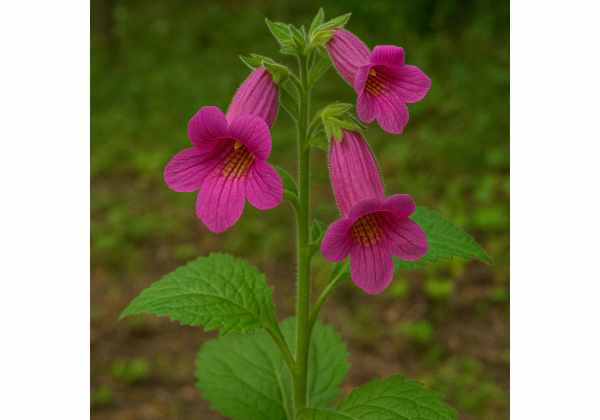
Rehmannia is a traditional East Asian medicinal herb best known for its root, which is used in different forms depending on how it is prepared. In Chinese medicine, it is often called di huang, and the difference between raw and prepared rehmannia matters because processing changes both its traditional role and parts of its chemical profile. Modern interest in rehmannia centers on its anti-inflammatory, antioxidant, and immune-modulating compounds, especially iridoid glycosides such as catalpol, along with phenylethanoid glycosides and polysaccharides.
People usually look into rehmannia for recovery support, dryness-related symptoms, menstrual and midlife wellness formulas, and broader “yin” or restorative tonics. That said, the research picture is mixed. Laboratory and animal studies are extensive, but strong human evidence is still limited for most uses. A few recent clinical and review papers are promising, especially for formula-based use and one small skin-health trial, yet rehmannia is not a proven stand-alone treatment for any major condition. The safest way to think about it is as a potentially useful traditional support herb whose benefits depend heavily on the form, dose, and reason for use.
Key Insights
- Rehmannia is mainly used for restorative, moisture-supporting, and inflammation-related goals rather than as a quick symptom reliever.
- The strongest modern interest is in antioxidant, immune-modulating, and tissue-protective effects, but most evidence remains preclinical.
- Traditional oral use commonly falls around 10 to 30 g of dried root per day in decoction-style preparations, while extracts are much smaller and not directly equivalent.
- Pregnant or breastfeeding people and children should generally avoid unsupervised use.
- People taking diabetes medicine, blood-pressure medicine, or immune-active treatments should use extra caution.
Table of Contents
- What Is Rehmannia and Why Processing Matters
- Key Compounds and Medicinal Properties
- Potential Health Benefits and What the Research Says
- Traditional Uses and Modern Forms
- Dosage, Timing, and How Long to Use It
- Side Effects, Interactions, and Who Should Avoid It
- How to Use Rehmannia Wisely
What Is Rehmannia and Why Processing Matters
Rehmannia usually refers to the root of Rehmannia glutinosa, a flowering plant now generally placed in the Orobanchaceae family. It has been used for centuries in Chinese, Korean, and Japanese herbal traditions, where it is treated as a serious medicinal ingredient rather than a casual wellness herb. Most of the time, when people buy rehmannia supplements, they are buying some form of the root.
One of the most important facts about rehmannia is that it is not a single, uniform product. Traditional systems distinguish among fresh, dried, and prepared forms. In Chinese medicine language, fresh or raw forms are often grouped under sheng di huang, while the processed form is commonly called shu di huang. Processing may involve steaming, drying, and sometimes repeated treatment that changes taste, color, texture, and chemistry. That is why two bottles labeled “rehmannia” can behave differently in practice.
This matters for three practical reasons.
First, the traditional purpose shifts with preparation. Raw rehmannia is often described as cooler and more clearing. Prepared rehmannia is usually viewed as deeper, richer, and more tonic. Even people who do not use traditional diagnostic language can still understand the distinction: one form is usually chosen for a more reducing, cooling style of support, while the other is chosen for rebuilding and nourishment.
Second, the chemistry changes with processing. Marker compounds such as catalpol may decrease, while other compounds, including certain sugar-derived and Maillard-reaction products, increase. That can alter both activity and tolerance.
Third, the preparation affects digestion. Rehmannia, especially the prepared root, is often described as dense, moistening, and heavy. Some people tolerate it well, while others notice bloating, fullness, or loose stools if the dose is too high or the product is not matched to them.
For everyday users, the best takeaway is simple: do not assume all rehmannia products are interchangeable. Ask four questions before using it:
- Is this raw root, prepared root, leaf extract, or a multi-herb formula?
- Is the product standardized, or is it simply powdered plant material?
- Is the dose listed as actual extract weight or dried-root equivalent?
- What is the intended goal: short-term symptom support, traditional formula use, or longer restorative use?
Those questions matter more than the front-label marketing language. Rehmannia can be a thoughtful herb, but it is not a plug-and-play supplement.
Key Compounds and Medicinal Properties
The reason rehmannia attracts so much research attention is that its root contains several biologically interesting compound groups. The most discussed are iridoid glycosides, phenylethanoid or phenylpropanoid glycosides, oligosaccharides and polysaccharides, and processing-related compounds that become more prominent after steaming or drying.
The best-known iridoid glycoside is catalpol. It appears again and again in laboratory papers on rehmannia because it has been studied for antioxidant, anti-inflammatory, glucose-regulating, neuroprotective, and tissue-protective effects. Catalpol is one reason people often associate rehmannia with metabolic and nerve-support claims, although most of that research is still preclinical.
Other iridoid-related compounds include aucuboside and several rehmannia-specific glycosides. These are thought to contribute to broad cell-signaling effects involving inflammation, oxidative stress, apoptosis, and immune response. In plain language, they may help explain why rehmannia repeatedly shows up in research on tissues under stress.
A second important group is phenylethanoid glycosides, especially acteoside, also called verbascoside. These compounds are often discussed for antioxidant and anti-inflammatory activity. They are also relevant to the plant’s skin and tissue-support reputation, because they may help defend cells from oxidative damage and inflammatory signaling.
Rehmannia also contains saccharides and polysaccharides, including stachyose and related oligosaccharides. These are less glamorous than catalpol in marketing language, but they may matter just as much. Some researchers think the polysaccharide fraction helps explain immune-modulating and gut-related effects. This does not mean rehmannia is a probiotic herb, but it does suggest that part of its activity may involve the intestinal environment and the immune system rather than only direct pharmacologic action.
Processing adds another layer. When raw root is steamed and prepared, its chemistry shifts. Catalpol may fall, while compounds such as 5-hydroxymethylfurfural become more prominent. This is one reason prepared rehmannia is often treated as a distinct medicinal substance rather than a stronger version of raw root.
From a practical angle, rehmannia’s medicinal properties are usually summarized this way:
- Anti-inflammatory potential
- Antioxidant and cell-protective activity
- Immune-modulating effects
- Tissue-support and restorative potential
- Formula-friendly synergy with other herbs
That list sounds impressive, but it needs context. “Potential” is the right word. Rehmannia has a rich chemistry and wide mechanistic interest, yet chemistry alone does not prove clinical outcomes. A root can have interesting compounds and still show weak or inconsistent human results. That is exactly why it is better to think of rehmannia as a promising medicinal herb with a strong traditional logic and an incomplete clinical record, rather than as a miracle herb hiding in plain sight.
Potential Health Benefits and What the Research Says
Rehmannia is often marketed for blood sugar, kidney vitality, hormonal balance, inflammation, longevity, and skin health. Some of those claims have real traditional roots, and some have real laboratory support, but the level of evidence varies a lot.
Inflammatory and immune balance
This is one of the most credible modern areas of interest. Rehmannia compounds repeatedly show anti-inflammatory and immune-modulating effects in lab and animal work. That helps explain why the herb appears in traditional formulas for chronic inflammatory states, recovery, dryness, and immune imbalance. Still, most of the stronger evidence here is mechanistic, not large-scale clinical proof.
Skin support
One of the clearest recent human signals comes from a small randomized, placebo-controlled trial that used a rehmannia leaf extract, not the traditional root. In that study, 100 mg daily for 56 days improved acne severity, skin hydration, and quality-of-life measures in women with acne. This is encouraging, but it should not be overread. The sample size was small, the product was a leaf extract, and the result does not automatically transfer to every rehmannia capsule on the market.
Menopausal and ovarian support
Traditional practice has long used rehmannia in women’s formulas, especially where dryness, heat, fatigue, and depletion are emphasized. Modern review papers also show real interest in this area. A recent review on processed rehmannia and ovarian hypofunction suggests potential benefits, while a newer meta-analysis found that multi-herb formulas built around rehmannia improved some perimenopausal symptoms in women with breast cancer. The catch is that these were formula-based studies, often with methodological weaknesses and high heterogeneity. In other words, the signal is interesting, but it does not prove that rehmannia by itself reliably treats menopause symptoms.
Metabolic, kidney, and tissue-protective support
This is where online writing often gets too confident. Rehmannia does show promising glucose, renal, liver, vascular, and neuroprotective activity in preclinical work. But for most of these uses, modern human evidence is still limited, formula-based, or both. That means rehmannia may be worth discussing as a supportive herb, not as a replacement for standard care.
This evidence profile is different from the cleaner supplement narratives people may expect from herbs such as ashwagandha. Rehmannia is more traditional, more preparation-dependent, and more often used as part of a formula than as a single stand-alone extract.
The honest bottom line is this: rehmannia has plausible benefits, and some early human findings are promising, but the strongest claims still outrun the evidence. It makes more sense as a carefully chosen support herb than as a proven treatment.
Traditional Uses and Modern Forms
Rehmannia has a long traditional reputation as a restorative root, especially in systems that talk about yin, blood, essence, fluids, and heat. Even for readers who do not use that vocabulary, the pattern is still understandable. Rehmannia is typically chosen when the goal is to cool and moisten, rebuild after depletion, or support systems that seem overtaxed, dry, overheated, or worn down.
Historically, it has been used in formulas for symptoms such as:
- Dryness and thirst
- Heat sensations and irritability
- Recovery after illness
- Menstrual and midlife support
- Tinnitus, dizziness, and low-back weakness in traditional frameworks
- Chronic inflammatory and deficiency-style patterns
Importantly, rehmannia is often a formula herb. It is less commonly used as a simple one-herb self-care product than herbs like peppermint or ginger. In traditional practice, it may be paired with roots and berries that change its direction, digestibility, and overall effect. For example, blood-focused formulas may combine rehmannia with Chinese angelica, while other formulas use it in broader restorative combinations.
Modern products come in several forms:
- Cut or sliced root
This is the closest fit for traditional decoction use. It is usually preferred by trained herbalists because it gives the most control over preparation and formula balance. - Powdered root
Convenient, but harder to compare across brands. A capsule full of root powder is not the same as a concentrated extract. - Dry extract capsules or tablets
These may be easier for daily use, but the label matters. Extract ratio, standardization, and dried-root equivalent all affect real potency. - Liquid extracts or tinctures
Useful for flexible dosing, though quality varies and product labels are often inconsistent. - Multi-herb formulas
This is how rehmannia is most commonly used in traditional settings. The formula may make more sense than the single herb, but it also becomes harder to know which ingredient is responsible for which effect.
One practical point is easy to miss: leaf extract and root extract are not interchangeable. The recent skin trial used leaf extract, while most traditional and commercial rehmannia products use the root. Consumers often assume “rehmannia is rehmannia,” but that shortcut can create bad dosing decisions and unrealistic expectations.
If your interest is traditional, formula-based use, whole-root or professionally designed formula products make the most sense. If your interest is convenience, standardized extracts may be easier. In either case, the form should match the goal.
Dosage, Timing, and How Long to Use It
There is no single evidence-based dose that fits every rehmannia product, and this is where many articles become misleading. A raw-root decoction, a prepared-root powder, a concentrated extract, and a leaf extract capsule should not be dosed as if they were the same thing.
For traditional root use, a practical adult range often lands around 10 to 30 g of dried root per day in decoction-style preparations. That is a broad range, and it reflects the fact that rehmannia is often used in formulas rather than alone. Not everyone needs the higher end. In real practice, the right amount depends on the preparation, the person’s digestion, and the reason for using it.
For modern extracts, the label matters more than the herb name. A 300 mg extract can be much stronger than a 500 mg capsule of plain powder if it is concentrated and standardized. The most concrete recent human dosage comes from the skin-health trial, which used 100 mg per day of a specific rehmannia leaf extract for 56 days. That result is useful, but it does not create a universal rehmannia dose.
A sensible dosing approach looks like this:
- Start with the exact product form you plan to use.
- Read whether the dose is extract weight or dried-root equivalent.
- Begin at the low end of the suggested range.
- Take it with food if you are prone to bloating or loose stools.
- Change only one variable at a time.
Timing is usually simple. Many people take rehmannia once daily or in divided doses. If the formula feels heavy on the stomach, taking it after meals is often easier. If it is part of a practitioner-designed formula, follow that schedule rather than inventing your own.
Duration matters too. Rehmannia is not typically a one-dose herb. Most people who try it are using it for a few weeks rather than a few hours. A practical self-monitoring window is 2 to 8 weeks, depending on the goal. That gives enough time to notice digestion, energy, dryness, sleep, skin, or cycle-related changes without drifting into indefinite use.
Long-term use deserves more care. Reassess if:
- You are using it beyond 8 to 12 weeks
- You are taking prescription medicines
- You have diabetes, kidney disease, hormone-sensitive conditions, or autoimmune disease
- You are stacking it with other glucose-lowering or hormone-focused supplements
The safest mindset is to dose the form, not the herb name. Rehmannia works best when you respect its preparation, its density, and its limits.
Side Effects, Interactions, and Who Should Avoid It
Rehmannia is often described as well tolerated, but that does not mean risk-free. Mild side effects are more plausible than dramatic ones, and digestion is the area most people should watch first.
The most likely problems are:
- Loose stools
- Bloating or abdominal fullness
- Nausea or reduced appetite
- A heavy feeling after dosing
- Occasional dizziness or intolerance in sensitive users
These issues are especially relevant with richer prepared-root products or larger traditional doses. Rehmannia is a moistening, dense herb, and some people simply do not digest it comfortably.
The second issue is uncertainty. Rehmannia has a long traditional history, but high-quality modern safety data are still limited for many populations. That is why the safest “who should avoid it” guidance is conservative.
People who should generally avoid unsupervised use
- Pregnant people
- Breastfeeding people
- Children
- Anyone with significant ongoing diarrhea or very sensitive digestion
- Anyone using it instead of proper evaluation for serious symptoms
People who should use extra caution
- People taking diabetes medication, because rehmannia compounds may affect glucose regulation
- People on blood-pressure-lowering medication, especially if they are prone to dizziness
- People using immunosuppressive drugs or managing complex autoimmune disease
- People taking multiple herbs aimed at hormones, blood sugar, or inflammation at the same time
In some cases, the risk is not a proven direct interaction but a practical one: the herb may change how your body feels, affect symptom tracking, or add to the effect of other treatments in ways that are hard to predict.
Another important safety point is product quality. Rehmannia supplements vary widely in sourcing, preparation, and testing. A low-quality product can create problems unrelated to rehmannia itself, including contamination, adulteration, or mislabeled extract strength. Look for products with clear plant part identification, preparation details, and third-party quality testing when possible.
Stop using rehmannia and get advice if you develop:
- Persistent diarrhea
- Rash or allergic symptoms
- Palpitations
- Marked dizziness
- Worsening fatigue or abdominal discomfort
Also, do not use rehmannia as a substitute for medical care when the issue could be serious, such as heavy abnormal bleeding, uncontrolled blood sugar, kidney disease, severe menopausal symptoms, or persistent inflammatory skin disease. A supportive herb can still be the wrong first move if the diagnosis is not clear.
How to Use Rehmannia Wisely
The best way to use rehmannia is with realism. Most problems with this herb come from category mistakes rather than from the herb itself. People buy the wrong form, expect a quick fix, compare unlike products, or treat a traditional formula herb as if it were a simple single-ingredient supplement.
A useful starting question is not “What is rehmannia good for?” but “What am I actually trying to improve?” Rehmannia makes more sense when the goal is specific: dryness, restorative support, a practitioner-guided women’s formula, or a longer-building approach to stress and depletion. It makes less sense when the goal is immediate symptom suppression.
The next step is to avoid the most common mistakes.
Common mistakes
- Ignoring raw versus prepared form
These are not interchangeable. They differ in chemistry, feel, and traditional use. - Comparing milligrams across unmatched products
A capsule of powder, a concentrated extract, and a decoction are not the same dose. - Using too many herbs at once
If you combine rehmannia with several other “balancing” products, you may not know what is helping or causing side effects. - Using it for symptoms that need diagnosis first
Severe acne, abnormal bleeding, fatigue, uncontrolled glucose, and kidney concerns deserve real evaluation. - Assuming traditional use equals proven clinical effect
Traditional wisdom matters, but it is not identical to strong modern trial evidence.
A smarter approach is to choose one form, start low, and track a few meaningful outcomes for two to four weeks. These might include digestion, energy, dryness, skin changes, cycle-related symptoms, sleep quality, or how “heavy” the product feels. If the herb clearly does not fit, do not force it.
People exploring broader restorative formulas also often encounter herbs such as astragalus. That does not mean the herbs do the same job. Rehmannia is usually more moisture-focused and rebuilding, while astragalus is more often framed around surface energy, resilience, and immune tone.
In the end, rehmannia is best treated as a nuanced medicinal root. It may be helpful, especially in the right formula and the right person, but it rewards careful use more than casual experimentation.
References
- Progress of research into the pharmacological effect and clinical application of the traditional Chinese medicine Rehmanniae Radix 2023 (Review)
- Changes in Rehmanniae Radix processing and their impact on ovarian hypofunction: potential mechanisms of action 2024 (Review)
- Assessment of the Effect of Rehmannia glutinosa Leaf Extract in Maintaining Skin Health: A Proof-of-Concept, Double-Blind, Randomized, Placebo-Controlled Clinical Trial 2024 (RCT)
- Rehmannia glutinosa for perimenopausal syndrome in patients with breast cancer: A systematic review and meta-analysis 2025 (Systematic Review)
- Rehmannia 2026 (Monograph)
Disclaimer
This article is for educational purposes only and does not replace medical advice, diagnosis, or treatment. Rehmannia products vary widely by plant part, processing method, extract strength, and formula design, so one product cannot be assumed to work like another. Because evidence for many uses is still limited, especially for stand-alone products, speak with a qualified healthcare professional before using rehmannia if you are pregnant, breastfeeding, have a chronic medical condition, or take prescription medicines.
If this article was helpful, please consider sharing it on Facebook, X, or your preferred platform so more readers can approach rehmannia with clearer expectations and safer decision-making.