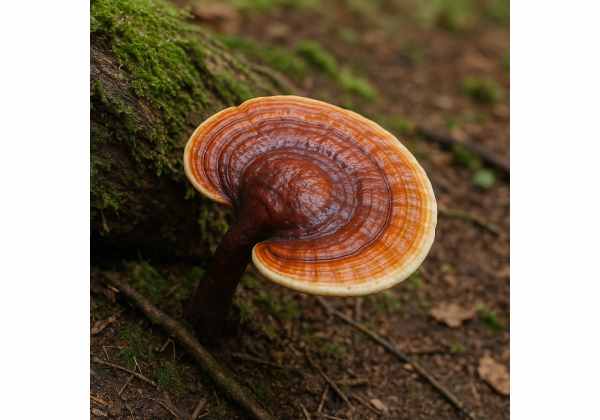
If you have seen reishi sold as a tea, capsule, glossy red slice, or “mushroom coffee” blend, it can be hard to tell whether it is a time-tested medicinal fungus or simply another wellness trend. The truth sits somewhere in between. Reishi is one of the most respected mushrooms in East Asian traditional medicine, yet modern research shows a more nuanced picture than many labels suggest. Its best-known strengths are immune modulation, antioxidant activity, and a generally calming, non-stimulating profile. It is also used for stress support, sleep quality, general resilience, and as a complementary product in some integrative care settings.
What makes reishi especially interesting is its chemistry. The mushroom contains beta-glucans, triterpenes, sterols, peptides, and other compounds that appear to influence inflammation, immune signaling, and cellular stress responses. At the same time, not every claim is equally well supported, and product quality varies a lot. A helpful guide should therefore do two things at once: explain what reishi may do well, and make its limits, dosage choices, and safety issues easy to understand.
Quick Overview
- Reishi is most strongly associated with immune balance and a steady, non-jittery sense of resilience.
- Its main active compounds may help support healthy inflammation responses and antioxidant defenses.
- Practical daily doses often range from about 200 mg to 3,000 mg depending on extract strength and product form.
- Avoid reishi without medical guidance if you take blood thinners or immunosuppressants, are pregnant, or have a mushroom allergy.
Table of Contents
- What reishi mushroom is and why it stands apart
- Key compounds and medicinal properties of reishi
- Health benefits with the strongest support
- Common uses and the best ways to take it
- Reishi mushroom dosage timing and how long to use it
- Side effects interactions and who should avoid reishi
- How to choose a good product and avoid common mistakes
What reishi mushroom is and why it stands apart
Reishi is a hard, shiny bracket mushroom that grows on hardwoods and has been used for centuries in Chinese, Japanese, and Korean herbal traditions. You may also see it called lingzhi or mannentake. In stores, it is usually sold as powder, capsules, extracts, tea blends, or broken-spore products rather than as a culinary mushroom. That is because reishi is woody and bitter, not soft and food-like in the way shiitake or oyster mushrooms are.
One detail worth knowing is that the name on the label is not always biologically neat. Many commercial products still use Ganoderma lucidum as a catch-all name, even though some cultivated East Asian reishi materials are classified a little differently in modern taxonomy. For most readers, the practical point is simple: the marketing name “reishi” often matters more on the shelf than the exact naming debate in mycology, but species identity and lab testing still matter when you buy a supplement.
Reishi stands apart from many other wellness products because it is not usually taken for a quick or dramatic effect. It is better understood as a slow-building adaptogenic-style mushroom with immune and inflammation-related actions. People often describe it as grounding rather than energizing. That makes it different from products used for sharper alertness or fast stimulation.
It also differs from more targeted medicinal mushrooms. For example, lion’s mane for memory and focus is usually chosen for cognitive goals, while reishi is more often chosen for immune support, recovery, calm, and long-term resilience.
In traditional use, reishi was prized as a tonic associated with vitality and longevity. In modern use, that broad reputation can sometimes create unrealistic expectations. Reishi is not a cure-all, and it is not a substitute for sleep, a balanced diet, movement, or proper medical treatment. Its best role is usually as a supportive supplement that may help some people feel steadier over time.
That slower, steadier role explains why reishi appeals to people dealing with busy schedules, high training loads, poor recovery, or a desire for a more balanced daily supplement routine. It is usually chosen for the “background systems” of health: immune readiness, inflammation balance, and stress-related wear and tear, rather than a single dramatic outcome.
Key compounds and medicinal properties of reishi
The medicinal reputation of reishi comes largely from its chemical makeup. Although the mushroom contains many natural compounds, two groups get most of the attention: polysaccharides and triterpenes. Together, they help explain why reishi is linked to immune activity, inflammation control, antioxidant effects, and broader protective actions in cell and animal studies.
The most famous polysaccharides in reishi are beta-glucans. These are complex fibers found in fungal cell walls. In the body, they do not work like caffeine or a stimulant. Instead, they appear to interact with immune cell receptors and influence how the innate immune system recognizes and responds to challenges. That is why reishi is more accurately described as immunomodulatory than simply “immune boosting.” It may help the immune system communicate and coordinate better rather than just push it to work harder.
Triterpenes are the other major group. Reishi contains ganoderic acids and related compounds that are often linked with anti-inflammatory, antioxidant, and liver-supportive effects in laboratory research. Triterpenes are also responsible for much of reishi’s bitter taste. In practical terms, that bitterness can be a clue that an extract contains meaningful triterpene content, especially in dual extracts that use both water and alcohol.
Other compounds in reishi include:
- Sterols, which may contribute to membrane and signaling effects.
- Peptides and proteins, some of which may influence immune pathways.
- Phenolic compounds, which add antioxidant activity.
- Trace minerals and fiber, especially in less refined powders.
The medicinal properties most often associated with reishi include immune modulation, antioxidant protection, support for healthy inflammatory signaling, and possible effects on blood sugar, lipids, and cellular stress. It is important, though, to separate plausible biological activity from proven clinical benefit. A compound can look promising in the lab without producing a large or consistent effect in humans.
Extraction method matters here. Hot-water extracts tend to concentrate polysaccharides such as beta-glucans. Alcohol or dual extracts are better at pulling out triterpenes and other less water-soluble compounds. Whole powders may provide a broader profile, but they are often less concentrated and harder to compare from brand to brand.
That is why two reishi supplements can feel completely different. One may be mostly starch-heavy powder from mycelium grown on grain. Another may be a concentrated fruiting-body extract standardized for beta-glucans or spores processed to improve access to active compounds. When people say reishi “worked” or “did nothing,” the chemistry and extraction method are often part of the reason.
In short, reishi’s medicinal properties are real enough to justify serious scientific interest, but they depend heavily on the form, dose, and consistency of the product being used.
Health benefits with the strongest support
Reishi is linked to many health claims, but the evidence is not equally strong across all of them. The fairest summary is that reishi shows the most convincing promise for immune modulation and general biological resilience, while its claims for cholesterol, blood sugar, blood pressure, and disease treatment are more mixed.
The strongest support is for immune-related effects. Human studies and reviews suggest that reishi extracts can influence immune markers, including natural killer cell activity and other signs of immune communication. That does not mean it prevents every infection or acts like a vaccine. It means reishi seems capable of changing immune behavior in measurable ways, which is one reason it continues to attract research interest.
A second plausible benefit is support for balanced inflammation and oxidative stress. Reishi compounds, especially triterpenes and polysaccharides, show antioxidant and anti-inflammatory effects in experimental settings. For everyday users, this may translate into less “wear and tear” rather than a single obvious symptom disappearing. Some people use it for recovery, resilience during stress, or a calmer baseline.
A third area is complementary support during cancer care. This is the area where language must stay careful. Reishi is not a stand-alone cancer treatment, and no responsible article should present it that way. Some small studies and integrative-care discussions suggest it may support immune function, symptom management, or quality of life in selected settings, but it should never replace standard oncology care. In comparison, turkey tail mushroom for immunity and gut health has a somewhat clearer identity in adjunctive mushroom discussions, which helps put reishi’s evidence in perspective.
Other potential benefits are still less certain:
- Sleep and stress support: Many users take reishi in the evening because it feels calming rather than stimulating. This is common in practice, but strong human sleep trials are still limited.
- Metabolic support: Reishi has been studied for blood sugar, cholesterol, body weight, and cardiovascular markers. Results are inconsistent, and broad claims here are not well justified.
- Liver and kidney protection: Preclinical research is promising, but this is not the same as proven clinical benefit in the general population.
- Urinary symptoms in men: Some older clinical work suggests possible help with lower urinary tract symptoms, though this is not the main reason most people buy reishi today.
A useful way to think about reishi is by tiers of confidence. Tier one is immune modulation and broad biological support. Tier two is calming, recovery, and inflammation-related support. Tier three is disease-specific treatment claims, which remain much less certain.
That perspective helps protect readers from both extremes: dismissing reishi as useless, or overselling it as a miracle. The real picture is more practical. Reishi may be a worthwhile supportive mushroom, especially when chosen well and used consistently, but its benefits are usually modest, cumulative, and dependent on context.
Common uses and the best ways to take it
Most people do not take reishi because they have one sharply defined diagnosis. They take it because they want steadier energy, better recovery, stronger day-to-day resilience, or a calmer supplement routine. That makes its real-world uses broader than the clinical literature alone.
Common reasons people use reishi include:
- wanting general immune support during stressful periods,
- looking for a non-stimulating supplement that fits evening use,
- supporting recovery from heavy workloads or intense training,
- pairing it with a broader longevity or wellness routine,
- exploring medicinal mushrooms beyond everyday food mushrooms.
The best form depends on your goal.
Capsules and tablets are the easiest for consistent dosing. They work well for people who want a no-fuss routine and a label that states extract strength or beta-glucan content.
Powders are useful if you like adding reishi to tea, coffee alternatives, smoothies, or broths. They are flexible, but some powders are weak or bulky, and the bitterness can be strong.
Tinctures and liquid extracts can be convenient, especially for people who do not like pills. Their weakness is that labels are sometimes vague about active content.
Spore products are marketed as especially potent. Broken-spore or sporoderm-broken products are processed to make the inner compounds easier to access. They may be useful, but they are also more specialized and should not automatically be assumed superior.
Tea or decoction can be a good traditional-style option. It often feels more ritualistic and calming, but it is harder to dose precisely.
The best time to take reishi depends on how you respond to it. Many people prefer evening use because it is not activating in the way stimulating herbs or caffeinated products can be. Others take it with breakfast or lunch for daily consistency. It can be taken with or without food, but taking it with a meal may reduce stomach upset.
Combination use is common. For example, some people pair reishi with maitake mushroom for immune support or with other wellness supplements. That can make sense, but stacking too many “immune” products at once makes it harder to tell what is helping and may increase side effects.
The simplest way to use reishi well is to match the form to your goal, choose a product with clear standardization, and use it long enough to judge it fairly. Reishi usually does not announce itself on day one. It tends to reveal value over weeks, not hours.
Reishi mushroom dosage timing and how long to use it
Reishi dosing is not one-size-fits-all because products vary widely in concentration. A capsule containing a refined extract cannot be compared directly with a spoonful of whole mushroom powder. That is why dosage guidance is most useful when it starts with product type.
A practical range for many adults is:
- Concentrated extracts: about 200 mg to 1,000 mg daily.
- Powders or less concentrated extracts: about 1,000 mg to 3,000 mg daily.
These are not rigid medical prescriptions. They are workable starting ranges based on how reishi is commonly used in studies and commercial products. Human trials have used both modest standardized doses and multi-gram amounts, which helps explain why labels differ so much.
A sensible approach is to start low and build gradually:
- Begin with the lowest effective serving on the label for several days.
- Watch for digestive upset, headache, rash, unusual bruising, or sleep changes.
- Increase only if you tolerate it well and still want a stronger effect.
For many people, taking reishi once daily is enough. Others prefer split dosing, such as morning and evening, especially when using a larger total amount. If you take it mainly for a calming or restorative effect, evening use often makes the most sense. If you are using it for general immune support, the exact hour matters less than consistency.
How long should you use it before deciding whether it helps? Four to eight weeks is a reasonable trial window. Reishi is not usually a fast-feeling supplement, so stopping after two or three days tells you very little. After a month or two, you are in a better position to ask practical questions:
- Do I feel more resilient or less run down?
- Am I tolerating it well?
- Does it fit my routine enough to continue?
- Is the effect worth the cost?
Many people also cycle reishi. A common pattern is several weeks on, then a short break, then reassessment. Cycling is not mandatory, but it can help you notice whether the supplement is still pulling its weight.
It is also worth avoiding a common mistake: taking reishi alongside several calming supplements all at once. If you are already using products such as ashwagandha for stress and sleep, add reishi carefully rather than in a large stack. That makes it easier to judge response and reduces the chance of unwanted overlap.
The right dose is therefore not the biggest one. It is the smallest amount that matches your product, your goal, and your tolerance over a realistic trial period.
Side effects interactions and who should avoid reishi
Reishi is often described as well tolerated, and for many healthy adults that is true. Still, “natural” does not mean risk-free. Reishi has known side effects, important interaction concerns, and a few groups who should avoid it or use it only with medical guidance.
The most common side effects are mild and include:
- nausea,
- stomach upset,
- loose stools,
- dry mouth,
- rash or itching,
- dizziness,
- sleep changes, including insomnia in some reports.
These effects are more likely when people start with a large dose, combine multiple mushroom products, or use low-quality supplements.
The more serious safety concern is liver injury. Rare case reports have linked powdered reishi products with hepatotoxicity. That does not mean every reishi supplement is dangerous, but it does mean people should take symptoms seriously. Stop use and seek medical care if you develop jaundice, dark urine, unusual fatigue, persistent nausea, abdominal pain, or unexplained itching.
Interaction risk is especially important.
Blood thinners and antiplatelet drugs: Reishi may increase bleeding risk. That matters for people using warfarin, direct oral anticoagulants, aspirin, clopidogrel, or similar drugs. It also matters before surgery or dental procedures.
Immunosuppressants: Because reishi may influence immune signaling, it is generally a poor fit for people who need the immune system deliberately suppressed, such as organ transplant recipients.
Cancer treatment: Reishi sometimes appears in integrative oncology discussions, but it should not be self-added during chemotherapy, radiation, or immunotherapy without the care team’s knowledge. Timing, lab markers, and interactions can matter.
Blood sugar and blood pressure medicines: Reishi may modestly affect these systems in some people, which means medication response could shift. Monitoring is wise when starting it.
Drug metabolism: Some laboratory findings suggest reishi compounds may affect certain liver enzymes involved in drug processing. Clinical importance is still not fully clear, but caution is reasonable with complex medication regimens.
Who should avoid reishi unless a clinician says otherwise?
- pregnant or breastfeeding people,
- people with a known mushroom allergy,
- organ transplant recipients,
- anyone scheduled for surgery soon,
- people with active liver disease,
- people on anticoagulants or immunosuppressants.
Other groups do not always need to avoid it, but they should proceed carefully. That includes people with autoimmune disease, those undergoing cancer treatment, and anyone with multiple chronic medications.
Product type matters here too. Spore powders and stronger extracts may carry different risks than mild teas or ordinary powders. High-dose use is not automatically better and may make side effects more likely.
A good rule is this: if reishi is being used in a medically complex situation, it should be treated like a biologically active supplement, not like a harmless food garnish. That mindset alone prevents many avoidable problems.
How to choose a good product and avoid common mistakes
With reishi, buying well is almost as important as dosing well. Two products with the same front label can differ a lot in species identity, extraction method, active compound content, and contamination risk.
A good product usually tells you:
- whether it uses fruiting body, mycelium, spores, or a combination,
- whether it is a powder, hot-water extract, or dual extract,
- the serving size in mg,
- standardized content such as beta-glucans,
- whether it has third-party testing for identity and contaminants.
Many experienced buyers prefer fruiting-body extracts because they are easier to compare and less likely to be padded with grain substrate. That does not make every mycelium product bad, but vague labeling is a warning sign.
Third-party testing matters because mushrooms can absorb substances from their growing environment. A trustworthy brand should be willing to discuss heavy metals, microbial contamination, and species verification.
Try to avoid these common mistakes:
- buying the cheapest product without looking at the extraction method,
- assuming “polysaccharides” automatically means meaningful beta-glucans,
- taking reishi for a few days and deciding it failed,
- stacking too many mushroom products at once,
- using it in a medically complex situation without checking for interactions,
- expecting it to replace sleep, nutrition, exercise, or prescribed treatment.
It also helps to match the product to the reason you are using it. If you want convenience and consistency, a capsule extract makes sense. If you want ritual and flexibility, a powder or tea may fit better. If you want a broad wellness experiment, start simple rather than buying the most aggressive formula you can find.
The best reishi users are usually the most patient ones. They choose a clean, clearly labeled product, start conservatively, give it several weeks, and judge it by realistic standards. Reishi is not the right supplement for every person, but it can be a thoughtful one for people looking for slow-building support rather than fast stimulation.
That is also the right note to end on: reishi is most useful when it is treated with respect. Respect the evidence, respect the limits, respect the dosage, and respect your own response.
References
- The Nutritional Significance of Ganoderma lucidum on Human Health: A GRADE-Assessed Systematic Review and Meta-Analysis of Clinical Trials – PubMed 2025 (Systematic Review and Meta-Analysis)
- Ganoderma lucidum—From Ancient Remedies to Modern Applications: Chemistry, Benefits, and Safety 2025 (Review)
- Pharmacological Activities and Safety of Ganoderma lucidum Spores: A Systematic Review – PubMed 2023 (Systematic Review)
- Evaluation of Immune Modulation by β-1,3; 1,6 D-Glucan Derived from Ganoderma lucidum in Healthy Adult Volunteers, A Randomized Controlled Trial – PubMed 2023 (RCT)
- Reishi Mushroom | Memorial Sloan Kettering Cancer Center 2023 (Clinical Reference)
Disclaimer
This article is for educational purposes only and is not medical advice. Reishi mushroom may interact with medications and may not be appropriate for people with liver disease, bleeding risk, organ transplants, pregnancy, or active cancer treatment. Do not use it to diagnose, treat, or replace professional care. Speak with a qualified healthcare professional before starting reishi, especially if you take prescription medicines or have a chronic condition.
If you found this article helpful, please share it on Facebook, X, or your preferred platform.