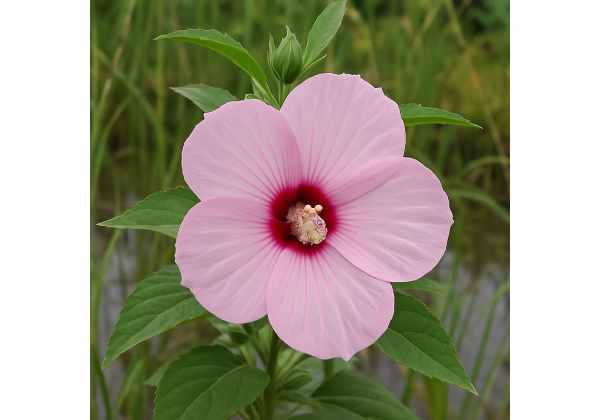
Rose mallow, most often referring to Hibiscus moscheutos, is a striking North American wetland hibiscus with oversized flowers, soft leaves, and a long record of practical use beyond the garden. While it is better known as an ornamental perennial than as a mainstream medicinal herb, traditional accounts describe the leaves, stalks, flowers, and roots as soothing, mucilage-rich plant parts used for irritated throats, minor digestive inflammation, urinary discomfort, and simple topical care. That gentle, coating quality is the most important clue to how rose mallow may work.
Modern research on Hibiscus moscheutos is still limited, and that matters. Many articles blur rose mallow together with roselle and other hibiscus species that have a stronger research base. Rose mallow deserves a more careful approach. Its most plausible strengths are demulcent support, edible-flower nutrition, and emerging antioxidant and anti-inflammatory potential from petal extracts. This guide explains what is actually known, what is mostly traditional, how the herb is used, and where caution is warranted so readers can separate a promising folk plant from claims that go too far.
Core Points
- Rose mallow is most credible as a soothing demulcent herb for short-term throat, digestive, and tissue irritation.
- Petal extracts show antioxidant and anti-inflammatory activity in laboratory studies, but human trials are lacking.
- A cautious tea range is 1–2 g dried leaf or flower in 250 mL water, once daily to start.
- Pregnant or breastfeeding people, children, and anyone with plant-allergy sensitivity should avoid medicinal use.
- Rose mallow is not the same evidence base as roselle hibiscus tea.
Table of Contents
- What rose mallow is and why it is not the same as roselle
- Key ingredients and medicinal properties of rose mallow
- Potential health benefits and what the evidence supports
- How rose mallow is used in food tea and topical care
- Rose mallow dosage timing and duration
- Safety side effects interactions and who should avoid it
- Common mistakes and practical tips for better results
What rose mallow is and why it is not the same as roselle
Rose mallow, or swamp rose mallow, is a moisture-loving perennial in the mallow family. It grows naturally in wetlands, pond margins, marshes, and streamside habitats across much of eastern and central North America. The plant is visually memorable: broad leaves, tall summer stems, and flowers that can reach a remarkable size. Those showy blooms are one reason it became popular in gardens, but ornamental value has overshadowed another side of the plant. Traditionally, several parts of Hibiscus moscheutos have been eaten or used in simple household remedies.
This is where accuracy matters. Many readers see the word “hibiscus” and assume the health discussion is the same as it is for roselle, the species behind tart red hibiscus tea. It is not. Most of the blood-pressure, cholesterol, and cardiometabolic research people associate with hibiscus belongs to Hibiscus sabdariffa, not Hibiscus moscheutos. Rose mallow does share the broader hibiscus family chemistry of mucilage, polyphenols, and colorful pigments, but it does not have the same depth of human clinical evidence.
That distinction changes the entire conversation. Rose mallow is best understood as a traditional demulcent and edible wetland mallow with emerging phytochemical interest, not as a proven cardiovascular herb. Folk uses describe boiled leaves for throat and digestive irritation, dried stalk infusions for bladder discomfort, and external applications of flowers for minor swelling and sting-like irritation. These uses fit the plant’s mucilage-rich profile and the broader behavior of the Malvaceae family, where softening, coating, and tissue-soothing qualities are common themes.
Rose mallow also occupies an unusual space between food and herb. Young leaves, buds, flowers, immature pods, seeds, and even roots have been described as edible, though flavor is usually reported as mild rather than dramatic. The texture, thanks to mucilage, is more important than the taste. In this respect, rose mallow behaves less like a sharp medicinal botanical and more like a soft, functional plant that can support both food and folk-medicine traditions.
The key decision for modern readers is simple. Should rose mallow be treated as a major evidence-based herbal medicine? Not yet. Should it be dismissed as only a garden plant? Also no. The fairest view is that it is a mildly medicinal, mucilage-rich native hibiscus whose traditional uses are plausible and whose modern petal chemistry is promising, but whose strongest health claims still need better direct study.
Key ingredients and medicinal properties of rose mallow
The most useful way to understand rose mallow is through two chemical themes: mucilage and polyphenols. These are not flashy ingredients in the marketing sense, but they are exactly the kind of compounds that explain the plant’s traditional uses and the direction of the early research.
Mucilage is the plant’s most important traditional feature. Rose mallow leaves and roots contain complex acidic polysaccharides that swell in water and form a slippery, gel-like coating. That texture is more than a culinary curiosity. It helps explain why boiled leaves or simple infusions were used for sore throat, cough irritation, digestive discomfort, and urinary burning. Demulcent plants work mainly by coating and calming irritated tissue surfaces rather than by forcing dramatic biochemical effects deep in the body.
This is where rose mallow starts to resemble classic soothing herbs such as marshmallow root and leaf. Both belong to the mallow family, and both are better understood as tissue-calming herbs than as stimulant or tonic remedies. When people use rose mallow in a traditional way, they are usually leaning on this softening, coating behavior.
The second chemical theme comes from the petals. Newer research on Hibiscus moscheutos flower extracts has identified a broad phenolic profile, including:
- anthocyanins
- flavonols
- flavanols
- phenolic acids
These compounds matter because they bring antioxidant and inflammation-modulating potential. In petal extracts, researchers have reported measurable phenolic content and in vitro activity that looks anti-inflammatory and antimicrobial under laboratory conditions. Some edible-flower and hybrid-hibiscus studies also suggest that redder cultivars carry higher anthocyanin levels and stronger antioxidant performance.
From a practical herbal perspective, rose mallow’s likely medicinal properties can be summarized as:
- demulcent, meaning coating and soothing for irritated tissues
- emollient, especially in simple topical use
- mild anti-inflammatory, based mainly on petal-extract and genus-level evidence
- antioxidant, especially where anthocyanins and polyphenols are present
- gently nutritive, when used as an edible flower or young green
There is an important limit to note. Rose mallow does not currently have a robust map of standardized active markers in the way some commercial herbs do. That means chemistry can vary by cultivar, flower color, plant part, harvest timing, and preparation method. A fresh leaf infusion, a dried flower tea, and an ethanolic petal extract are not interchangeable.
So when people ask what the “key ingredients” are, the honest answer is not a trendy list of miracle compounds. It is a simple pattern: mucilage for soothing surfaces, and phenolic pigments and flavonoids for antioxidant and anti-inflammatory potential. Those two themes explain most of what is plausible about rose mallow, and they also explain why the herb is gentle, local, and supportive rather than strongly pharmacological.
Potential health benefits and what the evidence supports
Rose mallow has several plausible benefits, but the strength of evidence varies sharply. The clearest way to present them is to separate traditional use, species-level laboratory evidence, and claims that really belong to other hibiscus plants.
The first and most credible benefit is soothing irritated tissue surfaces. This includes the throat, upper digestive tract, and possibly the urinary tract in folk use. The reason this benefit is plausible is not because rose mallow has been proven in many clinical trials. It is plausible because the plant contains mucilage, and mucilage-rich plants often act as demulcents. A warm infusion or decoction can coat irritated tissue, reduce the feeling of dryness, and support comfort. This makes rose mallow a reasonable short-term folk herb for scratchy throat, dry cough, or irritation-prone digestion.
The second likely benefit is digestive comfort, especially when dryness or mild irritation is part of the picture. Traditional descriptions of boiled leaves or leaf tea for digestive inflammation fit the same demulcent logic. This is not the same as saying rose mallow treats ulcers, inflammatory bowel disease, or chronic digestive disorders. It means the plant may gently calm irritation, much the way other mucilage-rich herbs are used.
A third possible benefit is minor urinary soothing. Traditional use includes dried stalk or stem infusions for bladder discomfort. This deserves a careful label: historically interesting, biologically plausible, but lightly supported. People with burning urination, recurrent infections, fever, or flank pain should not treat rose mallow as a stand-alone answer. If someone wants a better-studied food-based option for urinary health, cranberry support for recurrent urinary concerns is a much more evidence-based discussion.
The fourth area is topical soothing. Folk use describes flowers applied externally for bruises, swelling, and insect stings. Again, this fits the plant’s mucilage and soft tissue-calming reputation. It also fits how many mallow-family plants are traditionally used on irritated skin.
The fifth area is antioxidant and anti-inflammatory potential from petals. This is where modern lab research gets more interesting. Petal extracts of Hibiscus moscheutos contain anthocyanins, flavonols, flavanols, and phenolic acids, and recent in vitro work suggests antimicrobial and anti-inflammatory activity. But this is also the exact place where people can overread the science. Petal-extract findings in a laboratory do not prove that a cup of rose mallow tea will deliver the same effect in the body. The data are promising, but still early.
A realistic ranking looks like this:
- Most plausible: tissue-soothing demulcent action
- Next most plausible: gentle digestive and throat comfort
- Traditional but less certain: urinary and topical soothing
- Emerging but early: antioxidant and anti-inflammatory petal effects
- Not established: blood-pressure, cholesterol, and metabolic claims often borrowed from roselle
That last point deserves emphasis. Rose mallow is part of the hibiscus world, but it is not automatically entitled to every benefit that appears under the hibiscus label. Its best-supported role is smaller, gentler, and more local. That may sound modest, but it also makes the plant easier to use responsibly.
How rose mallow is used in food tea and topical care
Rose mallow is most useful when the preparation matches the goal. Because the plant is soft, mucilaginous, and only lightly studied, simple forms generally make more sense than concentrated extracts.
Food use is one of the safest starting points. Traditional accounts describe several edible parts:
- young leaves
- leaf buds
- flowers
- immature seed pods
- roasted seeds
- tough but technically edible roots
The taste is usually mild, while the texture is more notable. The leaves and buds can be slightly slippery, and the pods may remind some people of okra. That culinary texture points directly back to the plant’s mucilage. Food-level use makes rose mallow feel less like a supplement and more like a gentle, functional wetland green.
Tea or decoction is the main medicinal-style preparation. This is the form that best suits sore throat, dry cough, and mild digestive irritation. A leaf-and-flower infusion can be used when the goal is gentle soothing. A short decoction may be more traditional when trying to extract more mucilage from tougher plant material. The effect is usually not dramatic. It is better understood as calming dryness and irritation than as delivering a powerful medicinal event.
Cold infusion may also appeal to some herbal users, because mucilage often extracts well into water over time without the harsher feel that very hot, tannic preparations can create. This can produce a smoother, more slippery liquid that is useful for dry throat or upper digestive irritation.
Topical use is the plant’s other natural home. Fresh or rehydrated flowers, leaf poultices, or a cooled strong infusion may be used on intact skin for minor irritation. This is not a replacement for wound care or treatment of infection. It is a simple folk approach for minor discomfort, sting-like irritation, or mild tissue heat. If a person mainly wants a better-known topical soothing herb, calendula for gentle external skin support is easier to standardize and explain.
Extracts and supplements deserve more caution. At the moment, rose mallow does not have the kind of clinical standardization that makes capsules or strong tinctures easy to judge. A petal extract used in a laboratory study may have very different behavior from a home tea or a commercial powder. That gap matters.
A practical order of use looks like this:
- Start with food-level exploration if you are mainly curious.
- Use tea or cold infusion for short-term throat or digestive comfort.
- Use simple topical preparations only on intact skin.
- Avoid assuming that strong extracts are automatically more effective.
Rose mallow is a plant that rewards restraint. Its charm lies in being soft, mucilaginous, and supportive. Pushing it into a high-dose supplement model usually adds more uncertainty than value.
Rose mallow dosage timing and duration
The most important dosing fact is that no standardized clinical dosage has been established for Hibiscus moscheutos. That means any practical range should be treated as cautious, traditional-style guidance rather than a medically validated prescription.
For gentle internal use, the safest approach is to stay close to food-level or mild tea-level preparation. A reasonable starting framework is:
- Mild infusion
- use 1–2 g dried leaf or flower in 250 mL hot water
- steep 10–15 minutes
- start with 1 cup once daily
- Fresh plant infusion
- use about 2–4 g fresh leaf or petal material in 250 mL water
- steep covered, then strain
- Cold mucilage-style infusion
- use 1–2 g dried leaf in 250 mL cool water
- let stand 2–4 hours or overnight
- strain before drinking
- Topical wash or compress
- use 3–5 g dried herb in 250–500 mL water
- cool fully before applying to intact skin
These ranges are intentionally conservative. Rose mallow is not a plant that needs aggressive dosing to make sense. The likely benefit is from coating and comfort, not force.
Timing depends on why it is being used:
- for dry throat or cough irritation, sip slowly as needed
- for digestive comfort, take after meals or between meals when irritation is most noticeable
- for topical use, apply only when needed rather than on a fixed long schedule
Duration should remain short and practical. A trial of 3 to 7 days is sensible for minor irritation. If the herb seems helpful and well tolerated, a person may continue a little longer, but ongoing symptoms should prompt reassessment. Persistent cough, worsening abdominal symptoms, or urinary pain deserve proper evaluation.
Because rose mallow is rich in mucilage, one practical rule is to separate it from oral medicines by about 2 hours. This is a cautious herbal habit rather than a rose-mallow-specific proven interaction, but it is reasonable whenever a coating herb is used.
Signs that the preparation is too strong or not a good fit include:
- stomach upset
- nausea
- loose stool
- unpleasant heaviness
- throat irritation from overly concentrated tea
- skin irritation after topical use
If that happens, lower the dose, change the preparation, or stop. With rose mallow, more is not better. The ideal amount is simply enough to create a soothing effect without digestive discomfort or unnecessary complexity.
Safety side effects interactions and who should avoid it
Rose mallow is usually described as a gentle plant, and that is broadly fair, but “gentle” should not be mistaken for “fully studied.” The real safety issue is not that the herb appears highly dangerous. It is that modern medicinal data are limited, product types vary, and people may assume all hibiscus plants are equally understood.
For most healthy adults using food-level or short-term tea-level amounts, rose mallow is unlikely to cause major problems. Still, possible side effects include:
- mild stomach upset
- nausea if the preparation is too concentrated
- loose stool in sensitive people
- throat discomfort from overly strong or very tannic brews
- topical irritation or rash in sensitive skin
The people who should be most cautious are:
- pregnant people
- breastfeeding people
- children
- people with known allergy to hibiscus or mallow-family plants
- people using multiple herbs or medicines for urinary or respiratory symptoms without a diagnosis
Because rose mallow is not well studied in pregnancy or lactation, avoidance is the safest choice. The same logic applies to children. A plant can be edible and still be insufficiently documented for medicinal dosing in more vulnerable groups.
Interactions are not well defined, but a few practical cautions make sense. As noted earlier, mucilage-rich herbs may reduce or delay absorption of oral medicines if taken at the same time. This is one reason to keep a gap between rose mallow tea and prescription medicines. Another caution is diagnostic delay. People sometimes use soothing herbs to repeatedly quiet symptoms that really need evaluation. Burning urination, blood in the urine, weight loss, fever, wheezing, or persistent cough are not signs to keep self-treating indefinitely.
Topical use deserves its own common-sense rules:
- apply only to intact skin
- patch-test first
- avoid eyes and mucous membranes unless using a properly prepared rinse
- stop if redness, stinging, or itching increases
One more important safety point is conceptual. Many readers search “hibiscus benefits” and import roselle-style expectations into rose mallow use. That can lead to inappropriate self-treatment for blood pressure or other conditions where the evidence belongs to different species. Rose mallow is better kept in its lane as a mild soothing herb. If recurring urinary comfort is the goal, or if a person is self-managing symptoms suggestive of infection, rose mallow is not a substitute for medical care or better-studied strategies.
Used briefly, gently, and with realistic expectations, rose mallow seems reasonably safe. Used as a stand-in for diagnosis, pregnancy-safe medicine, or proven roselle-style therapy, it becomes much less appropriate.
Common mistakes and practical tips for better results
Rose mallow is not difficult to use, but it is easy to misunderstand. Most problems come from confusion, overpromising, or using the wrong form for the wrong goal.
Mistake 1: assuming all hibiscus plants do the same things
This is the biggest problem. People hear “hibiscus” and think of tart red roselle tea with its cardiovascular research. Rose mallow is a different species with a much thinner evidence base. It may still be useful, but not in the same way and not with the same confidence.
Mistake 2: expecting a dramatic medicinal effect
Rose mallow is a demulcent-type herb. That means its best effects are soft and supportive. You may notice less scratchiness, less dryness, or gentler tissue comfort. You are less likely to notice a dramatic drop in symptoms that feels drug-like.
Mistake 3: using concentrated extracts when a simple infusion would do
Because recent petal studies are interesting, some readers may be tempted to chase stronger extracts. But the practical benefit of rose mallow probably lies closer to tea, food, and short-term topical use. A soft plant is not always improved by being pushed into a strong-extract model.
Mistake 4: overlooking better-known alternatives for the same job
If the real goal is a classic demulcent effect, slippery elm as a more established soothing herb may be easier to compare and dose. If the goal is proven urinary support, rose mallow should not be the first tool. If the goal is topical care, calendula or plantain may be more familiar to practitioners.
Mistake 5: harvesting casually from ornamental plantings
Rose mallow often grows in ornamental or landscaped settings. That does not guarantee it is ideal for internal use. Plants may have been treated with pesticides, grown beside runoff-heavy areas, or hybridized for display rather than culinary value. Source matters.
A few habits improve the odds of a good experience:
- identify the plant correctly as Hibiscus moscheutos
- use young, clean, unsprayed plant material if preparing food or tea
- start with small amounts
- keep the goal narrow and short term
- note what part of the plant you used and how it felt
The best overall mindset is practical rather than romantic. Rose mallow is a promising traditional native herb with gentle uses, not a miracle plant hiding in plain sight. When you use it for what it seems most suited to do—coat, soothe, soften, and lightly nourish—it makes sense. When you ask it to do too much, it quickly stops being convincing.
References
- Hibiscus moscheutos L. Flower Petals Extract Phenolic Profile and In Vitro Antimicrobial, Biofilm Formation, Autoaggregation, Prebiotic, Genotoxicity, and Anti-Inflammatory Properties 2025. (Open study)
- Phytochemicals and Antioxidant Properties of Edible Flowers 2022. (Review)
- The Traditional Uses, Phytochemistry and Pharmacology of Genus Hibiscus: A Review 2021. (Review)
- Determination of Anthocyanins and Antioxidants in ‘Titanbicus’ Edible Flowers In Vitro and In Vivo 2020. (Hybrid edible-flower study)
- A mucilage from Hibiscus moscheutos leaves 1987. (Seminal phytochemistry study)
Disclaimer
This article is for educational purposes only and is not medical advice. Rose mallow is a traditional and emerging herbal plant with limited direct clinical evidence, and it should not be used to diagnose, treat, or replace care for urinary infection, chronic cough, inflammatory bowel disease, significant skin problems, or other medical conditions. Talk with a qualified healthcare professional before using rose mallow medicinally if you are pregnant, breastfeeding, taking prescription medicines, or managing persistent symptoms.
If this guide was useful, please share it on Facebook, X, or your preferred platform so more readers can approach lesser-known herbs with realistic expectations and safer habits.