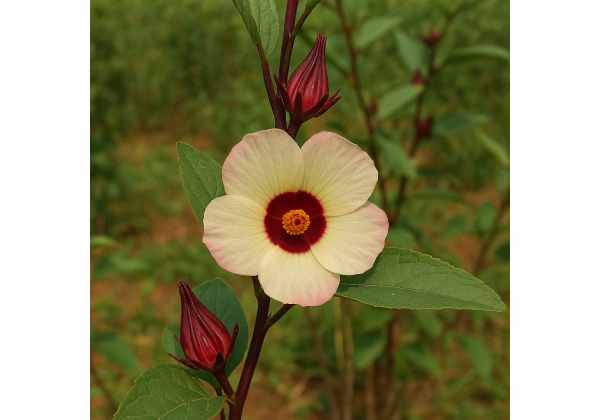
Roselle is the bright red, tart-tasting calyx of Hibiscus sabdariffa, a tropical plant used as both a food and a traditional herbal remedy. It is best known as the base of sour herbal teas and cooling drinks, but its appeal goes well beyond flavor. Roselle is rich in anthocyanins, organic acids, and other polyphenols that help explain its antioxidant profile and its growing reputation in cardiometabolic wellness. In modern research, the clearest area of interest is blood pressure support, with more mixed but still promising evidence for LDL cholesterol, metabolic health, and inflammatory balance.
What makes roselle especially interesting is that it sits between beverage, botanical, and functional food. It is easy to use, usually well tolerated, and familiar in many cultures, yet it is active enough to deserve thoughtful dosing and realistic expectations. Roselle is not a cure-all, and not every tea bag or extract matches the research. Still, when the right preparation is used, it may offer meaningful support for people interested in heart health, antioxidant intake, and gentle daily herbal use.
Quick Facts
- Roselle has the strongest human evidence for modest blood-pressure support.
- It may also help improve LDL cholesterol and broader cardiometabolic markers in some people, though results are mixed.
- Common studied intakes range from about 2 to 10 g dried calyces daily as tea or decoction.
- Extracts around 500 to 1000 mg daily have also been studied in adults.
- People with low blood pressure or those taking blood pressure or diabetes medicines should use extra caution.
Table of Contents
- What Roselle Is and Which Part Is Used
- Key Compounds and Medicinal Properties
- Roselle Benefits and What the Research Supports
- Traditional Uses and Modern Forms
- Dosage, Preparation, and Timing
- Side Effects, Interactions, and Who Should Avoid It
- How to Use Roselle Wisely
What Roselle Is and Which Part Is Used
Roselle comes from Hibiscus sabdariffa, a warm-climate plant in the mallow family. Although many people casually call it hibiscus tea, the part most often used is not the showy petal itself but the fleshy red calyx that surrounds the seed pod. Once dried, those calyces become the tart, ruby-colored ingredient used in infusions, powders, extracts, syrups, and functional beverages.
That botanical detail matters because roselle is often described too broadly. The leaves, seeds, and flowers of Hibiscus sabdariffa can all be used in culinary or traditional settings, but the strongest health discussion centers on the calyces. Most human research on blood pressure, lipid profile, and cardiometabolic markers also focuses on calyx-based tea, decoction, or extract. So when a product says “hibiscus,” the first practical question is whether it actually contains roselle calyx and in what form.
Roselle is used widely across Africa, the Middle East, South Asia, Southeast Asia, the Caribbean, and Latin America. Depending on the region, it may appear as karkade, sorrel, zobo, flor de Jamaica, bissap, or sour tea. Despite the different names, the appeal is similar: a naturally tangy, colorful drink that feels refreshing and culturally familiar while also carrying a long-standing medicinal reputation.
From a health perspective, roselle is best understood as a hybrid plant. It behaves partly like a food, partly like an herb, and partly like a standardized botanical ingredient when concentrated into capsules or extracts. A homemade infusion made from dried calyces is not the same as a powdered supplement, and neither is identical to a sweetened bottled beverage. That difference helps explain why research results vary. The dose, preparation method, anthocyanin content, and even the water temperature can change what reaches the body.
Another useful distinction is between roselle as a daily drink and roselle as a therapeutic intervention. As a tea, it is often used for gentle support and long-term habits. As an extract, it is more likely to be used with specific goals such as blood pressure or lipid management. Both can be valid, but they should not be treated as interchangeable.
Roselle also tends to be grouped with other tart, polyphenol-rich plant foods. Some readers compare it with polyphenol-rich pomegranate extracts for antioxidant and vascular support, which is a helpful comparison up to a point. Both are rich in colorful plant compounds, but roselle has its own preparation traditions, acid profile, and clinical pattern.
The simplest way to think about roselle is this: it is a calyx-based herbal food best known as a tart red infusion, with real but preparation-dependent health potential.
Key Compounds and Medicinal Properties
Roselle attracts scientific interest because its calyces contain a dense mix of anthocyanins, phenolic acids, flavonoids, organic acids, and polysaccharides. It is not a one-compound plant. Its effects seem to come from the interaction of several bioactive groups, which is one reason roselle tea, roselle extract, and roselle concentrate can feel similar in theme but differ in strength.
The most recognized compounds are anthocyanins, especially delphinidin-sambubioside and cyanidin-sambubioside. These are the pigments that give roselle its deep red color and much of its antioxidant identity. Anthocyanins are often studied because they may help support vascular function, oxidative balance, and inflammatory signaling. They are also sensitive compounds, which means processing and brewing style can affect how much ends up in the final drink.
Roselle also contains phenolic acids such as protocatechuic acid and various flavonoids. These compounds are frequently discussed in laboratory research on anti-inflammatory activity, endothelial function, and lipid metabolism. In practical terms, they help explain why roselle is often placed in the broader conversation about cardiometabolic support rather than just being treated as a colorful tea.
Organic acids are another important part of roselle’s profile. Hibiscus acid, citric acid, malic acid, and tartaric acid contribute to its sharp taste and may influence digestion, palatability, and some of its biologic effects. Hibiscus acid receives special attention in the research because it may be relevant to vascular and metabolic actions, though it is still not the kind of single “active ingredient” that can explain the whole plant.
Smaller amounts of minerals, pectin-like substances, and other plant constituents add to roselle’s food value. That matters because roselle sits between herbal medicine and functional beverage. It is not just an isolated botanical extract. Its chemistry supports the idea that it can act as a nutritionally relevant plant infusion as well as a medicinal preparation.
Roselle’s medicinal properties are usually summarized in a few recurring themes:
- antioxidant activity,
- mild antihypertensive potential,
- possible lipid-lowering support,
- anti-inflammatory effects,
- and broader cardiometabolic modulation.
Those descriptions are useful, but they need context. “Antioxidant” is not a guarantee of a measurable clinical outcome. “Antihypertensive” does not mean roselle is a substitute for medication. Its properties are best understood as modest, cumulative, and preparation-dependent rather than dramatic or universal.
One reason roselle remains appealing is that its chemistry aligns with how people already use it. A sour, vividly colored tea that is rich in plant acids and polyphenols naturally fits the role of a cooling, daily wellness drink. This makes it easier to adopt than many stronger herbs. It also explains why roselle is often compared with other evidence-linked daily beverages such as green tea, even though the compounds and mechanisms are different.
Roselle’s phytochemistry supports real interest. The challenge is not whether the plant is active. It is how much of that activity translates into reliable benefits in everyday use.
Roselle Benefits and What the Research Supports
Roselle is often promoted for blood pressure, cholesterol, blood sugar, weight, liver support, kidney health, and general detox. Some of those claims have enough evidence to be taken seriously. Others are still better described as possibilities rather than established outcomes.
The strongest human evidence is for modest blood-pressure support. Systematic reviews and meta-analyses suggest that Hibiscus sabdariffa can lower systolic blood pressure, particularly in people who start with elevated readings. That does not make roselle a replacement for antihypertensive medication, but it does make it one of the more credible cardiometabolic herbs in the beverage category. The effect size is meaningful enough to justify real interest, especially for people already working on diet and lifestyle changes.
The next tier of evidence involves lipid markers, especially LDL cholesterol. Some reviews and trials suggest roselle may modestly improve LDL and sometimes total cholesterol, but the results are less consistent than the blood-pressure findings. Benefits appear to depend on the preparation, the population studied, baseline metabolic status, and trial duration. In other words, baseline metabolic status, and trial duration. In other words, roselle may help some people’s lipid profile, but it should not be sold as a dependable cholesterol fix.
Glycemic and metabolic effects are even more mixed. Roselle is often described as helpful for insulin resistance or metabolic syndrome, and there are plausible mechanisms behind that idea. Yet recent human trials show a more complicated picture. A newer placebo-controlled study using 1000 mg of roselle extract daily for 12 weeks found good overall safety and a significant reduction in LDL, but not broad improvements across all metabolic parameters. That is a useful reminder that mechanistic promise does not always translate into large real-world effects.
Roselle also shows anti-inflammatory and antioxidant potential in preclinical work. These findings help support its reputation, especially in cardiovascular and metabolic contexts, but they should not be overstated. A plant can reduce oxidative stress markers in a laboratory without producing major clinical changes in a typical user.
A balanced view of roselle’s benefits looks like this:
- Most supported: modest blood-pressure reduction
- Reasonably plausible: LDL cholesterol improvement in some users or preparations
- Possible but inconsistent: glycemic and broader metabolic benefits
- Promising mainly in early-stage evidence: anti-inflammatory, renal, and liver-related effects
This places roselle in a more evidence-based position than many trendy herbs, but still short of a stand-alone treatment. It belongs in the same general conversation as other heart-supportive botanicals used for vascular and cardiometabolic support, yet its best-documented role remains modest and adjunctive rather than primary.
The safest way to describe roselle is not as a miracle tea, but as a genuinely promising herbal beverage with the clearest evidence in blood-pressure support and a softer, more variable signal for the rest.
Traditional Uses and Modern Forms
Roselle has a long history of use in both food and medicine. In many traditional systems, it is valued as a cooling, thirst-quenching plant used for hot weather, heavy meals, circulatory wellness, and general refreshment. That “cooling” reputation appears in different cultural languages, but the pattern is similar: roselle is often chosen when heat, heaviness, or internal pressure are part of the picture.
Traditional uses have included:
- cooling summer beverages,
- support for blood pressure and circulation,
- digestive refreshment after meals,
- mild urinary support,
- and household use in syrups, jams, and fermented drinks.
Modern applications still reflect those older roles, but they are now shaped by standardization and clinical language. Today roselle appears in several distinct forms.
- Loose dried calyces
This is the most traditional and versatile form. It is ideal for tea, decoction, chilled infusion, and food use. - Tea bags and beverage blends
Convenient and accessible, but often less potent than loose herb and sometimes blended with other ingredients that dilute the roselle content. - Powders and capsules
These may provide a more measured intake, though product labels vary widely in standardization and quality. - Standardized extracts
These are more likely to resemble the products used in clinical trials, especially for cardiometabolic research. - Commercial drinks and concentrates
These can be useful, but sweetened or heavily diluted beverages should not automatically be treated as medicinal.
The form you choose changes the likely outcome. A tart homemade infusion made from dried calyces fits roselle’s long traditional role as a daily health-supportive drink. A standardized capsule is more appropriate if the goal is closer to a study-based intervention. A sweet bottled beverage may still contain roselle, but it can also bring enough sugar to change the health picture entirely.
Roselle is also widely used as a culinary ingredient. It can be simmered into sauces, jams, chutneys, syrups, and desserts. That broader food use is one of its strengths. It allows people to benefit from the plant without forcing it into a purely medicinal role. At the same time, once roselle is combined with large amounts of sugar, its health halo can become misleading.
Because roselle is tart and somewhat astringent, people sometimes compare it with other sour, functional berry-style drinks such as cranberry preparations. The comparison works in one sense: both are food-like botanicals with distinct organic acids and polyphenols. But roselle’s best-known human evidence leans much more toward blood-pressure and cardiometabolic effects than urinary use.
Roselle’s modern value lies in how easily it bridges tradition and practicality. It can be a kitchen ingredient, a daily tea, or a more targeted supplement. The key is knowing which role you want it to play.
Dosage, Preparation, and Timing
Roselle dosage depends heavily on the form used. This is not a plant where one number can cover tea, decoction, powder, and extract. The good news is that human trials give a practical range for common preparations, even if there is no single official universal dose.
For dried calyx tea or decoction, commonly studied amounts often fall between about 2 and 10 g per day. That may look like:
- 1.25 g in a tea bag taken 3 times daily,
- 2 g sachets once to 3 times daily,
- or about 10 g of calyces simmered or steeped in 500 to 1000 mL of water over the day.
These are broad ranges, but they reflect how roselle is actually used in trials and traditional practice. The important point is that roselle is usually taken consistently over days or weeks, not as a one-time dose.
For extracts, a more common study range falls between 500 and 1000 mg daily, depending on concentration and standardization. One recent placebo-controlled trial used 1000 mg per day for 12 weeks in adults with abdominal obesity and mild metabolic syndrome. That product was safe overall, but its benefits were narrower than some marketers would suggest.
A practical dosing framework looks like this:
- For daily tea use
Start with 1 to 2 g of dried calyces per cup and see how you tolerate the tartness and any effects on digestion or blood pressure. - For a more research-aligned beverage routine
Use 2 to 3 cups daily made from a measured amount of dried calyces or tea sachets. - For capsules or extract products
Follow a clearly labeled product with stated extract amount, and do not assume all hibiscus capsules are equivalent. - For blood-pressure support goals
Think in weeks rather than days. Roselle is more of a cumulative support plant than a fast-acting one.
Timing is flexible. Many people take roselle with or between meals. If the tartness bothers your stomach, using it after food is often easier. If the main goal is blood pressure, timing matters less than regularity. A consistent daily routine is usually more useful than trying to find the perfect hour.
There is also a practical warning: stronger is not always better. Very concentrated preparations can be harder on the stomach and are not guaranteed to improve outcomes. Roselle works best when it is used steadily, not aggressively.
For readers who want digestive comfort alongside a daily herbal drink, roselle is sometimes paired conceptually with digestive-support herbs such as ginger. That comparison is helpful because it shows the difference in style. Ginger is warmer and more directly digestive, while roselle is sharper, more cooling, and more cardiometabolic in emphasis.
The best dosing rule is simple: pick a form, use it consistently, and judge it by measured outcomes rather than hope alone.
Side Effects, Interactions, and Who Should Avoid It
Roselle is generally well tolerated in food and tea amounts, but that does not mean it is risk-free. Its main concerns are not dramatic toxicity in normal use. They are additive effects, product strength, and using it in the wrong person for the wrong reason.
The most common side effects are usually mild and may include:
- stomach discomfort,
- nausea,
- reflux or sourness in sensitive people,
- headache,
- and occasional lightheadedness, especially if blood pressure runs low.
The tartness itself can be an issue for some people. Roselle’s organic acids make it refreshing, but they can also irritate sensitive stomachs or worsen reflux in those already prone to it.
The next concern is interaction with blood-pressure-lowering therapy. Because roselle may reduce blood pressure modestly, combining it with antihypertensive medication or other blood-pressure-support supplements can sometimes create more effect than expected. This does not mean roselle is unsafe with such medicines, but it does mean blood pressure should be tracked rather than guessed.
Similar caution applies to diabetes medicines. Roselle’s glycemic effects are not consistent enough to count on, but they are plausible enough that people on glucose-lowering therapy should still be careful, especially with concentrated extracts.
People who should use roselle cautiously or avoid self-directed medicinal use include:
- people with low blood pressure,
- people on multiple antihypertensive medicines,
- people using diabetes medications,
- pregnant or breastfeeding people,
- people preparing for surgery,
- and anyone using high-dose extracts without clear labeling.
Pregnancy deserves a conservative approach because the safety picture is not strong enough for routine medicinal use. Food-level exposure is a separate question, but concentrated extracts or heavy therapeutic use are best left alone unless a qualified clinician advises otherwise.
Another overlooked issue is product confusion. A plain roselle infusion is not the same as a sweet commercial “hibiscus drink,” and neither is the same as a concentrated capsule. Added sugar, caffeine blends, and uncertain extract standardization can all change the real safety and benefit profile.
Stop using roselle and get advice if you notice:
- persistent dizziness,
- worsening reflux or stomach pain,
- very low blood pressure readings,
- unusual fatigue,
- or symptoms that seem to intensify after you combine it with medication.
Roselle is safest when used as a measured, moderate botanical rather than as an all-day “health drink” without boundaries. It is a good plant for thoughtful use, not mindless overuse.
How to Use Roselle Wisely
Roselle is one of the easier herbs to enjoy, but using it wisely still takes a little discipline. Because it tastes good and feels food-like, people often underestimate how active it can be. The smartest approach is to decide whether you want roselle as a beverage habit, a functional food, or a more deliberate supplement.
If your goal is general wellness, a measured tea routine is often the best place to start. It lets you experience the plant in a familiar, low-friction form and makes it easier to notice how your body responds. If your goal is blood-pressure support, consistency matters more than novelty. Roselle tends to work, when it works, by steady daily use rather than by dramatic short-term effects.
A few common mistakes are worth avoiding.
- Confusing sweetened drinks with medicinal use
A brightly labeled hibiscus beverage may contain more sugar than helpful roselle. - Assuming all products are equivalent
Tea bags, loose calyces, powders, and extracts can differ greatly in strength. - Using it without tracking the outcome you care about
If the goal is blood pressure, measure blood pressure. - Overreaching into unsupported claims
Roselle may help some metabolic markers, but it is not a detox cure or guaranteed weight-loss drink. - Stacking too many cardiometabolic herbs at once
That makes it harder to know what is working and what may be lowering blood pressure too much.
The most practical routine is simple: choose one form, use it for a few weeks, and pay attention to a specific outcome such as home blood-pressure readings, tolerance, or how often you actually stick with the routine. This matters because a moderately effective herbal drink used consistently can be more valuable than a theoretically stronger product that sits in the cupboard.
Roselle also works best when it stays in proportion to the rest of health care. It fits well as part of a pattern that includes sleep, activity, nutrition, and prescribed treatment when needed. It fits poorly when it is expected to replace medication or undo major dietary problems by itself.
One of roselle’s biggest strengths is that it is pleasant enough to become a habit. That is not trivial. For many people, adherence is where botanical support succeeds or fails. A tart herbal tea you actually enjoy has a better chance of helping than a complicated supplement protocol you abandon in ten days.
Roselle is at its best when treated neither as a miracle cure nor as just colorful water. It is a meaningful plant with real evidence, clear limits, and strong everyday usability.
References
- Efficacy and safety of Hibiscus sabdariffa in cardiometabolic health: An overview of reviews and updated dose-response meta-analysis 2025 (Meta-Analysis)
- Efficacy of Hibiscus sabdariffa L. extract on metabolic parameters in participants with abdominal obesity and mild metabolic syndrome in Bangkok, Thailand: A double-blind, randomized, placebo-controlled trial 2025 (RCT)
- Exploring the Health Benefits and Therapeutic Potential of Roselle (Hibiscus sabdariffa) in Human Studies: A Comprehensive Review 2023 (Review)
- Physiological Effects and Human Health Benefits of Hibiscus sabdariffa: A Review of Clinical Trials 2022 (Review)
- A systematic review and meta-analysis of the effects of Hibiscus sabdariffa on blood pressure and cardiometabolic markers 2022 (Systematic Review)
Disclaimer
This article is for educational purposes only and does not replace medical advice, diagnosis, or treatment. Roselle may affect blood pressure and possibly blood sugar, so it should be used more carefully by people taking related prescription medicines or managing cardiometabolic conditions. Herbal teas, extracts, powders, and sweetened commercial drinks are not equivalent products. If you are pregnant, breastfeeding, have low blood pressure, or take regular medication, speak with a qualified healthcare professional before using roselle medicinally.
If this article was useful, please consider sharing it on Facebook, X, or your preferred platform so more readers can approach roselle with clearer expectations and safer use.